VideoDeconstructor of Fun
Supercell CEO vs. the EU — Is This the End of Free-to-Play in Europe?
13 Oct 202514 min video
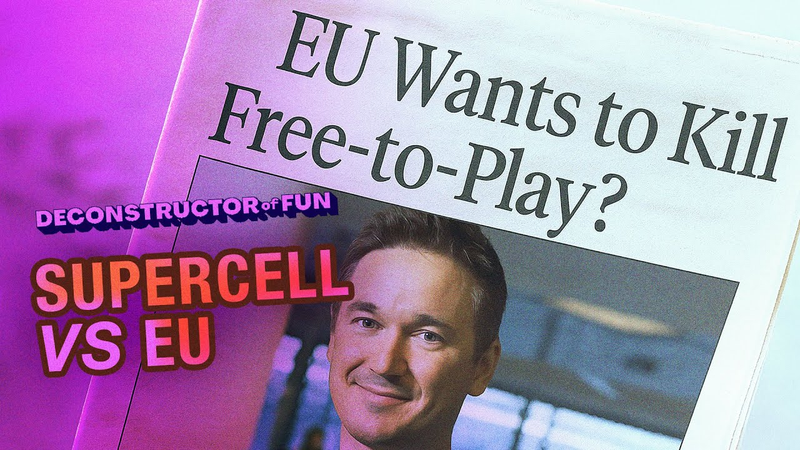
[Music] So today's big news was that Supercell CEO railed against the Digital Fairness Act. Now for everybody who's been following Twig, we discussed in Twig episode 346, less than 10 episodes away, how EA wants to ban free-to-play games. And today, Supercell CEO released his open letter to the nameless and faceless deep state regulators of European Union. And the letter from Supercellio is a rallying cry to save Europe's gaming industry from self-inflicted damage through overreaching regulation. And if you haven't read the letter, in essence, it's this. So what the CEO Kapanadan is saying is that he warns the upcoming EU policy moves, the digital fairness act and the consumer protection cooperation
guidelines all sound very nice that these two things could break the fundamental mechanics on how games work, particularly in-game currencies and microtransactions, meaning free-to-play games. So in-game currency according to this act would be treated as a financial transaction in the same way as virtual currencies such as bitcoin. So that means that every transaction would thus become a purchase that requires parental approval and is processed via extra pop-up windows because EU loves pop-ups. This would indeed be a massive disrupt to a flow of today's game. So, it's not when you're buying something from the store. It's I'm spending soft currency and it would come up and tell me what the euro price for that would be. So, if this goes through, the Europe's 27 billion gaming industry in terms of valuation is in trouble. There's three things that going to happen. One, it will force studios to rebuild their monetization models that are not around
freeto play. That's of course not very nice. It pushes companies towards ad driven games, which is even worse. And most importantly, it drives investment and talent out of Europe. And the call to action that the CEO had with his post for policy makers was number one to engage directly with the industry before legislation, which is interesting that he's suggesting that the policy makers should actually listen to the ones they're about to regulate. Number two is to keep the in-game currencies classified as digital content, not as digital money, which makes sense because you can't move around this. And number three is base any future rules on data, not assumptions. That's seems pretty reasonable. Eric Crest, we've been talking about proprietary monetization on this podcast for about 5 years and apparently EU is listening to you. What What do you say about this one? I don't know. I am so
torn on this subject. I have kind of talked on both sides of my mouth like over the years on this. First, I I will applaud Ilka for coming out and talking about this. I think, you know, this is something he should be doing with given his position in the industry. I think ultimately likely this is going to get watered down when it passes next year. I still believe that they really want to target under 18, which I I I still think is a valid goal on their behalf. and over 18, I don't think these regulations will stick. But then again, I could be wrong, right? Because they keep referring in the legislation to vulnerable consumers, right, which are the under 18 crowd. You know, I would love to get into a debate about the predatory nature of freeto play and the aberant behavior that it normalizes, but you know, Phil's not here, so I I got to wait for Phil to get back and maybe we'll talk about that. On a personal level, like just from me anecdotally, I don't really see the damage free to play is to the kids. Like in my experience, right? I see far more damage from Tik
Tok and other social media than I do free to play.
Yeah, I agree.
And I and I I think fundamentally free to play is kind of like a training ground for predatory monetization. You know what I'm saying? You're you're preparing the children for the trappings of gameplay.
It's not a gateway. It's not a gateway drug. Get out of Get out of town. Get out of town.
I am not done. Right.
This is preparing them for the trappings of gambling. Desensitizing them from the dopamine rush caused by real like gambling. Like it's a training ground, right, for them to prepare for a life of exposure to DraftKings and and all that crap that's getting price.
Seriously.
Yeah. Seriously. I'm just joking. Not really. I honestly think that freeto play is far more easier for parents to enforce and monitor and restrict because you can track it from a [ __ ] spending perspective, right? Versus things like social media which they're engaging willy-nilly and you may be able to
hinder the amount of time that they interface with it, but you have no idea what they're actually seeing on a regular basis. So, it's so far much harder to manage as a parent that sort of thing. And but again, you have to take this with a grain of salt from a parent who's like one kid is like hopelessly addicted to [ __ ] social media and the other one who could give a [ __ ] right? So anyway, that's on a personal level. Netn net, I think cooler heads will prevail. This will be targeted to 18 and under and they won't destroy the industry, but we do need voices out there getting engaged and getting input into this legislation.
How farreaching is this going to be? cuz I look at like apps like touch tunes which is a jukebox here I it uses social it uses a soft currency so is that also going to have the same regulations so it's everything so Reddit the Reddit little like duads that you can award to people same thing you're going to spend 50 cents on awarding this post a little h high five so then Tik Tok I think also has some sort of currency in it all of this is going to be effect as long as it's if they want to do blanket
okay but yeah maybe but Tik Tok is
primarily ad driven right so it's not like
you can award stuff I need to check at one point.
Okay. Anything where you can buy little like doohickeys to give to people, that would be included then as well.
Yeah. Subscriptions will likely not be
It's funny what they call unfair and what they what they are concerned about. I think Eric's right. If the EU really cared about harm, they'd focus on Tik Tok, not Supercell.
I agree.
Yeah. It it feels like the the oversight that we're seeing has very little correlation with actual harm, which makes you kind of question why this is happening. It's like you like everyone's saying like so far like TikTok is rewiring your brain on behalf of the CCP. Influencers are selling detox tea as wellness and gambling apps as a way to get rich quick like to kids, but games are the focal point cuz it's like easy. Go ahead.
Yeah. No, I mean I'm with you. I made the same art price picks. Sorry guys. Like Price Pix is catering towards children, right? Like they are
advertising on places where children can go and they are bringing them into the fold of what gambling looks like for reals, right?
And I guess my flippant point and I'm joking is that like you know freeto play actually does is a training ground, right? You know it can teach people how to like gamble responsibly potentially, right?
Well, yeah, but the same is true for like the Monopoly board game.
Yeah. Should we ban tax monopoly currency, too?
Dude, Phil.
Yeah, but I always win, so I'm okay with it.
Phil is absolutely losing his mind listening to this. I just can't wait till next week. He's going to just go on a big fat rant on this. But I
I will say though that like one of the reasons that games are a great focal point is cuz it's easy, right? Like addicted children are making microtransactions. Your kids are spending real money on fake stuff. This is this is great sound bites. It's also it's also $30 billion in the EU, right? Like it's a big market.
I feel like this argument initially
kicked off in like this is like a 2019 2020 argument that's just kind of hitting the ground now. Do you know what I mean? So your point Josh made me think of this. I feel like yeah the the Tik Tok to me I agree is more of a time suck. It I think it's more damaging for people to for especially for younger kids like growing up on that seeing what they think perfection should be and it's just an absolute lie. But if everything moved as fast as it should, that should be the pivot now. But it's not. We move very slowly. So maybe then in 5 years then it'll be them going after Tik Tok. But where this is like playing catch-up to practices that were investigated however many years ago that are finally hitting the floor. I don't know.
I think you're totally right. Like if you look at how ad tech works, especially like a tech in general, Google just had an antitrust ruling in September of this year and it's for stuff they've been doing since like the mid 2000s. like it's such a lag
and and so yeah, of course these companies are going to be hyperaggressive because they know they get 10 15 20 years of like reaping the benefits. It's like a logical move to
this kind of level of slowness.
Yeah, there's two sides to it as as all of you have said like on one hand the EU's motivation is by no means misguided like free-to-play games for all their accessibility and the behavioral design and monetization psychology. Like I was a product manager that's how I started my career. I was studying on how to get money from nothing from you know players. So that kind of blurs the line between fun and financial transaction especially when they're kids being involved. When we start talking about the you know the latest ground of monetization techniques from loot boxes to different currencies like how many currencies there are in an RPG game. you know, these limited time offers, these personalized offers driven by AI, LTV platforms, they exploit known cognitive biases and the regulators are reacting to a decade, as you mentioned, this has been going on to a decade of this growing unease with the model. So, their goal, if you're a regulator, is
transparency, it's consent, it's control, and the proposed rule may be really, really clunky and overbearing, but the intent is sound. You have to give them that. And then you go to other side, our side. So games for sure aren't banks. They're entertainment products that depend on frictionless interaction and that emotional flow when you get deep into a game and really get sucked into it. And this EU proposal treats every tab and in-game button like you're signing a mortgage. and it requires separate authorization euro denominated breakdown of the cost of the freaking soft currency in a game and then withdrawal rights probably to it. So this EU's bureaucratic sledgehammer that they keep hitting everything with doesn't just target this predatory monetization that Cres has been talking about. It targets entire free-to-play business model that allows games to reach billions for free. And when it
comes to this letter, I think as Chris said, it's really great that Ilka in his powerful position is not afraid to put his name forward, his authority forward, and speak on behalf of the industry. I think the way the letter was written is very clever because on the first sentence he talks about Clash of Clans which is his game, Candy Crush, which is you know the friendly game on the other side of the bay and then he kind of puts yeah your game Microsoft game but he also puts Minecraft which is another Euro game and Witcher in kind of in the same sentence as European games. But the way I understand it the regulation is targeting freeto-play. So, Clash of Clans and Candy Crush, not Minecraft or Witcher that are outside of of this conversation as premium titles. It's weird that there's no other founders who are talking about this topic. Like Ricardo is nowhere to be seen. Marcen Mkhal from uh CD Project Red. They're, you know, thrown to the wolves as franchise creators. They're not saying
anything. So, it's kind of Ilka. And then the official governmental body of European gaming industries. I don't even know who's in charge of that. And yeah, sad there's nothing democratic about this. There's no vote. There's nobody defending this case. It's just bureaucrats doing their thing. And even the call to action in this letter is not for the people. It's, "Hey regulators, if you happen to be looking at this, it would be really great that you would make your decision based on data, not what somebody printed out out of Reddit for you." And yes, I also respect the irony in this one because for for at least a year, Ilka and other prominent investors in Europe such as Harry Stebings, who has a major VC and runs runs a 20-minute VC podcast, they've been pushing this project Europe as the next big thing and talking about how Europe is really the continent as a hotbed for innovation and startups. And today Ilka post this letter and Harry
posts a letter where the CEO of Revolute is piecing out of Europe and going to Dubai because of because of like I think it was taxation of unced gains. So you know irony that's not a good thing. I live in Europe but it was funny I have to say. [Music]
Auto-generated captions from YouTube — names and numbers may be misheard.
The European Union’s proposed Digital Fairness Act and accompanying consumer protection guidelines have sparked significant industry concern regarding the future of the free-to-play gaming model. Supercell’s CEO recently issued an open letter characterizing these regulatory efforts as a potential threat to Europe’s $27 billion gaming sector. The primary point of contention is the proposed classification of in-game currencies as financial instruments, similar to Bitcoin. If enacted, this would mandate that every virtual transaction undergo rigorous legal processing, including parental approval and explicit euro-denominated price disclosures, effectively dismantling the frictionless monetization mechanics that currently sustain free-to-play titles.
Industry analysts suggest that these regulations could force studios to pivot toward less desirable ad-driven models or drive investment and talent out of the European market entirely. Critics of the proposal argue that the legislation relies on bureaucratic overreach rather than empirical data, targeting gaming mechanics while ignoring more pervasive digital harms found on social media platforms. While the intent of the regulation—to protect vulnerable consumers, particularly those under 18—is acknowledged as valid, the current approach is viewed as a "sledgehammer" that fails to distinguish between predatory practices and standard entertainment monetization.
The industry response has been notably singular, with few other major European gaming executives publicly challenging the policy. Calls to action for policymakers include engaging directly with industry experts, maintaining the classification of in-game currency as digital content rather than digital money, and grounding future rules in objective data. While some observers anticipate that the final legislation may be watered down to focus specifically on minors, the current regulatory climate highlights a growing tension between the European Union’s push for digital transparency and the operational requirements of the global free-to-play gaming industry.

Deconstructor of Fun · 2026

Deconstructor of Fun · 2026

Deconstructor of Fun · 2026

Deconstructor of Fun · 2026

Deconstructor of Fun · 2026

Deconstructor of Fun · 2026

Deconstructor of Fun · 2026

Deconstructor of Fun · 2026

Deconstructor of Fun · 2026

Deconstructor of Fun · 2026

Deconstructor of Fun · 2026

Deconstructor of Fun · 2026
Naavik · 2024
Deconstructor of Fun · 2024

Deconstructor of Fun · 2026

Deconstructor of Fun · 2026

Deconstructor of Fun · 2026

Naavik · 2026

Deconstructor of Fun · 2026
Deconstructor of Fun · 2026

Deconstructor of Fun · 2026

Deconstructor of Fun · 2026

Coda · 2026
Deconstructor of Fun · 2025
Comments