1 free read left. Create a free account for unlimited reading + AI research.
Create free accountWhitepaper DiGRA
1 free read left. Create a free account for unlimited reading + AI research.
Create free accountWhitepaperDiGRA
Frans Mäyrä argues that the existing SCI model of gameplay experience centers on immersion during active play. He finds it insufficient for the full range of how people encounter digital games.
Frans Mäyrä's paper argues that the existing SCI model of gameplay experience, which focuses on immersion during active play, is insufficient for capturing the full range of how people encounter digital games. Drawing on Richard Johnson's "Circuits of Culture" framework from cultural studies, the author proposes a contextual game experience model that situates play within layered social, cultural, and historical contexts. The central thesis is that a game's significance extends well beyond its formal rules and core gameplay, and that understanding digital play requires attention to production conditions, social relations, personal histories, and wider societal values.
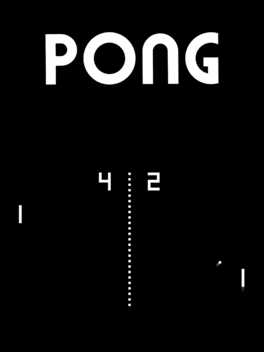
The paper's primary illustrative case is Nintendo's Wii console, examined through its positioning as a "gameplay revolution" in response to competitors Sony and Microsoft, its roots in the 1980s recovery of Nintendo after the 1983-84 video game crash, and its bundled sports games that reference early "television games" such as Pong. The author also describes observed practices, including experienced gamers transporting consoles to non-gamers' homes and the use of Wii Sports as a social activity within a university department. The paper treats collecting and non-playing as valid forms of engagement, arguing there is no single "right" way to play.
Methodologically, the work is theoretical and reflective rather than empirical, and the author presents it as a step toward a more holistic framework. The paper concludes by questioning whether player experience can be meaningfully studied in laboratory conditions detached from everyday social life, and it advocates for combining evaluation methods with broader contextual inquiry.
DiGRA · 2018
Anzu · 2026