1 free read left. Create a free account for unlimited reading + AI research.
Create free accountArticle Board Game Studies Journal
1 free read left. Create a free account for unlimited reading + AI research.
Create free accountArticleBoard Game Studies Journal
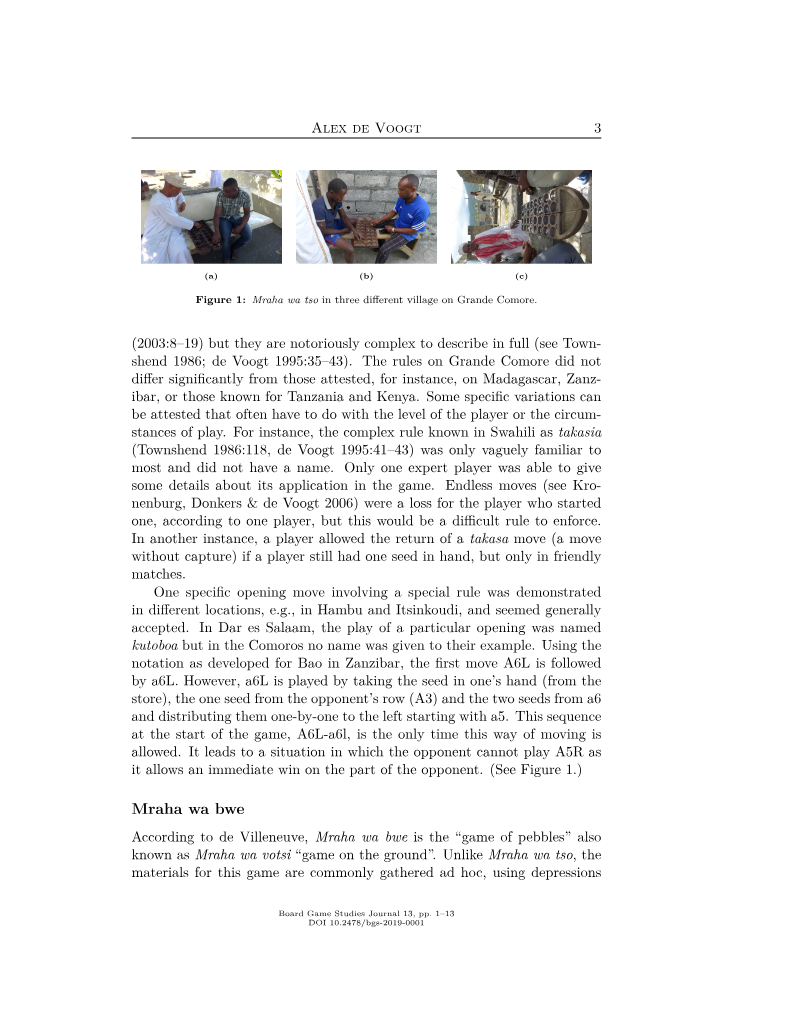
The study examines board games on Grande Comore, the largest island of the Comoros archipelago in the Indian Ocean. Fieldwork was conducted in June 2018.
This study by Alex de Voogt examines the board games played on Grande Comore, the largest island of the Comoros archipelago in the Indian Ocean, and argues that their distribution reflects layered historical contact with East Africa, France, and the Ottoman Empire. Drawing on fieldwork conducted in June 2018 and on earlier descriptions from Mayotte and the wider region, the author documents how the games are practiced today, noting that Mraha wa tso (Bao) is played communally at village squares and mosques rather than in the capital Moroni, while Mraha wa bwe (a Siga variant) is played informally in the city center. Three games carrying the name Dama were identified: a 100-square Checkers variant reflecting French colonial influence, a Turkish Draughts variant recorded as the southernmost attestation to date, and an Alquerque variant on a 12-square board.
The study finds several rule variations from published descriptions, including differences in the orthogonal-only movement of Mraha wa bwe and specific opening conventions and special rules in Bao. The author also reviews historical sources on Ottoman games, including a seventeenth-century Dutch travel account and a Turkish miniature depicting Backgammon and Mancala, and compares these with archaeological evidence from rock-carved boards. The Comorian games, particularly the combination of Siga, Turkish Draughts, and Ṭāb recorded in a historical account from Anjouan, are presented as evidence that perishable or portable game forms, such as sand and chalk boards, may be underrepresented in the archaeological record.
The author concludes that Alquerque's origins remain uncertain and that Mancala is best associated with East African rather than Ottoman influence. Contemporary game practices in the Comoros are thus positioned as valuable data for understanding the broader and often undocumented distribution of board games across the region.
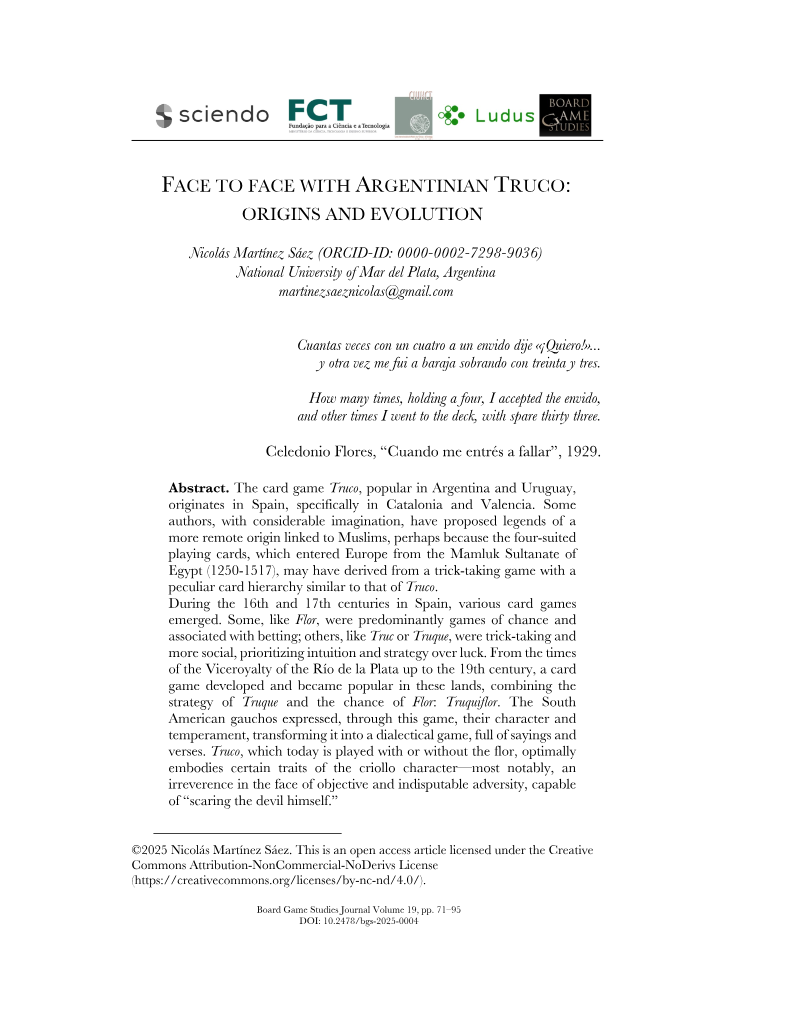
Board Game Studies Journal · 2025
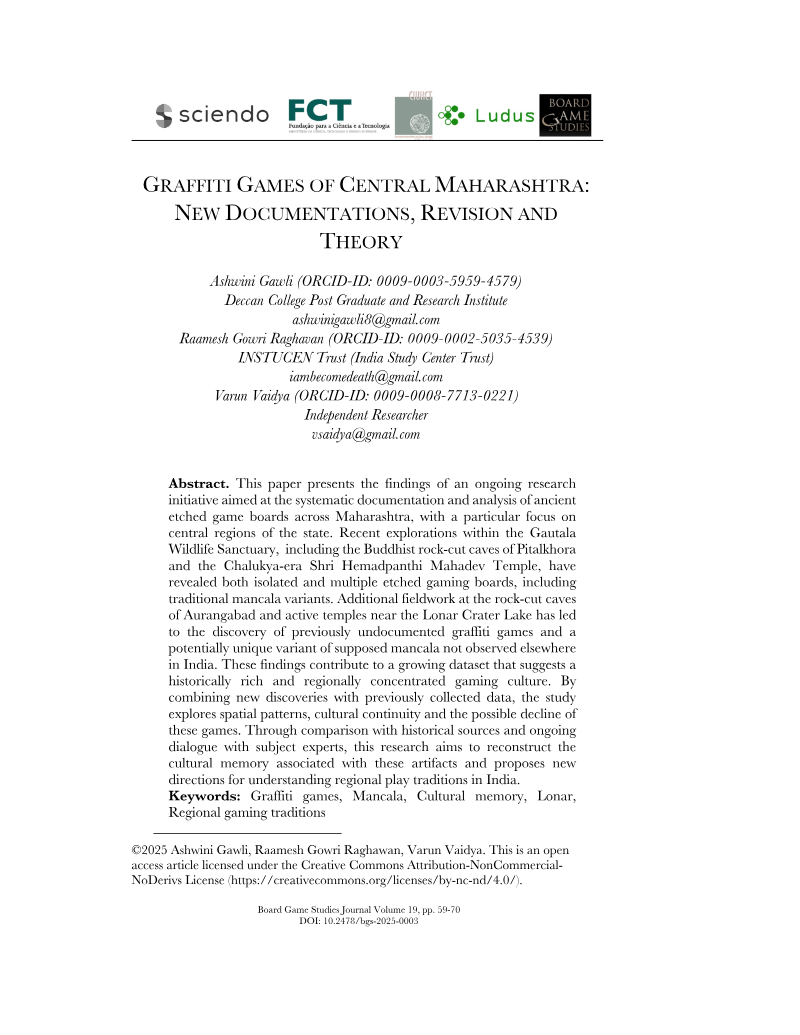
Board Game Studies Journal · 2025
Board Game Studies Journal · 2025
Board Game Studies Journal · 2025
Board Game Studies Journal · 2025
Board Game Studies Journal · 2025
Board Game Studies Journal · 2024
Board Game Studies Journal · 2024
Board Game Studies Journal · 2024
Board Game Studies Journal · 2024
Board Game Studies Journal · 2024
Board Game Studies Journal · 2023



European Conference on Games Based Learning (ECGBL) · 2026



European Conference on Games Based Learning (ECGBL) · 2026



European Conference on Games Based Learning (ECGBL) · 2026