Loading the document
1 free read left. Create a free account for unlimited reading + AI research.
Create free accountArticle DiGRA
1 free read left. Create a free account for unlimited reading + AI research.
Create free accountArticleDiGRA
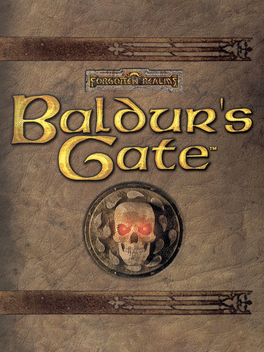
This paper examines how cities function in single-player fantasy role-playing games, including Baldur's Gate, Oblivion, Dragon Age: Origins, Skyrim, and The Witcher 3. Its central argument is that a city's meaning resides less in its visual appearance than in the functions it offers and the embodied spatial practices it affords the player-avatar. Drawing on phenomenology and semiotic architecture theory, the authors organize their analysis around four recurring spatial tropes: centring, inside/outside demarcation, movement, and encounter. Together these shape how the player experiences habitation while positioning them as an outsider who must earn belonging within the urban environment.
The analysis finds that RPG cities typically function as figural centres, often placed at the culmination of the player's journey, and serve political, economic, and religious roles that reinforce their pivotal status. They are also framed as bounded interiors set against a dangerous exterior, with gates and access restrictions that withhold entry until the player completes quests or otherwise proves worthy. Streets operate as multicursal paths that guide purposeful travel while inviting digression, and squares emerge as sites of polyphonic encounter where competing social forces meet, as exemplified by Novigrad in The Witcher 3.
The authors situate these spatial patterns within a nostalgic, idealized vision of pre-industrial Europe, what Eco termed "fantastic neomedievalism." Yet they argue the games go beyond mere nostalgia, using medieval-inspired settings to depict power structures, ideology, and imperialism that continue to shape contemporary cities. The paper concludes that in-game city space always carries ideological content, particularly capitalist ideology given the socio-cultural context of game production, and it calls for future work on the socioeconomic implications of these spatial practices.
Each row is a game or company this document names, each column a document, oldest first. A mark means that document names it. Select a row to see those documents.
DiGRA · 2026

Press Start · 2026
DiGRA · 2026

DiGRA · 2026
Press Start · 2022
DiGRA · 2005
Digital Games Research Association · 2026
International Journal of Role-Playing · 2026
game · 2026
International Journal of Role-Playing · 2026
International Journal of Role-Playing · 2026
Press Start · 2025
DiGRA · 2025