1 free read left. Create a free account for unlimited reading + AI research.
Create free accountWhitepaper DiGRA
1 free read left. Create a free account for unlimited reading + AI research.
Create free accountWhitepaperDiGRA
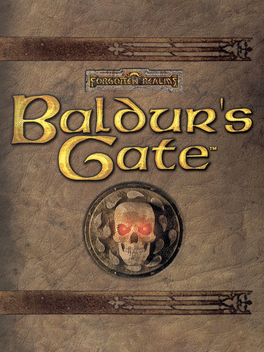
Christopher Warnes's paper argues that digital role-playing games, using Baldur's Gate I and II as its central case, cannot be fully understood through the formalist approaches that dominate game studies, particularly the ludology/narratology debate. Warnes contends that such formalism reflects both a disciplinary insecurity and an anxiety about the games industry's commercial pull. In their place, he advocates historicised, cultural materialist and postcolonial modes of critique, which he applies to commercially produced computer games for the first time in a sustained way. The paper is a theoretical and interpretive essay rather than an empirical study, and it draws on a range of literary, historical, and media-studies sources rather than survey data or original player research.
Warnes's central claim is that the Baldur's Gate games are best understood as simulations of the fantasy novels that inform the Dungeons and Dragons genre, and that this fantasy tradition traces back to the medieval romance. Drawing on Geraldine Heng's account of the First Crusade and on John McClure's analysis of late imperial romance, he argues that fantasy developed as a response to colonial encounters and that its representations of race, such as elves, dark elves, and gnolls, carry the traces of those encounters. He traces this lineage through H. Rider Haggard's King Solomon's Mines and She to Tolkien. Warnes also examines the game's requirement that characters adopt a good, neutral, or evil alignment, which he compares to Manichean rhetoric in post-9/11 political discourse, and he frames this as a revival of romantic moral structures with contemporary political relevance.
Each row is a game or company this document names, each column a document, oldest first. A mark means that document names it. Select a row to see those documents.

DiGRA · 2026

DiGRA · 2026



DiGRA · 2026



DiGRA · 2026



DiGRA · 2026



DiGRA · 2026



DiGRA · 2026



DiGRA · 2026



DiGRA · 2026

DiGRA · 2026



DiGRA · 2026



DiGRA · 2026
International Journal of Role-Playing · 2026