1 free read left. Create a free account for unlimited reading + AI research.
Create free accountWhitepaper European Conference on Games Based Learning (ECGBL)
1 free read left. Create a free account for unlimited reading + AI research.
Create free accountWhitepaperEuropean Conference on Games Based Learning (ECGBL)
The game targets children aged 4 to 8 and is built on a simplified four-element model of computational thinking.
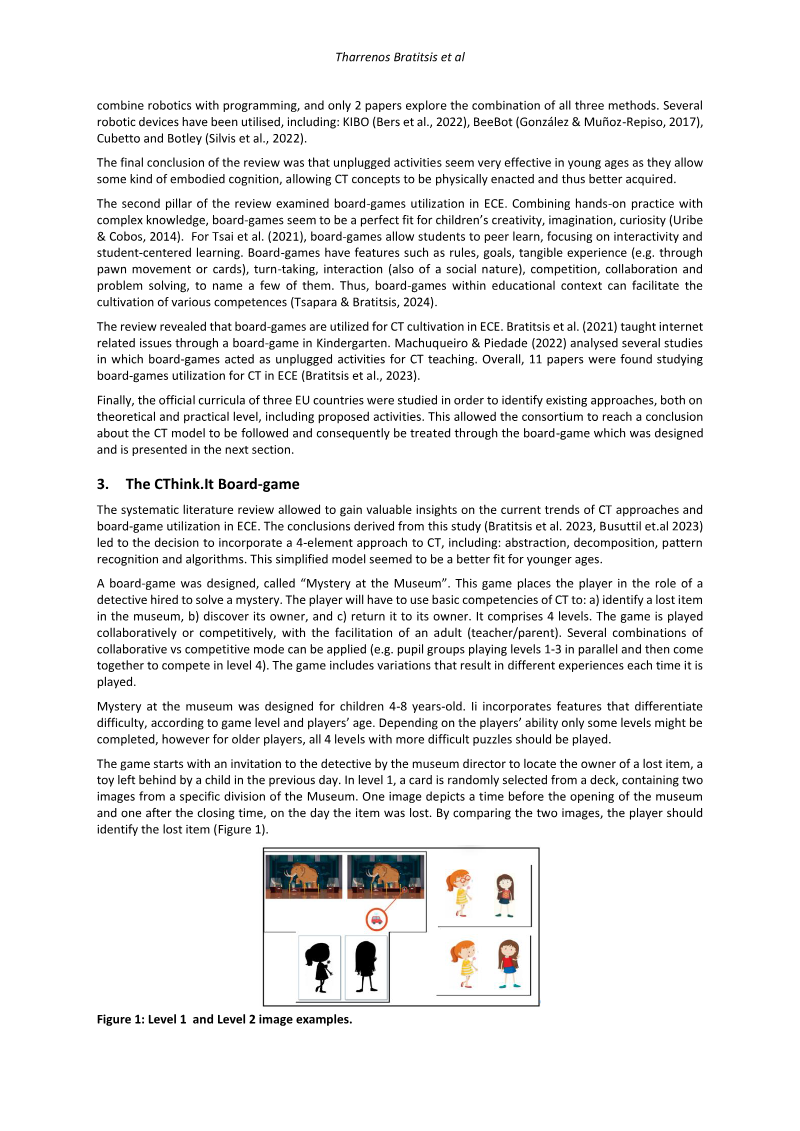
The paper presents CThink.It, a board game designed to introduce computational thinking (CT) to children aged 4 to 8 in early childhood education, and reports preliminary pilot findings from schools in Greece, Malta, and Portugal. The authors ground the design in a systematic literature review, which identified 51 studies on robotics-based CT approaches and 11 on board games for CT in early childhood education. Drawing on curricula from three EU countries, the team adopted a simplified four-element model of CT: abstraction, decomposition, pattern recognition, and algorithms. The game, titled "Mystery at the Museum," casts players as detectives who locate a lost toy, identify its owner, and return it across four progressively complex levels, supported by eleven accompanying lesson plans.
The pilot evaluation, still ongoing at the time of writing, used teacher training, lesson-plan testing, and structured feedback forms, with at least three teachers per country and at least ten children per session. Preliminary observations indicated that the collaborative mode was more manageable for teachers than the competitive mode, which produced waiting times and supervision difficulties in larger groups. Students showed high engagement and motivation, and repeated play improved focus on learning outcomes. Reported challenges included undersized boards and pieces, difficulties with the programming bar in Level 3, and prolonged play in Level 4 due to dice-dependent mechanics. The authors conclude that the game is promising but note that graphical redesign, rule refinements, and quasi-experimental assessment of learning outcomes remain necessary.
European Conference on Games Based Learning (ECGBL) · 2025
European Conference on Games Based Learning (ECGBL) · 2025
European Conference on Games Based Learning (ECGBL) · 2025
European Conference on Games Based Learning (ECGBL) · 2025
European Conference on Games Based Learning (ECGBL) · 2025
European Conference on Games Based Learning (ECGBL) · 2025
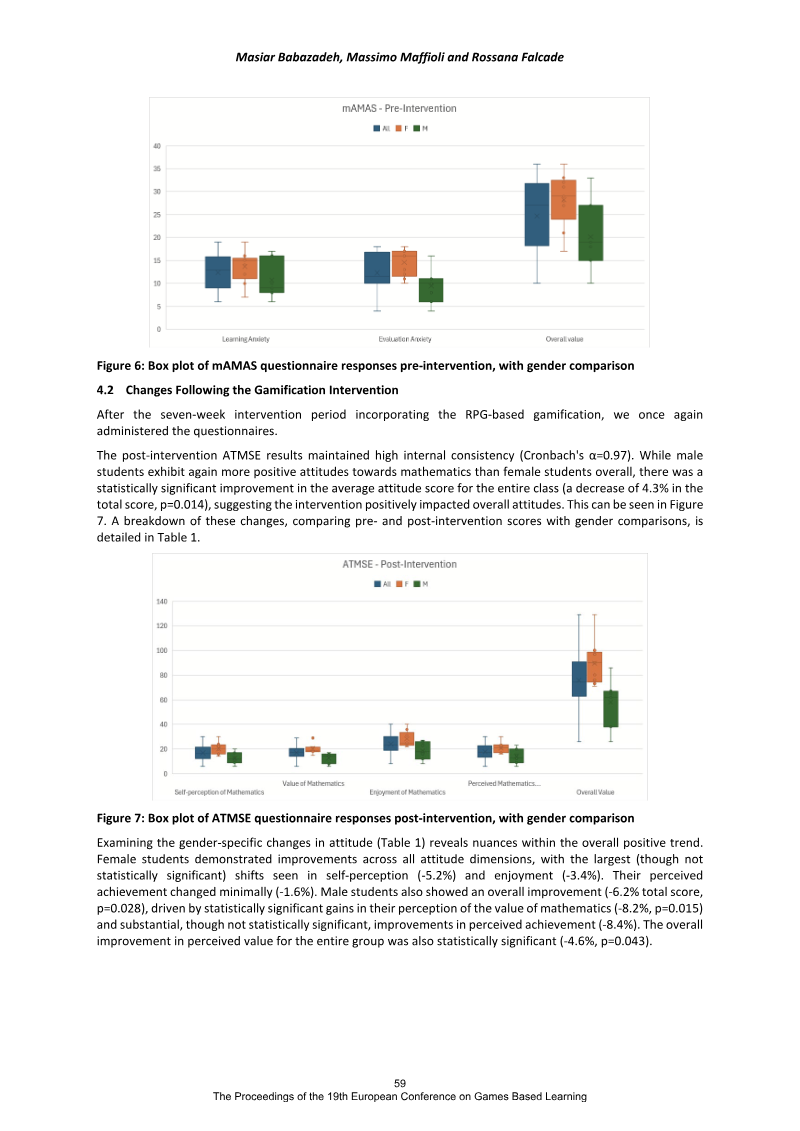
European Conference on Games Based Learning (ECGBL) · 2025
European Conference on Games Based Learning (ECGBL) · 2025
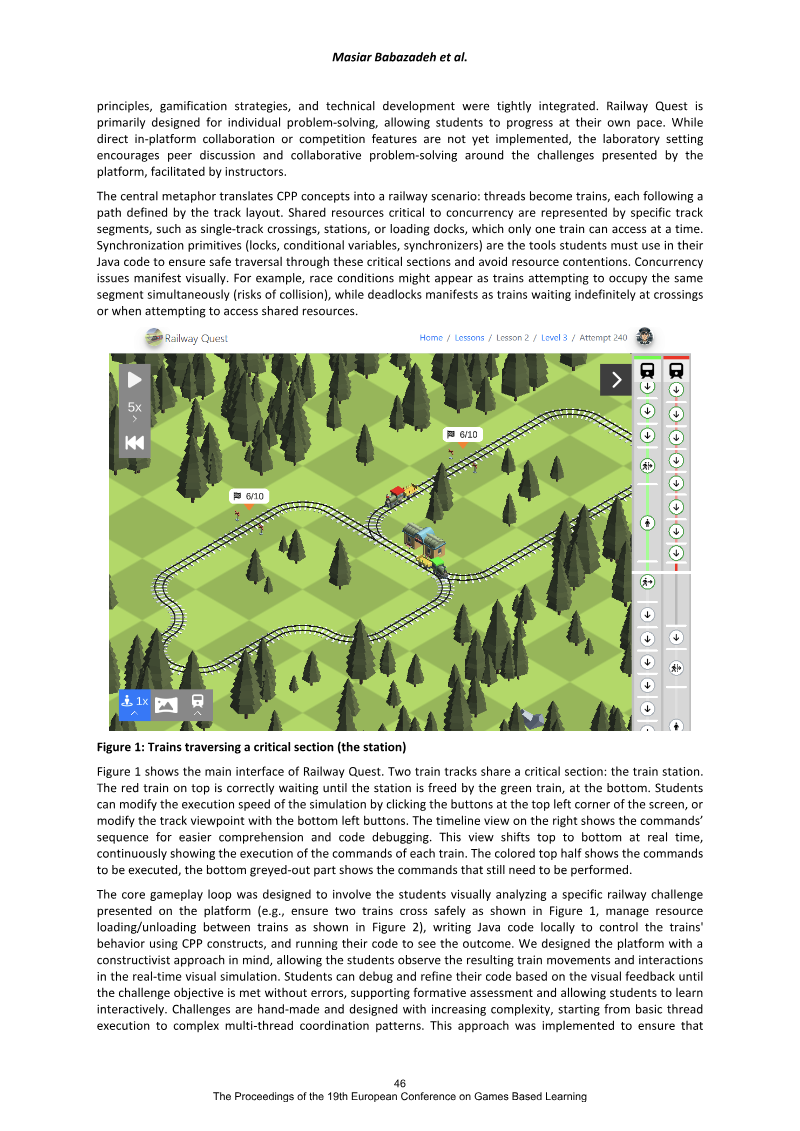
European Conference on Games Based Learning (ECGBL) · 2025
European Conference on Games Based Learning (ECGBL) · 2025
European Conference on Games Based Learning (ECGBL) · 2025
European Conference on Games Based Learning (ECGBL) · 2025
European Conference on Games Based Learning (ECGBL) · 2025