1 free read left. Create a free account for unlimited reading + AI research.
Create free account
The case for adding competitive elements to your game
Key insights
7 takeaways- 01Amazon provides a suite of cross-platform, engine-agnostic APIs that enable developers to implement complex competitive features such as leagues and tournaments without requiring frequent client-side patches.
- 02The platform utilizes a cloud-based, scalable architecture designed to support everything from small indie projects to games with millions of concurrent users.
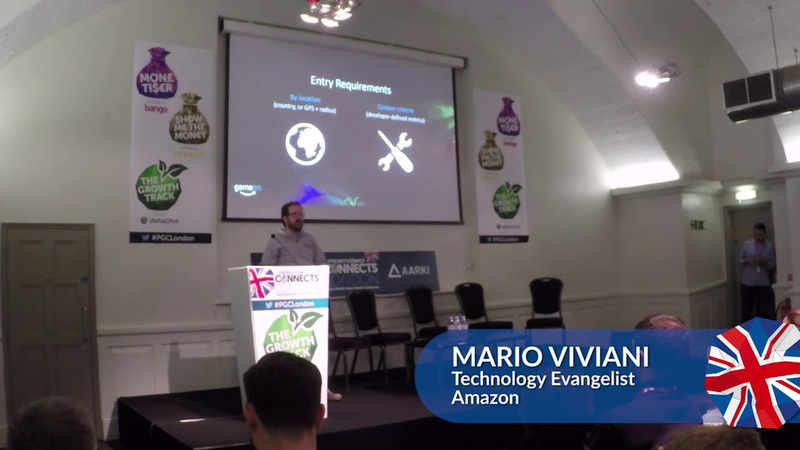
- 03The service supports customizable tournament entry requirements, including geographic gating via GPS and player-specific status like VIP tiers.
- 04Developers can offer both digital in-game rewards and physical prizes, with Amazon managing the logistics for physical fulfillment.
- 05The service operates on a usage-based pricing model that includes a free tier to support developers at all stages of growth.
- 06Integrating competitive elements like tournaments and leaderboards significantly boosts monetization, with early adopters reporting a 106% increase in free-to-play conversion rates and a 500% surge in new paying users.
- 07To accelerate implementation, Amazon offers engine-specific plugins for platforms like GameMaker Studio 2 that include pre-made assets and demo projects.
Ask AI about this video
Transcript
[Music] all right how are you guys doing all good I know I'm in between you and lunch so you know I'll try to keep it light so thank you very much for being here appreciate you guys coming so my name is Mario I work for Amazon I would say that I was probably destined to work with games as I'm Italian I my name is Mario and my dad's name is Luigi true story anyway I'm very excited to be here talk to you about the case for adding competitive elements to your game why is that important so I guess that we're we're all in this room because we love games right we're we're gamers ourselves
we're marketeers that working in the world of games and if you think about gaining self what is at the base of of gaming in general is competition is it sometimes is it just competition with yourself is if you're playing a single-player game sometimes this competition against other players in case of multiplayer games actually this is something that goes beyond the world of gaming is corroborates the words of sports as well think about football big thing here in UK you if you're a football fan you want your team to win and to defeat the other the other team if you're a football player yourself you absolutely want to give your best and win and why is that because because at the end everyone wants to win everyone wants to demonstrate that they're great at what they're doing and at the end as as game developers inning as game marketers what is that we really want we want passionate players we want to get to those power users right we want to
get really engaged with games they really get into it and spend time and possibly money in it so how do we get these guys how do we get the power users so as you can imagine it at Amazon we do a lot of events like this like Polly Pocket Gamer between me and my colleague Mike which is also in the room we do a lot of talks and presentations sometimes we have booth where we demonstrate our devices and Amazon we have a lot of devices like the Amazon fire tablets we showcase those so a funny thing happened and some of these events we're showcasing mobile games to demonstrate the capabilities of our devices a lot of these games are very simple hyper casual games and some of those don't even feature a competitive element to it but the couch the end the interesting bit is that people come into our boots were starting playing against each other using games that were not built for a
competitive element at all so we start started thinking about that said okay so there is value per se in competition but a lot of developers have issues bringing competition to their games maybe again a game does the repetitive element so how can Amazon help you there so we sort of wanted to straight test this we wanted to verify that this intuition was right so we actually run and one of the first mobile games in sports competition called champions of fire with no audio anyway [Music] [Applause] so as you've seen here these people were playing games like like fur ninja and other kind of games like some of them were playing Crossy road like games which don't have a real competitive
element to it but they were competing against each other using these games in dedicated sessions so we said okay how can we bring this to everyone how can Amazon enable all game developers doesn't matter the platform doesn't matter the game energy doesn't matter the game to get a competitive element to it so that's why we last year and GDC we introduced game on so what is game on is a set of flexible api's that allows any game developer to easily build a cross-platform competitions into their game and what's the added value from Amazon well is that you can award both digital in-game prizes but also physical prizes which are shipped and fulfilled by Amazon so we know a couple things about shipping stuff so we thought you know why don't we give this power to our developers so there are three main components of game on and if you think about it this is also three of
the most important things for a game developer in general scale so game on scale as your game scales is built on top of Amazon Web Services even there we know a couple things about cloud computing so the entirety of game on is built on top of AWS as your game scales if one on day one you have 10 million players on day 2 you have 100 million players well I wish you you have no problem is game on scales gracefully allows you to do organic acquisition I will touch that in a little bit er many ways through which game one allows you to acquire new customers but import most importantly is about engagement a detector game just allows you to retain more players and to engage with them in a lot of different ways so this is what game on is closed cross-platform API allows you to build many revolves around competition will deep dive in them second allows you for a lot of other
interesting cool features like user-generated competition allows you to deliver rewards and also provides a set of tools and dedicated dashboard for you to use so cross-platform API why did we go the API way because again we wanted to make this available to to everyone a lot of services provide dedicated SDKs but we thought you know if you're building a game for console PC mobile even what if you're building in Malek's a voice game you might want to add a competition to that one as well so easy game on is built on a restful api if your system or your platform the framework they using to build the game can make an HTTP call you can use game on full documentation for our API you can find it on our developer portal very very easy to use and again the core message here is that we don't want to
lock you in on a specific platform it doesn't matter which game engine you're using it matters for your creative so one of the first adopters of game on one of our launch partners has been survival arena and they integrated game on tournaments on the desktop version of their game and also on the mobile version and this also allows for cross play it's entirely up to you as a developer if you want to like cross play or not but most developer do and it's very easy to do so game on revolves around competition around adding competition to your game so most mostly revolves around the creation of leaderboards you can create teams you can create leagues as well you can rank players by any metric so if you're building a racing car the metric could be lap if you're building a I don't know if you're building a skill based game it
could just be a lot higher score it's entirely up to you how you define these variables and it's very easy to create them you can set the number of attempts so say in order to participate this tournament you only have five tentative after that sorry you need to wait for the next tournament you can invite winners to multiple rounds so you can be literally leagues and tournaments you can also schedule record recurring tournaments to happen automatically if you're being working with game live ups you know how setting up tournaments can be painful but game on removes the friction by allowing you to reschedule tournaments the easy way so we'll be working with gear club for last year and they were looking for a very easy way to bring competition to their game and they use game on as you will see in a bit we will show I will share some insights about how they were performing they were
very happy about both the speeding development but also how easy was to adopt the game oops so now so let's let's say that you want to create a game that you're building your game and you want to create specific requirements for people to enter tournaments so let's say for example that we want to build a tournament just for Pocket Gamer you could do that because you can use a location-based tournament which is based on GPS coordinates if your game of course is capable of getting in GPS coordinates based on the user device you can set the radius around a specific Jo point and say you can you need to be physically there to participate to that tournament or you can use any custom criteria so let's say for example again we want to build a tournament just for the greater Seattle area where the Amazon headquarters is you just this is
an example of how you would set up your entry requirement for the tournament you just put a name and description you say that the type of entry requirement is GPS based and GPS coordinates based you put the center of the radius and then define the radius in kilometers it could be in meters or whatever you want and a radius around it so in this case is 10 kilometers from the center of Seattle what if you have a specific variable in your game which says that a player is a VIP maybe it's a power user what if you want to create tournament just for your top paying customers you can do that if you define a variable in this case that says that the status needs to be VIP and all if those customer will be shown the tournament or what is the opposite was what if the player is an entry-level player you can just define that their
league needs to be between for example 0 and 10 depending on how you rank their skills in game based on how they're performing so as you can see you can completely totally customize the entry requirements when we launch this service at GDC Power Rangers legacy voice actually made a geofence around the GDC conference and run a tournament with physical prizes that you could only win at GDC so imagine how you use this feature as a developer to create specific events what think about what this also means for influencers as well and why is that important so we just seen in this conference there's been many many talks about the importance of influencers and and in general about user-generated content so as game on allows you both as
a developer to create your own tournaments and define tournaments but if you want you can also enable user-generated competitions so anyone could create for example I want to create a tournament just with my friends and I can do that just with my family just with my co-workers happening just at work at my office for example but more importantly these appeals to influencers into streamers so I don't know if you guys ever heard about service called twitch which is also powered by Amazon actually we just released a twitch integration for game on so this means that if your game supports the game and the user generated tournaments streamers can share tournaments with their followers they just need to share a credential which is
just the code and then players can a connector twitch account to a specific tournament and start playing in the same tournament where the favourite influencer is so how do you do that just need to integrate game on and allow user-generated content very very powerful but probably the most powerful feature is what I mentioned already which is the real word pricing so you can create tournaments you can fund real word prizes and get those prices shipped to the winners of your tournaments you can also award in-game currency or in-game prizes and that's available everywhere because right now the only caveat is the real word prizes is available only to US customers this means that even if you are uk-based developers you can leverage real word
prizes by working with Amazon and ship real word prizes to you while the digital in-game prizes are available anywhere you can do that anywhere game on is available and a game on console we know that creating tournaments is painful so we wanted to take out that pain so we built an entire separated game on console from our Amazon developer portal which is very easy to use actually you don't need to be a developer to use it you don't even need to be really tech savvy to use it so it can be given to two non developers as well two to run in game competition so for example we have a interface that allows you in this case for example to create tournaments in the greater Seattle area and to give access only to VIP players through a dedicated UI or another thing
that I mentioned before is recurring tournaments how do you do that there is a dedicated UI as well you can choose a specific day of the week where you wanna run tournaments in this case for example we decide that we want to repeat every week only in the weekends after 10 weekends and we can do that just in a few clicks in a few seconds everything that I'm showing here I just want to make this very clear is also available through the API so you can do do this through the UI or completely programmatically from your game from your live ops manager what not surprising of course how does it work how how do you can start using it but how do you pay for it so we had to cease it's a new model we had to think about a new pricing model for game on so basically it revolves around posting a score every time a player posts to score
that counts as one posted score or a single or count as a single play the first 35,000 plays per month are free and that's available for the first six months of your of your play after that you start paying only for what you use a third of a penny per submitted score keep in mind that our usages of the API are free so if you're pulling a leaderboard or if you are I don't know if you're pulling a team or or a result or you shipping a prize all of that API is free is just just based on how many scores do you submit so this is actually pretty generous if you start playing with it if you want to exactly know how would this match your game we have a dedicated dashboard on the Amazon developer portal for game on so we have
a lot of partners which are already using eman this is just some of our launch partners but we want to democratize the use of game on and to make available even to the single developer working in the garage to the indie developer so some case studies why is it important so we're here because you want to hear about you said okay this is gray like the whole sales pitch that's cool does it actually work does it actually allow me to retain customers and to so some case that is here recently we were working with were fiends and they launched real word pricing in their game and the results were actually pretty impressive free-to-play conversion shut up a hundred and six percent month-over-month average revenue per daily user increased by 17 percent day over day average in new propane users skyrocketed over 500
percent and session time increased by over twenty percent and that's because they actually did a pretty smart thing they were running tournaments only during the weekends but during the week that were advertising that there will be tournaments happening and there were suggesting players to skill up in order to prepare for the tournament such a pretty pretty interesting we didn't invite advise them to do it was entirely their strategy and worked out fine another one gear club so gear Club were run already running tournaments in in the past their developer Eden games but they reported 20% increase in retention when they add the rearward prizes via game and also they were really happy they didn't have to do any update on the client-side when we were to add the new tournaments or new events those everything was done dynamically via the API itself they were just using a Java client to connect to the game or API
which is pretty efficient but now I've been talking about API and I said yes we don't want to lock you in in any in any SDK in any platform you know you can you can use whatever you want but actually after a few months we got some feedback from developers this feedback was yes by the end I keep using the same game engines and if I need to use specific game engine and connect to the API would it be easier to have something like a wrapper that does that so we be listening to that and I'm very we've been working with a uk-based game engine maker which is game maker studio and I'm pleased to announce that starting right now we have the first game maker plug-in the first game on plug-in and this is the game maker studio 2 plug-in which extremely simplifies the addition of the game on API to egg maker studio based game we'll
be working with them we've been you know working together the guys a yo-yo games have been amazing in supporting the integration of game on and they provide a plug-in that provides also includes a demo project and objects rooms and scripts which are pre-made and allows you to start using it more literally in a few minutes you just need to download the plug-in from the library add your game on public key which is your your API key basically and then you have a dedicated demo project with a series of buttons and features that allows you to submit your first score to text your first tournaments to build teams and even to test the shipping and fulfillment of digital and real word pricing so it is available right now it's free for download and use and again you can find it here don't worry I'll be
sharing these slides pretty much anywhere if you go on the yo-yo games website you can find it and download and there is full documentation there and also on the Amazon website well if you want to know more about game on we have a full tank documentation reference for the API the dedicated gaming console and even a dedicated Amazon customer service support that's another thing that we do pretty well at Amazon customer service so if you have any question any problem you can reach out directly to me or contact our customer support so this is this is it thank you very much guys for listening and I really hope that you will start playing with game on and add being competitive elements to your game thank you very much [Applause]
[Music]
Summary
The integration of competitive elements into mobile and cross-platform games serves as a primary driver for player engagement, retention, and monetization. By leveraging tournament structures, developers can transform casual experiences into high-stakes environments that foster community and incentivize long-term participation. This approach addresses the industry-wide challenge of maintaining a dedicated player base, as competitive play encourages users to refine their skills and invest more time—and potentially capital—into the game ecosystem.
To facilitate this, Amazon provides a suite of cross-platform APIs designed to simplify the implementation of competitive features regardless of the underlying game engine. These tools allow developers to create leaderboards, leagues, and recurring tournaments with customizable entry requirements, such as geographic location via GPS or specific player status (e.g., VIP tiers). A significant differentiator in this service is the ability to offer both digital in-game rewards and physical prizes, with the latter managed through Amazon’s existing logistics infrastructure. The service is built on cloud-based architecture, ensuring scalability for titles ranging from indie projects to large-scale games with millions of concurrent users.
Data from early adopters demonstrates the efficacy of these competitive strategies. Case studies indicate substantial improvements in key performance indicators, including a 106% increase in free-to-play conversion rates and a 500% surge in new paying users for specific titles. Furthermore, developers report that dynamic tournament management—facilitated by API-driven updates—removes the need for frequent client-side patches, thereby reducing operational friction. To further lower the barrier to entry, Amazon has introduced engine-specific plugins, such as those for GameMaker Studio 2, which provide pre-made assets and demo projects to accelerate integration. The service utilizes a usage-based pricing model, offering a generous free tier to support developers at all stages of growth.

















Comments