1 free read left. Create a free account for unlimited reading + AI research.
Create free account
Onboarding UX design tips for mobile
Key insights
6 takeaways- 01Data-driven funnel analysis is critical for identifying bottlenecks; for example, the team discovered that 89% of new players failed to engage in exploration and 41% of those who purchased ships never dispatched them.
- 02Accelerating the core gameplay loop—such as speeding up ship acquisition—is a highly effective strategy for reducing player drop-off in the early funnel.
- 03In the case of Seaport, implementing incremental design changes—such as intuitive iconography and dynamic tooltips—increased the ship dispatch rate from 59% to 85% before any formal tutorial was introduced.
- 04Prioritize iterative UI and game rule refinements over complex tutorials to resolve friction points, as these low-cost changes can significantly improve core gameplay engagement.
- 05Designers should avoid the 'killer feature' trap and instead rely on funnel analytics, PlaytestCloud user testing, and A/B testing to validate small, high-impact improvements to the onboarding flow.
- 06Integrating a guided NPC tutorial after optimizing game mechanics further boosted the ship dispatch rate to 96% and achieved a 40% day-one retention rate during soft launch.
Ask AI about this video
Transcript
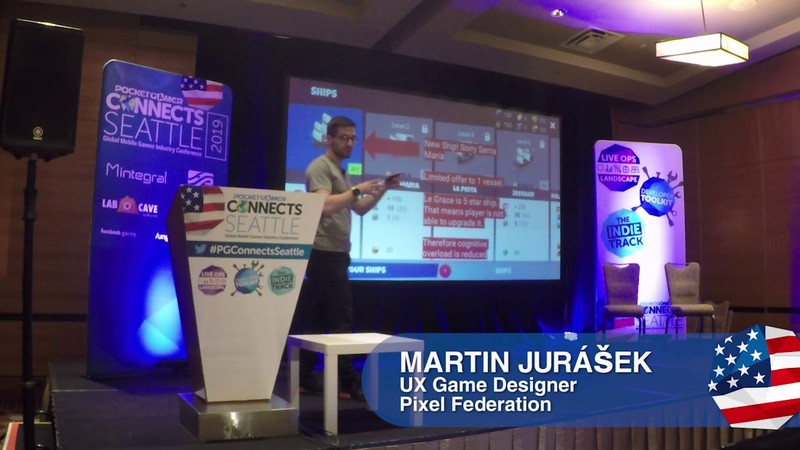
okay so hello and welcome to my talk no I just like dropped okay so hello and to my talk my name is Martin Eric work as a UX game designer in a company called pixel Federation Europe Slovakia Central Europe so I got a lot of a lot of things to share with you guys but we got limited time so today I'm going to share with you our case study how we developed our game when we decided to go for a mobile because for those of you guys who are not familiar with t-port it is a it is a mobile free-to-play game or what's called cross-platform game where you as a player become a captain who gets to manage his sport who gets to who gets to manage his fleet of ships you
get to trade fulfill contracts etc etc so so so many interesting things you can do enter their game and I have a confession because when we launched our game back in 2015 on a Facebook there was no tutorial whatsoever and I know guys we are here on a conference we're talking about best practices what to do what is working well disclaimer this is not working so well having no tutorial is definitely not a takeaway from today's talk and we'll get we'll get there eventually how it worked at how they work out for us having tutorial as compared to having no tutorial but I'm going to share with you some music steps what we did as something extra to to just rather only focusing on the actual tutorial so whenever launcher again there was no tutorial and the game looked like this couple months before the actual release on the Facebook so as
you can see we had a lot of work ahead of us and when we were talking about classic tutorial like this there was no time for that so the original plan in a development was that will be will have this type of tutorial like this you're all familiar with this type of tutorial yeah the the guide shows up it tells you what to do what works what and what you are supposed to do sometimes he forces you to do something so this is we're all familiar with tutorial so I'm not going to put emphasis on this mechanic inside the game but you know when we launched our game on Facebook there were KPIs weren't so bad so we we won't originally we intended to work on the story since day one after release because you know you cannot afford to have again without tutorial game was released there were so many different problems that we can we almost forget
about tutorial but since kpi's were doing so well for almost two and a half years we had no time to focus on developing any tutorial mechanic so then there was a breaking point when we know that okay we cannot do it like this forever we need to develop an actual functional tutorial mechanic and we know it's going to be a long sell pun intended ahead of us and that breaking point was going on a mobile because mobile is super competitive the two many different devices Android iOS so we know that if we want to go global we want to launch our game on both of these platforms we need to have a working tutorial so the lot of work needed to be done in order to have a functional tutorial and we as a game designers are always curious and we start to thinking okay can we do something extra other than just waiting
till that feature gets developed because getting the tutorial requires a lot of development work but we as a game designers can do so much more than just focusing on one functional mechanic so what we did instead is that since our game was running and performing we started collecting insights we told with our analytic guys and now a read now we talk we're looking at the other funnels and basically this is the new player funnel which kind of shows you what type of action was done inside our game and based on these insights you can easily identify a couple of problems so now now that we're looking at this top funnel here we see that only 33.8 33.8% of players managed to collect actual cargo from the ship which kind of sucks if your game is about chips yeah about getting material so the the well the first gap you can see is the the players which register and did something
there's a huge drop-off but this is usually related to some kind of technical issues so that there's not much for us game designers we can do about it and the other big the other big gap and I'm going to talk about this one is about what once the player buys the ship he doesn't get to send it so if we go little bit into more detail only 56% of players purchased ship as I said it's quite problematic if your game is about chips and even if they manage to buy the ship they still do not interact with the ship so and even if we're talking about exploration which is a big part of the sea port explore exploration type of game 89% did not get to see any type of exploring with inside of our game so moving on we started fixing we try to fix those bottlenecks and as I said the problem is that a lot of players do not buy the ship but actual real problem is that if they manage to buy the ship
because you can you can do it easily with the you know with that tutorial which was currently in development by the time and once they buy the ship they do not interact with it so ok we can do couple easy tricks we do not require any development time and maybe maybe it could work for us so today's takeaways and maybe you just already found out as I was talking about this that well we don't have time for that obviously so long story short tutorial is only one of the tools you can use as a game developer in order to design perfect onboarding experience you but you shouldn't put all your focus only on two totally there is so much more and on too and on in today's talk in my case study I'm going to focus on just one thing what we did so as I said the problem is once the player gets the ship in our in our case it was Santa Maria he never sent it he never said it on a sale so we inside
our team started thinking about it okay for us we've been working on a game for almost three years even if even before the game was released so for us it was can obvious yeah you just stab the middle icon the map the ship goes on the lab so it's it makes sense for us but actually the understanding of this mechanics was not so clear because the data says those interactions were not so clear and here is the actual data which supports this coin so when we knew when we identified this as a problem we we try to do as much as we could for without you know you know without requiring it and developers work or any complicated developers work because they were you know they were building a new mobile client new UI and there there were so many things that needed to be done in order to have a mobile version of this game so first thing with it and
actually is going to be only five steps and then I'm going to share with you some results is that we tried to improve the clarity step by step so yes so probably the icon was not working so well and we decided to change it so new icon how did we how did we decide that that new icon should be a steering wheel of the ship well usually you can you can just decide we want a new icon then you can argue with your eye director and you know you can have an argument like who is more experienced of what but what we did instead is we did an icon light blink so assignment for our director was I want to have new set of icons which could represent the actual ship dispatch and those icons look like this and then once we ran ran the test and we this is like the there's like detail process how we did it but long story short the way was the steering wheel it was done in
two days you want to take a picture I guess but I'll be sharing those slides so no worries because it's really detailed so long story short this icon was what was the winner of the of this icon light blank test so okay so we just improved our interaction probably can we do something else yeah we came up with the idea of dynamic tooltip so these tooltips will will show for a new player because for alder players it could be kind of bothering you know so we made set of rules when this type of dynamic tooltips should show up yes the this was the type of mechanic which required some developers work but it was really simple to implement so in different aspects of the game in the early stages we added this type of dynamic tooltips and developers are really happy because there we are we're not doing some kind of special hacks which which would require to you know do some do some kind
of problematic implementation just the new basically new dynamic tooltip mechanic which was easily which which was possible to be used in in the later stages of the game as well so even here so moving on we just did already two steps and it's starting to look better and then we decided ok like maybe we shouldn't be afraid to change even game design rules if it makes sense for us so what we did we get rid of the of this icon because this icon represented you can send a ship to to the docks which is definitely not the first interaction you want a new player to have with your ship because the ship basically disappears we want your ship to go on a sea open sea and do some contracts so we get rid of this once again it could be done with hex you know if it's a new ship then this button should be hidden stuff like that this is this is this is a developer's
health so we change the actual game design rules so new game design rule if player owns in total less ships than his capacity of the fleet he's not able to send to ducks because that make any sense so once again we're happy developers are happy and the game is improving step by step this is this is and this is like really really simple still we're not talking about big mechanics and this is something that we shouldn't forget about as game developers because once we identify problems often we're looking for really big killer features big changes which should dramatically improve your game but sometimes even doing this type of small changes can help you a lot so three steps already getting better and there is the one last button which is kind of extra we want to give you only one option this is the upgrade button for the ship now that I showed you a couple of steps how we solve the previous issues how could we do it well we change the ship basically we went
from Santa Mira to a Grace and this is the ship which is already available in a shop with five stars up fully upgraded with five stars so basically it looked like this the ship was fully upgraded it had even better stats so maybe the player could be more attached to this kind of better-looking ship but in the end it looked like this so basically the new ship is much better as you can see this is the first interaction for a new player in indie like couple months before and after after the only four four changes it looked like this so I think we're done and ready for sale yeah let's see the data not yet because what's what's happening the problem is that there was one reality real literally a rail related mechanic and that mechanic was that once player buys a new ship the ship starts sailing towards your port and then it ate Canada
docks and it took a lot of time I know it was realistic and but the usability wasn't there so we change this rule if the docking docking slot is open and you buy a new ship it's it shows up immediately so but this once again this changed this small developers rule it was it made a difference of 30 seconds and that was also game change for player if he eventually if he even sees the new ship so let's talk data finally so this is the original unclear interaction only 69 percent of the ships which were purchased were sent yeah after with it these changes eighty-five percent of purchase ships were son so which is dramatic dramatic increase in a terms of interaction with the game and as a as you could have seen it wasn't snot nothing special yeah not a big
feature just really really small iterative changes so based on these results we're really motivated to try even more and we we started experimenting with upgrade marks retention chests changing this is like sleeping notifications about product production buildings but we don't have that much time to talk about these details some of them worked for us some of them not and let's go forward we even tried to fix explorations once again just by combining the level design and map design we tried to you know create new destinations move exploring a little bit forward it was not it was not like developing a new features we just moved a Content little bit forward maybe even a little bit further to the actual home port so the player would see that so as you can see really really a huge amount of small iterative changes for the game game designers which did not require that much of developers work so it
worked for us and what does this mean as I said this is the DES takeaway you can do so many small things as a game designer and you shouldn't forget about them tutorial that would not help you of course tutorial can guide you from point A to the point B the question is is the actual understanding of the game will be there and it is not guaranteed you know because the tutorial can always force you to do the thing that you maybe but maybe you will not understand the game in the end so let's talk about the actual tutorial as I said it was a guide mechanic it was the NPC triggered by various events it had two two purposes the first one was just sure just to show up and he kind of explains you a little bit more about things that just happened in a game or he was trying to force you to do
actual stuff this is the basically guide forcing you to buy a new dogs which can leads you to buy a new ship and then you get to dispatch the ship so basically building up to that actual interaction with the ship so once we had this tutorial already with it around five iterations with the playtest cloud which is a really nice online platform where you can test your game you just submit a build and then your players then then these testers will play your game they will command outloud and you can see the actual video how they interacted with the game so it's really nice to to fix your usability issues so this is the play test cloud and once we're feeling ready and you know deadline was there we launched the game with a B test and we compared we compare the performance of the game without tutorial and with tutorial so this is the actual data directional funnels as we have seen at
the beginning it's quite hard to get a grasp on this data so I did a couple more comparison and this is the difference so as you can see and as I have said at the beginning definitely you want to have a tutorial inside their game it's it's it's not something new but we get the data which can even support that having no tutorial is definitely not a good practice at all so and now going back and talking about the question which was ships dispatch after purchase well we had 85% of after our after small changes and not now with the guide we we managed to reach 96% and as you remember previously it was only 59% so there's a there's a really huge improvement especially if your game is about chips so great success for us and thanks to
this type of small actions and then the guide mechanic we managed to reach day 1 retention of about 40% during soft lunch phase which for us was really really good especially in our genre it's it's not super casual games which usually are able to manage around like 40 50 60 % for as 40 percent was really really good so this is the actual data and I thank you for your patience and if you get any questions I'm here on a stage or afterwards right thing Thanks quick question first before I'll go over there and so with your tutorial tool tips I did was it coder placed or was it designer placed could you could you so the reason I asked is as increasingly projects I'm working on we're getting the developer teams to create the tooltip system so the that's actually implemented by a designer not actually
implemented by the code team have you done that kind of thing or are we done it differently well actually these dynamic tooltips were done by developers basically well we created the we created the actual points where it should be activated and also the localization codes for for them but they needed to just just our dad because it's we found it incredibly useful to build a tool frame taught it framework that the designers use because it means that we can actually do testing cycles of vastly more rapidly and we're not taking away they cost an expensive the development team at the same time but are we also adding in conditional tooltips so the tooltips will come in under certain conditions which their variables are exposed to the designer put in and again that makes it amazing because if you find that someone's not I mean this particular on I'm thinking about as a word game if we find that people aren't looking for the word properly we were at certain over a second and then we do the
Beyonder yeah you can you can also do it with with the triggers like after a couple of seconds of no interaction the tooltips should show up and even like hand whatever yes yeah and I think that sort of stuff's amazing but around a huge fan of what you're trying to do that's wait a question here so if you've got a microphone I'm not too sure yes so you mentioned you get did some other methods other than onboarding tutorials to get people to learn the game you maybe share what some of those well within what what we've been trying to focus on mostly was to do a lot of those whitest clouds because usually when we did this this five iterations like here I didn't want to go into too much detail but you can even see how they have they rated the game and what was really interesting for us that after the actual gameplay there
was a swervy dam there was a survey where there was a set of questions which the answered and what what helped us well basically the results from that service helped us to realise what are the actual most fun parts of the game so for example those players they really appreciated the exploring phase of the game so this kind of helped us to realize okay maybe we need to put it a little bit maybe we can expand on that in type of emotion insider game because before that it wasn't so popular that's after the game's live already put those surveys in or one testing sorry the games were already live on on the App Store and Google Play we need no no the the these tests were around even before the actual a soft launch so basically we developed a build we shared it on this platform and they played it so so yeah and of course the game was already running on Facebook so so we're just sneaking one extra quick question as far
as the number of changes you made from one iteration to the next did you focus on one particular final step for each iteration and only change things relating to that step or did you like when you put the talk to system in did you expect that that would be across the entirety of that that funnel well the thing is like how we approach this whole whole process it it was a in a lifespan of around like four months and basically if I haven't done this talk we wouldn't even realize what type of changes or where what was the actual impact of those changes because the the we needed to do a lot of stuff we need we know about a lot of problems so in some bills we just implemented only one change and in some bills we implement it you know a couple of changes and like scientifically speaking it will be really nice to you know just
implement it step by step then have a talk with the with the analytics guy and doing the appropriate B test but in some cases there was basically no time for that I know so so just tracking an overall improvement and you could say that every time yeah yeah because especially in some cases one thing is that what once you don't have anything and you want to implement the new feature you just do it and you know the and sometimes you you know you just try to improve already existing features so but it's been a huge make so for us but it definitely wasn't the best development process for us and it could be done definitely better but it's part of the learning process so I don't know thank you very much yeah thank you
Summary
This analysis examines onboarding optimization strategies for mobile games, specifically focusing on the free-to-play title Seaport. The core thesis posits that while tutorials are essential for guiding players, they are only one component of a successful onboarding experience. Game designers should prioritize small, iterative, and data-driven improvements to user interface and game design rules to resolve friction points before relying on complex, resource-intensive tutorial mechanics.
The findings are based on a case study of a cross-platform game transitioning from Facebook to mobile. Initial data revealed significant drop-off points in the new player funnel, specifically where users failed to purchase or interact with ships—the primary gameplay loop. By analyzing these funnels, the design team identified that 89% of players did not engage in exploration and only 59% of those who purchased ships actually dispatched them. To address these bottlenecks, the team implemented a series of low-development-cost changes, including updating iconography to be more intuitive, introducing dynamic tooltips, modifying game design rules to prevent premature ship docking, and accelerating the ship acquisition process.
These iterative adjustments yielded substantial results, increasing the ship dispatch rate from 59% to 85% prior to the implementation of a formal tutorial. Subsequent integration of a guided NPC tutorial further improved this metric to 96% and contributed to a day-one retention rate of 40% during the soft launch phase. The methodology relied on funnel analytics, PlaytestCloud user testing, and A/B testing to validate changes. The analysis concludes that designers should avoid the trap of seeking "killer features" and instead focus on incremental refinements that improve clarity and reduce player friction, ultimately creating a more intuitive and engaging onboarding experience.













Comments