1 free read left. Create a free account for unlimited reading + AI research.
Create free account
Superstar Session:Hitting Big Numbers:What Numbers Can & Cannot Tell You About Your Hypercasual Hits
Key insights
7 takeaways- 01Integrate tracking tools early in the development cycle to establish a robust historical dataset necessary for evaluating performance across diverse global regions.
- 02Align monetization models with game structure by utilizing interstitial ads for level-based games and rewarded video integrations for endless titles with meta-game economies.
- 03Interpret organic install rates with caution, as these metrics are frequently driven by store visibility and regional features rather than the game's inherent virality.
- 04Prioritize universal gameplay metaphors, such as traffic or physical tasks, to ensure titles remain accessible and successful across both Western and Asian markets.
- 05Balance quantitative findings with creative intuition by fostering direct collaboration between data analysts and game designers.
- 06Use granular event tracking, such as tutorial drop-off rates, to identify specific friction points and refine game design rather than using data to justify pre-existing assumptions.
- 07Focus on iOS platforms and specific user segment behaviors when navigating the complexities of the Chinese market to maximize profitability.
Ask AI about this video
Transcript
[Music] everyone how's the energy just after lunch good I hope I'm gonna talk a little about a little bit about numbers analytics stuff that if you're a publisher you you know that you should be doing already if your developer self-publishing or not you should probably be thinking about more just a little bit about myself been in the games industry for about 12 years now working always in some kind of like free-to-play kind of games on the PC and a mobile for a while Joy pack is a publisher where with the base in Beijing and Copenhagen but we also have people in Amsterdam Tokyo and
London now and while we focused mostly on publishing games in the Asian markets in the last year we're now getting more into global publishing as well in Asia specifically China we've been very successful last year and a lot of the numbers we're seeing today are coming from that but I'm also trying to show you some comparisons of data that we've seen in the West versus versus Asia specifically so first of all to to analyze stuff you have to collect data and even if you're not really doing any data analysis right now you should probably start integrating these tools right now there are tons of options to choose from we're working with game analytics and adjust a lot we're very happy to kind of like the insights that these tools give us even if you're not sure about them and you're like hey I'm not sure if it's like if I can figure that out and seems to be pretty complex I don't have any data analysts Europe still should get on to integrating these
tools now because if you're later building this list knowledge internally and half the time to focus more on it you want to have as much back data as possible I have two two games that I want to talk about for now and then I had a third one later this game is called skip school by Eureka in Japan it's our most successful game in China we had over 10 million downloads on iOS and China alone was in the top three most downloaded games on iOS and China and the game is kind of like if you remember the old point-and-click adventure style games you have these mini puzzles were broken down in small levels where you're a student that tries to escape from the teacher win with more and more creative methods and the other game I wanted compared to is fluffy fall bye bye what games we published this game only in in China and it was another good success for us in China we were
very happy with it wasn't a top 30 most downloaded games there and this is a little bit of different kind of games game it's an endless game you're falling through this tunnel of different obstacles that wants to kill your cute little fluffy and you have to avoid these obstacles and then unlock new Fluffy's collect them all and unlock different powers so I want to take like 3 different different looks at different data and I'm going to talk about the data first and then about what I think you can and cannot read out of this kind of data so first I want to look at the revenue sources so we we know where the money that we make with the games where it comes from and as you can see for these two games it's very different over two-thirds of the revenue for skip school comes from interstitial ads a little bit less than 1/3 from rewarded video and then banner ads has about 3% it doesn't have any a net purchases for fluffy it's pretty much the other way
around where most of the revenue comes from the rewarded ads 2/3 there's a little bit of in-app purchases that kind of tells you about like maybe I shouldn't focus too much on the in-app purchase part when it's only 1% of my my revenue if it's only cosmetical upgrades that people can buy it might not be worth putting most of your effort into that but then interstitials always also I have like about a third of the revenue there and this will not really help you once your game is life but it's something you should think about when you're designing a game where like how does the structure of my game how does that fit in with my monetization strategy right so skip school is a level base game with a lot of short little intervals that has just naturally interrupted after a minute or two which gives you a lot of opportunities to show little interstitial ads and kind of make that your main source of income if you
have an endless title like fluffy once player get really attached to your game and really good it might be five minutes or ten minutes depending on your game design until they're getting out of the active gameplay session and then you have to think about should I interrupt the gameplay session or wait until the end interrupting is usually not a good idea also something that the data will definitely show you if you look at the at the retention of your players you should always see like how does this change when I turn features on and off but in in fluffy for example we have other advantages there is a little bit of a meta a little bit of an economy around the game so they're rewarded video becomes a much more important part because suddenly you have missions that you can fail but restore it or you can just watch a reward that to keep playing a little bit further in your endless session things that you can't necessarily do with a with a more level based approach sometimes you can do both
it really depends on your game design but you should think about both of these parts when you're designing the game it's like how does that feed into my other systems and data can help you look at the games that you already have and kind of inform your decisions going forward I don't tell you to make games design games only based on data but it will tell you a lot about how people are using your game and how they play it and what are they are interested in if you test like if you have two different game modes if one is vastly more popular you want to know because that's what you should focus on when it comes to updates and so on I'm gonna bring a third game into this this is Ottoman buy set snail in Denmark super fun game little fighting game but very simplified and a casual hyper casual way where it is a bit more complex than the other two game still so there's a bit of more reaction time it also has a meta of like stuff you can unlock there is a small
multiplayer mode although that's not the focus of the game but this is a game that majorly we launched globally so this was one of the first bigger global titles so here I have a bit more comparative data between the different regions but also it had some influence on some other things let's look at the organic rates like how many people came directly through a link through an ad that we had in a different game versus how many people just found it in the App Store got recommended and just looked for it or came through the game through other other venues so for skip school the majority of the user is more than 50% it came organically where unpaid users which of course for us is great right because the the math in hyper casual is there's about very thin margins so the more you can push this towards an organic install base the the more leeway you have on the user acquisition side as
well while for fluffy although we're still pretty close to even fifty five percent of the the installs were paid but then in out man it's way more on the on the paid side so two-thirds of the users there came directly from user acquisition only one-third came organically and you might think hey that's my K factor right that's what all the UA people are talking about this is how viral my game is so this will be the same for the game at all times if if people talk about my game that will influence directly how much how many free users I get per paid users but it's not as easy as that because there are other factors that might determine this and this is where you have to be careful when you're looking at the data you might have one idea of like hey this is what I want to prove k factor of my game I just look at paid versus organic installs and go ahead with that but that might not necessarily be true in this
case the big difference is that we've launched the first two games only in China when they got very nice visibility in the stores right so skip school wasn't the top ten for a couple weeks straight even fluffy had a lot of a lot of visibility in those in the charts was featured a couple of times and that helps of course with or organic grade right like of course other things factored into this but install y wise when we look at up man is not that far off of fluffy fall is pretty similar but for offense those installs were split over multiple regions and that means in every single region you don't get as much visibility so if you're coming up with like different ideas of different different concepts that you want to prove with your data always try to like put what is what is another reason that this might happen like what did I not think about you always have to try to
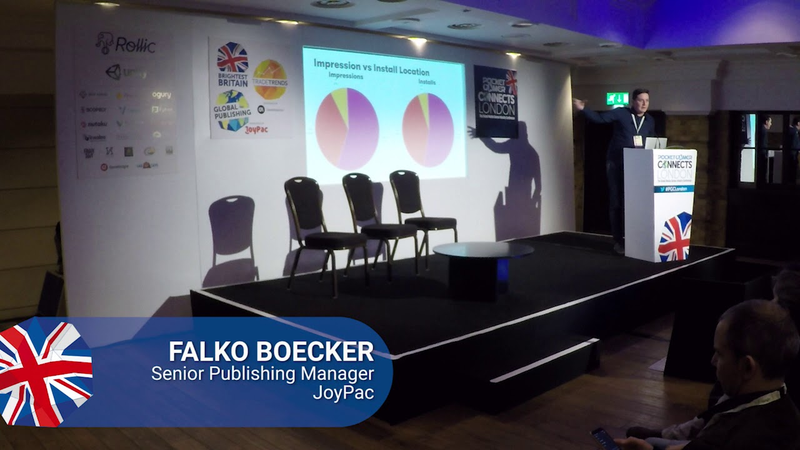
prove yourself wrong as well the third example I want to look at the impression versus install ratio so this is fairly similar so for any for 57% of the impressions for our ads in China we get 54% of the installs from there while for the u.s. is 35 versus 40% so you can see we're slightly better at advertising in one region over the other but they're pretty close together that's how they that's that's how it should be why I come to that in a second but it's a little bit different on cost in China only 46 percent of our cost when it comes to you a are in China so that means that maybe we're a little bit better at advertising there it also means that you can maybe get impressions they're a little bit cheaper but what this number is helping us judges the
cultural differences between the different versions of the game right because if you have a game that is very specific to a concept a metaphor and metaphors do a lot of the work for you in hyper casual that is only understood in one region so if you're having a game that that is very much about something very Western in its core you might see vastly different numbers if you look at something like the impression to install ratio versus China on the other hand you have games that are about traffic peeling fruit the concepts that kind of are understood internationally and those things will always help you a little bit when it comes to marketing your your games so to wrap this up is like first of all data is important like even if you if you are like a really core game developer that thinks that K it's all about the feeling it's all about the coolness data can can
be fun it can be fun to look into that and try to figure out like what the people that are playing your games are like and it also can tell you a little bit a lot about what to focus on what people are looking for in your games what makes you unique as a game designer and what you should focus on for the current games once you're still working on them but also where to take those those games down the road if you're working on new titles it's also about challenging like coming up with assumptions so you can dig around in data just randomly and see if something sticks out but most of the times it's better if you're having a clear hypothesis hypothesis that you want to prove but as I said sometimes that's dangerous because sometimes it might look a very specific way on the first time you can kind of like find data to prove anything but you always have to question yourself and see if that that idea falls apart once you're starting
challenged with with other data and this is only like a short overview mostly on the marketing side but once you're going into the game side you can dig much deeper you can have specific tracking points after you should for example have a tracking point after your tutorial how many of the players that come in drop out during the tutorial it can be a huge amount of people and then maybe you're teaching the players the game the wrong way so it is very much connected with marketing and and game designs so bring those people together especially if you have a good data analyst you have to get these people to talk and you have to kind of like build up your hypothesis and then work into that to see yeah which ones hold up to to scrutiny and which ones fall apart once your what once yours questioning yourself and this is pretty much it I'm trying to keep it short thank you very much but we do have
times for good time for questions so if you guys want to ask I thought only Finnish people were shy and never ask questions apparently apparently that the English people are also very shy I have a question though if that's okay well I wanted to ask you you were talking about the cultural differences when when dealing with data could you tell a bit more what happens between Asia and and China and and Western countries when it comes to user retention and more on the design side a little bit sure it really depends on the style of game that you have and hyper casual I think people are more afraid than they should be when it comes to the to the cultural differences you don't have to redesign your game and make everything look red and have menus that
are full of stuff for your hyper casual game to work in China sometimes there are reasons for that if you look at a mid core game you see tons of different kind of like modes and and options on the screen which goes along with the kind of the way that people play the games there so they want to see the depth of the content pretty much from the beginning but other than that in hyper casual it doesn't really matter as long as your metaphor holds up and that I think goes goes globally where don't make a game about racing if it's hyper casual make it a game about traffic so like it's both have cars but one is very universally understood while one is more specific and there of course there are some exceptions right in China you see a lot of games that are based on Chinese history and folklore and those don't work that well in the in the West and sometimes it's the other way around but if you have like hyper casual which is very much down to the core game playing the fun based experience you don't really have to worry about
changing that too much and it's the retention the same I mean like I kind of have a feeling that the Chinese if they love you they love you right okay if they hate you they are not gonna be of another two minutes on your game that is true yeah there there is a difference in retention there we see that Western players are a little bit more sticky when it when it comes yeah to to these kind of games in in general China like morality has a huge impact on that though once you're established in the charts and once people are start talking about it you will see a lot of like stuff coming from that and sometimes it happens randomly I've seen that with mobile games I've seen that with steam games that the community just discovered a game and suddenly it went through the charts and people went crazy even though wasn't officially released in China and in those games they're incredibly sticky yeah hello I just need to break the
stereotype that Finnish people don't ask question in another talk they were talking that hyper casual games have it easier to like enter the Chinese market because the government licenses aren't like a streak with those the games that the only moment us with ads I was just like wondering like what's your take on that or is that the case or is it that black and white and yeah in a lot of ways you still run into the same problems right you still if you have any purchases for sure you need the the license especially for Android on iOS you can kind of get around that and just release the game although that might later impact your Android license a little bit so yes you can one Theory's just remove all of the in-app purchases and go straight up at monetize that works it still helps having a local partner a partner that has a local
office because it gives you access to a lot of other UA channels and a couple other community channels that you can't use otherwise I think for iOS though like I think you people should focus more on iOS iOS is much stronger in China yes there are millions and hundreds of millions of Android devices but a Chinese iOS user behaves very closely when it comes to spending eCPMs to a u.s. iOS user why an Android user is a completely different story but there you really have to go for mass but going for mass also means you have to have somebody who talks to all the different Android stores because you don't have Google Play so you want to be at one at least eight if not ten or twelve of them so there's a lot of work for a more risky risky kind of element off the market what I'm sorry that's the time sink your FICA thank you [Applause]
[Music]
Summary
Effective hypercasual game publishing relies on a disciplined approach to data analytics, moving beyond surface-level metrics to inform design and marketing decisions. Publishers should integrate tracking tools early in the development cycle to build a robust historical dataset, which is essential for evaluating performance across different regions. Key performance indicators—such as revenue sources, organic versus paid install ratios, and impression-to-install conversion rates—provide critical insights into player behavior and market viability. However, data must be interpreted with caution; for instance, organic install rates are often heavily influenced by store visibility and regional features rather than just the inherent virality or "K-factor" of a game.
When analyzing monetization, developers must align their game structure with revenue models. Level-based games often favor interstitial ads, while endless titles may benefit more from rewarded video integrations that support meta-game economies. Furthermore, while cultural nuances exist between Asian and Western markets, hypercasual titles often succeed globally by utilizing universal metaphors—such as traffic or simple physical tasks—that transcend regional boundaries. While Chinese players may exhibit different retention patterns compared to Western audiences, the core gameplay experience remains the primary driver of success.
The analysis emphasizes that data should be used to test specific hypotheses rather than as a tool to justify pre-existing assumptions. By tracking granular events, such as tutorial drop-off rates, developers can identify friction points and refine game design accordingly. Ultimately, the most effective strategy involves fostering collaboration between data analysts and game designers to ensure that quantitative findings are balanced with creative intuition. Navigating the complexities of international markets, particularly in China, requires a strategic focus on iOS platforms and an understanding of the distinct behaviors of different user segments to maximize reach and profitability.