1 free read left. Create a free account for unlimited reading + AI research.
Create free account
Superstar Session: Building Blockchain Games & NFT Businesses for the Masses, Not the Crypto-natives
Key insights
6 takeaways- 01Blockchain technology enables sustainable revenue models by facilitating capital raising through early asset sales and the creation of secondary markets for in-game items.
- 02The transition from renting digital assets to true player ownership is the primary driver for enhancing long-term player engagement.
- 03The industry is shifting from Ethereum-based development toward more scalable and cost-effective layer-two solutions, such as Polygon, to address technical and energy-related barriers.
- 04Developers must overcome significant cultural resistance from traditional gamers while addressing the current reliance on crypto-native users to expand their player base.
- 05Mass adoption of blockchain gaming requires replacing complex multi-step wallet and bridge processes with simplified tools like social-login wallets and streamlined on-ramp solutions.
- 06The future of the sector centers on the development of 'open metaverses' where interoperable assets function seamlessly across multiple gaming environments.
Ask AI about this video
Transcript
[Music] [Music] next up we have a yan from bentley um talking about something that we talk a lot about in in these circles which is uh nfts and blockchain for for the masses not just the crypto natives [Applause] thank you john um so yeah my name is jan i'm from deadly and i'm going to talk about bringing blockchain gaming to everyone short background about myself super short i'm more with a crypto background than a gaming background i fell at the crypto rabbit hole in 2016. um my web 3 journey has been like trading right i don't know but uh if people have been trading since 2015 or
2016 you have seen this like train ride up and down and then we've seen multiple different things with crypto from trading icos d5 but now very hot is ft space the gaming space and the metaverse space and i believe in the future it would also be the dao space so with communities created around cryptocurrencies i started working at delta crypto portfolio tracking application sold to etoro in 2019 and then i joined wendley a year and a half ago shortly about vendi as well so vendi is a regulated company backed by by investors and it's basically a layer between blockchains and the games or between blockchains and projects because we also work for brands but 80 of our customers are blockchain games and then with the games they directly connect with the consumers of course finally the different services that we have are wallet services so for instance we work for the sandbox when you create
an account on the sandbox you will get the vendi wallet in the background we also have our own nft marketplace with a lot of game assets nfds and we have a complete set of nft tools apis minting apis nft analytic apis and even a shopify app to sell nf3 nfts through a web store we now have more than two million end users um yeah some of the games that you probably are familiar with most of them are being built on polygon some still on ethereum but migrating to other blockchains uh binance marching is big as well avalanche we see it popping up more and more um and then solana as well but yeah it's super important to decide on which chain you're going to be building we saw a lot of migration now already from ethereum to the other chains and there's also something that i want to share at the end of the presentation it's something that we launched with vandy i don't know if you sell it john but uh yesterday uh through email and in our twitter so okay the talk
that i want to have with you is bring blockchain gaming to everyone but first i want to ask you a few questions to know here because i've been talking at the event with people that develop games and not everybody is a big fan of nfts and i'm building their games on blockchain so my first question would be who here is developing a game on blockchain already okay so let's say twenty percent another question who's against nfts or who's not like in favor of adding nfts to its games okay only one person okay cool that's gonna be an easy crowd then thanks i wanna talk about two things so first i wanna talk about why blockchain matters for the gaming industry um and then the second part is how you need to or what you need to think of when you build a game on blockchain so first of all why why considering blockchain for your game i think what we've seen in uh in the past months
and past years is that blockchain or nfts have been a great way to raise capital for your game or for your game development if you see that the sandbox with their land sale there is more than two million in dollars other games did as well so selling tokens but also selling nfts before the game goes live selling that narrative and then raising from your community of potential future gamers or investors gives you already a lot of money to develop that game secondly it creates more economic value for publishers and gamers so you create within your game you create economies imagine that fortnight that the skins were nfts and that people were trading skins and owning those skins then every skin that has that would have been resold on their marketplace would be um yeah revenue stream for the gamer directly but also for the publisher so that's something that we're gonna see with nft and games it changes the economy and then
super important for me is that with nfts we're gonna shift from renting to owning our own assets in the game it doesn't make sense anymore like in the real world we all are used of owning our own assets we own a house you own a car we own stuff we own our clothes and with a game it's and the digital economy is going to be the same people want to own their things they want to own i don't know a race guard and they want to play with that race car in different games or if they're done with playing with that race car they want to sell that race car to somebody else so that their efforts are not lost anymore and it's also a great marketing strategy if you have people that own assets within your game or that can use assets of your game they're going to be yeah brand building your game to be able to sell their assets when they're done gaming or to hire the value of those assets and then also super important like when you see innovation and i'm sure you all work in the gaming industry you saw that gaming industry is always first when it comes to digital innovation and other innovations and it's going to be the same with um with with you play to earn
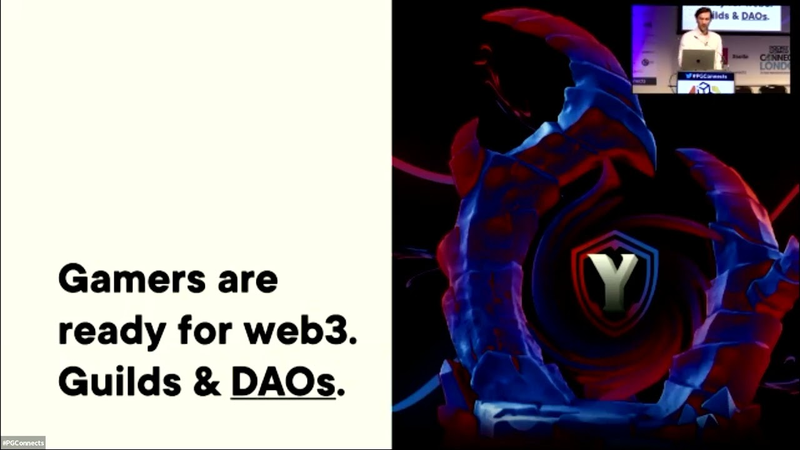
mechanisms mechanisms or nfts and blockchain gaming and i think the best example is guilds and taos it's like taos always existed in the gaming industry but those were called guilds and now we see that guilds and taos are gonna yeah merge more and more together for the people that don't know maybe a dao is a decentralized autonomous organization so it's basically a community that is rewarded with a token for doing stuff and working together on positive things all right so a few things to keep in mind when you want to build a blockchain the first one yeah i have to talk about it is a lot of game publishers receive a lot of backlash about nfts um a lot of you will receive backlash from gamers as well if you already have a game and then introducing nfts it's super important to educate your gamers accordingly so yeah educate them you don't have to start with selling nfts before you tell them anything about what is nft maybe
you could airdrop them nfts maybe you can airdrop them tokens so that they already are onboarded without even having to pay something but if you want to sell nfts to fund your next project within your game just educate your players otherwise you're going to have backlash like um yeah stalker and and team 17 had from their gamers and then remember also the free to play earlier we heard it's it's it's hard to predict that it's going to be the same as with free to play where everybody was against free to play and then free to play was used everywhere um it's hard to say that play to earn or blockchain gaming is gonna be the same but it looks the same at this moment like the future play had also a lot of backlash in 2008 and then what i mentioned earlier as well is know when to use blockchain and which chains to use so when to use blockchain you do you need to have every transaction and every thing that happens in your game on chain probably not some stuff can exist off chain and then you want to have check-ins on shade and also the type of chain is
super important i'm like super tired and i think john you hear that as well is when people say the sustainable effects on on blockchain are a killer and and that's why we don't want to use blockchain but this is like already sold for three years with year two solutions so choose the right solution and that that is not an issue anymore so sustainability is not an issue anymore if you still want to build on deterio yeah and nobody wants to build on ethereum but ethereum is a great chain and i can still hear one solution but you have super high gas fees and that is a chain that is not super sustainable for doing transactions but a chain like polygon if you do a transaction on polygon it costs 0.0001 and it's like in two seconds um um jade okay now the second part is how and how will we add up the masses and not only the crypto natives because now we saw like blockchain gaming we see a lot of good cases already but most of them are built from the crypto industry and for
more crypto native people with their metamouse accounts and logging in and an earning token so how do we want from the gaming industry adapt those um yeah those gamers what we already have from the game industry is important we already have communities of gamers i think gaming has the strongest and biggest community next to um that's probably uh music communities but gaming is super weakness creators as well there are many creators in the gaming industry many good cases many good games with millions of of users and of course you already have a lot of dev tools like unity or real engines to build those games so now what do we have from the crypto industry we have those there two solutions to make scalable blockchain games we have grants so a lot of blockchains give grants to potentially good games to develop their game on that specific blockchain so there is money to build those there are on-ramp solutions for people
that want to get into the game and and don't own ethereum or btc or whatever other token there are many good on-ramp solutions and there are many integration tools like yeah that we would be one of the integration tools for games to uh to tap into blockchain good examples um avogadro i don't know if who here that that would be good for me to know who here knows the game i've got you okay not that much it's like the number one big game on polygon i'm a super fan of uh of avigacious your digital bet that you need to bet and now they're building their own metaverse uh so it's super cool it's a bit geeky the sandbox almost everyone cool looking forged okay also like big one so rare a bit different okay actually infinity nice amber sword yeah a few okay cool amber sword is really a promising game as well but those are in my opinion and there are many others but those are the really good cases of blockchain gaming so what
do we need uh we need more tools people that are here to to get build tools in the space we need those tools uh to adopt the masses we need education so this is uh i think i should have put it this on like the first one but education is going to be key to uh to educate people on what is blockchain gaming and why yeah what is a token etc and how to be safe with it a legal framework but that's not something that i want to dive deeper into but definitely that's something that's going to be needed in the future as well interoperable assets so what i mean with interoperable is that a game asset that you use in one game you want to use it as well or be able to use it in another game or in another metaverse like the example with the car if you drive it in one game you also wanna be able to drive it another game so that means that's completely shift in the mentality of game building you're gonna open yourself up towards gamers having assets from another game maybe a competitor but driving with that same asset with that same car in the in your game then we need open meta versus i think
that's going to be the big challenge with facebook now if facebook or meta is going to build an open or closed metaverse they say it's going to be open but yeah we really don't know if it's really going to be open but that openness is going to be important to let people build those minigames within your environment to build on top of your assets on top of your economies um that's going to be yeah the next big thing and then killer games we heard it earlier as well like the killer apps we now need those killer games that on board like x infinity was one of the killer games in my opinion the sandbox will be one as well uh one once they are yeah live and then better onboarding experience i think this is uh still the biggest issue for games is or blockchain games is to onboard the masses in a simple way and to explain this i'm a huge fan of arigato so i'm a big big big fan but i want to show in a few slides the journey that i had um starting playing avigarchi so first to play habigachi you need a token the ghost token to have that token you go to binance you purchase that on a crypto
exchange so you need to make an account you need to trade um yeah you need to deposit euros then trade to a stable coin or to ethereum then you need to trade to two ghosts but okay you have ghosts you stand that goes to your metamask account your metamask wallet for this uh you're gonna pay an ethereum transaction fee um you're going to wait yeah a few minutes and then it's going to be on your metamask and you're going to see it popping up in avigachi then avigachi you have your ghost but you need to send it to polygon because avigaci is on polygon and then the token just purchased some violence is on ethereum so you need to bridge it to polygon you need ethereum as well because you need to pay for that transaction to bridge it to another chain you don't have ethereum in your wallet because you just started the game so you go back to binance you buy ethereum you send it back to your veda mask account and now you have ethereum and you can bridge that ghost token to your polygon wallet in metamask and then i i didn't show it here but you need to add polygon as one of the chains to your middlemost wallet as well which is also not super easy now you have ghost you
can stake them on the game which gives you friends another token in that game with those friends there and ghost they're both on automatic chain but each time you do a transaction in the game you need to pay a super tiny gas fee but for that gas fee you need matic so you go to a decentralized exchange where you transfer or you swap that ghost for medic which enables you to pay for every transaction in the game you add that matic to your wallet and you're ready to play and you can enjoy everybody so that's pretty complicated to onboard the masses let's say and uh in this journey so we need more easy to use tools um i want to plug apparently in here but definitely you just create an account by linking to your google account on vanly in the wallet you with one click you create a polygon wallet you purchase from within your walletmatic you swap medic to ghost within your wallet as well so that's like four or five clicks and you're ready to enjoy avogadro but still too many steps let's say to start
enjoying the avogadro game so once we have all this we're all gonna make it um how can we help we have two big programs i would say a new one is our accelerator program which we're gonna launch in a few weeks maybe a few months but it's really helping games and game ids to develop on top of blockchain with our tools but also having token economies raising funds doing stuff like this will be in our accelerator program and then the other services that we offer are our whole deck suite of uh of tools and then one last last thing that i promised we launched something yeah which is special first first type of nft that exists in this way so it's a fully interoperable nft it's called the meta ring and a meta ring is connecting all different partners and meta verses and with the middle ring you're going to have utility in all those meta verses so imagine they're all open and with that middle ring you're going to be able to access specific games minigames platforms within a
versus concerts events but you're also going to be able like in the sandbox to have your own avatar that's connected to the metering so we're creating a community and setting or showing the example of what is possible with an interoperable nft the sale is going to go live in two weeks or if you're interested you can always check the website or go directly to metaring.one website has been launched yesterday so yeah it was super fun and then the sale will be in two weeks already yeah that's it another another precise uh presentation there's three minutes for questions okay so you have any questions for yan anyone okay if we haven't i'll have one so you want to go a little bit more into what the meta ring is so what exactly what exactly am i getting for my method what exactly am i going to do with it okay cool so yeah with the bannering we already partnered with 12
different blockchain projects so most of them are metaverse projects or blockchain games and then with the mentoring you're going to be able to access a lot of perks so every metaverse or every minigame gives their own perks and then the goal will be to grow this ecosystem into a bigger ecosystem um so see it a little bit like a meta key but also something that can really be used within the game and we're so we're building uh specific places in the sandbox in vulcan forge but we're also working with them to give free airdrops to the users so let's say that one specific game on an airdrop an asset that you can play with in their game they will be able to air drop it to bitter ring holders and then we do the communication to them hey check out this game and you get a free asset in that one so this is something as a question i guess that said a lot in in blockchain game space about interoperability and you're sort of building sort of a yeah it's an interoperable sort of ticket and we also talk about nfts being tickets so this is sort of doing a bit of both it's a ticket that gets you into multiple um experiences
and and also sort of acts as a um sort of vip sort of ticket as well that you're getting some extra services in there so pretty cool exactly good thank you very much thank you [Music] [Music] you
Summary
The integration of blockchain technology and non-fungible tokens (NFTs) into the gaming industry represents a significant shift toward player-owned economies, though current adoption remains largely restricted to crypto-native users due to high technical barriers. The primary thesis is that for blockchain gaming to reach the masses, developers must prioritize user-friendly onboarding, education, and interoperability while leveraging existing gaming infrastructure. By moving away from complex, multi-step wallet and bridge processes, the industry can transition from a model of renting digital assets to one of true ownership, which enhances player engagement and creates sustainable revenue streams for both publishers and gamers.
Key findings emphasize that blockchain provides critical utility for game development, including capital raising through early asset sales, the creation of secondary markets for in-game items, and the establishment of decentralized autonomous organizations (DAOs) to foster community governance. However, the current onboarding experience—exemplified by the cumbersome process of acquiring tokens and managing cross-chain assets—remains a major friction point. To overcome this, the industry must adopt simplified integration tools, such as social-login wallets and streamlined on-ramp solutions, to minimize the technical burden on non-technical players.
The scope of this analysis covers the global blockchain gaming sector as of early 2022, focusing on the transition from Ethereum-based development to more scalable, cost-effective layer-two solutions like Polygon. The methodology relies on industry observation and practical experience from service providers, noting that while sustainability concerns regarding blockchain energy consumption have been largely addressed by modern layer-two protocols, the industry still faces significant cultural resistance from traditional gamers. The conclusion highlights that the future of the sector lies in "open metaverses" and interoperable assets, where digital items can function across multiple gaming environments, ultimately transforming how players interact with and derive value from virtual worlds.