1 free read left. Create a free account for unlimited reading + AI research.
Create free account
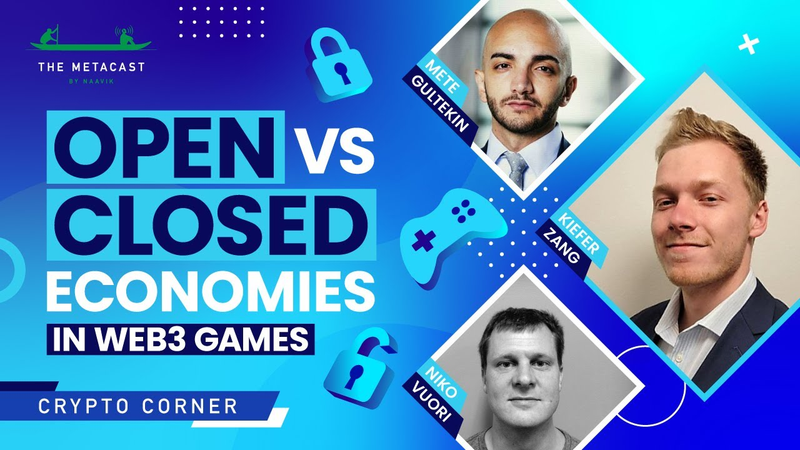
Open vs Closed Economies in Web3 Games - The Metacast by Naavik
Key insights
6 takeaways- 01Sustainable models must prioritize core gameplay utility over speculative financial incentives to ensure player engagement remains high even if external market rewards fluctuate.
- 02Developers should shift away from unsustainable play-to-earn models toward systems that mirror traditional free-to-play spending motivations.
- 03Developers must implement mechanisms to protect the player experience from professionalized, non-contributing participants who seek only to extract value from the ecosystem.
- 04Web3 gaming economic stability requires developers to act as central banks, meticulously managing token inflows and outflows to prevent systemic instability.
- 05Economic health is best maintained through the strategic use of faucets and sinks to control inflation and the potential use of dual-token models to separate medium-of-exchange functions from long-term value accrual.
- 06Resilient ecosystems should treat tokenized assets as flexible building blocks rather than the primary product, drawing on historical precedents like Second Life to manage currency stability.
Ask AI about this video
Transcript
[Music] hello and welcome to the medicast crypto Corner brought to you by navic I'm your host nickovoy today we talk about game economies in web 3. one of the exciting and interesting aspects about building in web 3 is the notion of digital ownership of actually owning the assets that you're playing with but when we as an industry up until this point at least have been talking about digital ownership plate to own uh terms in that in that vein we are generally talking about non-fungible tokens nfts which are unique in-game assets uh there are lots of flavors amenities cosmetic items like skins battle passes playable characters land fenu ownership Geo nfts Clan membership the list goes on and they're actually a ton of really exciting and interesting applications for nfts in game design and we're seeing new use cases on a daily basis and we will come back to nfts in a future episode to talk about the Innovation that's happening
there but today we're talking about something that doesn't get talked about very much uh up at least up until this point today we're talking about fungible tokens so in other words tokens that can be swapped one for one with another token so this is your in-game currencies essentially think of a dollar it's exactly the same as another dollar gold coin same as another gold coin gem for a gem they have the same utility the same value no one gem or no one coin is different to another and you can just swap them into changeably and the reason we're talking about this today is because one of the big promises that we've heard about web3 is the notion that players can retain some element of economic value for all of the effort and energy that they put into gameplay um the analogy that I like which is not a Perfect Analogy but um the analogy that I I like to use is the old physical model of buying a new game you know whether it's a cartridge or a disc or whatever from Gamestop you play it until you're done and then you sell it to a friend you sell it back to the store you put it up on eBay and you
retain some fraction of the original purchase price um you're not playing the game to earn but because you own the game you actually physically have the game you are retaining some residual economic value but with the current Paradigm in web 2 you know digital downloads DRM that notion of player retained economic interest is completely out the window the developers and the platforms on which the games are played are retaining 100 of the economic value of that game and that brings us to today's topic you know web3 changes this equation at least in theory and it allows the players who are playing the games to retain some level of economic interest in their digital assets both the non-fungible ones which are the unique assets that we talked about and we generally talk about as an industry but also the fungible ones the in-game currencies uh that they're accumulating through you know gameplay time spent in the game trading with other players winning tournaments things like that but the big question that we're talking about today is just because you can open up your economy doesn't mean you should
um and so to shed some light on this question we have two incredible guests who have deep knowledge designing in-game economies they come from the web 2 world but they are building the business in web 3 thinking through what does it mean to build you know game economies whether it be open or closed and so our first guest here is Vader we are joined by hopefully a positive force um he uh does game economy design and Consulting through his firm Vader research we're going to have show notes that'll link out to that and he writes on the subject of web 3 games on a very excellent medium blog uh he's also a friend of the Pod he's appeared on the show before with the other Nico and that is in fact how I got to know him and reached out to him so Vader it is great to have you back welcome to the pod thanks Tinker thanks for having us awesome and our second guest is Kiefer Zhang he works at the very appropriately named economics design where he also works on game economy design and Consulting he speaks regularly on the subject to conferences I met him last week at one on web3 gaming and he also
writes about the subject at the economics design website again it'll be all in the show notes Kiefer welcome to the pod thanks for having me looking forward to getting into it all right well that's exactly what we're gonna do next so we are going to Dive Right In um I gave the long intro because I thought it was important to kind of set the scene around what are we talking about when we talk about game design and and the economy nfts are as at least I believe what we typically talk about when we talk about digital ownership but I actually think that there is a huge opportunity to talk about the fungible token and the the in-game currency side of things so let's start by kind of defining what we're talking about here with open Rec closed economies so key for I'm gonna go to you first what do we actually mean when we're talking about a closed game economy and why has that model of a game economy emerged as a dominant game economy design both in web 2 and still to this day in web 3. yeah so I would Define a closed economy as one where you're really not allowed to trade items or currency that are within
that game economy for any kind of item or currency outside of that particular game but it also further break this down a little bit into some subcategory is I see within closed economies that are important to understand and so at one level you have situations where there's no player to player trading it might be a completely single player game or it might be a multiplayer game experience but the hour there's no actual peer-to-peer economic interaction but then another level that I would still say is within a closed economy is where you have a player to player trade but it's only for items and currencies that are locked within that particular economy so think of most MMOs are fitting in this particular subcategory and so here you do have black markets arising so you have uh gold farming and gold trades but inherently these kind of practices are not condoned by the game studio and so it's more of breaking the
rules of a closed economy rather than truly being open and in terms of why it's been a dominant type um it's really I think it comes down fundamentally to risk so there's there's really low risk to implement when you have a high level of control over your economy and so when you're going out to a more open economy this brings in a lot of risk on the actual implementation strategy now these are great points and we're going to get to those uh in a second we've got some follow-on questions going a lot deeper on both this notion of you know not being condoned you know by the the game developers when you do see some of this um uh you know peer-to-peer player-to-payer trading happening and also the notion of risk because risk comes in many shapes and sizes and forms and I want to definitely dive into like what is that risk um and how do we actually uh think about that as a game developer okay great so hold those thoughts we'll go deeper into those but in the meantime let's go to Vader here um your turn let's talk about defining what is an open economy and you can't
just say it's the opposite of a closed one um what is an open economy actually mean what what does it enable players to do and let's touch a little bit on what are those risks that kiefers were you know kind of alluding to here what are some of those risks for a developer when they try to implement an open economy and it's it's quite rare so we don't have a ton of examples of uh of really looking at that but yeah talk to us about open economies and what they mean to you sure so like Kiefer explained you know with close economies there's a one may money transfer relationship where it's a it's a transfer from the player's pocket to the developers pocket but not the other way around um open economy is basically enabled for a you know two-way money transfer um both from player to the game that will operate from the game developer to the player um so like in an open economy some or all in-game items tokens assets and if these could be tradable in exchange for real money so an example is like I play
Diablo as I kill the MPC beasts I earned the in-game currency and some loot um in a closed economy you know I can't sell the in-game currency or loot in exchange for real money and I can either reinvest them back into the game economy so that I can you know earn like better loot better items better weapons um or um I just don't do anything with them and so that that loot I earned or the tokens they just fat price out of the the game economy but like if we think about a Webster Diablo um where like as I kill the MPC beasts I earn the in-game currency which is a um you know erc20 cryptocurrency token and I also earned some item loot which are nfts um so because like let's because we assume that this battery Diablo is an open economy I'm actually able to sell these tokens and nfts in exchange for real money you know could be BDC could be USD but I I actually get
some real monetary value um so suddenly as a player I'm actually making real money by just playing a game and killing killing beasts um but when you think about like where does this money coming from that's where things get pretty complicated because essentially the game developer has this power to print its own print and distribute its own monetary assets to the players which is a very powerful powerful um tool and that's what makes open economies much more complex than the closed economies because an open game economy has to solve problems that a close economy has but also has much more have much more parameters to balance compared to a single close game economy and in terms like what's what's exciting about um open economy like where the opportunities are is like um when you think about what what makes a game fun uh like part of what makes a
game fun is the reward distribution mechanism um like in Diablo every time I kill a beast you know I earn XP I level up I earn maybe a better sport um I feel like I'm recognized and appreciated for for my behavior and um the randomness of what I can earn when I kill a beast even like makes things more spicy and more exciting now imagine that their Wars are now in in real money or in tokens and empties that could be you know converted for for in exchange for real money um things get even more exciting and spicy because like like imagine uh imagine a battle royale game where based on your survival ranking you are actually earning real money or monetary assets um you know it's going to be higher or lower based on your sort of whatever ranking um things just get much more exciting um it makes like the core Loop more exciting engaging and addictive to be honest um addition like another way to look at it is um you know some because some of these
in-game nfts are traded on the secondary markets they can go down and up in price and um the fact that they can go up in price subconsciously might convince a free-to-play whale that wait I'm not just spending you know uh ten thousand dollar on buying a skin that I'm not going to be able to use outside of the game this is actually an investment for the future nfts are doing well and and you know this game can can be successful in the future um even though that might not be very accurate just that subconscious way of thinking might um might enable the game developer to better engage and monetize players all sorts of players whales free-to-play players and and even speculators which we I think we will talk about later but so in short you know open economies offer developers better tools to engage and monetize their users but it is a double a sport um it you know a game to all pretty easily mess it up and then if you mess
it up it will plead to play return and a lot of money left on the table oh so much to unpack there I used one of my favorite words which is spicy it's a term I use as well for why we think our game that we're building um benefits from an open economy that is you know we are building an open economy uh for our game and we think it makes it more spicy exactly that but yeah you're so right it's a double-edged sword uh what a great phrase like it you know on the one hand it it offers something quite exciting and quite uh um an unlock essentially for lots of different player personas and different kinds of psychologies and we're going to talk about that we have a whole segment on player personas and how different kinds of psychologies uh respond to you know the open or close economy um but yeah exciting things to dig into we have so much so much more there so okay great well thank you so much for kicking that off so I'm gonna I'm gonna kind of um take it back to the web 2 Paradigm here um and call out from the very top here that it is not impossible
to design open economies of web 2 right and in fact you've already alluded to a couple of examples here that I was going to bring up too which is you know the Diablo auction house uh gold farming and you know World of Warcraft in particular but lots of other games in the same genre um I know Zynga poker extremely well Zynga poker actually had even though it's a casual game had a very similar Paradigm where it's like people could buy gray Market chips or entire accounts um for a lot cheaper than what Zynga offered uh in game and so this notion of kind of open player trading has been around and some of it's been conscious and some of it's been um accidental if you will the conscious choices are very few Diablo's auction house and a couple of others but Diablo's probably the biggest example in my mind um and then the kind of The Accidental ones or the ones where the developer doesn't condone it to to use kiefer's term like you know that's frowned upon and typically you're trying to shut that down certainly we were playing whack-a-mole at singapoker when we were trying to figure out like okay there's this huge Market in Indonesia um that is basically selling chips for
like a tenth of the cost and that's hurting our economy and hurting our monetization right um and that's part of the reason why developers don't don't like that um so tell me talk to me maybe we go back to Kiefer on this one uh because I think you brought a bunch of these up here in your your intro why is it that developers haven't embraced more openness in their economies like why didn't let's talk about Diablo's auction house because that's you know an example I think probably most of our listeners know the best um why did that not work why did they because they ultimately shut it down why did that not work what were the the pitfalls there and how could the developer have embraced it and is there something in web 3 that uniquely makes that problem either go away or makes it easier to mitigate yes there are a few problems with the Diablo 3 real money Auction House implementation and I want to start off by clarifying that I think this is really an implementation issue not something that's fundamentally wrong with trying to go with an open economy and so one of the components here is
looking at how do you avoid having a situation where you're balancing retaining some value to Assets in your economy so if you have assets that are trading four-wheel value you want them to retain that value you want to have some level of of importance to that ownership and purchase so you want to avoid I call it like a race to the bottom issue so if you're Distributing assets that have value how do you prevent a bunch of people from coming in um playing the game to get all to get a huge inflation of these new assets and then pushing the price and just crushing that price but then balancing that against you have all these other players who maybe they don't want to interact with the market maybe they just want to play the game they don't want to feel forced to have to buy something and so you need to make sure that you're able to provide them with a good access to a regular progression through the gameplay without being too pushy on on a monetization pinch and the with the Diablo strategy they they went kind of
all in on the the real money component and players felt that push of uh there's there's such a limitation on the ability to get the items that you really need to go far in the game um that they they were not properly catered to and so here you can you can have an open economy but it doesn't mean that you have to go All or Nothing in having uh the implementation for your nfts so you can have uh take that to the web three context um for just generalizing tradable versus non-tradable you could have some portion of assets that are that are tradable and so this is distributed based on what do you think the real demand is from players that want to purchase these to have some progression but then also having a class of equivalent non-tradable assets where since they're non-tradable you don't have to care about the overall inflation rate you can look at the in the distribution rate per individual user to tailor that
individual gaming experience so that they don't feel left out when you're implementing this more open economy um you also want to look at what happens when you have the ability to buy Power uh in the game so specifically with Diablo we're talking about um a an open economy that they're going with a you a route where uh where the tradable assets have utility which is which is a risky strategy it's uh versus just a tradable cosmetic route um and so you have to think about what what are the implications when you allow that um this brings in the big pay to win component and also thinking about how do you do this without undermining the core Loop of the game uh you don't want people to be able to skirt too much of the content or mess up the content pacing and so making sure that you're bringing in components where you're balancing the ability to purchase these advantages uh or powerful assets while
retaining requirements of continuing to go through kind of in Diablo's case kind of the grindy core Loop of leveling up in order to properly utilize these assets and not ruin the game experience Vader a couple of things are you know this notion of the very beginning actually where Kiefer started was you know it wasn't necessarily that the problem was the open economy per se it was the implementation problem um you know implementation is everything of course in in uh and you know you got to have a good core concept A good thesis you know and obviously a good core Loop good game design and then the implementation piece is critical um I'm actually not privy to the original design decisions that the you know Diablo 3 team made regarding the auction house but to me it always struck uh you know something that was not an afterthought but it was something that they put in later not at the very beginning and I wonder how much of implementation is forethought and planning at the very beginning stages of putting an open economy together would
love to hear your thoughts on that I know you've taken a lot of looks at web 3 games existing web 3 games and kind of thought through through and I think I've heard you speak on this and certainly I've seen you write on this this topic where it's like if you're designing the economy from the ground up you've got to kind of either design it from as a closed economy or as an open economy um and you kind of got to go down one now obviously you don't have to go all in to kiefer's point you don't have to embrace everything that that particular Paradigm requires you so air quotes requires you to adopt um but at the same time it would probably be a better play to think about okay we're gonna have an open economy what are the problems how do we actually Design This from the ground up more sustainably sustainability I think is going to be a big theme for a lot of what we talk about here so anyway long question but but yeah the the idea that like it's not a open economy is not a problem per se it's really how we Implement them and you really probably should be thinking about it from the very beginning when you actually designing your entire game economy yeah 100 agreed um it's because if you make some important architectural
mistakes early on there's just there's either no way changing those decisions or it's going to be very painful um an example is like which assets do you make tradable um whether they're tradable are they fixed in supplier variable um like a great example is you know actually land right um when they were selling the land I don't know um I don't know how how sure they were regarding the land utility um and so there were a lot of narrative baked into the land as if the landowners were going to get a lot of you know a good amount of yields and and increase in price um but and and at some point when they actually decided to and so the land was fixed in Supply then they they realized that wait land is going to be a core piece for the overall land game play so if you make it fixed and Supply then it's going to become um too expensive uh for for others and because it's kind of
expensive it's just gonna um slow down the growth um so why don't we either you know have infinite land or or increase the the number of land uh so that's just pissed off the community uh straight forward right because if that was the case why would the people spend the money to buy the land uh so I think um making getting the right architectural design early on um like having a plan on when you're gonna sell the token when you're going to sell the nfts what utility would these NFL have and even like without having you don't need to think very detailed about the utility but just think about whether like if I own this nft am I able to generate uh create new assets like tokens or other nfts over you know six months 12 months and what level of you know skill Randomness time would be required for that even like doing that overall uh simple design on like something like machinations or
Excel would that this give an idea on on the architecture so I I'd agree with like Kiefer that it's pretty important to have that model and and I would agree that like um probably the answers between open and closed economy where um having an open economy with with a lot of uh closed economy measures a bit similar to almost like you know more socialist uh countries got it and since you brought up Axia I think you know this is a great place to to talk about that obviously they're the 800 pound you know web 3 open economy gorilla in the room and so I always preface this statement with a I have a lot of love for the Scott Davis team they are pioneers in many ways they have done incredible work kind of Paving the way and opened up a path for you know web3 developers to to say hey like there's you know there's something really interesting here um and we should you know explore that further but we have to use the word ponzenomics here um not because Sky Mavis are actually Infinity like deliberately designed
their game that way I don't think so at least um certainly whenever they've spoken on the topic that's not something they say like hey we were looking to create this kind of pyramid-shaped scheme but but that's what ended up happening um you know with their Jewel token structure um you know AXS axias and and SLP and with SLP of course being the the fungible token in their economy um what what went wrong I know there's been we don't have to do a full deep dive on there's there's been plenty of podcasts and and papers on this topic but just at a very high level what went wrong in your opinion um with that particular model obviously they're still very much around and they've got lots of different game designs coming and they're you know kind of pivoting into publishing uh titles as well but what went wrong with the original Axia model how did that dual token model end up uh kind of collapsing on itself uh at a very high level what why do we start with the Invader actually on this one because I know you've looked at this pretty deeply and I'm sure you have as well keeper but I
just know that I've read some of Vader's stuff on this sure um I mean the short answer is the outflows for more than the inflows um and to to explain that like if I buy an axi nft I can actually earn back my money in say 30 days 60 days um and the axes are permanent so I can earn SLP infinitely um but you know when you think about where where the those SLP the tokens are coming from um the sky movies actually Infinity was minting them so in a sense it was by design it was like like a a Ponzi um and and the growth just made it uh worse and worse to be honest um but you know is it the fault of the dual token economy it's it's actually not it's more about like if we think about this um if I'm able to earn back my upfront actually investment in 60 days by earning SLP you know that is
unsustainable but if I'm earning my action let's let's assume that um axes die after one year right it's a temporary asset um and I can earn back my um X investment upfront investment only if I earn 50 of the or like more than 51 percent of the matches that I played over a year um then someone else actually loses right so there's more like zero-sum game element um so it's not the fault of dual token economy it's it's it's the fault of the overall design and I didn't want to get into the the width of the design not to get too technical but that's like the short answer yeah I know and that's exactly what I was looking for you know like at a high level what went wrong and it was this notion of sustainability and I think sustainability is a you know again it's a theme we will come back to over and over again but what you gave one concrete example of how they could have
made that economy design more sustainable like not the fault of the dual token economy but the fault of you know the haze just not sustainable to expect everybody to make a return in 30 60 days or whatever those numbers are uh zero-sum game another term here which I think is really interesting um what are other ways uh go to keyframe this one like what are other ways that you could take an open economy and make it more sustainable is it just a case of slowing down progress or you know making the pinches a bit harder is it about making it a zero-sum game um I think the work you use the word socialist at one point uh we're gonna get into price controls versus free market in a second actually um I'm very curious to hear how can you take tactically speaking practically speaking as a game designer what do you do to make your open economy more sustainable over the long term yeah so one component of this is making sure that you have proper control over inflation of all assets that you want to have value in your economy um actually did fairly poor job of this of they
controlled the inflation of assets at a player level but with no control over the number of players effectively they had no control over the overall inflation level of of their utility token it's also really important to consider where is the value injected into your economy and so you can think this could be a time for money trade-off could be a status for money trade-off depending on how uh how accepting your audience is of pay to win components could be a power for money trade-off but should not be focusing on a money for many trade-off like the primary motivation for a lot of that actually spending was uh buying just for the just with the expectation that you're going to get additional Financial rewards later and that's not a sustainable uh motivation to rely on to to prop up this economy you want to make sure that you have a strong core Loop that's not reliant on these Financial incentives so you can do a test on this just a kind of
rule of thumb test if if you strip out all the web 3 components all the financial incentives and look at what remains of it and think about how you would try to monetize that like step in is another example that comes up a lot of if you think about if you take out any sort of financial rewards there can you still expect people to be buying those shoes like there's no real reason for them to you'd have to adapt to a very different type of monetization strategy and so what that tells you is that the only reason people are buying those is because they're expecting a financial reward and they're expecting to get more money out than what's going in and that is going to give you that pontinomic structure and then last thing I'll point out on this is that you really need to think about having strong syncs for your assets again that are not financially focused but understanding that different sinks are going to be applicable to different types of players and I'm sure we'll get into that more when we talk about player personas player motivations you know this is something that uh you know you're obviously heavily touching on here which
is you know a lot of web 3 existing games were this played to earn meta where people are playing for financial reward and that ultimately isn't sustainable you know games are meant to be fun they're not meant to be jobs if they were jobs they wouldn't be games right so you know kind of uh it's a circular argument in many ways but but that to me is at its core you know as a game developer you're trying to make a game that people want to play regardless of whether it costs money or or you know you make money right um and so uh player motivations there are many of these right and key for you just touch on time for money status for money power for money there's lots of these kinds of and these are essentially the sinks right like you are expecting players to play putting money into the ecosystem and then whoever is extracting value from the ecosystem is hopefully doing so in a sustainable manner so that you know the people who just just want to play the game are just playing the game and they're doing what you do in web 2 you know free to play games where you're choosing to spend money for entertainment value not because you have any expectation of making that money back what are what are some other player motivations that you
can tap into here and maybe we're bleeding a little bit into the player personas piece here because um so we we had Quinn uh Quinn Campbell who's the VP of growth from Sky Mavis on uh on the Pod a couple of episodes ago and uh he had written about and we talked to him about they have 11 personas that they've identified in Axia and those 11 is only half of them actually play the game and the other half are part of the ecosystem but per Quinn are extremely valuable you know um they don't necessarily have to play the game they don't necessarily even have to provide liquidity but some of them are just part of the ecosystem because they're excited about the Dow or they're excited about staking or they're excited about social status um long-winded question to get to the notion of what can open economy game devs do to to tap into some of these motivations that actually do create a more sustainable ecosystem more sustainable game design a more sustainable economy um that is different in web 2 or
different to web 2 I should say and maybe jump to later on this one it's a big question nice um no step one how do you how they get a player's money out of his pockets to the treasury and step two when when there's a game developer you're rewarding tokens for a specific activity or nfts how do you make the player reinvest those earnings back into the game economy um and and you know Kiefer upon uh touched up uh touched on the the points about like you know spending for time pay to win um and I agree with those um I think like so like likely players would spend on for the experience right if they enjoy the game they might spend an experience and this can be you know um like Clash of Clans game they want to just uh skip
waiting um maybe it could be like more the Pay to Win element just because they enjoy winning not not maybe not because they actually want to earn more but they just enjoy winning um and so these are like I think a bit more traditional free to play spending motivations uh I think what what February open economy can bring is um it's like almost like wagering type model where um as a as a player you actually spend you want to earn money from the game yes I mean it's it's not good for the economy and we've seen this with axi um but if you design the economy in a way that you actually convert those who are spending money to earn more money into um deflationary players for the economy because they're actually the ones financing the ones um who are earning right and and there needs to be a lot of like you know um you gotta tap on the irrational part of
the player's brain to to nudge them to make these Investments and spending decisions we're trying to tap into some of these in our game some of these psychologies where uh you know you may not actually play the the air quotes core game um but you are playing the game in a different kind of way so in our game it's the notion of an owner class where you're actually managing a record label or venues and you may not be playing like the music management Sim but you're actually playing the game and you're a valuable component of it because you're you want status you want visibility um you know we're building in the Solana ecosystem and there's a there's a very famous uh Solana uh Persona if you will influencer called Seoul big brain and uh he's really into games and invests in a lot of games and he's he's a uh he's an investor and player in a game called phono finish game which is a horse racing game and he doesn't actually race the horses but he owns a stable and in that stable he owns a bunch of horses
and those horses are actually managed by real human beings that he employs to manage those horses and that to me is a great example of what web3 enables it enables players of very different kinds who do have Financial motivations and they may not have Financial motivations to earn but they actually have so much money like they're so crypto rich or so you know just rich in general that they derive pleasure and entertainment value from being an owner class in this ecosystem and from being seen to be these really you know like hey I'm this guy like here's who I am I am an owner class and there can't be that many of those I'm curious to hear your thoughts on how many of those those players that's really what I was trying to get out with you later like how many of those types of different classes of players can you tap into um again axis identified 11 personas of which only half or or players um I bet you there's a whole bunch more that are enabled through open economies in web 3 not because of the financial
earning motivation but because there's more spiciness at play right like because there's real money at stake like your point Vader was like very well taken wagering model there's a wagering model like I'm almost like betting but betting can win or lose right whereas I think with the Axia model kind of uh fell out on its face because you could never really lose or the expectation was that you know price always go up right and so if I play I will always earn more as long as there's more players coming in but wagering is interesting because wagering isn't always going up it's not an expectation that I earn on this there's an expectation I could also lose and so I wonder if you put that lens on web3 in an open economy what kinds of player personas beyond the wagering types beyond the owner class can you tap into um that are still players and still valuable to the ecosystem but are not trying to extract value from the game does that make sense maybe Kiefer jump to you on that one yeah and so I see the real value out here from web3 is it's creating this new type of building block and that's
enabling the a monetization of the time versus money trade-off in a way that can be used outside of just monetization solely by the studio and so you can take that building block and be very creative in how you implement it and so I'll go back to kind of two personas I like like business owners and workers but I want to maybe put a different lens on how these are interpreted and how I see them happening in the future here and so on the business owners side I see this not just in a sense where you're an NFC older where you passively hold an asset and kind of capture revenue from other people's activity but more so to the point where you're running a really competitive business and you're trying to add value um with having an important role in the economy and so it's not that people are are mindlessly playing the game and revenue is Flowing to you it's you have
found a specific Niche inside of this complex economy and you were running a business where you have to think of what is the best strategy for me to make money in this context by providing value to someone you are providing real value to someone else in the economies someone else is making a Time versus money trade off and that is fundamentally the core value that's funding the ability for you to do this and it takes effort you're running a real business um and then that enables the the second Persona of a com of like the complex worker here and so this is not the p2e play to earn sense that we've seen in this last wave of games where it's just play the simple repetitive game purely based on participation that you're getting some sort of financial output but you are putting actual time um and being paid based on this time versus money trade-off and it's requiring actual skill and to to contextualize this a little bit more uh we could look at say like Star Atlas or that type of game in general where you
have a very complex uh player to player economy I think uh Space strategy um where there could be you could be running a company or running a business where you're trying to make a certain type of ship and what's fundamentally funding this is that there are a lot of players that they just want to ship to go off and blow people up they don't want to go through the entire process of creating that show but there's a business opportunity there for the person that can figure out what is the optimal strategy for collecting those resources the perfect risk-adjusted trade route to get those resources to where you can craft it and make that ship and collecting the right people who have the perfect skill set to do this in the most efficient way possible and then for the workers um they're participating in that supply chain and so they could be really good at finding places to mine have a high crafting skill or even something that I find really interesting is you could have a skill that has nothing to do at least directly to do with that that
actual process like you could be a really good fighter but since you might have this kind of trade route if you need to transport these resources there's demand in this economy to hire someone who's really good at fighting to protect that so they're fitting into this complex economy leveraging their skills and earning real value as a legitimate job at the metaverse I love that that is very very close to to our vision um of of having these you know uh skilled players who occupy specific niches in the ecosystem and that you know the game is complex enough and hopefully fun complex enough where players have to find like they have to choose where they're going to spend their time because they can't spend their time everywhere and I think that's that's a really interesting aspect you know web 2 games you are typically playing them at least most games you're typically playing them by yourself and even if it's a social game you're all playing the same game right like you're all playing okay I'm like competing on all these aspects against all these other players um and I think where web3 gets
interesting is you do get this the specialization it's like running a business like a lot of these terms bring very true to me where you got to put in skill um and if you're putting in the right amount of skill and providing the right amount of value to somebody else then you can earn but then there are going to be some players who just want to play and just want to pay to skip the you know all of that all of that that part of it so brings very very true to me um but that brings me to game balancing because game balancing is hard at the best of times and I think you've both already touched on this but when you have an open economy it's it's that much harder because it's you can't probably anticipate what different player personas you're going to have how many of these specialized skilled owner types are you going to have how many workers specialized workers are you going to have how many um you know what percentage is is going to be extractive versus uh you know sinks into the economy um how do you how do you guys again you do this for a living um how do you guys advise your clients and how do you think about the game balancing when you have an open economy um and doesn't matter if it's a single
token model dual token model triple token model um you know uh open with a mix of closed or closed with a mix of open how do you go about balancing a game where there is the expectation that some amount of the economy flows out um and doesn't stay part of that ecosystem forever which of course is still hard to design and hard to balance but it's a heck of a lot easier than if you're have an expectation that some percentage is going to flow out and it's going to presume really depend on how many players you have at any given time and of course the player mix so Vader let's go to you on that um um I mean first of all you've got to model out if you are having net outflows right and you got to make some assumptions like for example you know we said that axi was unsustainable because that flows were more than the inflows now in my opinion a game in the initial months could have some net outflows so the outflows can be more than the
inflows and it's a bit like subsidizing you know user growth it's a bit like you know Uber offering free rides or discounted rights to to acquire and engage users um once you have an idea of the token allocation and this can be based on and we're talking about like the community token rewards you can make you know assumptions based on maybe the daily active users maybe the number of uh nft holders maybe I don't know number of match played proper energy per per nft um once you have that um then what is like your main monetization slash business model you know if if your main monetization comes from secondary fees so like royalty fees like a um ccg or or um you know collectible type game then
you might want to constantly change the meta so that you want to constantly incentivize players to trade and buy new new nfts while doing that you have to be very careful about um how and when you Nerf or above a a character as well just because you know in a closed economy you you know from buff a card or or a gun or any item um doesn't make a huge difference um but in an open economy you're constantly gonna like um you know change the price because there's going to be a market reaction to that people are going to either sell or buy those items so all those parameters should be considered at whole and also you know um like we're talking about the token rewards very financially and mathematically but um how does how does how does it gonna um affect the players experience you know okay so we're rewarding more tokens in the initial months to attract more
users but if a player is uh was earning more more tokens in the initial months and now is earning less tokens is that going to affect his experiences you know value of of being recognized um so all these stuff are like additional parameters that should be monitored when when you're balancing a game design and I also want to like add a few points to to the the previous um comments that like Kiefer made um so like I definitely agree that you know we have this new player types and they specialize in specific areas and they're because they're specialized in specific areas um people they have some value and people are demanding and they're willing to pay for that that those Services I think the problem is that like something like let's say breeding in axi right um in axis well there were some people who were good with data and had some you
know models that they could optimize they could tell you which to actually parents would make the best actually baby when you breed um like when when that is done by um an irrational player who doesn't do extreme amount of calculations like that is okay because you want the player to um not to make the perfect choices for the for the overall economy but when is when that is done by um you know a hedge fund that employs data scientists and then Finance guys um then as the economy you end up giving too much of your value to to um participants like a hedge fund who might not give back that much because they're just there to extract um and they're not adding much value to the to the game economy one of the things that I've spoken to you about Vader is uh the the idea of you know even in web 2 you have you know lead
economists uh for especially for games that have complex economies but that to me strikes uh as even more important in web 3 uh you know the notion of having a central Banker essentially managing the inflows and the outflows and setting the exchange rate um you know maybe imposing some kind of restrictions on how much you know can flow out how much can flow in uh on on any given day or any given time period any Epoch or you know season and what have you um and those are obviously there's a lot of considerations there um how do you think about in an open economy an open web3 economy what is that role of the central Banker um how can they manage the economy in a way that again sustainability big theme that that remains sustainable without annoying the players you know because the notion of when you own something and it's mine and that is is what we're saying to web three players we're saying hey you own the assets or you look you know have some at least some residual economic value in the game that you're
playing um it's very hard to take something away you know we've talked about nerfing and and uh buffing um buffing is easy you can always add things it's like great I have more you know value to this thing more utility more power more status whatever that something is but when you Nerf something and you've owned it for a while you're not going to feel great about that and so what is that role of the central Banker or the kind of the the lead Economist if you will of a web 3 open economy game how can they most effectively manage the expectations of players on buffing and nerfing inflows and outflows setting limits um how much is really possible should it be a complete free market free-for-all like Hey we're Libertarians you know let the the system decide for itself or does there need to be some level of of central control having this banker and what are the limits on what they can actually do um on a day-to-day basis to manage that sustainable economy yeah I'd love to jump in on this so when
we're talking about this you can have control or you can you can do a good job of setting this up in the initial stage as well as having ongoing balancing and management and so at the early stage here it's really about doing a good job of setting up the fundamental incentives to get people to act in the way you want for each specific asset and when people talk about tokens they they kind of say this in a general sense but to get more specific here token tokens is a technology you can have vastly different types of assets and often I split this as on one side you could have a currency it's meant to be a medium of Exchange in the economy um think of it like as the equivalent to traditional fiat currency that you have in a country and then on very other end here you have something that's meant to accrue value almost Equity like this is the kind of token that gets sold to investors and so with the the medium of exchange currency you want people to
spend it you want price stability uh it should be net on net slightly inflationary and then contrasting to that like a value accrual asset you want people to hold it to be a little bit net deflationary and you'd expect there to be price appreciation they're investors who who definitely have that expectation um and so should understand uh first off I think a lot of designers they don't even necessarily realize that this is a split to be aware of if you try to combine these into one asset it's you're going to kind of have a conflicting incentives that will mean that you fail in these goals so first you got to determine what is the goal that you have for these for this asset between those general areas um and then once you have that in place figure you set the initial incentives so um how are you setting the uh faucets and sinks for that asset to make it either net inflationary or net deflationary
um if you have a fixed Supply versus a variable Supply that'll affect people's expectations around whether they're going to hold or spend as well as the the net inflation or deflation rate and so that's setting up the initial expectations uh but then there's the ongoing balancing uh component and where this really does you really do take in these uh Central Bank kind of role as uh as someone at the at a game Studio or if you give some of that control over to maybe on elected Council by the Dow if you want to decentralize more but on an ongoing basis then I think it's very important to if you are focusing on that currency type of asset um because if you have if price stability fails um like if the price goes up then people are reluctant to spend it because oh wow I could I can make money if I keep holding this why would I want to spend it that's going to be problematic for your economy also if it goes down fails
as a store of value so you're able so then you would want to start using some tools like uh you can have reserves in place that you can use to support the price on the low end you can use inflation or setting price ceilings to create limits on the high end and you can even do you can even pull directly from the Central Banking uh Playbook of Point Out Concepts like forward guidance of saying this is what I'm going to do in the future and if you set that expectation well enough and the players trust that you'll follow through you might not even have to take action because the market will correct on your behalf because you set that expectations and for the the value accrual or Equity type assets I'd say it's slightly less important but it's still beneficial to do these kind of ongoing activities uh if you want to do something like tweaking the faucets and sinks to make it more net deflationary to switch people to help with that value accrual asset and realign those incentives are
you advocating for a dual token economy here or am I reading it too simply here because you were talking about the notion of having you know a utility token essentially with a price stability with slide inflation that to me implies you know an inflationary gameplay token that you know is used for your day-to-day activity and then you something like more of an equity token if you will that has price appreciation um with a slight deflationary pressure that allows people to get that kind of more rarely as a reward and note that like hey this is something that we're looking to hold that is very similar to the Axia AXS SLP model dual token model am I being too simplistic here am I reading in that that that's something you're advocating for or is is there a lot more Nuance to it I'm sure there's a lot more to it yeah it definitely more Nuance to it um I think people see the dual token model and but they're not going to level below to breaking out what is the fundamental value accrual versus medium of exchange components because you can have these these don't have to be tradable assets you could have a medium exchange be a soft current
currency that's off chain you can have multiple on chain currencies if you want but just make sure that you understand um the fundamental reason that you have each of them in the economy and the the main warning is don't combine the medium of exchange and value accrual type of uh attributes into the same asset um like if you try to sell something sell a medium exchange token to investors they're going to expect the price to go up and that is directly conflicting with your gold price stability Vader I'm gonna jump to you on this one I want to dig a little bit deeper on this because I know you have thoughts on last time we spoke uh or a while one of the last times we spoke you were not necessarily convinced by the jewel token model and I think one of the things you were saying well you could probably get by with just a single token um so would love to hear your thoughts on how kiefer's thinking about uh this notion of you know medium of exchange token and value accrual token of course you can have lots more in there in the mix I mean your typical web 2 games have
usually have at least five or six or seven or eight or ten different currencies if you will right but of course they're all in a closed economy and there's no expectation of value extraction um what are your thoughts on uh the single token model uh or or dual token model or any any number of tokens model um how are you thinking about this notion of medium exchange versus value cruel sure sure so this is one over area where kefir and I have different different thoughts on um so value accrual is definitely a very strong utility and when you think about the axis dual token take the both SLP and access they're sort of both they both have value accrual features meaning you know X percentage of breeding fees go to SLP and it's burned or are paid in SLP and burned the one minus exponent percent of the the breeding fees are paid in excess and and um they're they're burned or they go to Treasury
um and Valley accrual sometimes happens you know among you know token nft Equity entity um but basically it reflects that look if this underlying business is going to be successful in the future um the token nft or entity attached to this business is going to go up in price so it has some um speculative value baked in because of this Valley crew feature now in the medium of exchange um future so like in my opinion um medium of exchange future utility makes sense for real world economies for currencies you know it makes sense for um every every country to have its own currency um because you know that's what is used to pay for the groceries and and for for people that you're working with um but with and it also makes sense for the voucher games and close economies but with web tree games what I think is
that um you know let's say I'm I'm playing shrapnel or or blast rail like any any game or block stars um there's a high percentage that I'm not going to hold on the utility currency or the governance token um if I if I believe in the future of the game you know I'm gonna hold on the governance token because I'm actually making a speculative investment um but otherwise um I'm probably gonna go back to my own local currency or maybe USD or maybe eat if I'm if I'm believing in the future of um ethereum um and only at the point of transaction say when I'm buying an nft or when I have to pay for energy breeding I'm going to convert that that USD or eth into that games token and I know that there are like people there are some teams working on software to make this you know point of sale transaction
this exchange even more easier so that um you know you can plug in your credit card or just just um crypto wallet and immediately your um you whatever currency you want is exchanged and you can pay for for those goods um so in that sense the medium of exchange feature kind of loses its its utility but that said when you think about when you think about what you're using the this token to purchase um it's actually nfts in the game and those nfts maybe should have some price stability rather than so maybe they should sort of have not the medium of exchange utility but more like a sort of value utility so that no matter what happens to bitcoin or or the game game speculative rather cruel token price those nfts should
trade in a specific range which is a very commonestic way to way to design an economy because it might sound simple but it's actually like you're basically almost designing an algorithmic stablecoin from an nft um and and there are some like problems with that in addition to you know it being depeg like like in the Luna case you also like how do you decide on the price so for example let's say you have a shotgun and you have a sniper um like what should the the price range be for the shotgun you know it should be two dollars 253 Y3 um which should be for the sniper what if what if the demand is actually more than um two dollars or less than two dollars so you're actually like um either either you're losing money as the game from your own pocket to to keep that that range or you're having the player lose money um so so uh that had that also has its
own problems or response to that one um so I think looking at axi as a reference is maybe not the best mental model for this I think a an example that I think is much more relevant for thinking about the usefulness of a medium exchange currency is second life so second life it's a metaverse that's been around since 2003 and their Linden dollar it's it predates Bitcoin it's not a cryptocurrency but it you can trade it four dollars it is an open economy um and so with uh with Linden dollars it's they've they have a model where they've essentially enforced a price window so it'll trade between roughly a certain in range and they're taking um they're they're using Central Bank strategies to to create this constrained pricing range um but it is crucially not a stable coin so they didn't just say we're just going to use dollars or we're just going to directly Peg one to one US Dollars uh because there's benefits to having a I
call it maybe like a semi-stable coin if it's I know it's enough stability that there's that users feel comfortable holding it and so they don't feel like there's there's friction or they need to trade back and forth every time like they're fine holding it for a little bit but they they still retained inflation as a tool and so inflation obviously like we've used the term a double-edged sort of like you have to be very careful but there's a reason uh it's useful and why why governments they're not all just on like the gold standard there's benefits to having that in your toolbox to be able to stimulate growth either when you're bootstrapping or in a down period is any time you need to give kind of an additional incentive boost in a very careful way and having inflation as a tool with a very carefully designed medium of exchange token could be the thing that gives you an edge over your competition that's only using a stable coin yeah I absolutely love geeking out on this stuff this is the reason I'm building in web 3 is because there is so
much opportunity and there's no clear right path forward there's just a lot of experimentation and fun stuff you can try as a game designer as a game developer and not all of it's going to work but some of it will and some of it will open up brand new use cases and different player personas and um really exciting new game designs and economies so um in the interest of time we're going to have to I would have loved to go back and forth on this because this is actually an area that I'm personally particularly excited and interested in uh you know this notion of how do you manage your game economy both setting it up and then you know on a day-to-day basis what tools you have in your toolkit like are you a central Banker is it a complete libertarian free market are you you know enforcing some version of Communism like you can go you can go in a lot of different directions here um but a quick question to follow up with both of you guys here as exciting as it is to to me and to us and I think hopefully to our listeners who are you know game industry professionals who are looking at this space how oh how much does the average gamer care um I mean a lot of this is obviously
going to happen under the hood and so you know it's it's more or less invisible to the player but some of these things are going to Bubble Up to the surface right they're going to notice inflation they're going to notice these central bank forward-looking statements if that's what you're doing as a game developer um these are things that a lot of game devs and economists will geek out by um but at the same time your average gamer that we're trying to onboard from web 2 into web3 gaming are not necessarily going to care about so how important is this really as you're thinking about your games it's very interesting as an uh academic exercise and as exciting as a game developer to experiment with these things but how much does this actually bubble up to the surface for the gamer themselves how much do they care yeah so it it affects the player to experience um it depends on how how dire the the situation is um like we we've seen in past games like you look at Diablo 2 where if you they they messed up their their currency that gold was very deflationary you couldn't they had limits on how much you could hold just had a lot of components that
made it a very poor currency so the community has to jump over to uh the stones of Jordan and then there was an exploit with that and then that became an unusable currency and they had to uh to jump over to runes and so you have it impacts the experience of of how players are interacting with the economy um and also the incentives that you set impact how how people are going to um what what they're going to do whether they they feel like they need to spend a lot or if they should be holding so they react to the incentives that you said yeah yeah I think um how much does the average gamer care I think you know it depends on the game genre as well like because okay so a gamer already has to make a lot of decisions right they have they have to optimize with with maybe the if it's a shooter game with with The Mouse and the keyboard if it's like a strategy game with making decisions um and when you add Financial elements as well they now need to think about
more parameters because there's money at this thing um so like I think maybe strategy game some more like AAA core games people might enjoy geeking on these decisions thinking about these decisions um but the Casual game players probably won't care about this right the average Candy Crush player won't care about it but um if you add a simple um almost like a real money game element to Candy Crush and if they know that they're actually competing with another player and based on their performance they're gonna um like win at a one dollar or two dollars that might affect their engagement so I think um the the the complexity of the economy should also be based on the average gamer of a specific game genre yeah I totally agree with that I think there there's going to be innovation in game economies for all the way from like
the most core Niche type of game where people literally spend hours and months and years leveling up all the way to the Casual Gamer they're going to be opportunities I think for doing interesting things with those game economies that'll be more or less complex more or less uh financialized more or less tokenized um across the board so um that's my prediction at least um uh so we're gonna wrap it up there um this has been an incredibly interesting conversation uh I have loved geeking out on some of these topics with with you guys um there's obviously a lot that goes under the hood into these games into any game but uh you know with web 3 games and open economies I think it just makes it that much more complicated um to me in a good way in a fun way it's a challenging exercise but um yeah we will see what game developers do in the coming months and years as we take some of these technology I mean I think Kiefer I think you call them building blocks um yeah there's they're building blocks right like blockchain Technologies is a
building block you know a tokenized economy it's a building block nfts digital ownership is a building block all of these things come together in different ways there's no one-size-fits all so um thank you so much Vader and and Kiefer for for coming on the Pod today um it's been a real pleasure and you guys are welcome back anytime thanks for having us it was really fun thanks that was awesome and also a big thank you to all of our listeners uh we'll be back next week with more interviews more insights more analysis from the weird and wonderful world of web3 so until next time friends stay crypto curious and feel free to send questions guest recommendations and comments to me my email is Nico navic dot Co and you can find me on Twitter at nicothefin DMS always open until next time [Music]
thank you
Summary
Web3 gaming represents a fundamental shift from the closed, developer-controlled ecosystems of traditional gaming toward open economies where players retain ownership of fungible tokens and non-fungible assets. This transition aims to enhance engagement by integrating real-world value into gameplay loops, yet it introduces significant operational risks. The primary challenge lies in balancing economic complexity; developers must act as central banks, meticulously managing token inflows and outflows to prevent instability. Success depends on prioritizing core gameplay utility over speculative financial incentives, ensuring that the experience remains compelling even if external market rewards are removed.
Sustainable economic design requires moving away from unsustainable play-to-earn models toward systems that mirror the spending motivations of traditional free-to-play titles. By creating specialized roles—such as skilled workers and asset owners—developers can foster value-driven exchanges based on genuine utility. Effective management involves the strategic use of faucets and sinks to control inflation, alongside the potential implementation of dual-token models to separate medium-of-exchange functions from long-term value accrual. These mechanisms must be calibrated to protect the player experience from professionalized, non-contributing participants who seek only to extract value.
Ultimately, the most resilient economic models are those that treat financial elements as flexible tools rather than universal requirements. Drawing lessons from historical precedents like Second Life, developers are finding that semi-stable currencies with managed inflation provide the necessary levers to stimulate growth and influence player behavior. As point-of-sale conversion technology improves, the industry is increasingly focused on tailoring economic complexity to specific target audiences. By treating tokenized assets as building blocks rather than the primary product, developers can create durable, engaging ecosystems that balance player incentives with long-term economic health.