Loading the document
1 free read left. Create a free account for unlimited reading + AI research.
Create free account
Stop Saying Games are Young and Take Pride in the Colourful History of Games
Key insights
6 takeaways- 01The gaming industry has historically served as a primary driver for technological adoption, consistently integrating new tools into the human impulse to play.
- 02Recognizing gaming as a foundational pillar of human culture rather than a young medium allows the industry to better contextualize its role in history.
- 03Video games are not a nascent medium but the latest iteration of a 5,500-year human tradition of rule-based play, originating with ancient games like the Egyptian Senet.
- 04Games have functioned as essential societal instruments for millennia, such as Renaissance parlor games that facilitated intellectual competition across gender lines.
- 05Modern strategic planning and military doctrine were significantly shaped by 19th-century simulations like Taktisches Kriegspiel, which influenced global conflict strategies.
- 06Contemporary gaming business models, including coin-operated arcades, are direct evolutions of 19th-century amusement machines and pinball distribution systems.
Ask AI about this video
Transcript
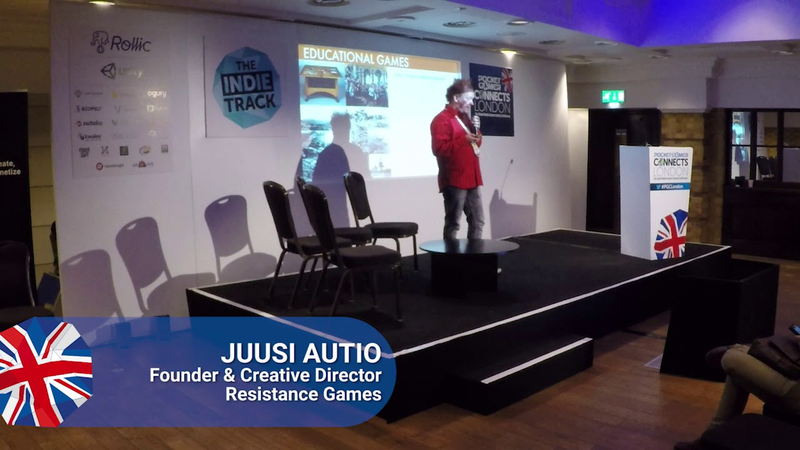
[Music] it's great to be here today I will be walking through the very colorful history that our industry has and hopefully by the end of the speak all of you who are still here stop saying that our industry would be young because I have a few few things to prove that it's it's the start of a new decade and the biggest newspaper in my country Finland just announced like recapped a decade and said that finally videogames became the eighth art form and in many ways this this presentation is my like middle finger to that journalist writing that because I think we've always been one of
the great arts before I go into the topic itself a brief presentation I'm you sell to you I've been in game business for fourteen years mostly as a designer or or a business developer why I'm talking about history of games is also explained that my background is in history I studied history at all the university but before I go into the main topics I want to pinpoint something that usually journalists artists movie makers novelists they think that we share a common heritage that everything started when Stone Age people were exchanging stories in at the fireplace telling awesome stories that's not really the case because our origin is a lot further it goes to play already animals play and a hundred years ago Johan who is in a Dutch historian went into lengths to
prove that without the play element there can't be any other forms of culture now I'm not going to bore you with philosophy so when did first games appear all of the hunters and gatherers that existed in historical time meaning that someone was watching them they had games so can we speculate that games are as old as humanity well sadly they his history research doesn't really work that way because with with the hunters and gatherers there is a few problems that makes us not know so much about about them first of all there's a lot of time going on and that of course influences what we can discover the lifestyle of hunters and gatherers they change place so it's less probable that we will ever find stuff about that have survived then then with farmers and of course most used materials even though
it's called the Stone Age wood was the most common or bones and they decompose quite quite quickly so indeed if we look at the birth of gaming we are talking about the birth of farming there is lots of more evidence and indeed wherever high cultures have risen we instantly see games games there as well let's take two examples Egypt no surprise there that Egypt has the oldest oldest game out there it's called Senate it's been played at least five and a half thousand years but it could be older because Senate style boards have been found in pre-dynastic Egypt not the components just the boards so it could be that Senate is eight thousand years old up up to eight thousand years old old so it could be older than even ancient Egypt the rules themselves are very similar to trouble
with the paradise I accept that the Senate is a lot more tactical you can impact the game a lot better so that's that tells something about Senate that it was played longer longer duration than Christianity has existed and it started out as a secular game but when Congress conquered Egypt then there was a look back so it became a religious religious game later on now how about at the other part of the world ancient China ancient China or China as we know it is basically founded during the era called warring States period when China was divided into lots of different rival rival small kingdoms and it's it was the Golden Age of Chinese philosophy it was the home to Confucius mochi Lao Tzu and many many many others and by the
time that Confucius was just a little toddler there wasn't just one game up there were actually three games in the book Liuba has lots of interesting stories about it she young she was used by the generals already a Chinese chess variant and then wait she was one of the four refined arts already drink the time of Confucius meaning that if you want it to be anyone you needed to know how to play yg and wait she actually is the oldest game that still played because we know it's better by the Japanese name of gold now I don't I have limited time so I don't go to other high cultures but from from Ethiopia tomato America from India to to the Indies all high cultures have had games and interestingly enough Ethiopian origin games called Mon Cala well we Europe European called call it Mon Cala but that's actually game genre
with over 800 historical variants and that that game could be older older than humanity it's actually so common that it's in the classical research of games it's one of the five genres of games where others are war games racing games hunt games and then games of alignment and ended in one color games and then quite surprisingly the oldest genre listing of games comes from the great enlightened himself the Great Buddha who lists sixteen different game and play categories and sadly well not not all of them are games in some are clearly plays but sadly the oldest genre listing is a blacklist so that's the john ray listing of Kay that puta would not play so thanks
thanks puta for for the oldest list but if you're a good Buddhist you don't play Pictionary because that's clearly band a band game one of these Andre listings one of the key points that I still want to make is that whenever new technology has risen games are among the first to adopt that whether it's computers or paper so when playing cards arrived to Europe the invention of paper is very very new playing cards come from China throughout the man Empire - - to Europe and they take Europe by storm and interestingly that history is very well documented why because there is lots of town ordinances around Europe where games are being banned so the oldest known known such ban is in from Paris where 1369 they don't ban they ban lots
and lots of different types of games but not yet card games and in 1377 also card games of that band or playing cards a band same happens in Switzerland same happens in Florence yes again it's a ban and in Regensburg in 1378 they're playing cards is banned if you play it too high-stakes though and the greatest persecution of games takes place in Nuremberg which is famous for its trials because in 1452 there is 76 ledges full of board games card games and every every games available that are being burned at the stake now let's describe how fast games take over Europe is that in only a hundred and fifty years over 400 games are invented using playing cards and these are listed in a royal book written for I don't remember was it the French King or British King but but for for a king who was interested in in
games it's not always bad stuff though with with games or that we know history of games in Renaissance era siena Cena was a democracy and there was a widespread parlor game culture which allowed women to compete mentally as equals with men and over the course of slightly more than hundred years first the men were super impressed and in in one academy they started making plays that promoted the role of women and sooner or later it led to first letting women into the academy which caused a huge huge scandal of course so Florence who had conquered seeing a band that but then later on first in the world there was a Academy directly aimed for women Academy of the our secret focusing on poetry and place now educational
games have been around forever as well so nothing new with the serious games topics you could say that the 1818 early 19th century is the year as a century of top thesis creaks bill because it was used by militaries around the Western world the talk teases creaks bill is the first war simulation game not like tactical game like chess but rather that there is two players and an umpire who basically is the computer who has the only board with all the information and then the players just give orders like they would if they were on a battlefield and it played a small role in the Napoleonic Wars but then they play the game played a huge role in the German unification war when Germans beat down the Danish Austrians and France the Prussian military commanders gave thanks to the duck teachers creeks bill which
led to the adoption of the of the game in the other countries as well now interesting historical curiosity curiosities are that the Schlieffen Plan in the First World War was devised by using tactics Crick's bill and so was the pretty sure British response they also simulated that and changed their plans because they realized that if German attack through Belgium and Netherlands Fritz can't come come on time to help so they changed their plans where they would land with with the expert degeneration expeditionary troops difficult word sorry and indeed Pearl Harbor was simulated by the Japanese and actually the first couple of simulations they ended in a disaster so they also revised their plan and managed to make a surprise attack on the American base and not so important role but small role tactics brick Creek spill had also on Second World War
because when d-day took place there was a bad weather and then both military commanders of the German army were off one was with the visiting and family and the other had went to a place without a phone playing or simulating the oncoming attack on the beaches of Normandy so he wasn't there and couldn't be reached in I think it 36 hours or something because they didn't expect that attack during the bad weather now one more point that I want to make why why sorry why we shouldn't call our industry young he's regards to business models now let's have a look at the pin games or pinball games so Bagatelle one of the earliest pinball games was already really popular in the seventeen hundreds actually it was played a lot by the Sun King Louie Louie the fourteenth also and first
attempts to make money by coin-operated things was to sell seditious material in 1822 so that you could sell foreign basically without knowing that you selling that but that was not successful the first successful adaptation for coin-operated mechanisms came from arcades pinball games basically so by the time of late 8/8 hundreds there were lots of amusement games pinball games and others where you just insert the coin and then you get good to have some fun and they spread sprite to bars so that the bars could make money by selling also entertainment for the customers now I'm not going to I'm not going to deep into the video game history but this is exactly the
distribution model that the video games needed half a century later so there was a way to distribute video games or arcades and interestingly enough it was the Great Depression actually that helped pinball games spread everywhere because they were cheap to manufacture cheap too cheap to play and they didn't break down so that's why pinball games became the big big thing now I think I'm running out of time so it's time to wrap things up so my point is that games have been around forever and we will be around forever games are older than movies games are older than novels games are older than theater so we should stop saying that our industry is young and indeed by the time our industry video game industry is born there is already there is already distribution model
models in place there is already monetization models beyond just the premium in place and it's just a continuum in a fact that whenever new it new inventions take place whether it's bones paper coin-operated mechanisms or computers games are among the first to adopt it so that's pretty much it I think I'm got a few more minutes and I think the timer there's a little ahead okay carry on feel free yeah well indeed it's only the last point that by the time video games were born we had already T game TV shows in America and I think in prison people had watched people play spelling bee on television before our video games were even invented so let's stop saying that our industry's young and take pride in
the colorful history that we all share so if you have any questions I'm happy to answer and also I have 11 our lecture series in OMA which is now on discount so if you want to learn more use this code and you'll get it at 80% discount thanks very nice thank you particular questions so should I kick off as always I love the fact that you kind of if you think back through it like you said earlier that games are actually older than humans and particularly or play at least yes like what is games then plays with rules exactly yeah but even in I think they haven't done studies of chimp play and they seems to been established kind of set up of social rules exactly what do you think
that says to us in terms of you know how we look at new in designing new games you know are there lessons from looking at a kind of priming you're kind of way of looking at play that we should still be paying attention to you know in in creating for example is hyper casual just another you know who gets the fruit I'm definitely pro in to that if we look at lots of the big classics of the 19th century or 20s early 20th century they usually have some sort of route in in some of the historical games like saying it was played for thousands of years and then trouble is almost identical except that you can't protect your pieces like you can in Senate which basically takes away the player influence quite quite a bit same-same indeed would have told us not to play Pictionary clearly one of the genre is that you shouldn't play games where one draws a picture and other one tries to guess what that is so that's to know why why is pictionary so evil then again if you played it over
Christmas you probably know here maybe not maybe it's just mocking my family any other questions thank you so much yeah thanks for having me [Applause] [Music]
Summary
The gaming industry is frequently mischaracterized as a young medium, yet it is deeply rooted in a 5,500-year history of human play. Rather than emerging in a vacuum, video games represent the latest iteration of a long-standing cultural continuum. Games have consistently served as a primary vehicle for human expression, social organization, and technological adoption, predating modern motion pictures, literature, and theater. By examining the historical trajectory of play, it becomes clear that the industry’s current mechanics, distribution channels, and monetization models are modern adaptations of ancient precedents.
Historical evidence confirms that games have accompanied the rise of every major civilization. Ancient Egyptian games like Senet, which dates back at least 5,500 years, and the Chinese game Weiqi (Go) demonstrate that complex, rule-based play has been a cornerstone of high culture for millennia. Furthermore, the evolution of gaming has often mirrored societal shifts; for instance, parlor games in Renaissance Italy provided a rare space for women to compete intellectually with men, while 19th-century military simulations like Taktisches Kriegspiel fundamentally shaped the strategic planning of major global conflicts, including the World Wars.
The industry’s business and distribution models also possess deep historical roots. The coin-operated arcade model, which proved vital for the early video game industry, was built upon the success of 19th-century pinball and amusement machines. Similarly, the rapid adoption of new technologies—from paper for playing cards to modern computing—has always been driven by the gaming sector. By recognizing this extensive heritage, the industry can move past the narrative of being a nascent art form and instead embrace its status as a foundational pillar of human culture, characterized by a persistent ability to integrate new technology into the timeless human impulse to play.





















Comments