1 free read left. Create a free account for unlimited reading + AI research.
Create free account
Staying on Target - How Mental Health Affects Game Creation
Key insights
7 takeaways- 01Sustainable game creation requires leadership to shift away from 'scrappy startup' mentalities by aligning project schedules with realistic human capacity.
- 02One in five game industry professionals is diagnosed with a mental health issue, such as anxiety or depression, during any given year.
- 03Systemic workplace pressures, specifically chronic overwork, job instability, and a lack of diversity, are the primary drivers of the industry's mental health crisis.
- 04The industry's failure to address mental health openly creates a stigma that discourages support and worsens the psychological toll on developers.
- 05Excessive overtime and crunch culture are negatively correlated with game quality, often resulting in lower Metacritic scores.
- 06A lack of diversity and inclusion in the workforce creates a disconnect between development teams and their global audience.
- 07Developers face additional psychological strain from negative public narratives that unfairly link video games to real-world violence.
Ask AI about this video
Transcript
[Music] so I'd like to talk about mental health in the game industry because this is a topic that often comes up at least between the lines but very few people talk about it and I'm gonna start by reading a basically an excerpt of an email that was sent to me not too long ago from a student based here in Europe and the basically this is what she said so dear Miss Edwards last year I attended one of your lectures at our school and you inspired me as you may have heard in September in October multiple controversies in our industry came up and this is why I'm emailing you within our school we have a slack channel that we use to discuss things that are going on in the industry right
now now recently the student the incidents at telltale and rockstar came up we've gone into a lot of discussion about this and what we need to do about it in our school teams to minimize this behavior in the slack Channel we see a lot of we need to unionize the game industry messages and I see a lot of we need to get out of this mindset but it doesn't give us anything that we could possibly work with they are just words to be honest with you these incidents worry me tremendously I'm concerned that when I come out of the university I will be forced to work in many hours crunching as you see in these incidents and after all these stories are not really that uncommon here I fear I feared that while I love videogames and I'm passionate about creating them I will no longer be able to see my loved ones I'll be forced to work at a company that enforces ridiculous working habits as part of their culture and I will fall into a deep depression and start hating the game industry and games as mentioned we've discussed a lot on our school what we could do but I'd like to ask you know
what can we do what can we the students of today and the developers tomorrow do against these practices right now I am mainly afraid of what future awaits me it's not the kind of email you want to get from anybody and I get these kind of responses a lot because I'm out there I speak a lot of events I meet a lot of students around the world and the concerns that she shared the reason I shared that particular email is because it pretty much encapsulated a lot of the feeling I hear from students in the industry but not just students also people who are in the industry as well and now I've been around the industry for a long time it'll be 27 years as of April and when I ran the ITA the International Game Developers Association for five years one of the first things I did after I left the game industry our skis not the industry left the ITA was become involved in mental health because when I talk to all these people around the world and engage with them one of the most common things that I had expressed to me about what's their biggest concern about the industry it was mental health it was basically on a very personal level how is this
affecting me as a developer all of these things that weigh upon me it's not just the pressures of the job itself but it's all of the larger pressures around doing the job and being part of this industry and all that entails and so that's one of the reasons why I joined take this which take the store deals with mental health from the game industry just recently you may have heard that here in the UK they have a new new organization called safe in our world I just became a patron of that organization and I'm also involved in the toronto international games summit on mental health and because it's an issue that's very important to me because i see how many people it affects across this industry the maybe not so shocking reality is that one in five people this year will be diagnosed with some degree of mental health issue that can be a wide range of things from anxiety to depression some of its more obvious a lot of it isn't which is one of the reasons we don't talk about it because you know you know if you walk into work on a Monday morning with a broken leg you get all this sympathy and people like oh can I
bring you coffee are you okay but if you walk into work on a Monday morning and say I just don't feel like working today why well I just I feel depressed and nobody knows what's to say it's like well maybe if you just work hard today you'll feel better it's like that's not an answer when the shocking thing too is that one or two people in their lifetime will be diagnosed with some kind of mental health disorder so it's a very prevalent thing and yet it's a stigma that we really don't talk about very much now what I want to talk about in a very short time that I am here is a lot of what I'm talking about comes out of this report that came out just late last year the state of the industry report which I highly recommend you take a look at on the tape the store website and in this report they outlined three key factors that are affecting game developer mental health and this is after doing a tremendous hour about a research and doing surveys with developers working in the industry so the number one issue which is probably not a shock to you is the lack of job stability in longevity now when I was running the ITA we created something called the developer
satisfaction survey and you can see here that like when we asked questions like why did you want to leave the game industry maybe it's not a surprise but the by far the largest answers that I want a better quality of life and no doubt a lot of us have heard those anecdotes from friends who left because I like I I love working on games but and usually that butt is followed by all kinds of reasons why the the pressure that you know the uncertainty all of these kinds of things and then we also asked people you know what which of the reasons captures why they would want to be self-employed or freelance the number one answer there is more control over working conditions because again it's something that we find impacts people a tremendous deal there's I'm not going to read through all of these stats but these are some of examples of some of the other information that came out of the survey you know like only 46 percent feel that there's a clear path of advancement only 18 percent receive overtime compensation throughout the industry only you know 18 percent regularly work 45 to 59 hours each week
which is a lot it's more than normal like that stat you know 24% worked for three to five different employees over five years that's a lot that's a lot of change happening in your life and moving from place to place not just as an employer but actually physically moving to different geographies in that amount of time it can be incredibly stressful and so a lot of stress points that came out of the survey again things that are not too surprising to us of course crunch having to do crunch in the time pressures the role of employees on social media if you happen to be a community manager for example and you're expected to be the frontline of your company and have to deal with the trolls and everything else and the companies oftentimes don't really care so much like well that's your job your job is to deal with that but if you know anyone who's been a frontline community manager you know the amount of stress that they've had to deal with when they're dealing with with the with the audience competitive workplace uncertainty around stability which is a
huge issue in our industry frequent job and location changes so all of these kind of add up to a lot of that the pressures that we've we have and undoubtedly this will cause mental health stress and then of course that we talked specifically about crunch it's not it may be not not a surprise either that when we did our survey the majority of people think that crunch is unnecessary there's you know when we ask that question and there's all kinds of reasons they give which we don't have time to go into what's interesting though is when the game outcomes project was done about five years ago one of the most interesting finds that they had is that the more that companies crunched it tend to have result in lower Metacritic scores which is crazy because that is exactly the opposite of what crunch is supposedly trying to do you're trying to create the best game possible and be successful nock dimension get it done on time but then the fact that the more you crunch to actually results in lower Metacritic scores that obviously says something is
broken in that cycle if you're interested specifically about the crunch topic I recommend looking at this white paper that came out in 2016 called crunch hurt roots is a great overview it's about 15 pages long and it talks basically from a physiological and medical point of view why crunch doesn't work for human beings we as we as people can sustain about two weeks of crunch and then after that there is basically zero ROI on all additional time spent and so oftentimes the companies we call those sprints so they're intended to be quick like a week or two that makes sense for human physiology but beyond that it just doesn't really work and we know that we and we've seen the effects of that especially on the mental health side now of course this all kind of leads to another topic which is unionization and a lot of times the opinions on yuna's ation have started shifting quite dramatically over the last several years as you can see so this information over the last decade as we were monitoring this when I was part of the IH da and Beyond you see the
affinity for unionization has increased and oftentimes when you ask people why are they so supportive of the union it's often because of the work-related issues and it's because the impact on their mental health now the second issue that came up in talking with developers is the lack of diversity and inclusion in the company and this is obviously coming from a lot of people it's not what's not just coming from people who are underrepresented in the industry it's also coming for people who are well represented which means mostly white males so there's a general sense that they would like to see more diversity and inclusion in this industry because they know that the people who play are playing our games are diverse I mean we we are basically dealing with the ubiquitous audience and yet those who are making games still are don't reflect our audience so when we ask questions like do you feel there's equal opportunity industry the majority answer is no and and this comes from a survey that's answered by about 79 percent white males and so it's not just the under representing this opinion which I
think is encouraging or we asked also do you how important do you rate the following so the first question was diversity in general in any workplace so seventy-five percent felt that that was import very important or somewhat important but in the game industry specifically it was 79 percent so again we have a huge you know strong opinion that diversity is very important and yet you know when we look across the landscape of our companies a lot of times they're not reflecting that sense you know if you take the US alone where you've got 45% of the game players are women and then you only have 21 percent of the workforce creating games are women and so there's a huge disparity there and I know further that was one of the things that I was pushing quite heavily when I was running the IGA and ever since then and the advocacy work I do is trying to help people understand that we want those who make games better reflect those who are playing them and of course there is a gender wage gap that exists as well this is old data of course from the Gamasutra salary survey
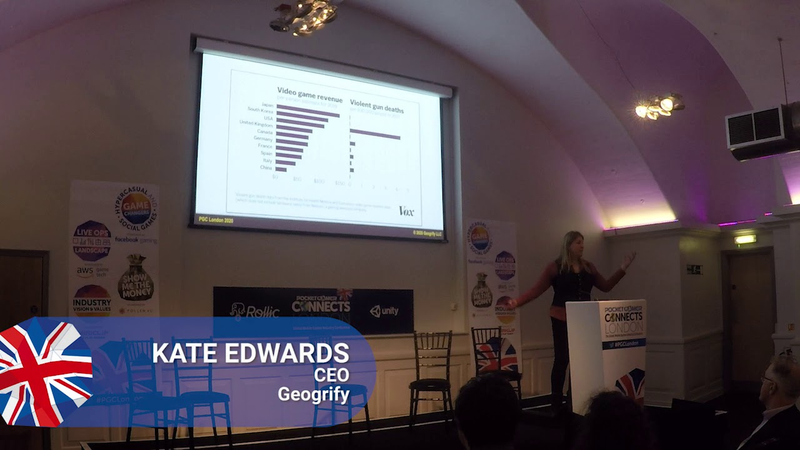
which unfortunately have not done since 2014 but it should but helps demonstrate you know that there is a actual tangible wage gap and especially is worse in the field of audio which they found where that disparity is and then the third issue that is also important developers which is affecting their mental health which I think we've seen more and more today is the public perception of what we do with the cut of the kinds of things that we do and what we create when we see things like this which I know in the u.s. is a very constantly reinforced narrative about how evil games are and how games are the cause of violence and we just saw what Joe Biden said yesterday where he called us creeps we are creeps who teach people to kill that's what he said so that's you know congratulations that's what we are now this is a huge failure of the industry this is a massive failure on our part I don't expect that guy to understand what we do but we as an industry have really failed in trying to
educate the public and really be engaging and helping them understand exactly what we do you know we see these stories that come out around these issues I mean this happens this narrative is constantly reinforced every single time there's a shooting in the US which unfortunately is like at least once a week we have these stories come up and everyone's doing the tug of war know its guns know its games know it's this is that you know you probably saw this little chart that was making the rounds on Facebook and social media of during the last couple of big shooting incidents in the US and I mean it's no secret it's like yeah we have access to guns in the US and is very readily available where I live in Seattle I can walk you know about a kilometer way to a pawn shop and I can buy a gun and easily and just walk out the door with a gun so because that's how easy it is what's interesting though in terms of the court of public opinion you know back in 2011 we had this major victory in the US where the Supreme Court ruled in the case of Schwarzenegger when Arnold Schwarzenegger was governor of California which is so ironic and he was
suing the game industry for violence and the the Supreme Court of the United States I know it really the Supreme Court of the United States was said in their findings these are pretty smart people they said there's no compelling link between violent games and its effect on children and that's been reinforced in other studies and yet you know Pew Research Center did this study a few years ago in the US they found that 40% of adults believe that there's a absolute connection between games and violence there's no evidence for it but the narrative is out there in the media 26% of adults think the games are waste of time even though more than 74% of adults play games which is kind of weird 60% of people believe that those who play games are mostly men which we know is not true and this is really crazy 23% think that most video games do not teach teamwork or communication so they've obviously not played any online game they haven't played any you know significant game in the last you know
five to ten years so they're kind of out of touch but my point being is that the narrative in the media is so divergent from the reality of people who play games and bringing this back to the mental health topic I talked to a lot of developers who feel this they feel this pressure when they're doing their work you know when they're talking with their family when they're talking with people in the public and they said what do you do for a living I'm a game developer it's like really you know it's like you can you didn't you weren't smart enough to be a doctor or a lawyer what happened to you and honestly there's people who think that about game developers and again I think it's more of a failure on our part not to be better advocates both as individuals and as a collective to explain to the public you know when for example when I talk to politicians out there in the world I mean let's say they're gonna do a policy in their country or their particular jurisdiction around fishing rights well guess what the entire room is filled with fishermen and people from that industry who are angry and they've got signs and they're
like don't do this to us when they propose legislation that might affect video games almost no developers show up now the trade associations showed up you know the lawyers from the trade association but the the government officials are like we expect those people to show up because they're paid to show up but where are the developers where are the people who create the games who actually are going to be affected and that's our problem we should show up we should be more engaged in that you know especially when we realize and embrace the fact that game are the current evolution of human narrative we are the ones who are currently defining how stories get passed from one generation to another all these other forms of media that have come in the centuries past you know these are all still relevant today but right now video games we it's on our shoulders and I think it's a great thing and a thing to be proud of that we are the ones carrying this the other thing that's really important too is understanding our economic position I think most of us already understand this but knowing that you know games compared to all the other forms of major media is
very significant you know these numbers are three years old now but so it's actually more than this but the proportions are still correct and what's even crazier when you think about all forms of life sports around the world like FIFA and the NFL and baseball and all that stuff you add up all the revenue from all life sports and we still make more money than they do which is insane it's it's were a going concern and yet I think a lot of times we as an industry think of ourselves as like a scrappy startup like we're the rebels it's like no we're actually the Empire it's like we are we're but you know and so one of the things that I think we need to do and I've actually done separate talks about this topic so I'm not gonna belabor it but I think it's a real benefit to our mental health as individuals and as a collective if we show that we are proud of what we do and we are willing to display that to the public and willing to stand up as a group and say I like what I do I'm happy with what I'm doing I'm not ashamed of what I do and I say this because even
though you may or may not feel that way I still meet a lot of developers around the world when I ask them like what do you do they say well I'm just a game developer and I want to slap them and say you're not just anything you are a game developer you know it's amazing so in the typical typical game development ecosystems that we have you know where we have these different players involved and we have the general public out there who are playing our games and we've got the non playing public that typically they're the ones who are very vocal against video games for various reasons could be religious regions cultural reasons whatever and they're very vocal to like educators into the government saying you know we don't want you to support games who don't want to do get research money to games and all that and I basically say we need to just bypass these people and do a better engagement of the game playing public and also help them to be our messengers as well and kind of be on our side so don't view players just as a monetary source and who's paying your bills because they are but there are also partners in our collective passion for
this medium there is hope as I'm finishing up here there's a lot of great things that are happening in different country companies throughout our industry who are starting to get the idea that mental health is very important and they're changing their work practices they're trying to minimize or eliminate crunch they're really trying to focus on mental health and diversity so there's a lot of good signs in our industry we need to see a lot more of this however but there is hope and like I said there's different organizations that are trying to confront this directly and I definitely encourage you to support them as well in what they're doing so there we go I think I barely made it state state state please state the opportunity to ask one question I don't know where tines in time but I think it will be really nice to just be able to have a question don't have any questions any questions yeah who's first over there in the corner all right here you go a great presentation I was
wondering will your slides be available so we can like circulate the message in our networks what's that can it will the slides be available so we can like circulate the message in our network yes thank you yes all right that's an easy question any other questions I think I saw someone trying to okay here we have alright yeah no problem okay Hey yeah thanks for that I mean this is definitely something that I've been thinking about as well but well I'm not as eloquent as you so I don't really have a chance of getting this message out there but the question that I have is actually how do we actually try to educate developers in order to take care of these things because perhaps a problem is not necessarily that we're not going to solve this problem by just telling everyone like hey now change
this yeah could it be that the problem is actually like more deeply rooted like education for instance right now at the moment most of the game study is actually based on sound still on textbooks and theories from 15 years ago which which do not allow for a lot of diverse of thinking or anything like that mm-hm and also is our society perhaps not ready for this because we're still having this well when it comes down to diversification on gender for instance we still have the ID that or at least a lot of people still have the idea why would you as a woman go over into games right so what can we do as a society or educational system in order to change these things well I think yeah there's there's a lot in that question so I there's a lot to unpack but basically on the industry side my answer to that question is basically there needs to be better leadership and I don't mean replacing the people who in leadership I mean they need to show better leadership
on these issues and show that it's important you know and because a lot of times if the if the leadership of our key of our game companies and publishers and everyone else made this a priority and and helped us to believe that they that they really take it seriously I think that would help for like on the mental health issue for example if you imagine what would happen if the leaders of most of the major companies and any company frankly actually stated to the company that you know I'm really concerned about your mental and physical well-being I want you to take care of yourself I'm gonna try and minimize crunch as much as possible and basically made it as part of the company's DNA and stayed it plainly and keep reinforcing it over time that this is important to me and not only that the in-depth they demonstrate it through their own behavior so they're not crunching all the time either which I totally understand it's not easy to do but they have to demonstrate and exhibit the behavior and then keep reinforcing it and also encourage people within the company to walk each other's backs you know so if you see someone you know there's like well I want to be here and
I want to work 18 hours a day is like but it's not good for you you know it's like well I don't have anywhere to I don't have anyone to go home to or anything like that it's like but still it's not get a hobby you know do something else this is not healthy so yeah I think there's a lot of things that we can do and I think it needs to start with the leadership making sure that it's important and the same is true with diversity too you know and I have met leaders in different companies in the industry who actually generally want to see better diversity and representation in their company but a lot of them they don't know where to start you know they don't know how to get it moving and it's like well that's fine there's all kinds of people who are willing to help them out and to give them advice and point them in the right direction and there's great organizations in this industry who can do that but they need to avail themselves of it and again I think that's a leadership issue and so I from my perspective that's where I've seen the biggest failure it's not that the message isn't out there there's tons of resources on diversity inclusion and mental health and everything else there's tons of resources on crunch
practices and project management and all that it's about the company's not willing to engage on it and actually do it and that's where the failure is to me I think that you know from my perspective also I see working in different countries or maybe there's a cultural perspective or as well absolutely I mean coming from Sweden I see one thing and went to work in Germany I see a different thing how women are treated how women are paid and yeah what's the rules you know yeah well it's like I remember like when Hannes Easter on IO Interactive in Copenhagen I visited and I was talking to him about crunch there you know and he said well these people don't crunch because the Danish people are not going to do it and it's like I need them to crunch sometimes but they I'll I'll tell them hey you need to stay late tonight and they just kind of chuckle and leave at 5:00 p.m. you know because I call that's cute that's really that's a nice joke and I love I love the fact and what he said then is as CEO he said then I had to adjust our project schedule to adjust to their behavior of like that's exactly what you're supposed to do not
the other way around and I wish more and more companies could do that and that now that's one of the things that's a geographer that's one of the things I've been trying to do in the industry is use examples like that take it to places like the u.s. and North America where they still do a lot of crunch and so you guess what you can still make great games and you don't have to crunch there's a way to do it it's not like it's impossible it's also something that when I get asked you know the Swedish kind of gaming phenomena what's it all about I talk a lot about the culture how we work yeah I mean one thing is highly people but the other thing is really how does a team work yes and that's all one really important part of that they take a lot of ownership but also expect to be respected back absolutely your work ethics absolutely which does have a very positive impact on mental health so any other questions no all right then thank you thank you thank you
you [Music]
Summary
The game industry faces a significant mental health crisis driven by systemic workplace pressures, including chronic overwork, job instability, and a lack of diversity. Research indicates that one in five industry professionals will be diagnosed with a mental health issue, such as anxiety or depression, during any given year. Despite the prevalence of these challenges, the industry often fails to address them openly, creating a stigma that discourages support and exacerbates the toll on developers.
Key findings from industry surveys highlight that the primary drivers of dissatisfaction are poor quality of life and a lack of control over working conditions. Crunch culture remains a pervasive issue, with data suggesting that excessive overtime not only fails to improve game quality but often correlates with lower Metacritic scores. Furthermore, the industry struggles with a lack of diversity and inclusion, failing to reflect the demographics of its global audience. This disconnect is compounded by a persistent, negative public narrative that unfairly links video games to real-world violence, placing additional psychological strain on developers who feel their professional contributions are misunderstood or maligned.
Addressing these issues requires a fundamental shift in leadership and organizational culture. Rather than relying on unsustainable crunch cycles, companies must prioritize employee well-being by adjusting project schedules to match realistic human capacity. Effective management involves fostering inclusive environments, providing clear paths for advancement, and actively engaging with the public to improve the industry's reputation. By moving away from the "scrappy startup" mentality and embracing the reality of the industry's economic significance, leaders can implement sustainable practices that protect the mental health of the workforce while maintaining creative excellence.




















Comments