This decline signals early-stage friction for the game.
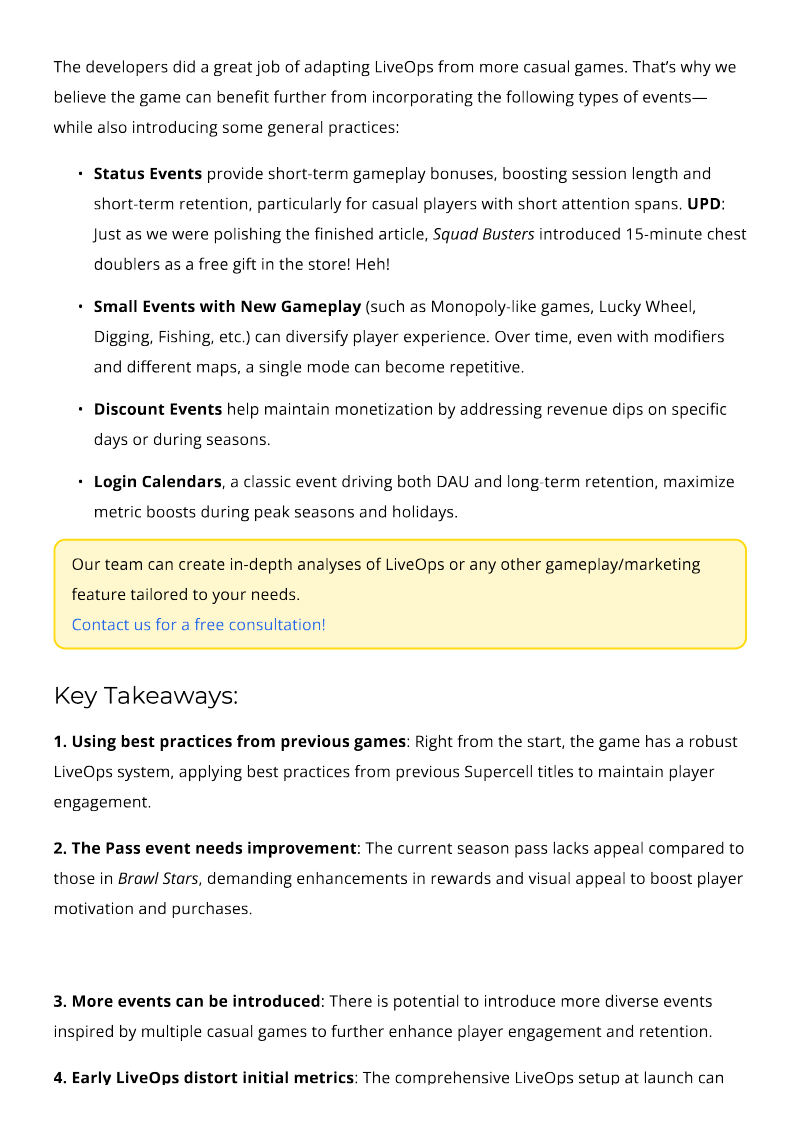
The season pass also fails to provide sufficient perceived value.
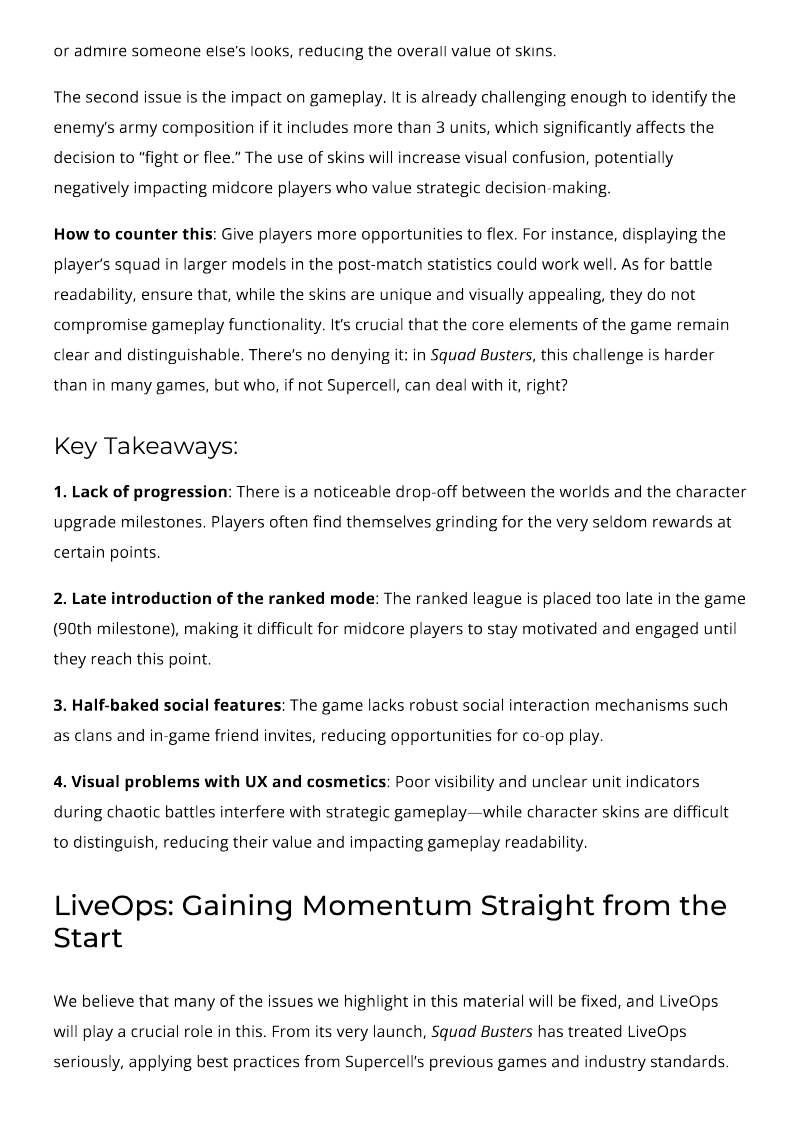
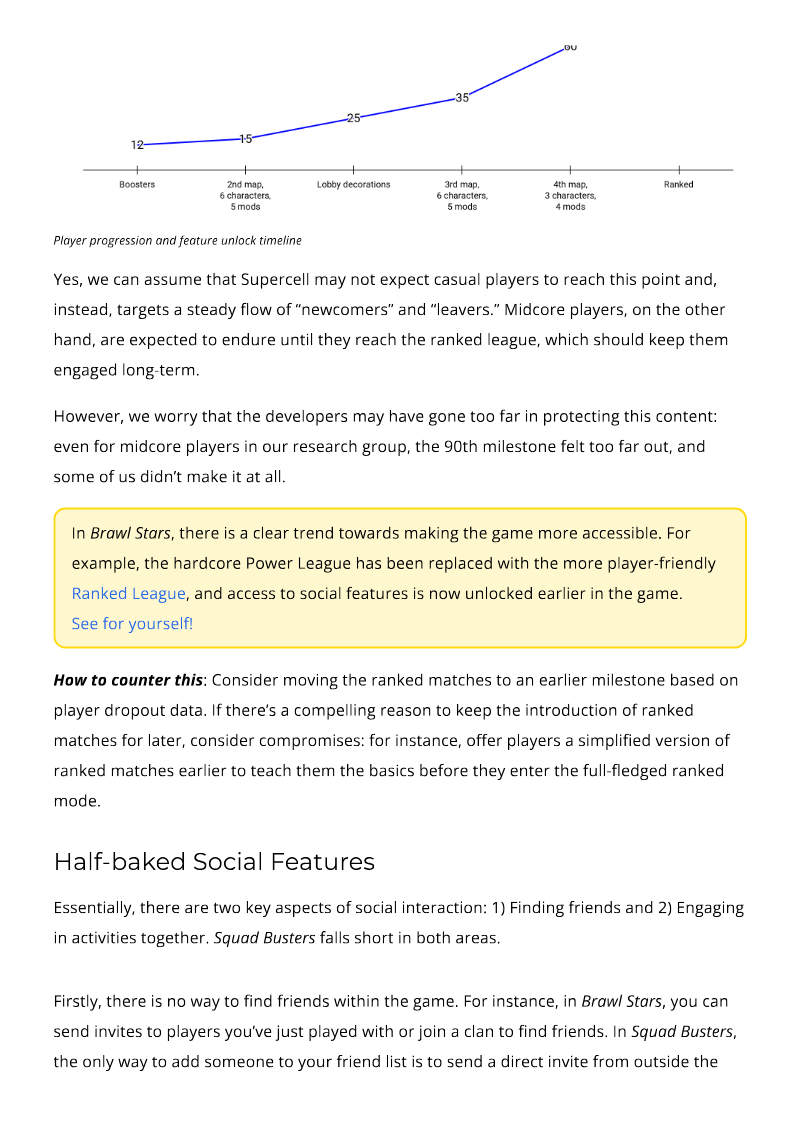
The late-game ranked mode remains inaccessible to most players. This creates a gap between the game's casual entry point and its endgame.
The team aims to iterate on event mechanics and refine UI/UX for better tactical clarity. This is designed to bridge the gap between initial acquisition and long-term loyalty.
This will help bridge the gap between initial acquisition and long-term loyalty.
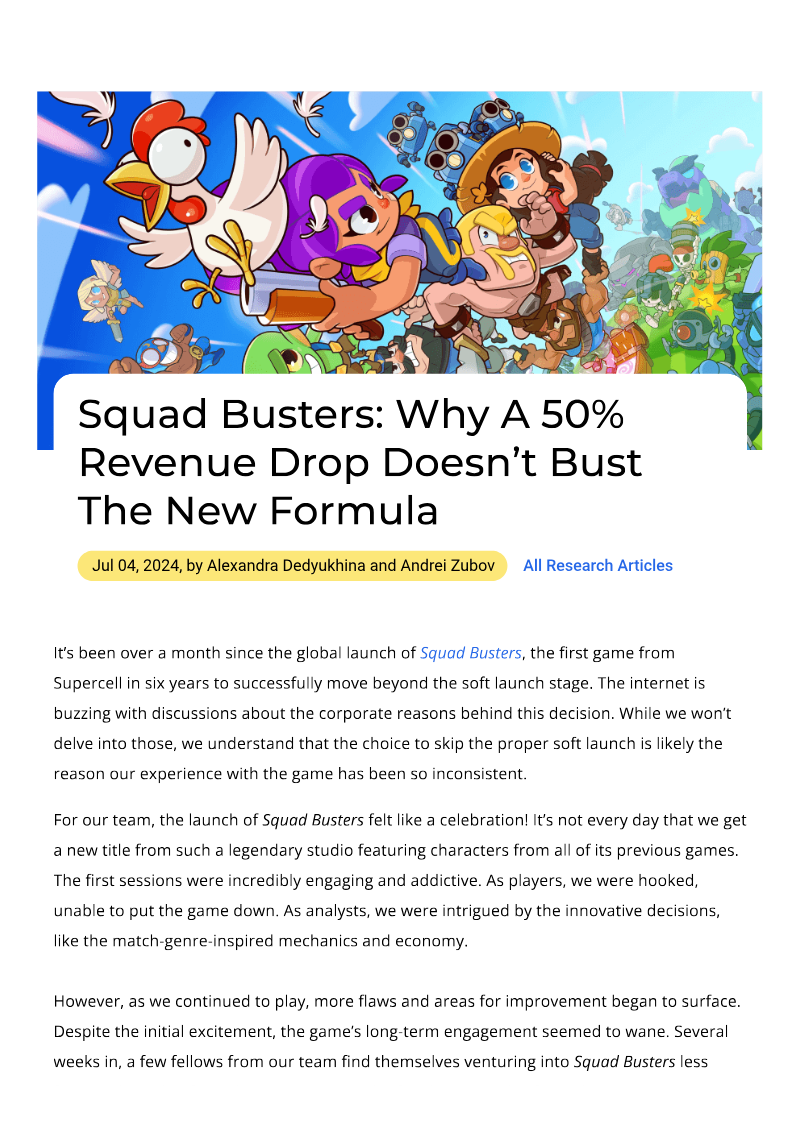
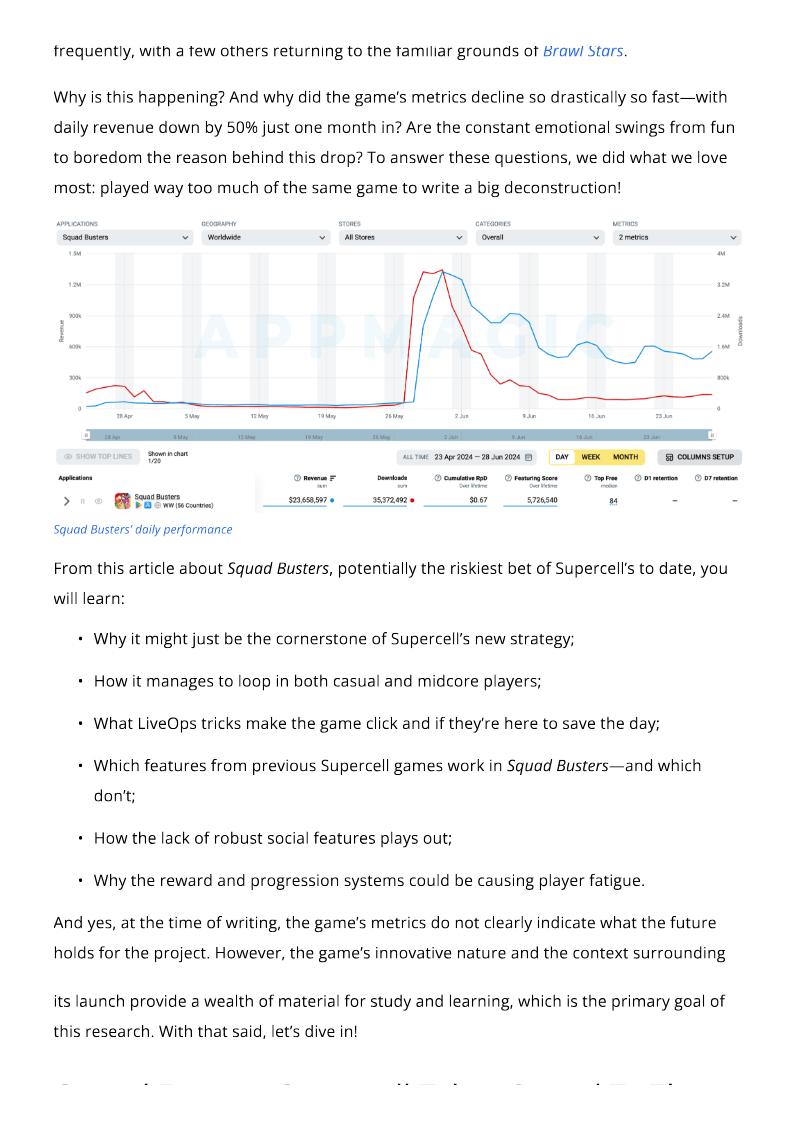
Squad Busters represents a strategic pivot for Supercell, aiming to capture a broad casual audience by synthesizing elements of MOBA, Battle Royale, and Roguelike genres into accessible, four-minute gameplay sessions. The core thesis posits that while the title has experienced a 50% decline in daily revenue during its initial month, this downturn reflects early-stage friction rather than a fundamental failure of the underlying formula. The game successfully leverages aggressive, Match-3-inspired monetization tactics, such as win streaks and consumables, to drive immediate engagement, signaling a departure from the studio’s traditional design philosophies.
Despite this innovative genre-blending, the game faces significant hurdles regarding long-term retention and endgame engagement. Player fatigue is currently exacerbated by a progression system that becomes increasingly tedious as character upgrade requirements scale, coupled with a lack of robust social features and clans. Furthermore, visual clutter often obscures tactical decision-making, and the current season pass fails to provide the perceived value necessary to sustain consistent spending. These issues are compounded by a late-game ranked mode that remains inaccessible to the majority of the player base, creating a disconnect between the game's casual entry point and its grind-heavy endgame.
Supercell’s history of effective LiveOps management remains the primary catalyst for potential recovery. By iterating on event mechanics and refining UI/UX to improve the clarity of character abilities, the development team is actively working to bridge the gap between initial acquisition and long-term loyalty. While the current trajectory highlights the difficulty of balancing casual accessibility with deep progression, the game’s unique structural foundation provides a viable path for growth. Future success depends on accelerating the introduction of social and competitive features to foster a more cohesive community and improve the overall value proposition of the monetization model.