1 free read left. Create a free account for unlimited reading + AI research.
Create free accountArticle gamevironments
1 free read left. Create a free account for unlimited reading + AI research.
Create free accountArticlegamevironments
The paper argues that avatars occupy liminal spaces between server, game world, and player body. It compares them to ghosts hovering between planes of existence.
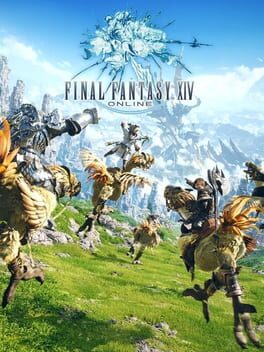
"Spirits in the Aether: Digital Ghosts in Final Fantasy XIV" argues that avatars in massively multiplayer online role-playing games continue a long tradition of technological ghost rhetoric. Its central thesis holds that avatars occupy liminal spaces between server, game world, and player body, much as ghosts hover between planes of existence. Through multimodal semiotic discourse analysis of Final Fantasy XIV (2013), the authors contend that ghostly themes operate across narrative, visuals, and gameplay mechanics, making them distinctly multimodal rather than merely literary. The analysis draws on hundreds of hours of expert play and scene-level review by novice researchers, with a particular focus on the game's opening, its narrative of The Calamity and partial memory erasure, and its aetheric and maritime metaphors linked to historical radio and internet rhetoric.
The paper's analysis of play emphasizes a flow state in which players project their attention into their avatars and experience digital rather than purely bodily sensations. Gated progression, death framed as a temporary delay rather than a terminal end, and repetitive "penitent" grinding are read as parallels to the liminal existence of ghosts in folklore and literature. The authors support these claims with specific gameplay observations, such as a level-1 avatar killed by a monster and avatars knocked into lava during the Titan encounter. Although largely interpretive, the study concludes that player and avatar together form a continuum of existence in which mortality is ambiguously defined.
A further argument concerns digital persistence. The avatar Polaris, which reached the level cap in September 2013, was used for 47 end-game raids before returning in August 2014 and being judged antiquated by other players, illustrates how avatars outlive their players' engagement and provoke anxieties about obsolescence. The authors interpret such reactions as expressions of players' desire to transcend physical limits and mortality, and as reflections of broader cultural fears about technological and social change. Their overarching conclusion is that games, like earlier communication technologies, renew mystery in a technologically saturated society by problematizing rather than affirming religious belief.
Each row is a game or company this document names, each column a document, oldest first. A mark means that document names it. Select a row to see those documents.
gamevironments · 2026
gamevironments · 2026
gamevironments · 2026
gamevironments · 2026
gamevironments · 2026

gamevironments · 2025

gamevironments · 2025

gamevironments · 2025

gamevironments · 2025

gamevironments · 2025

gamevironments · 2025
gamevironments · 2025
DiGRA · 2007