1 free read left. Create a free account for unlimited reading + AI research.
Create free accountArticle gamevironments
1 free read left. Create a free account for unlimited reading + AI research.
Create free accountArticlegamevironments
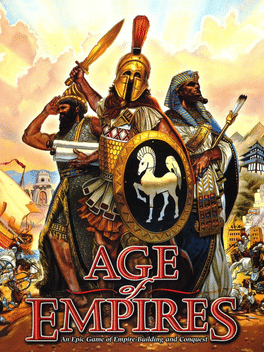
Cahit Mete Oguz's peer-reviewed article argues that video games distort the modern public understanding of the Byzantine army, relying on a narrow set of recurring tropes: Greek fire, Varangian guardsmen, and kataphraktoi (heavy cavalry). Despite Byzantium being underrepresented in gaming relative to periods such as World War II, a small number of widely played titles, including Age of Empires, Civilization, Total War, Crusader Kings, and Europa Universalis, repeatedly reproduce these same images across different developers and decades. The work's central claim is that these repetitions create a misleading picture of Byzantine military practice rather than a faithful one.
The analysis identifies several specific distortions. Games portray Greek fire as a routine naval feature, when Byzantine authorities guarded the technology closely and deployed it sparingly, mainly in the defense of Constantinople. The author also notes that Crusader accounts later generalized "Greek fire" into a broad label for any incendiary weapon, a conflation games perpetuate. The Varangian guard is overemphasized as a symbol of mercenary weakness, while native elite units such as the exkoubitores and hikanatoi are largely omitted. Kataphraktoi are frequently shown as mobile, self-sufficient shock troops, whereas Byzantine military manuals describe them as costly, rare, and best suited to decisive pitched battles. Games also impose Western feudal and chivalric structures and misplace timelines, such as starting campaigns after the Battle of Manzikert. Some portrayals are accurate, including the prominence of the dromon warship and the Varangians' distinctive reputation for loyalty.
The study ties these distortions to a longer legacy of Enlightenment-era historiography, particularly Gibbon's negative framing of Byzantium as a stagnant empire. The author argues that this framing, combined with the marketability of pitched battles over defensive or civilian-impact narratives, shapes game design. Byzantium's longevity, its administrative and diplomatic strengths, and its traditions of defensive and guerrilla warfare, such as those recorded in the Peri Paradromis, remain largely absent. The work concludes by calling on Byzantine scholars to engage more directly with the medium, grounding its critique in primary sources and scholarship by authors such as Treadgold, Whittow, and Laiou.
gamevironments · 2025
gamevironments · 2023
gamevironments · 2023
gamevironments · 2023
gamevironments · 2023
DiGRA · 2026