1 free read left. Create a free account for unlimited reading + AI research.
Create free accountArticle gamevironments
1 free read left. Create a free account for unlimited reading + AI research.
Create free accountArticlegamevironments
The paper examines how the game positions the Cult of the Absolute at the margins of its religious landscape.
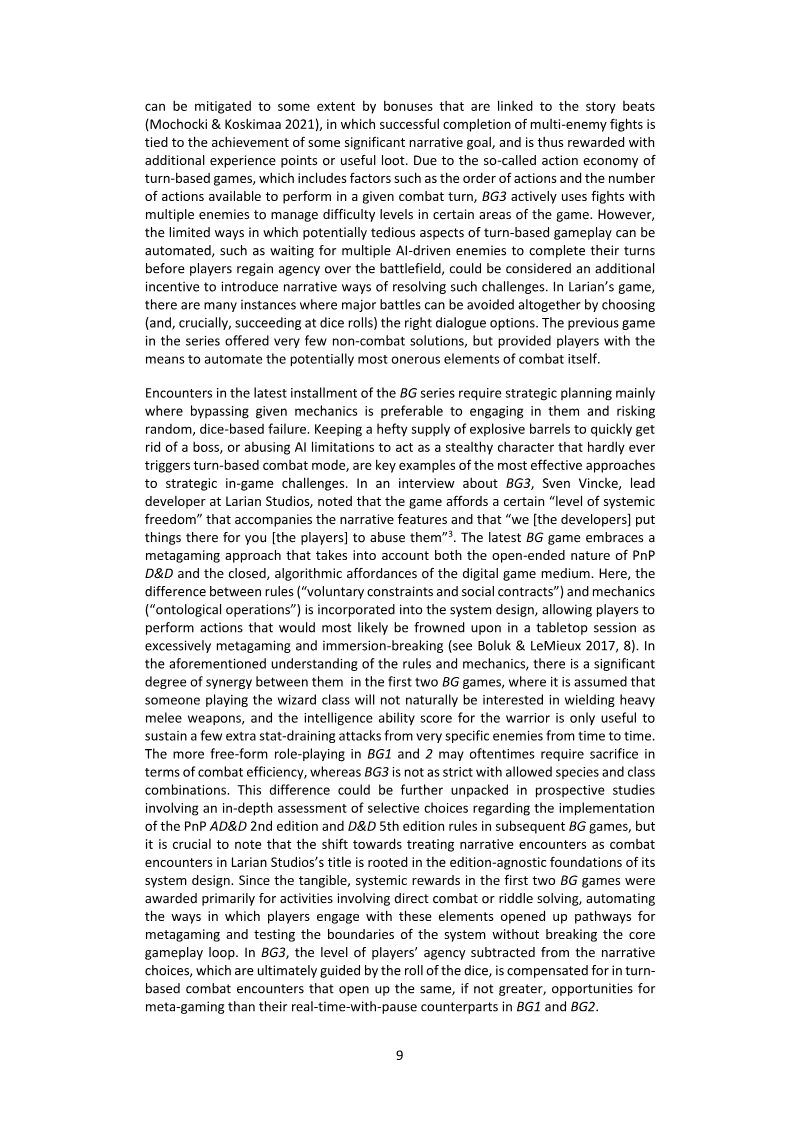
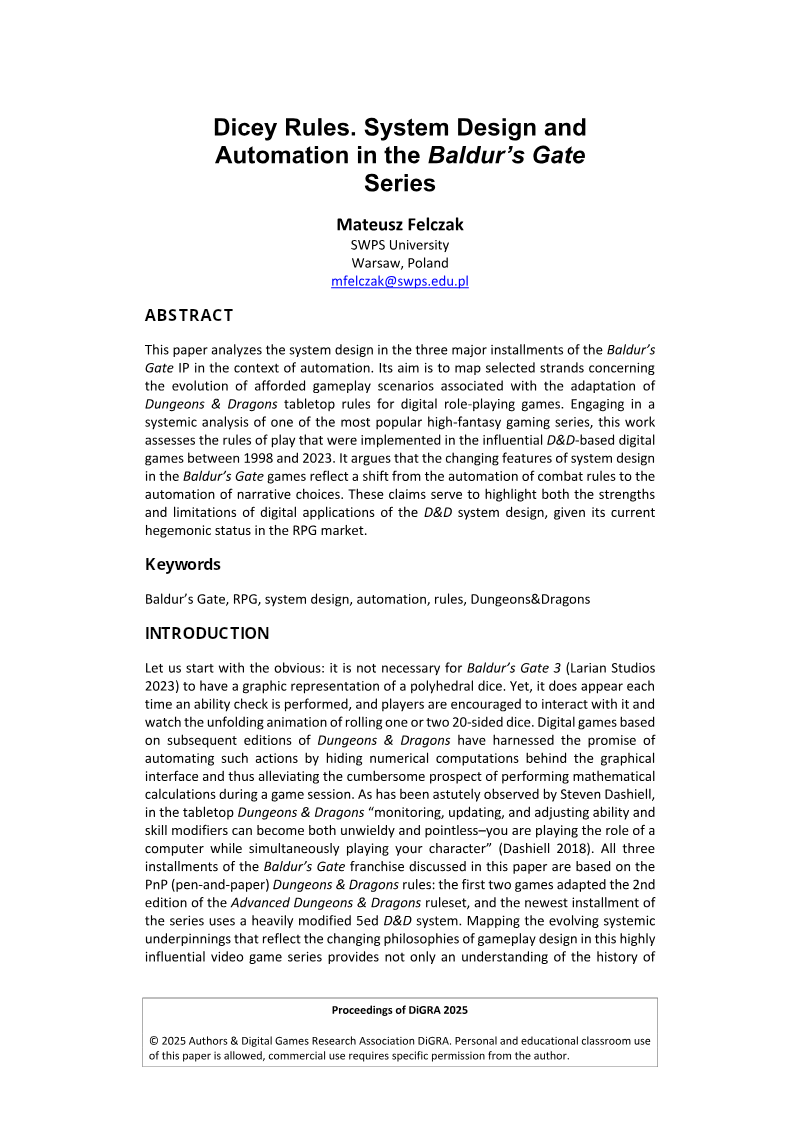
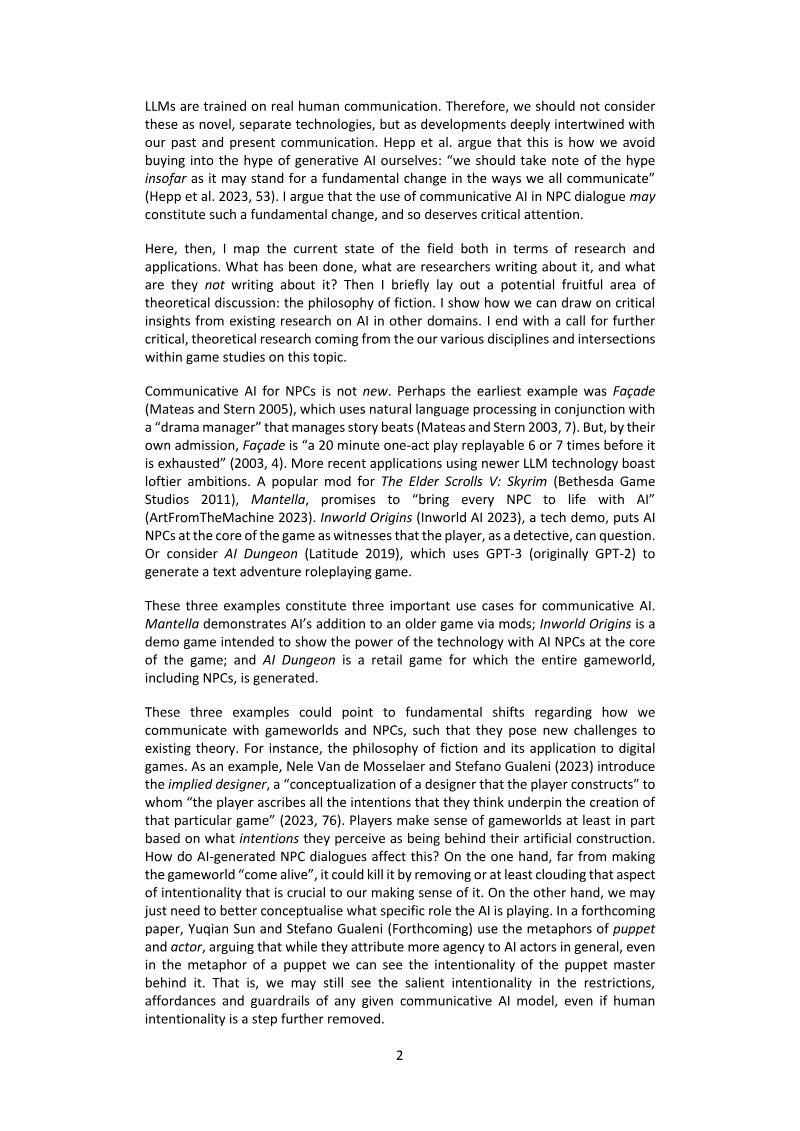
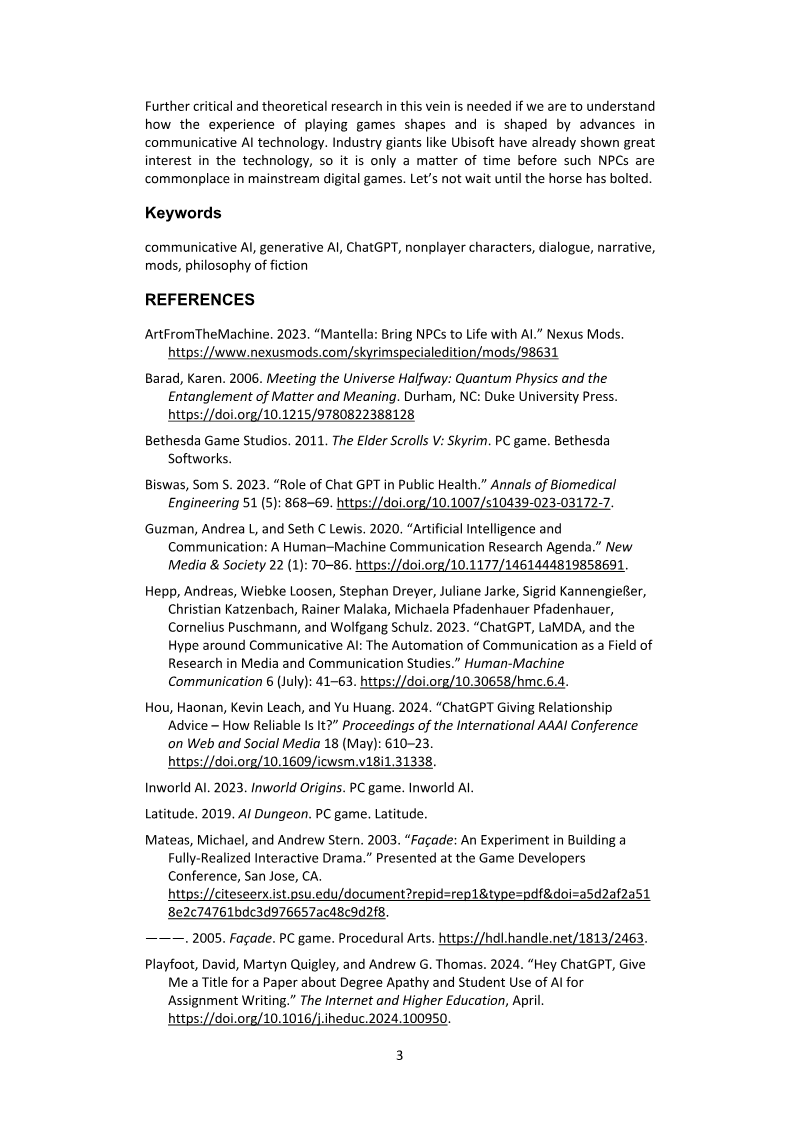
In "Creating Cult Controversies: Peripheral Religions in the Video Game Baldur's Gate 3," Dunja Sharbat Dar argues that the game's Cult of the Absolute is constructed as a peripheral new religious movement, positioned at the margins of the religious landscape and cast as divergent and dangerous relative to established faiths. The central claim is that this positioning operates not only through explicit narrative statements but, more significantly, through implicit audio-visual and narrative cues that draw on entrenched real-world cult stereotypes linked to violence, fraud, brainwashing, and absolute leadership.
The analysis rests on a framework combining theories of religious landscape, peripheral religion, and religious contact situations with sequence analysis of screenshots, audio, and text, paired with a game-immanent "playing as method." Its findings concern how the game's design reproduces these stereotypes. The Cult's defiled sanctum, aggressive narrative tone, purple fog, distorted voices, and pulsing sounds are read as deliberate signals of domination and mystery, a reading supported by developer comments in the official artbook indicating that the temple's ruin was intended to imply the Cult's control. Contrasts with established deities such as Shar, Selûne, and Helm further frame the Cult as a disruptive outsider.
The scope is a close reading of a single game, Baldur's Gate 3, with attention to its representational choices rather than player reception or empirical audience data. The study addresses the Cult of the Absolute as its primary case while noting how other groups, including goblins and the Kuo-toa, are depicted through tribal, indigenous, and cult-leaning stereotypes that range from menacing to comedic.
The author identifies limitations, notably that musical and haptic dimensions were not examined, leaving those channels for future research. The work, published in 2025 as part of a special issue of Gamevironments, contributes to scholarship on religion in games and fantasy fiction by showing how fictional religious movements can reproduce societal debates about new religious movements.
Each row is a game or company this document names, each column a document, oldest first. A mark means that document names it. Select a row to see those documents.
gamevironments · 2026
gamevironments · 2026
gamevironments · 2026
gamevironments · 2026
gamevironments · 2026

gamevironments · 2025

gamevironments · 2025

gamevironments · 2025

gamevironments · 2025

gamevironments · 2025

gamevironments · 2025
gamevironments · 2025
DiGRA · 2026