1 free read left. Create a free account for unlimited reading + AI research.
Create free accountArticle International Journal of Esports
1 free read left. Create a free account for unlimited reading + AI research.
Create free accountArticleInternational Journal of Esports
This study examines the sleep quality of professional Counter-Strike: Global Offensive (CS:GO) players, motivated by the concern that prolonged screen exposure may disrupt sleep and, in turn, impair the performance that competitive play demands. The authors recruited 12 professional players aged 17 to 25 (mean age about 21.6) from a single gaming house in Brazil, all of whom held top-tier competitive rankings. Participants completed the Pittsburgh Sleep Quality Index, the Morningness-Eveningness Questionnaire, the Epworth Sleepiness Scale, and a seven-day sleep diary, with results analyzed through descriptive statistics, t-tests, ANOVA, Pearson correlations, and effect size estimates.
The findings point to a cohort with poor subjective sleep quality, with a mean PSQI score of 9.25, well above the threshold of 5 that indicates sleep difficulties. Mean sleep latency was 38.75 minutes and mean sleep efficiency was 83.89 percent, both outside recommended reference values. Most players (58 percent) were evening chronotypes, and borderline excessive daytime sleepiness was recorded on average. Younger players showed notably worse sleep efficiency, with a strong positive correlation between age and sleep efficiency (r = 0.82, p = 0.001). Evening types reported poorer sleep metrics than neither types, though most of these between-group differences were not statistically significant, and sleep timing across the week was irregular.
The authors acknowledge that the small sample size limits generalizability and that actigraphy and polysomnography were not used, so the conclusions rest on self-report and diary data. The study concludes that irregular sleep routines and poor sleep quality may compromise both academic performance and competitive gameplay, and it calls for larger, more objective investigations across game categories and age groups.
Each row is a game or company this document names, each column a document, oldest first. A mark means that document names it. Select a row to see those documents.
International Journal of Esports · 2026
International Journal of Esports · 2026
International Journal of Esports · 2026
International Journal of Esports · 2026
International Journal of Esports · 2026
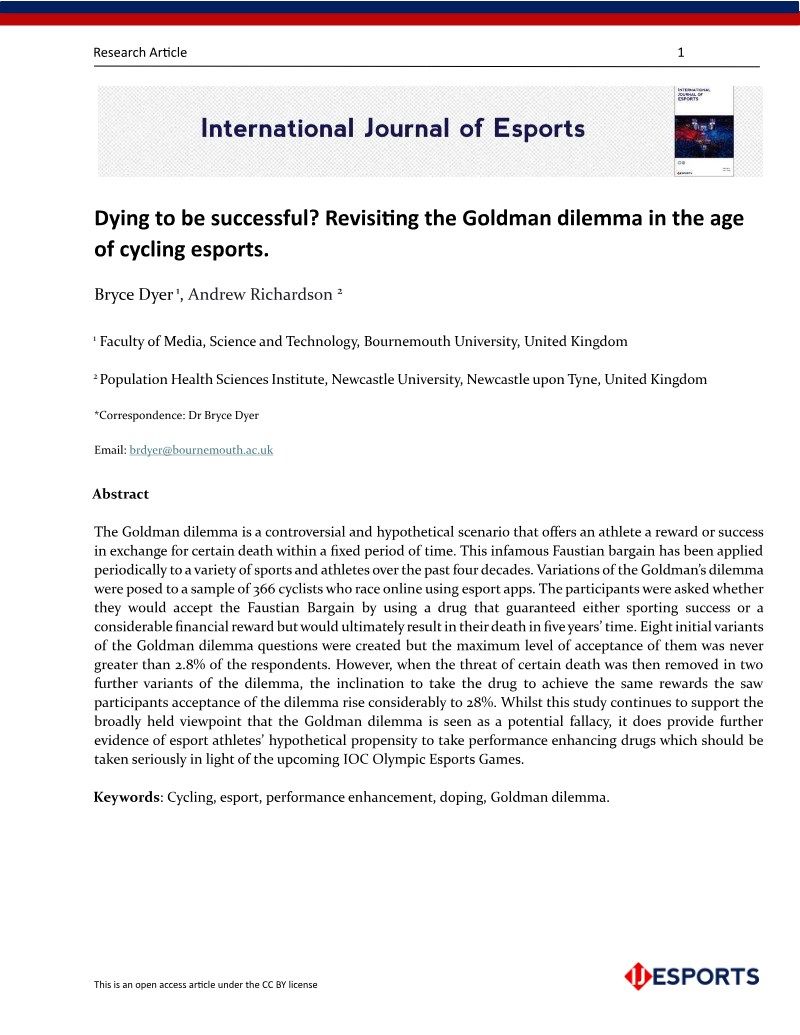
International Journal of Esports · 2026
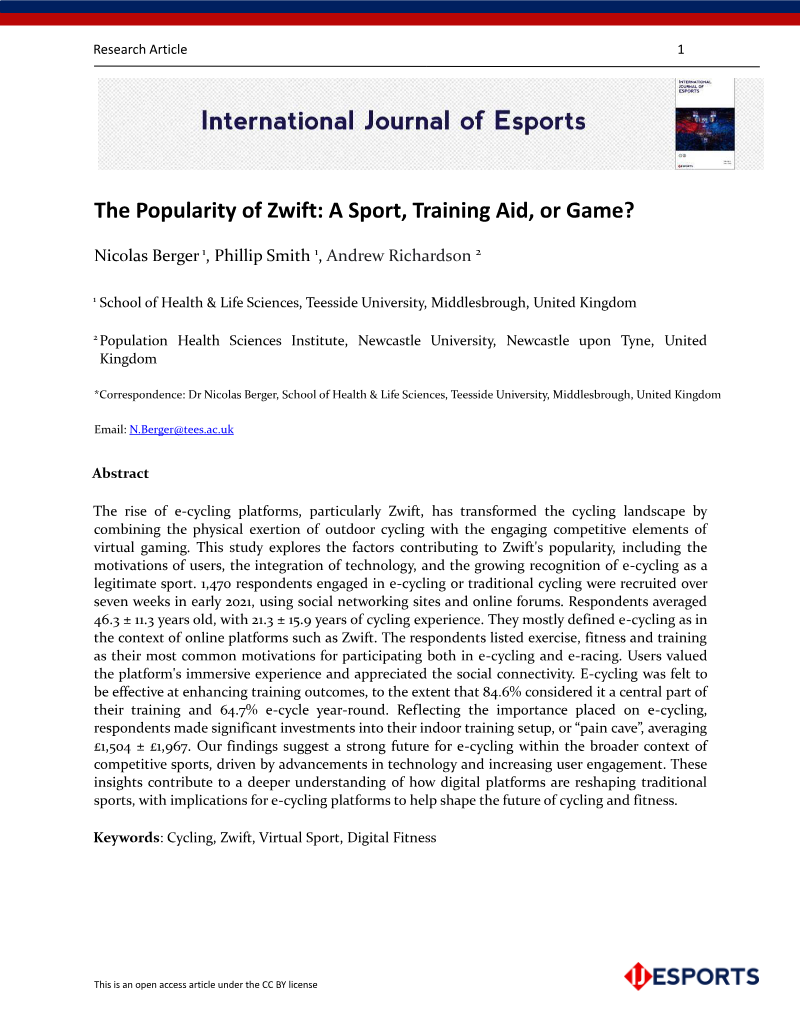
International Journal of Esports · 2025
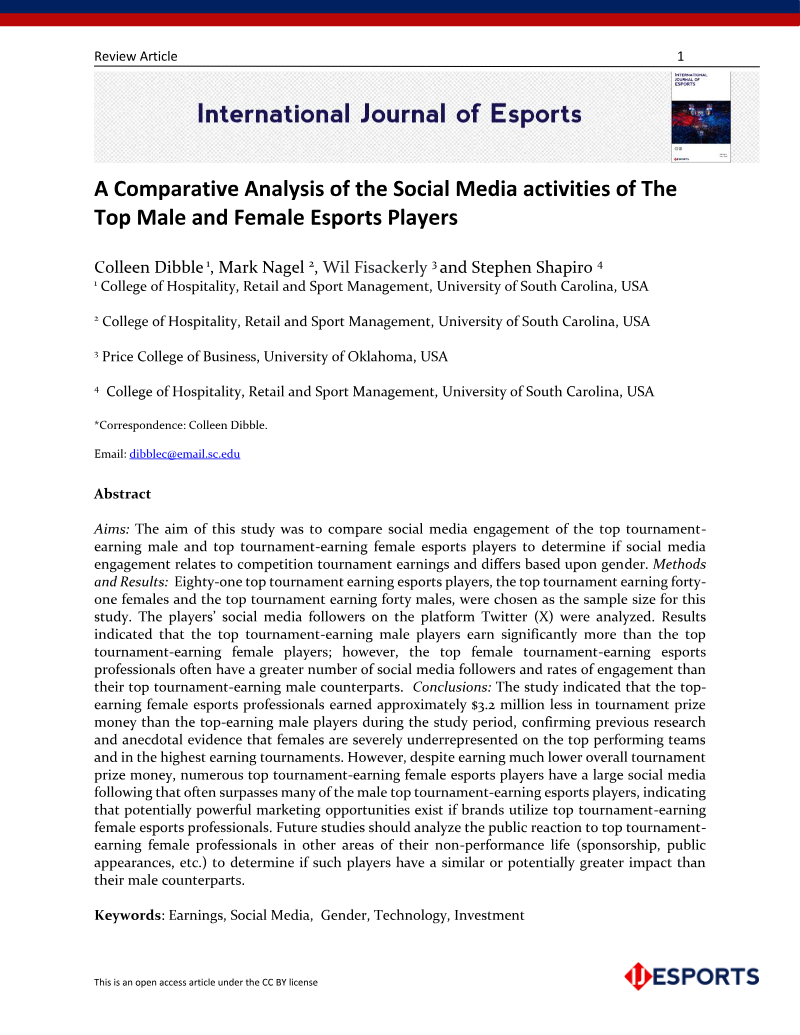
International Journal of Esports · 2025
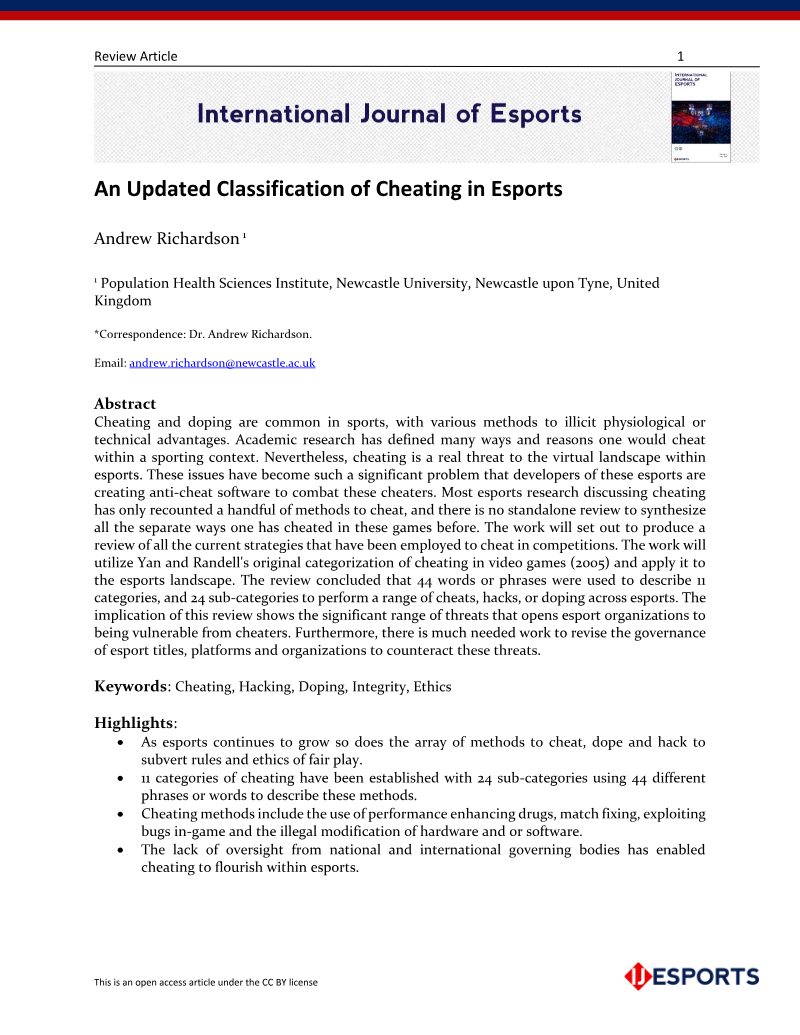
International Journal of Esports · 2025
International Journal of Esports · 2025
International Journal of Esports · 2025
International Journal of Esports · 2025
International Journal of Esports · 2024