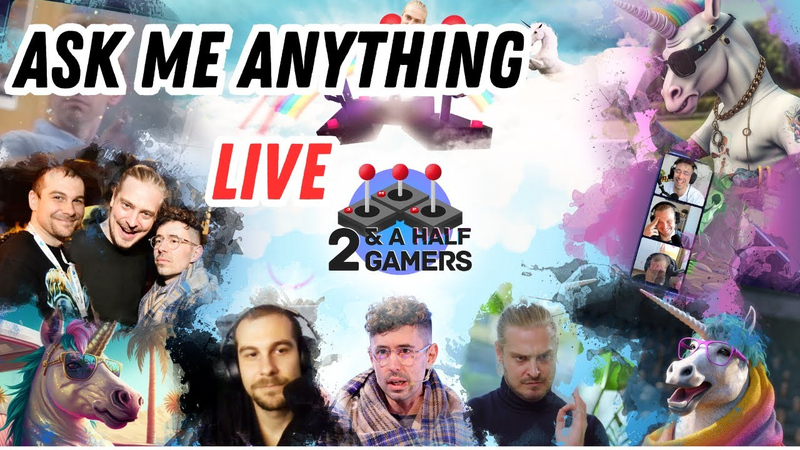
VideoTwo & a Half Gamers
🧠 How Deepstash gets 50% of subscribers from Web2App & 3,000 creatives a month
14 Oct 202654 min video
Transcript
Vlad, are you doing a lot on WebTap, as well? Or, I forget.
where I'm going. Exactly where I'm going. Tell us more how the Web actually looks like, because I know this definitely not the whole picture.
Uh yeah, yeah, yeah, we are we we started to to play with Web12 a couple of years ago. I think we gotten pretty pretty good at it as we started to generate revenue.
[music] [music] [music] [music] [music]
[music]
Hello, everybody. Hello. We have a special episode, once again. And we are going going to talk about Well, you will see. My name is Matija Lančarič.
I'm Felix Ballner.
I'm Jakob Adam.
And we are your hosts, and we have two special guests, not one. We have Vlad, and we have Jeff. Guys, welcome to the podcast. Jeff, welcome back. But first, Vlad, can you introduce yourself to the audience, and then I'll give it to you, Jeff, to just remind our audience who you are and where Why are you here?
Yeah. Hello, everyone. I'm Vladimir. I'm a one of the founders of Deepstash. Although, we now have more than one product, and we like to call ourselves smart heads. But yeah, I'm the
founder of Deepstash and uh yeah, we build an educational apps on the iPhone and Android, of course. Can't forget about Android.
It's fine. It's okay. You must probably make more money on iOS, right?
Yeah. But I was myself I was an Android guy until, I don't know, 2 months ago when I returned to the iPhone, so.
Can you tell that to Yakub as well, please?
Yeah, he needs to come back on iOS.
What do you mean come back? Like he's he was never on iOS.
He never had an iPhone.
He never been on iOS. Be real.
Okay.
Anyway, Jeff, welcome back. Welcome back.
to be back. Second time, I think, on
Yes. How is your mic?
It's better It's better now. We had you know, for those those listening, we had some troubles before, but we're good now.
Yes. Yes, so please can you remind our audience like who you are and what company are you working for?
Yeah, quick quick intro. I'm Jeff. I lead our origination team here at PVX. PVX, if you listen to the show, you're probably familiar with us, but we're a
fintech company. We provide non-dilutive growth capital in the form of user acquisition funding. We also recently announced a credit card offering for mobile developers spending on user acquisition.
Yay! I can't wait.
sell on our podcast.
Yes, as you can see. So, Vlad, can you please unpeg your business a little bit more as an introduction? Like what's you know, you are saying you have the number one microlearning app worldwide. I hope I mean, yeah. Can Yeah, and unpeg it, Vlad, please. And then Yakub is going to go over the whole whole stuff, so we can we can show our audience like what what are we talking about.
We started making educational apps right before COVID. Our our main product is is Deepstash and it's a product that surfaces key ideas from long-form content, mostly books. It started as a free platform during the COVID days, uh but then transitioned into a
into a premium offering. So, now people can uh purchase subscriptions to get access to more content, get rid of ads, save more of these ideas, and and things like that. We also have uh Paladin, which is a new a product. It has almost 2 years. It's the original, I don't know, history history app. And we can go into details how we decided to expand into history. Uh it's a cool story. Um and we're testing a few others. You have there by Lemon Imperial.
Yes.
All of them are in the same space, which is education. We're trying to make education fun, entertaining, move people from, I don't know, doom scrolling into some meaningful experiences. And yeah, we have quite a lot of users and
downloads and things like that.
Yeah. So, nice.
Yeah, we see from
Have Have you used it already?
Okay. I mean, this is a nice chart.
Yeah, yeah.
Hello. Well, okay. Yeah, cool.
Yeah, so a little bit of a let's say a ground here. Just to see the the app itself, like it looks quite
smart people is amazing, by the
Yeah, yeah. It looks quite quite minimalistic. I have a little bit of a let's say gameplay here.
Oh, well, you you changed.
What do you mean you changed?
Sure, I changed.
[laughter]
No, that's what I meant to say. You kids. That's you kids.
like it was hard to actually find a video of the actual uh gameplay screen, but like this is this is how it actually looks like. Yeah. It has a very nice onboarding of you selecting, you know, I'm interested in productivity. I'm interested in, you know, learning habits. I'm interested in that. So, the the app immediately customizes the choices for you. Even gives you a little bit of a Tinder style onboarding of like
I want this, I don't want this. And it's very customized. So, so that's there. And like why this is not loading? And uh afterwards, it gives you into this, let's say, library of like first the things that you have in the the home menu here where in the home menu itself it kind of scrolls down on the like the customized things. Then there's a Netflix style of Netflix style of, let's say, or maybe
If your internet is [ __ ] it's amazing.
My internet is just like going Yeah. The
Whatever. If you're listening to this and not watching on YouTube, you probably think we're seeing some really interesting stuff right now.
Yeah, here it is.
And and you make fun of Jeff and his microphone. Come on.
I had to preload this. Anyway, so you have similar stuff as for like a Netflix style screen where there's like all these books and everything where you can
choose and like go like without the customization. And then there's your library which is actually the thing that it's kind of one of the more important you can even actually scan your own books and put them into the app itself and just work your way there because it again is based on this whole fact of microlearning. So, it gives you everything in this very nicely narrated chapters. And it's actually I think if we can get the gameplay here. It actually looks a little bit of like a video, but it's not a video. It is like a image. Then there's a little bit of text and there's narration.
And afterwards there's some interactions where you can
Yeah, but even like do like a little bit of a quiz or summary at the end to apply your knowledge and stuff like that and then it pretty much goes from there. And if I remember the monetization is like a standard subscription where there's a limited amount of content enabled in the free version. I think something around 50 up to 15 books and three of your own?
What was it? Something like that.
Yeah, you have a limit on how many ideas you can save and how much content you can consume without being I don't know
interrupted
being sent interrupted by ads and other other I don't know forms of unwanted interactions, let's say.
Yeah, cuz I think if you reduce the quality
Yeah, yeah. So, majority of our users are still on the free plan, but more and more upgrading. That's how we pay the bills through our subscribers.
Yeah, and then I even got an interstitial for your second product for the Paladin.
Yeah, yeah, yeah. We started to cross-promote some of our products and uh by the end of this year, we will be able to have like a bundle of all our products under one subscription.
So, yeah, this is something that we're quite excited about. Nothing to announce yet, but it's something that we're actively working on. And we tested this one not just through I don't know ads, but through content references. So, for example, if you used our product in in uh in July, August and you happen to read I don't know any book by Homer, whether it was the Iliad or the Odyssey
Mhm.
you would have gotten some sort of like a pop-up saying, "Hey, you could experience the the full story on Paladin where we have this whole uh I don't know video-based storytelling of the historically accurate Yeah, yeah, yeah, yeah, we're heavy into into AI. Although, we do have we do have a team of editor historians. I mean, like uh we are quite opposed to one another history AI slop that's on on social and we put a lot of research into material
that ends up in in our app.
So, for you who are watching this, I took over the screen because my internet, like two streets away from Yacoub's, actually working. So, here we are seeing actual gameplay. So, now you can talk.
Funny you say gameplay. I mean, like
Yeah, I mean, come on. usage gameplay, same thing.
usage gameplay, yeah, yeah, yeah.
Let the hours speak. But, but actually, like when you open the book and go into these like bite-sized pieces, it is like feels like level-based because again
It is.
each idea is like a level. So, for instance, I opened the, you know, Sabotage by Your Ego whatever book and they were like already like this will be seven ideas. Let's cover these seven ideas one by one and each will be like one specific
Yes.
chapter.
Indeed, yes.
I Well, that's that's pretty nice and uh if I understand correctly, as you said, the whole portfolio kind of tries to work in unison with
pretty much everything deriving or going into each other where, as you said, with the Paladin app and then the other apps, which by the way sounds like Harry Potter spells to me. As for the As for their names, but looks cool and I really like the visual consistency between those.
Yes. Yeah, I mean, like we feel like all of our apps focus on a specific vertical and if we are to talk in business terms, in product terms, they have a a different experience. So, for example, booking give you like the abstract ideas, the core principles, and and things like that. Where, I don't know, Paladin goes more into like storytelling, the drama, the the events. And actually, that was the key insights that made us start a new product because I know ideas, everyone loves ideas, but they are quite abstract. I mean, how many of them can you consume
on a daily basis before your head blows up? That's why I mean, our our mascot is a guy with a head on fire for the same reason. But if you if you have some storytelling, some drama, if you get some characters, you get some intrigue, and things like that, some Game of Thrones style action, which is how how we see history, that that could be a a good complement to the pure intellectual side of things that exist in Deepstash.
Shall we talk a little bit more about the ads? I guess, as you said, like I got an interstitial of Felix. You had some questions there.
Yeah, no, no. I I was super curious, right? Because you're clearly doing some cross promo. I wanted to first ask about that cuz it's one of the things that everyone likes to talk about, but I don't think it's ever been well implemented and it's ever yielded any big companies any good results. I'm just wondering what kind of results you're seeing with the cross promo and what you're doing to kind of make it actually
work if it is working.
Well, we only started to to play with them. So, we don't have a lot of data. Uh But what we're seeing, and I don't know if I can offer an insight on past failures, is that for these to work, they have to they have to be super contextual. So, for example, like I don't know, if you read something about like habits like you are showing on the screen right now and we show you like, "Hey, we have a history app." Probably not as relevant. Uh it feels like an interruption. And this includes our our app. But if you're reading, I don't know, Iliad and you're reading something about I don't know, Achilles, and we tell you like, "Hey, do you want to learn more about Achilles and we have his whole story in this other app that you can experience a click away. The the pick up is is way way higher.
From from our limited test is like a 10x difference. So con- context matters. So yeah, I mean like It it it it all depends on on on this element alone. So yeah, we are pushing our other products through I don't know ads from one to the other and those are probably I don't know, industry standards in terms of performance. What I think makes us different is this contextual contextual linking. And there all these subjects whether it's I don't know, history, ideas from books, psychology or business can be intertwined and that's why we think the the the linking would would work for us. But of course, that means that our content strategy, our product strategy has to be in sync and we have to take all of these into account.
Right. How does it actually work when
you're a subscription app, right? So I I'm an AdMob guy. Subscription apps tend not to like ad monetization, but if you're doing cross promo, you must have had a discussion at some point about showing ads as well, right? Are you currently showing any ads or how are you doing it?
Yeah, yeah. In in some instances, yeah, we are part of the Google advertising program or something like that. So when we don't show our ads, we show ads provided by by Google AdMob I think or something like that is their their service. Yeah, it brings in some some revenue. Nothing to brag about. It's uh We we tried it. I don't think we can build a business just on advertising alone. Um so yeah, we look at that as a as an as a bonus, let's say. And that's not true just for for us. I think all subscription apps are treating it this way. Have you seen any company that is living out of the
advertising?
Yeah, quite a few actually. I mean I mean I've I've worked I've worked with a lot of them, right? But like basically usually what I say is that the fundamental thing is ads are not a revenue source primarily. They're a data source because basically tells you a lot about what users actually are. Right?
All right.
Right now you're working with one network. So, if you're only working with one network, basically what happens is that they rip your eyes out because they have no incentive to ever change their margins. If you go from working with one network to at least two or three or four, you probably will double or triple your revenue that you currently are generating. So, if you're generating a thousand dollars a day, you'll go straight to three, four thousand. And essentially I used to work in a network, right? And they're all evil pirates in a way because they want to get as cheap a supply as possible, right?
Cuz you are a saint. You are a saint.
Yeah. So, if you're only working with one like if you're only working with
Google, I had a client like two weeks ago. They only had Google in on AdMob. And then they put in two other networks, Unity and AppLovin, and revenue tripled, right? Because there's no incentive for Google to be fair to you. So, super easy on that, right? The other thing is when you're working with subscriptions, right? It It's also quite interesting to look at ads and the data you get from ads to actually derive what type of user it is, right? So, let's say if you know on average that you get subscriptions from a user that's comes from, for example, I don't know, the states, and this type of user usually subscribes within 36 hours of using the app, right? If they don't subscribe after that, it kind of makes sense to go the Duolingo route. And what they're doing is essentially what they do is if you pass by the purchase windows, by the different like data that they look at, then they start rolling out the rewarded ads and interstitial ads, right? And if you look at Duolingo's
quarterly filings, I think ad revenue for them is about 50 to 100k a day now. But the the key there is that they start showing it for everyone that they know won't subscribe. So, it's a different way of thinking about a paywall, I guess, cuz it's soft, but then exploiting more ads, right?
That was a form of secondary monetization, if you will.
Secondary monetization, but also that helps you with the other ones because the data from ads, if you think about what it is, it also tells you something. If like what you're getting paid for ads for different users actually tells you a lot about what type of user it is, right?
Makes sense. Yeah, thank you for the lesson. Took some notes.
Nice.
Yeah, get another working there. The Google are having a great time with you right now.
[clears throat]
Well, besides ads, like this is in-app purchase revenue, subscriptions, and I mean, I can see clearly like what's
Vlad, are you doing a lot on web app as
well? Cuz I I forgot.
Yeah, yeah, exactly. Exactly where I'm going. Tell us more how the web actually looks like because I know this definitely not the whole picture.
Uh yeah, yeah, yeah, we are. We we started to to play with web 12 a couple of years ago. I think we gotten pretty pretty good at it. As [clears throat] we started to generate revenue, I'm not the Apple fees became important.
[laughter]
So, yeah, we we started to look into, I don't know, ways that we could we could diversify. It was a Yeah, it was a tragedy at first. We didn't think we could make it work, but through through Yeah, through iteration, I think he Yeah, now, I don't know, more [clears throat] than 50% of our users or our paid subscribers are into the to the web. But, it has some some some spillover healthy spillover effects into the into the App Store, as well.
So, especially because our our marketing is so much, I don't know, educational, entertaining, and things like that. And we're trying to push our brand more and more. Uh, you can see that in, I don't know, app searches and app installs and stuff like that. So, it's a it's a healthy spillover into the App Store, as well.
And do you have um, specific landing pages for the web 12 and or you're sending it to the to your deep stash.com landing page, which
We we have quite a few now. We have multiple one, depending on depending on I don't know, the advertising promise or the the need or the problem that we're addressing. So, that you can be sent into into a into a landing page specifically focused on on whatever problem or need that we think our product can can resolve. And that whole thing connects to
the advertising connects to how the account is being configured. So, your I'm a first experience matches matches what you saw. We do that for Deep Slash, we do that for Paladin cuz a lot of the advertising for Paladin are just I don't know like trailers or snippets from the stories that you can see in the app and we try to connect the two as much as possible. That by itself is a technical challenge. But yeah, we're we're getting better and better at it.
Yeah, I don't want to go too too technical with the web to app questions, but it's very very important part of the the UA kind of activities, especially for apps and I'm you know, I'm really curious why it's not as popular. I mean, it is kind of getting popular in the gaming business, but not as much as I would I would hope for. But
Well, I I I've been talking to a lot of
the companies who are curious about
Yeah.
our improvements here and many people have tried to replicate what we're doing with limited success. But I think a lot has to do with the category that we're playing in. And our our focus on on on education because I think this is kind of like the unfair advantage. We are not I don't know promising another but I don't know tower defense game or or or things like that.
[laughter]
Which might be quite quite fun. I mean, the the the subscriptions that were that were that were selling and the promise that we are promoting has to do with education. Of course, it's fun. It's edutainment and stuff like that, but
Yeah.
It people usually associate this category with like an investment. It's like money well spent in comparison to I don't know, the gaming world which is perceived as pure
entertainment. So, yeah, I think we have quite a structural advantage here. But, the other one is like I don't know, company culture. We are when we started to play with this channel, it was a failure and truth be told, I was one of the people who thought this could never work. I was like, [laughter] this the number were so bad that it was like, no, let's let's I don't know, let's not spend time on this one. We we there's no way we can improve on on on these terrible numbers. Thank God I have a co-founder that was
who was like, I think we have to iterate more and we figured it out and yeah, um after I don't know, billion iterations, we started to see to see the light at the end of the tunnels. So, yeah, it's
it's a very iterative process and you have to keep failing and keep failing while retaining your enthusiasm and I don't think, yeah, a lot of like companies have that I don't know, appetite for pain. It requires to make the the channel profitable one, yes.
Well, so to be a little more specific, if I could. Like I'm curious to get your opinions on maybe why why Webtoon works better with subscription versus gaming. My thought is that because with subscription apps, you actually the people only have to make the person purchase decision once, right? So, they subscribe and then after that it's actually basically an opt-out. So, yes, there's a little more friction in that web funnel up front, but once they opt in, their actually only decision they can make after that is to opt out. So, adding extra friction is actually helping your LTV. Versus gaming, it's like every time someone buys something, they're making that individual purchase
decision every time. So, if you add friction every time, it just compounds. And that's why I think it's like this has become so much easier, like it the LTV just works better for subscription, versus where you have to purchase like every day for it to work.
Yeah, I mean
make sense?
Makes sense. Also, it still be more complex to actually show a tower defense game in on the web. Versus like a quiz or an onboarding funnel or something which is pretty much text-based. I mean, I'm I can see that kind of working for some games, but not for all of them. So, I think that's first one. And I'm going to try the [ __ ] out of this on my games, which now I can
Which is a tower defense game?
Which is also a tower defense game. So, I mean
Sorry, man. I didn't want to
So, that's that's No, no, no, that's This is good.
I thought you could get it off. I was like, this is great.
This is great, yeah.
I didn't know what I was doing.
No, this is perfect because No, because now, thanks to you, I have
these few ideas that I can actually implement right away. And there are some tools like Geeklab as like actually surpassed, like there's a workaround on the like actual landing page. You can just do it through SDK, and it simulates the web-to-app kind of flow. Which is one of the options, but then, yeah, I mean, I want to have it on the on on landing page and then do all do all the all the all the pain-in-the-ass activities that I need to iterate on. But, yes, it's still the connection is a little bit harder in the game industry rather than in the app business. So, I can I can understand that.
And that's why it's it's important like how do users perceive the purpose of whatever it is, the onboarding, the funnel, the whatever it is. Yeah. Because in our case, and it's actually true, I mean, it's it's part of a journey, it's perceived as a as a
customization journey.
Yeah.
With the end goal being that you're going to get into some sort of educational experience that is more true to your your interest and your values and and stuff like that. That experience is a little bit harder to replicate with a game. It depends on the game, I guess. But in speaking in general terms, I think this is why, I don't know, for subscription, and it's not just for education. I mean, we that that brings the the value element, but that I you see that with I don't know, like micro drama apps, which are the opposite of education, it still has to do with Yeah. Personalization.
your brain cells are dying.
Yeah.
Can I ask a a question kind of about the So, one of the benefits of gaming, right, is that you can capture whale spend. And one of the things that we've seen while reviewing some of the large-scale subscription apps, for example, Finch, is that basically they design their subscriptions on web, so you can
actually gift them, and you can gift unlimited amount of subscriptions to actually capture whale spend as well. Is that something you've experimented with as well, or something that's on the road map?
Uh no, we haven't experienced Probably something that would come to us in terms of I don't know, it's not a whale replacement, but it's more like, I don't know, institutional adoption. Which works more and more with with with Paladin in particular. Cuz we get like these emails like, "Hey, I'm I don't know, I'm a history teacher at this so-and-so school, and I would like to gift this to all my students." Or we have a a a business guy in a uh in a master's program who wants to gift to Imperium to his students, and like, "Can we Can I buy you I don't know a thousand seats in bulk and things like that. These are again anecdotal instances but we think we might get to a point where we have that that offering in
place. It's it's different than I don't know gifting a subscription because it has to do with I don't know user management and tracking and invoicing and I don't know things like that. Uh especially when when you have I don't know people that might be underage involved you have to maybe I don't know curate some some of the content library and and things like that. But yeah, we can see that as being something that we we do in into the future. Um and although we get a lot of inbound with with this we don't have the bandwidth right now to to work on it but I do expect that I don't know maybe next year we're going to have some people that can work on this one. Not exactly what you asked Felix but
Yeah.
in a similar vein yeah yeah.
No we you thought this along the same lines. I get it.
Oh yeah.
Well but you know I'm looking at this graph
right now and there are some you know spikes. And I would really like like love to know like what happened because this I mean it's going in the right direction. I see here is a spike in January. There is another spike in January funnily enough. And but now I mean this is just going up and right. And like what happened in between and also like where is actually you know the PVX partnership kind of fit where does it fit in this in this graph as well like I would say you know somewhere here before the scaling what you know I would like to hear your answer.
I will let you answer.
Yeah, yeah, yeah. So, to explain that chart I mean the basic explanation is seasonality with educational apps. I don't know, after Halloween, beginning
of I don't know, November, December, and mostly New Year's is I don't know, what's called Q5.
Yeah.
That's where And it's it's a human nature. I mean, a new year, new me. Everyone wants to improve themselves. This is the time when everyone goes on the App Store and is looking to improve themselves, to learn more, be better, things like that. And yeah, of course. I mean, like January is the start of the year. Yeah. New Year's resolutions, yes. I mean, we don't we don't have a
task list app or or things like that. But still
Still.
Yeah, it's still in the same vein. I want to be better. I want to read more. I want to I don't know, improve myself. I want to get inspired. And yeah, I mean, like this mid-year push that that you're seeing is just us getting better at telling our story, I guess. Uh because we're moving from I don't know, a general
general prob general I don't know, value position in terms of I don't know, be better, replace some of your doom scrolling with education, these like I don't know, general statements. Uh we're now connecting our our content with some of the things that were that we're doing. So, I don't know, we might catch you with an ad about Schopenhauer and existentialism. And it's like can you make money with can you make money with Schopenhauer or with Homer or whatever? If you ask it like that, probably not. But there are probably, I don't know, a thousand people that might be attracted to to that thing. And if you have a content library extensive enough, and you could go into a thousand different directions, which which means that you have a platform to to create all this content, to connect it with advertising, and then you have the you have the
the the cash provided by a by a capital provider, then yeah, you could you could let a thousand flowers bloom. And yeah, this is kind of like what's what's happening. And you can see that with Deepstash, you can see the same thing with with Paladin. I mean, the beauty of being focused on a very uh I don't know, very clear category is you can translate the learnings from one to the other. And this if something works with Deepstash or with Paladin, you can you can translate some of the learnings from one to the other.
Yeah, also, I don't know, but how did you kind of ended up in that situation where you said, "Oh, you know what? Like we have a great product. Like we know like this can scale. Now we just need money." Like where did where did that idea come from?
Well, they it's it doesn't it doesn't usually start with that. We always believed
believed that.
Yeah.
What happens as you transition and you make some of these investments into like, I don't know, web funnels, and you start to add to add the different tiers. Because we when we were on on on in-app purchases only, I mean, our most popular subscription was the one-year plan. And this is true for probably a lot of other subscription apps. But as you move into web, you have to diversify a little bit. So, you have to give I don't know, like a 3 months or half a year plan or things like that. Maybe even like a month plan, which would be like day trial type of a thing if you are super confident in the value of your product. Uh and as you as you move from 1 year to lower subscription tiers, uh depending on how much money you want to invest in marketing, your payback becomes becomes important. Uh we had a we have a
pretty great product and we have a great payback. Probably that's why um I don't know PVX decided to to work with us and us with with them.
Yeah.
But it's still I mean it it it partner like PVX comes in and it it it covers that that that cash flow issue that you might have by the time you I don't know you invest money in marketing and you pay I don't know Diablo in the Facebook and everyone else and the time you make your money back. And yeah, it's a it's a it's a great setup. I mean, I don't know how companies did it before a company like PVX showed up. I mean, like they were probably raising money and doing like equity financing for this sort of thing.
They go to the publisher and get off 50% of the revenue.
Whoa, whoa, 70% man. Like 50 would be a really nice.
Yeah, that's how it was done before.
some of those deals go down, right?
If you think about what we try to do, I
mean, we we basically the way I describe it is like we try to give people the ability to spend as much as they possibly can, so they can maximize the total ROAS dollars that they're making. And like we we actually sometimes we have these conversations with Vlad and we've had these conversations with other people where we're we almost said it to like, "Hey, we think you can actually spend you should be spending more. Your paybacks are quite good, quite fast, but actually your ROAS curves are so good that we think you might be leaving money on the table by not, you know, rather than say having a hypothetical like four or five-month payback, have your payback be like eight, nine months, but you will increase your scale by three, four X. And you will have so like so many incremental gross ROAS dollars, you know, despite having a, you know, {quote} {unquote} longer paybacks. And that's what we try to do. We we say don't don't worry about if you have the balance sheet to support that. Don't worry about hey, like okay, well, but what about our paybacks? They're stretching out. You just worry about pushing as much throughput kind of into the machine. And as long as the ROAS
holds, if the ROAS starts to degrade, then then obviously it makes sense to pull off the gas a bit. But as long as the ROAS holds and you're you're, you know, scaling, don't worry about the cash flow management of it. Like that's kind of the whole point of what we why we exist.
Yeah, but Jeff, like for you, since you are working with a lot of games, I mean, makes sense with the quality score and everything. Like how does the like the underwriting work for for apps businesses? Cuz
It's it's actually almost easier, right? Because the they're much more predictable curves, whereas within gaming, you know, once games scale to a certain level, the curves get I would say very predictable, but because it's not, you know, a a monthly subscription, it it actually the games games can have a lot more volatility. So with consumer subscription, we we actually, you know, find the underwriting can be easier cuz it's just like a decay curve, right? You you just have people, you know, unsubscribing every month or whatever.
And I I think we're pretty well known within the gaming space. Partially, I'll actually give you guys credit cuz we've been sponsoring your podcast for a while and I think, you know, we get people coming inbound from that often. I'm not just saying that. But consumer subscription is actually about half our business now. So we're doing a lot within short dramas, health and wellness, education, fintech. uh We're funding about 60 customers right now and, you know, call it around 40 million a month of of UA spend and and probably half of that is coming from from consumer
have been some of the early consumer ones. I remember, Jeff, when you sent the first contract one of the red lines that we we was like, "We're not a game." cuz everyone's like, "Oh, the game this, the game that." And we're like, "What are you talking about, man?"
Yeah. Yeah. I think I think probably true. I think you probably were one of the earliest ones.
Yeah. We're like, "What What did you have I mean, so since they were from like the earliest ones, like what was the
the KPI that made made you say like, "Oh my god, like this is it. Let's go. And let's go more into consumer apps."
It's We've been working together so long, I don't remember the exact KPIs, but like essentially, I do remember that I reached out to Vlad on on LinkedIn as I as I do often. So, we we, you know, but probably was one of those first spikes, you know, maybe that that first up stack. Saw it on uh you know, saw it on App Magic or Sensor Tower and and just, you know, reached out to Vlad to see if they were interested. This was honestly before UA financing was like really a a buzzword. So, Vlad was probably like, "What the hell?" Like
Yeah. What are these guys I have a I have a bag of swag. Do you want some?
Yeah. So, I think now the the conversations are are maybe even a bit easier because it's like, "Hey, I know what UA financing is. Like tell me, you know, where you guys are different or or whatnot." But I think back then it was a bit more like, you know, "What the heck is this?" But yeah, I remember we had a few conversations and and then maybe it actually wasn't initially. I think you we circled back. It sort of
was like first you didn't necessarily need the money and then once you started scaling up, I think we got back in touch and it was like, "Hey, now's now's the right time to to take a look at this."
Well, maybe I wasn't I wasn't sophisticated enough. I mean, like
[laughter]
maybe our first conversation was like, I understand like 50% of what Jeff is telling me, but yeah, apparently we can we can spend some money without getting diluted or some sort of magic and then I know it probably I had to it had to sit with me for a few months to Yeah. But yeah, I mean like we're quite me and my my co-founder and the team were a little bit old school in that sense. I mean we come from a B2B SaaS SaaS world in previous life and uh we are we we kind of have to see it to believe it, you know? It's like uh It one of the amazing things that Jeff and the team have, they have all these prediction models and uh they probably
know your business better than you know it yourself. And yeah, you have a call with Jeff and their team and like you guys are killing it and like one year you're going to do this and that and you only see like I don't know today and tomorrow and like maybe And but yeah, they're they're mostly mostly right. And yeah, you you you have to be in a in a dance with with your capital provider and it's an element of trust that builds in time.
Nice. And what what kind of changed after you got the money besides the the scale? Like did you need to do like different things? I mean I see 3,000 creatives on in last 3 days which if anyone is listening to this podcast and watching the show like this is amazing.
This is good. This is This is great.
So that's that's nice.
Uh Yeah, I mean like it it
You have to look at like a partner like PVX as putting on gasoline on the fire. And so it's it has to amplify something that it's working whether that's like I don't know, culture or creativity or things like that. So, I I think we had we had some of that already. Um but I don't know, growing and I don't know, getting more users and more everything allow us to to do more and more of what was already there. So, yeah, I I mean, I that that kind of applies to money in general, but even more so to, I don't know, UA financing, I would say.
Yeah, for sure. I mean, we're just trying to take away the blocker of like you worrying about cash flow. You know, there there were not certainly all the results are are a testament to that and and any team we work with. I mean, PBX has nothing to do with building the ads or the content, anything like that. It's just removing
the road block of, hey, okay, if things go right, where do I where do I get the money to pay for the stuff? Uh that that's all we're we're trying to do.
[snorts]
Nice. Okay. Oh, man. How big How big is the team on the UA and the creative side?
Like 30 people.
Ooh.
That includes
30 people. Wow.
And yeah, but that includes the advertising side. We also invest a lot in like organic channels and because like what usually works in in ads, like the ones that things that you're looking at, these are storytelling type ads and stuff like that. A lot of those actually work on organic and we have plenty of channels where where we push these these snippets of funny, entertaining, educational videos. And if something blows up, then we can probably I don't
know, amplify it even more with with advertising dollars. So, yeah, it's a it's a it's a decent team, but we're about I don't know. We're getting close to 100 people in total. So, we're
Nice. Can you unpack the the organic piece? I mean, do you have like a different TikTok fan pages or Facebook fan pages and then you just throw these types of content there and see like what kind of blows up? That's
Yeah, yeah, yeah. We have the official ones, but also we have some dedicated pages or accounts around certain niches or formats that we're constantly creating. So, yeah, and it allows us to to test and to create to create an organic audience, but also to discover something kind of if it's if it's something gives organically, I don't know, viral, then it it it will work 10 times better as a as an ad as well. And
I feel like the the the social networks, the Instagrams of the world prefer this mix because they they they want the the ad and the organic to, I don't know, kind of blend in a way.
Yeah, the engagement and all the all the
Exactly, yes.
signals.
So, uh yeah, that's kind of that's kind of how how how it works. And yeah, I mean like this whole creativity on on advertising also blends with the the content that we are we're producing inside of inside of our apps. I mean, we have billion pieces of I don't know, ideas and cool stories that we could we could tell and uh I I think our marketing team does an amazing job. It's like people this content and make it fun and get people excited about it. Yeah.
I'm some of the ads look really, really great. I'm just looking at the GTA 6
style Paladin ad.
We We see this We this with like We see this with micro dramas as well.
When you have a lot of content, you can really make the UA machine go brr.
Yeah.
But by the way, I mean like you mentioned the GTA. Well, actually GTA is going to be and we're not a gaming company, but I would say I don't know, GTA is like a cultural event.
Yeah, it's going to be a cultural event, that's for sure.
Yeah, exactly. Yes.
Uh so everyone knows about GTA whether they're gamers or not. So uh speaking about like crossovers and stuff like that, uh GTA is going to be one of the crossover things. So for example, you're going to start to get some recommendations in Deep stash about I don't know, the history of gaming. Like whether it's I don't know, classical books like Masters of Doom about id Software or whether it's the the actual story of and and books about GTA and then on the Imperio, you're going to understand the business of gaming with how a studio
works and how money gets made and things like that. And in Paladin, you're going to see some history around the the the actual cities that are covered. Whether it's Miami or I don't know, the the gangs that are being presented in in in those games to understand a little bit about the history behind the the stories. So yeah, I mean like that's kind of like one of the We're trying to hang ourselves on piggyback on these cultural cultural moments that we can use to to spread our our application. So we had I don't know, the Nolan with the The Iliad and The Odyssey. Uh we're going to have I don't know, in a few weeks we're going to start what start something with Halloween. So we're going to have all the vampire books in in Deep stash with their core ideas about what it means to be a human and like what is Frankenstein all about and
uh what's immortality? I don't know, the philosophy behind I don't know, horror novels. But in in in Paladin, you're going to see, I don't know, Vlad the Impaler, which happens to be a I don't know, a Romanian hero, but the inspiration behind Dracula and you're going to have Dracula and how [snorts] in in Imperium, how uh how Halloween became a big business and and and things like that. So, there are all these I don't know, cultural events that that allow us to push our our applications and
Nice.
and our content.
That's awesome. Also, I see I see quite a nice use of AI as well. So,
Mhm.
Yeah.
Yes.
Definitely.
Yes. Uh definitely, yeah. I think all the companies have to use it. I mean, like you're asking how how we're able to push so many I don't know, traders and content out is because we built a lot of the a lot of the tools.
I think I know that there is a lot of like I don't know, pushback in the gaming world against against AI, but in in terms of
Not in the mobile world.
Not in the mobile world.
Vocal minority, I would say.
That's
[laughter]
peaceful, so man.
Not peaceful.
Yeah, yeah.
Yeah, yeah.
All right. Okay, okay, okay.
But yeah, I mean, like in terms of tools and automations and things like that, it's it's amazing. I mean, like I would say the infrastructure that exists in the company, it relates to all those workflows, automations and and things like that with we that allow us to to operate with I would say a limited number of of colleagues and and and and people because everyone can do 10x what someone used to do a couple of ago.
Just curious, do you by any chance use open source models or just a commercial ones?
A combination of both. It depends on
That's great.
Yeah, yeah, yeah. Um it depends on on on the use case and even like in on the content side and the advertising side. I mean, you you you showed some ads that I don't know are like I don't know stickman figures and stuff like that that those don't require I don't know like X-Field latest model and and things like that. But the one that you're seeing right now, which probably it's a trailer from from the app and stuff. Uh This one probably is like the cutting edge and we're spending real money on on something like that. But yeah, we have like tier one, tier two, tier three. And uh Yeah. So, I see I see ourselves building more and more on top of like open source models as they're advancing so fast.
Yeah, and cheaper.
Yeah, and cheaper, of course. Yes. But we're at the point where I don't know, we use them both for for different purposes.
So, one last thing before before we go, I see all kind of social networks and stuff. No AppLovin, no playables.
It's on the road map. The playables are are on on the yes.
You're talking about the AI, man. You can do so much with AI, especially for your apps. Oh my god, you have you will have playable in like 10 minutes. Just take whatever you see on your Webflow and just turn it into an HTML file and then see you on AppLovin. See you on AppLovin.
Yeah, yeah, yeah, yeah. I know, I know, I know. And the AppLovin crew is is I don't know, quite uh I don't know, they're encouraging us to do it as well.
Knocking on your door.
Knocking on like, "Hey." [laughter] But we see it. Yes. Let's go. Yeah. There are so many opportunities and things that we could do. We just have to
I don't know follow a little bit of a overall map and pick our pick our battles. But yes. I think you're going to start to see some variables in Apple loving as well.
He's like
Someone from Apple loving hey Vlad can you start scaling your Apple
I think watching this show.
Yeah and then and then then on the other phone Jeff like hey by the way Apple loving you can scale you have all all the tools everything.
Yeah yeah yeah yeah.
Let me let me finish off by asking a question. It's actually a two-part question for Jeff. Would you say that money makes the world go round? And second question is who should reach out to you and how can they get in touch?
I like to say more money more problems but maybe that's not the [laughter] right message here. Yes, it it removes a lot of friction. People everyone should reach out to me. If you're you know it used to be only you know if you were spending kind of like a 100k plus we could we could work with you but now that we have our credit card offering it's actually targeted at you know folks still spending on credit card with their ad networks and kind of more of the long tail of folks just launching. So really anyone anyone can
reach out to me as long as you are spending on performance marketing then we want to be your bank and then provide you funding.
Amazing. Guys, thank you very much for for coming both of you Vlad for all the insights Jeff for all the insights from the from the UA financing side as well. And please listeners if you have any questions you have you know there is the comment section of the video or join the Slack channel and we see you next time. Thank you very much.
Bye-bye. Bye-bye.
Bye-bye.
Key insights
5 takeaways · ~2 min read- 01Deepstash acquires over 50% of its paid subscribers through a Web2App funnel, leveraging microlearning as a gamified, subscription-based alternative to social media.
- 02Deepstash's cross-promotion ecosystem with niche educational apps achieves conversion rates 10x higher than standard advertising channels.
- 03A 30-person team generates 3,000 creative assets monthly, utilizing AI-driven automation to maintain rapid testing and cultural relevance.
- 04Deepstash uses UA financing partners to extend payback periods and maximize return on ad spend, avoiding dilutive equity financing for user acquisition.
- 05The company plans to scale acquisition further by incorporating playable ads, treating educational content as a dynamic, interactive product.
Ask AI about this video
Summary
Deepstash has established a highly effective growth model by positioning microlearning as a gamified, subscription-based alternative to passive social media consumption. The core thesis centers on the efficacy of a Web2App funnel, which currently accounts for over 50% of the platform’s paid subscriptions. By prioritizing a single, low-friction purchase decision over the repeated transaction requirements typical of mobile gaming, the company has successfully lowered barriers to entry and fostered long-term user retention. This strategy is bolstered by a sophisticated cross-promotion ecosystem that leverages niche educational apps to achieve conversion rates ten times higher than those of standard advertising channels.
Operational success relies on a high-volume creative engine, supported by a 30-person team that generates 3,000 assets monthly. This output is driven by a focus on cultural relevance and interest-based storytelling, which allows the platform to pivot away from generic value propositions toward highly targeted, seasonal content. By integrating AI-driven automation into their creative workflows, the team maintains a rapid testing cadence that ensures marketing materials remain aligned with current user interests and platform trends.
Financial sustainability is achieved through a capital-efficient approach to user acquisition. Rather than relying on dilutive equity financing, the company utilizes UA financing partners to extend payback periods, thereby maximizing total return on ad spend. This liquidity allows for continuous investment in performance marketing and creative experimentation. Looking forward, the platform aims to further scale its acquisition efforts by incorporating playable ads, reinforcing its commitment to a data-driven, iterative growth strategy that treats educational content as a dynamic, interactive product.
Cite this video
Citation
Generating citation…















Comments