This represents an 8.7% year-over-year increase.
Page 4 of the reportThere was also increased engagement with finance and stock trading applications.
'Join Clash 3D' led global download charts.
This occurred in the U.S. and Europe, even as Google and Facebook remained top-tier global publishers. The market saw successful regional entries.
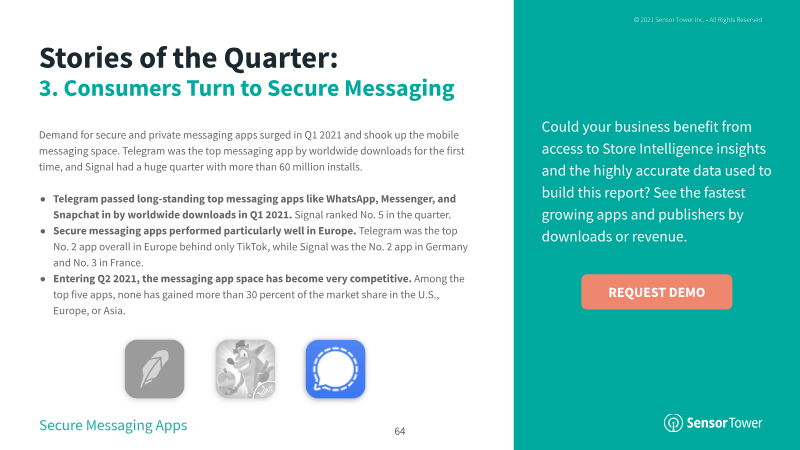
The mobile application landscape in the first quarter of 2021 experienced a period of robust expansion, with worldwide downloads reaching 36.6 billion. This 8.7% year-over-year increase was primarily propelled by a 15.3% surge in Google Play installs, which offset a slight decline in Apple App Store performance. The period was defined by shifting consumer priorities, most notably a significant migration toward secure messaging platforms like Telegram and Signal, as well as a heightened interest in finance and stock trading applications driven by global market volatility.
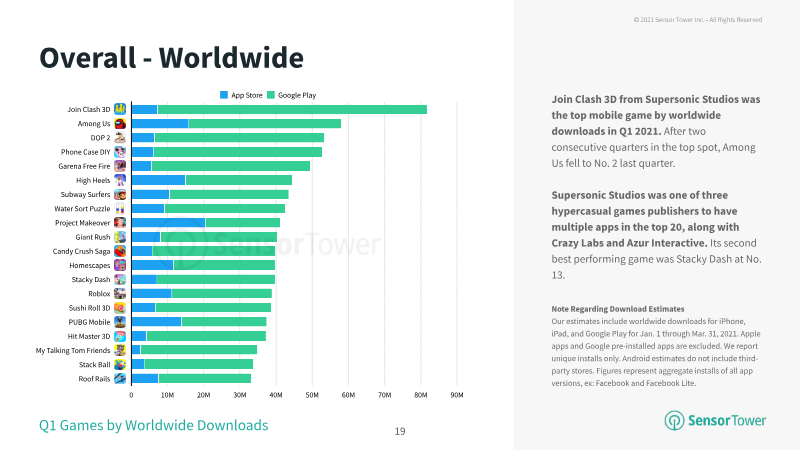
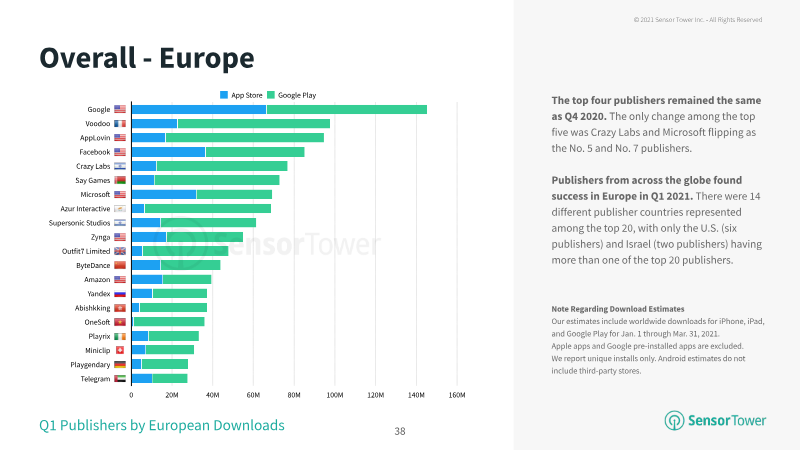
Mobile gaming remained a cornerstone of the digital economy, characterized by the continued dominance of hypercasual titles. Publishers such as Voodoo, AppLovin, and Crazy Labs maintained substantial market share, with games like Join Clash 3D leading global download charts. While established industry giants like Google and Facebook retained their status as top-tier global publishers, the market saw successful regional entries from new releases such as Project Makeover and Crash Bandicoot: On the Run, the latter of which achieved notable success in the United States and Europe.
Geographically, the industry displayed diverse growth patterns. China maintained its leadership position in App Store downloads, while emerging markets including India and the Philippines recorded the highest year-over-year growth rates. In India, the regulatory environment catalyzed a shift in market share toward domestic publishers. Ultimately, the quarter underscored a fragmented but highly active digital ecosystem where no single messaging or gaming entity held absolute dominance, reflecting a competitive environment defined by rapid consumer adoption of niche utilities and hypercasual entertainment.