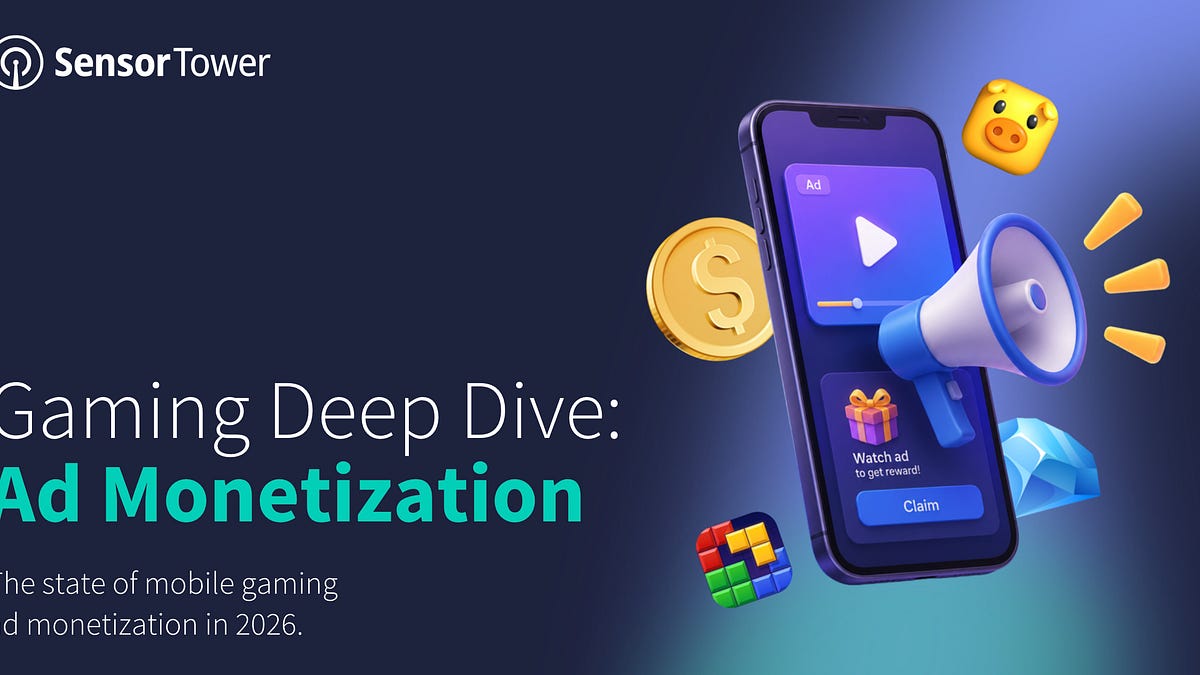
The mobile gaming industry is increasingly shifting toward hybrid monetization models as developers seek to maximize revenue in a stagnating in-app purchase (IAP) environment. As of mid-2026, 56% of mobile games incorporate ad monetization, a significant increase from 45% in 2021. This trend is driven primarily by the contraction of non-ad-supported titles rather than a surge in new ad-focused projects. In 2025, the mobile gaming sector generated $12 billion in ad revenue across 19 key global markets, supported by 2.4 trillion ad impressions and 25 billion downloads of ad-monetized games.
The analysis, which utilizes data covering approximately 5 million monthly active users across the Americas, Europe, and Asia-Pacific, highlights a clear geographic divide in monetization strategies. In emerging markets such as India, Indonesia, and Brazil, advertising accounts for 55% to 70% of total game revenue. Conversely, mature markets like the United States, Japan, and South Korea remain heavily reliant on IAP, which contributes 77% to 90% of total revenue. Puzzle and arcade genres dominate the ad-monetization landscape, collectively accounting for over 65% of total ad revenue.
Market concentration remains a defining characteristic of the industry. While IAP revenue follows a strict "winner takes all" dynamic, ad revenue is more distributed, with games outside the top 1,000 titles capturing 29% of the total ad market. AppLovin and Google AdMob maintain a combined 65% share of global mobile game ad revenue, with AppLovin favoring high-value users in Western markets and AdMob focusing on volume in developing regions. Non-gaming brands, particularly in the fintech and retail sectors, represent a substantial portion of ad impressions, consistently accounting for 31% to 49% of total inventory across top-performing genres.
Meridian Play · 2026

Alinea Analytics · 2026

Aream & Co · 2026
Poki · 2026
Appcharge · 2026

GameDev Reports · 2026
GameDev Reports · 2026

Circana · 2026

Newzoo · 2026

AppsFlyer · 2026

Almedia · 2026

GameDev Reports · 2026
Sensor Tower · 2026
Sensor Tower · 2024

Liftoff · 2024

data.ai · 2023

data.ai · 2023

IDC · 2023

Tenjin · 2023
ironSource · 2022
Google · 2022

App Annie · 2021

AudioMob · 2021

Almedia · 2026