1 free read left. Create a free account for unlimited reading + AI research.
Create free account
Rovio's VP of Finance for Games on UA and finance – A match made In heaven
Key insights
6 takeaways- 01The mobile gaming market is highly saturated, with nearly 800,000 games on the Apple App Store and approximately 750 new titles launching daily.
- 02Scaling a mobile game to a top-grossing position requires a capital investment typically 10 to 15 times higher than the initial development cost.
- 03Financial governance must treat each game as an independent business case, prioritizing the segmentation of spenders from non-spenders to accurately assess profitability.
- 04Geographic market selection is critical for efficiency, as developers should prioritize regions that offer lower costs per install (CPI) and larger, high-value player cohorts.
- 05Developers should adopt a conservative approach to ROI projections by using regression analysis to isolate organic growth factors rather than relying on inflated K-factor estimates.
- 06UA strategy must shift from short-term sprints to a sustainable, multi-year investment model that optimizes spending against actual bottom-line profits rather than vanity metrics.
Ask AI about this video
Transcript
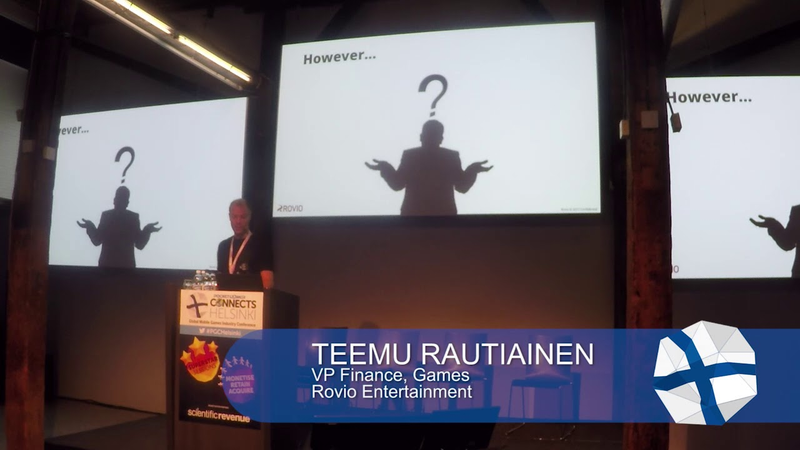
[Music] [Music] so I'm Tim from Rovio and really pleasure to kick off the tea stream here here at the PG conics Helsinki as well and said in his opening speech in the other other room that Robbie has been growing faster than ever during the let's say past two years and one of the reasons behind that is the UA so my speech is about how we made it happen and how we actually financially steered the UA to to invest profitably and and leveraged us as that as the growth engine for over here so I'm a data COI I'm a finance guy so I'll start with
some data and this is from Apple AppStore and as we all know it's it's very crowded marketplace at the moment there are actually almost 800,000 games in the Apple App Store at the moment and more than 750 games new games coming there every day so that's the touch the market we are all competing and operating in and at the same time it seems that only a few games actually less than zero point zero point one four zero one five percent of the games actually having meaningful ma use meaningful audiences so how do we differentiate in that kind of marketplace a lot of new games coming coming in every day already very crowded marketplace and and and becoming more more crowded all the time so 33 different ways to actually differentiate
one is obviously to create a game that is unique and viral that makes it true and to the charge and and everybody is talking about those games the other alternative is licensing so utilizes a well-known IP and you start as a vehicle to grow your game but obviously that can be quite costly so I think many of the companies have made the same conclusion on on the how to grow in the market and that's the UA and that's actually driving up the prices of acquiring more users into the into the game so the CPS are going up all the time and and that makes it more difficult to actually build audience for a game and you need a higher picker world war chests and bigger investments to grow your your audiences so that's the that's the environment and let's now think for a while that we are all in the same company we are shooting for our new
maker launch and these are the KPS we have for our game so v1 returns and 50 literally 20% co-op allow $20 cents CPI's from 5 to $10 k-factor around 1.2 to 1.7 and we are not expecting huge featuring or any impact other than our UA for our game so let's say that it's mere 20,000 down downloads per month that we can expect so how do we actually scale up this kind of a game so let's put reference point in there it costs roughly a five million USD to scale up the built mobile game at the moment it may cost more it may cost less but let's say that the five million is the ballpark so how much does it cost actually in the year treats us iOS games
top crossing charge a meaningful position in the top grossing charts and let's say that we'll start with top crossing 100 so any guesses how much does it cost to treat top crossing hundred position in the US iOS games [Applause] obviously it's indicative but based on our calculations it costs roughly 10 million so double the development costs you put 5 million in in the development and you need to put another 10 million in only in the US iOS to treat top crossing with these capias that we just presented what about 10 top crossing 50 it costs roughly four and a half times the development costs so roughly a bit more than 20 million USD to reach that position already starts appear quite a big investment in a year to reach the position okay we are more ambitious than that so what about top crossing 10 any ideas it costs roughly 15 times the
development cost to reach the top crossing then position in the in the US iOS game start of course it fully dependent on the KPS we just went through and also many other things not least a featuring or other organic impact but with this set up with these KPIs we expect that it's roughly 75 million that you need to put annually to in to three sort of ten top crossing position so it's quite an hefty investment isn't it [Applause] so how does it what does it mean to your business case it means obviously that that you need to have the war chest so here you let's assume that the development time has been two years so you have invested to five million maybe a bit more in the development then you put money in for a year to the UAE to actually buy users to buy audience for
your game and then we let's say that we stopped the investment after the year of you a and then the revenue starts to climb up and you make eventually return after let's say three years so now in today's marketplace today's environment but I think it's fair to say that this amount of money has increased very fast that you need to boot into the in the game actually to make it successful it's not no longer enough to just to build a good game you need to have this up to 15 times the money to actually build the audience in a year only and then if you extend it to three years it's quite much more and also from final self perspective it may not be profitable in the end so that's investment you don't know if it's going to bear any returns your game later on and that's the nature and that's the Rideau we are trying to solve in the with financial governance for
example it escaped us that we just presented for our own company for the mega title seems that they are not enough to actually reach the they are resulting in a lower returns as they would result for a top 50 investment so lower you a would actually result in better profits better return for the company so I think quite simply we can say that you you need it's not enough to put money in you need to have a good game first and that's eventually what it is about and then only after that when the game is you a or you need to have the world just to scale it up and then optimize the UA so that you can optimize also your returns not only the rankings or revenues or some other matrix it money that comes in at the bottom line is what matters to the company in the end so the question is of course and how
do we make it work and in the following slides I'll see her some of the learnings we have encountered and learned at Rovia now during the past one and a half years and let's start from the basics so all the industry insiders here I think these are very basic information so how to measure the the profit so LTV compared to the effective CPI or CPI if you don't want to use scale factor and then it needs to be higher than the target your company wants to achieve it maybe 10 percent it may be zero percent whatever you would stand is enough your company on a macro level it means that we compare the cross profit to us spent and essentially I would vote for cross profit and and really highlight the importance of having cross profit rather than revenue because there are some direct costs involved in the inter also in the u.s. spending or related to the US penny so
if you only miss revenue you may actually inflate your returns a bit which may not be good good to the bottom line so this is the macro level view on the bond the profit and obviously again the time frame is another factor that will affect on the return so you may want to have a six-month pay back rather than 12-month pay back or even 2024 month pay back for your game and it effects on the level of pay back you you want how do you how do you monitor that so how do we make it work this is one way of doing it this is how we did it at trivia so and are doing it a trophy at the moment again these are not actual figures for Rovio just indicative so in the bars we are showing the monthly you guys spent and the black curve shows that what is the target return we expect from that investment so let's say that six months ago we invested this much in you a we should be at this point of
return curve after the six months of the first month we should be here and by plotting your own actual returns on the this curve you can follow that if you are if you are reaching the target returns or not and well of course to you a team and we all should focus also or follow also the more frequent metrics on a daily basis even more frequently but but this gives a good overview on steering level on a monthly steering level how much returns we are getting and and still like frequent enough to make access to change the then optimize to invest investment sifter if it's not paying back as we want okay clearest water let's go and execute well not quite there are some things that that will impact on these formulas and and investments and and I'll highlight now
four of those in the in the following slides [Applause] so first games are different quite obvious people are different or players are different also quite obvious geographies are different and finally k-factor should we include it or not in our modeling these foldings are something that can quite easily impact hello a lot and in the models and make them quarry or make us like really be able to scale them up and and optimize our returns let's start with the first one games are different so here we have now three different games one classic a mid core game and another mythical came with the UA ROI target curves for twelve months and the last for 24 months so this is what we are expecting back from these games in terms of us and let's now
focus on the first month of investment in in all of these games so which one would you pick actually after the first one let's say that you don't see the other month you only have received one day at the point returned okay obviously it seems that this midcourt game is bringing much more money than the other games so it must be better than the other games but when you look at annual return it appears that actually after 12 months they are doing the same return in the end it says that this converge better in the early days and then it saturates and reaches the same position as the casual game well then the midcourt chill came start more more with a lower return so it converts more slowly but actually after 24 month
months it reaches higher return than the two games so do you have the stamina encouraged to actually wait for another 12 months to to take the returns that is available there on the market so these are the decisions you need to do with all the games and obviously it leads to one very important conclusion which is that games you can't compare games you can't compare genres you you need to treat them as independent business cases and from that point of view optimize the UA and and plant the upcoming new investments so that's the lesson number one treat games as independent business cases and scale them up to the max these games can achieve secondly players are different so we have here three million paid installs of beats hundred thousand uh spenders and and 1.9 million known spenders both of
them these cohorts are having their own kpi's so lifetime calculated from the retention 30 days for spenders in 15 for non spenders non spenders are not spending any money so nor now I APR plow spenders 30 cents a pretty good or go figure it meets the LTV of 9 and ldb of 0 if you look at the combined number and if you only would look at the combined numbers generically you would actually have LTV of 0.2 so I bet nobody of us would invest in this game with LTV of 0.2 at least it's not profitable it's quite difficult to get CPS lower than that but if you look at the spender cohort only and the LTV of 9 you can actually make decent amount of money with that game you just need to be able to define channels to point spenders focus on the performance-based you a
CPAs to base EPS that are lower flow at the nine-nine to actually filled up the cord it may be small slowly but you can still ramp up the cam and maybe later when the game improves the company LTV also improves and an additionally of course the nuts are excluded from here but the same applies for ads so so the players consumers differently and if you are able to attract it more closely you can target add whales Andrew that get more exact numbers for your targeting and leverage start actually ramping up the UA and in the game so another learning players are different don't read spenders and on spenders generically rather focus on spenders try to understand who are the spenders how they are spending and that will help you scale up the UA
thirdly geographies are different so this is sample data from one of our games and it shows the UA RI on the y-axis and they see P R and the x-axis and publicise it implies the cohort the cohort shows how big are the codes that we have acquired so I think we can make two conclusions at least from this one so there are some fairly small cohorts that can yield extremely high ROI and if you only focus on the relative numbers you can be very happy happy about these cohorts but in the end they don't bring you a lot of money absolute money so you can pay your salaries only with these these cohorts on the other hand there are let's say mid sized pretty large cohorts that you can acquire and find in many Western markets East Asian markets that are
lower in the CPI than some other remote let's say more crowded more populated markets so if you can optimize and and wisely use put your um money in the DOS markets find those cohorts you can actually optimize to you and again make it more profitable and scale it up more of course then it requires more color press and more operation with with the partners or internally building up the team to be able to cope with the global scale fourthly k-factor I think that's eternal point of disgust and in this industry should you use it or not and let's define the K factor first so here I mean with K factor that how many organic users each paid user springing with him or her to the game so if the if you bring one additional organic user it's a k factor of 2 so 1 + 1 2 and in the
related term is the organic multiplier so it that's the race of the whole total downloads the organic downloads with a paid download so that that's then you take the big picture view and look at the total downloads how many of those organics and again sample data from one of our games with organic multiplier so you can see that organic multiplier is evolving a lot during the lifetime obviously the discovery featuring things that are impacting and organic multiplier while then the K factor is more virality metric so so what is the intrinsic virality of the game and now looking at this graph what is the case like the factor you should use for it modeling in the best case we can use this one in the lowest case you can use something like this obviously huge difference in the impact on and of on your business
case by overestimating RK factory 10% it means that you're inflating your OS by 10% in the worst case and you can do it 500% here if you are over optimistic so it's very dangerous and may lead to already financial decisions if you use it wrong so I suggest you study your k factor organic multiplier and tie to the events possible featuring other factors that are impacting the K factor and and how you can do that and understand that they impact much better and how are we actually doing doing it Rovia is that we first focus on the in this is a period we try to get leverage the Morgan is Molly prior prior to the boot most extent and then we take it
down and are more conservative with the k-factor but that's the complex riddle that we are facing the in the games business and definitely its its complex there is room for optimization but it's also resolvable so we can resolve it and i think there are two factors that are determining how you should approach it first is the overall chest for chest so how much money do you have overall to spend in UA and the second is is the ambition so if you want to aim for a huge big bang launch and hope that you can actually recouped that investment faster and put it back in the UA or do you expect that you can scale or take more conscious conservative approach and scale it back in a more conservative way so that you have endurance for the let's say three-year investment period and that's because of the fierce competition how we have reasoned out at revere is that you need
to be able to endure for several years so you need to think it from the rather monotone perspective rather than a sprint perspective so I think it's fair to put your mullet and Sue's own when when starting rather than spikes and aim for a short sprint thank you Thank You Timur so I think we got a minute or two for questions if anyone has a question when I personally thought I was a fantastic way of explaining just how complicated it's getting in terms of understanding the space but also why we have to think in in in grounded ways not just assuming we took money and it all works it sounds like you're really kind of getting down to almost a bit kind of a method of a way of thinking about games which is much more holistic is that fair I think that's exactly the way to say it so you need to be holistic on the you investment and think about the whole
business case and how the UF its into that business case so if you divert from that it they can be disconnected so need to be a holistic approach so we have a question over Michael let me let me come down I'm not a leaf I can come down thank you thanks for good talk can you share more about the methodology you use to measure the k-factor it's it's quite deep discuss and so maybe we have another chat but overall I can say that there are like rigorous and analysis is a good way to actually try to evaluate it compare the downloads and and see the what kind of events what do you have have you done to the game and what kind of events there has been and if there's been featuring and these kind of things and try to separate those and through the regression analysis understand the impact on the downloads that's what high level huge say it like that
it's a Killian error we need to have more more discussion on Timmy thank you very much thank you [Applause] [Music] [Music]
Summary
In the current mobile gaming landscape, characterized by intense competition and a saturated market with nearly 800,000 games on the Apple App Store, user acquisition (UA) has become the primary engine for growth. With over 750 new games launching daily, developers face rising costs per install (CPI) and must navigate the financial reality that scaling a game to a top-grossing position requires significant capital—often 10 to 15 times the initial development cost. Success is no longer guaranteed by game quality alone; it requires a disciplined, holistic financial strategy that treats UA as a long-term investment rather than a short-term sprint.
Effective financial governance requires treating each game as an independent business case, as different genres exhibit distinct return-on-investment (ROI) curves. Analysts must avoid generic metrics, which can obscure the performance of specific player cohorts. For instance, segmenting spenders from non-spenders is critical, as the former often drive the profitability that justifies UA spend. Furthermore, geographic performance varies significantly; developers should prioritize markets where lower CPIs and larger, high-value cohorts allow for more efficient scaling.
Methodologically, companies must exercise caution when incorporating viral growth metrics like the K-factor. Overestimating the number of organic users acquired per paid user can lead to inflated ROI projections and poor financial decision-making. A conservative approach, utilizing regression analysis to isolate the impact of organic multipliers, featuring events, and intrinsic virality, is essential. Ultimately, the industry has shifted toward a model where endurance is paramount. Rather than pursuing aggressive, high-risk launches, developers should adopt a sustainable, multi-year investment perspective, ensuring that UA spending is continuously optimized against actual bottom-line profits rather than vanity metrics.