From Journey to Sword of the Sea: Austin Wintory on His Most Ambitious Game Scores | Full Interview
28 Aug 202633 min video
Transcript
Hello everyone. My name's Bryant Francis.
Hi, I'm Beth Elderkin.
And this is GDC Side Quest. Beth, you're bringing us a very cool guest today here on GDC Side Quest. I have admired their work for a long time. I sometimes will just let a full game soundtrack with their work run. So here I am tipping my hand a bit. Would you please introduce our guest because I want to hear what you have to say about them.
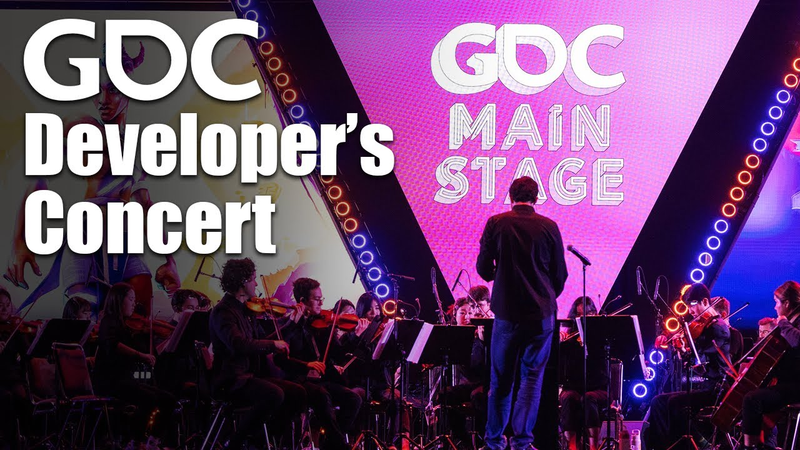
Yes, so I talked with Austin Wintory. He is a Grammy winning composer and BAFTA winning composer for games like Sword of the Sea, which I played and it was fantastic. Also Journey, Abzu, and so many other games. And he's also known for doing our Game Developers Concert. It'll be his fourth year coming up in GDC 2027. And I could not be more excited. I've been watching them since the very beginning. And every single year I am not kidding. I will cry at one point.
I confess at this year's GDC Festival of
Gaming it was my first time attending actually because of something Austin says in the interview that's on the other side of this conversation, which is, you know, when it was held during the GDC lunch hour, it was really popular, people attended, but a lot of people couldn't make it cuz, you know, noon at GDC or whatever is that them's working hours or hanging out hours, you know. Now it's been moved to after hours after the show floor closes and that made it easier for me to come and see it and I was just blown away because it's almost like one part concert, one part GDC talk, too. It's almost like the rest of the content at the show and it's really something you couldn't get just by like taking this and taking it to like the Hollywood Bowl or something.
It's a really incredible experience and I love the first year when everything came together because it for so many times it seemed like this could not happen. Because there were so many pieces that had to be put into place, but Austin is such he is a hard worker. He is a dedicated person. He loves what he does and he
loves supporting the community. And so, you know, when you when you hear him in the interview, you can hear that passion and it's it's almost contagious.
Yeah, and I'm going to give a shout out to a friend of the show Ashley Corrigan who I watched and I saw her like working through getting all those pieces in place and you know, something just like Game Symphony, a lot of people are bringing them together. An amazing developers concert takes, you know, it takes him, it takes Ashley, it takes the ops team. It It takes a village and Austin also honors that in his, you know, whenever he's talking about his work.
Absolutely.
Yeah. Well, enough enough about us. Let us now go to your excellent interview with Austin Wintory.
Like this score, it's crazy that I get to do this for a living. Every project is a bit of an adventure. [music] So you go, what are the parts of the adventure we kind of want to share with people? And and also, what are the parts that were not so fun? You know, I really always like to be very candid as well and say, this is this has its ups and its downs. On its worst day, it's still my dream
job. In the same way that like you can you know, have a pretty nasty fight with a loved one and not not love them. You know what I mean? It's it it I see it similarly. It's the full dynamic range.
Welcome to the GBC Side Quest podcast, part of GDC Festival of Gaming and wow, I can hear myself so loud this morning and it is fantastic. Today, I am so excited to welcome Austin Wintory, Grammy winning composer. Actually, when I was putting the session in our schedule, I actually had to update your bio because it still said Grammy nominated. Are you still getting used to that new addition to your title?
Huh. Uh I mean, I I I suppose, I don't know. I I to be honest, I find that that uh the kind of That's That's what I call the P.T. Barnum side of the industry. It's sort of the fun circus act. Um but,
it's really not the real essence of what we do. Uh there I always like to remind people there are innumerable great scores that no one even knows about because the game didn't even hit a threshold of attention to even know that there's great music in there, which because of the nature of these things means that they're also largely guaranteed to not be in the contention for awards, nominations, and stuff. So, it's it's hardly a meritocratic thing. And I say that I'm grateful because it is still voted on by colleagues and peers in the industry. This is true for all awards, you know, whether it's the Choice Awards or the Game Audio Network Guild Awards last night or the Grammy Awards or the BAFTA's, which were announced about an hour ago. Um and uh it's like it's a touching thing in a peer-to-peer way, but it has no bearing on the blank page that faces you the next morning, which is going to be just as merciless and brutal and hate-filled as it would have been anyway. So, it's
like I always try to I try to walk this line of going, "It's not that I'm ungrateful, but the work matters so much more." You know what I mean?
And you have done some amazing work. Sword of the Sea, Stray Gods role-playing musical that I love. Journey Yes, I'm I have play I've tried to play through every single one, but I always get really frustrated because the songs end up being a little bit too I end up mixing the genres too much, and I'm like, "This is inconsistent."
Well, so if it makes you feel better, we ran an algorithm on the game when we finished it. And if you think of each amalgam of all your choices as one version of the musical. So, you know, every choice you make, you get to the very end, the credits roll, and that was version one. And then, if you wanted to be very methodological in a kind of almost scientific way about it and say, "Okay, now I'm going to play the whole thing through and make all the same choices except I'll change one. And then I'll change another one. And if you were to try to do literally every version of the the full game that's possible as a result of all those branches, it's literally tens of millions of
versions of the musical. There's Based on the length of the game, it's it's not possible for someone to live long enough, even if they played 24 hours a day, to see every version of the show, basically. So, you're fine.
I remember going to the session about the the branching storylines for the music a couple of years ago at GDC Festival of Gaming. But, what I really want to talk about is the Developers' Concert. It is the third iteration. It is honestly one of the highlights of the week for me, and I know it is for a lot of people. And I really wanted to give our attendees and our wonderful people here some insight into behind the scenes of how it came about. So, how did the first Developers' Concert come into being?
So, uh that was it's all thanks to Ashley Corrigan. She is the absolute puppet master behind the scenes. Um I I So, the the full the full but short version of the story is there's another event that's sort of an audio-focused conference in the vein of GDC called
Game Sound Con, which was founded by Brian Schmidt, who's the president of the Game Audio Network Guild, which obviously had their awards here last night. G.A.N.G. is a big part of GDC. Brian is a seminal figure in the game audio world. And so, Game Sound Con happens in LA. It's much smaller, and it's only talks about game audio, music, sound design, that sort of thing. Similar to here, but on a on a smaller scale. It's it's a good place to go if if you're if you're new and all this is a bit overwhelming, and it's especially if you're really very focused on audio, uh it can be it can be great. And I I love it. I go every year. It's almost a spoil because it's about 5 minutes from my house. And um so, uh the Game Sound Con, I gave a talk. Actually, I think it was when I was giving a talk about Stray Gods. And Ashley, for whatever reason, came and and somehow that spurred the notion of a concert at GDC. So, she reached out to Brian Schmidt. And apparently, Brian went cuz this was happening in like December or January of that year.
Like 3 months before
So, we were a few months We were a few months ahead of the 2024 GDC. And so,
Brian basically said, "It's impossible to do in the amount of time that we have. Um but I don't know, maybe call Austin." And so, she called saying, "Look, this is I'm sure not possible. So, we're probably talking about 2025 GDC. What do you think of putting on a concert?" And because I am what doctors call a crazy person, I was like, "No, let's do it." Um and so, you know, marshaled my my team and and made a lot of calls and and got, you know, recruited Darren Korb, who I always do immediately, uh and was like, "Let's just Let's just stack this full of full of stuff." And we put together the show. And um it was back back then, the first two were on the main stage in the what was then the West Hall at in place of the keynote. So, it was at noon on Wednesday. And I remember thinking, "I'll be so happy if like 20 people come because this has never happened before, and we're all creatures of habit. So, you don't even know that it's ex- I mean, this thing is so full of stuff that you wouldn't think, "Oh, I want to go to a concert." Also,
noon on a Wednesday is not a normal orchestral concert time frame. And also, lunches during GDC is prime real estate.
Right.
Um and so, I was like, "I'll just be thrilled if like 100 people are lost and accidentally find it." And it was like 3,000 people. And I was blown away. I couldn't believe it. So, I thought, "Well, hopefully we can do this again." And it's like the Monday after GDC, they said, "Okay, we now have 1 year to plan the next one." So, then it started to become this All right, now I got to think in terms of fun vignettes and cuz I'm in this lucky position that basically most every composer are either friends or acquaintances. And I know a lot of the studio, I know all the publishers. And so, I being able to get a hold of material and all that is is I'm just in a very privileged position that that's very easy. So, then I get to just start thinking of crazy things where I go, "What's a show I've I've never seen before?" Like last year we opened the show with this bit I called if X made Y, where it was imagine, you know, if this
studio and this composer known for this thing had instead done this thing. So, like it started with if Gustavo Santaolalla and Naughty Dog of The Last of Us fame had done Kirby. And so, it's the Kirby theme in Gustavo's style. And like the culmination of that, which is absolutely what planted the seed for our finale this year, was I said if id and Mick Gordon had done Final Fantasy VII. And um I just remember, yeah, I was like, "This is so stupid. And I'm sure I'm the only one who thinks this funny." And but apparently not, because the audience seemed to like it. And so, yeah, it's it started to become this chess game of what crazy crap can I think of for this concert beyond just showcasing my friends and colleagues genuinely excellent music.
And you showcase some amazing composers, some that are well-known, some that may not be as well-known as you had mentioned, those who may not be getting enough sales to be qualifying for some of these merit-based things like the Grammys. And it's really interesting because I will swear at least a dozen times before every event, at least this year and last year, I had someone coming up to ask me, "Is this song going to be in the
concert? Is this song going to be Even my own sister was asking me which song was going to be in the concert." But we don't know. It is a super secret. No one on the GDC staff is allowed to know.
always asking me and I say, "Come come to the show." I'm again, I keep waiting for the other shoe to drop because it's crazy lucky that I'm given a budget to hire an orchestra, free reign to invite any guests that I want. No, there's no filtration of like, "Well, you know, I don't know. Is this a Is this a good person for our sta- No one even In fairness, I don't even give in anyone an opportunity to like rebut my selections. I just show up. Uh but I the fact that they let me do that is crazy. I don't take that for granted at all that I I just get to build my dream show and um and you know things like I'm going to ask Ben and Jen from Expedition 33 to come read a scene and I'm going to ruin it uh with music from Balatro. And we didn't even get to rehearse. We literally rehearsed that about 15 minutes before the doors opened and people started coming out.
Really?
Uh and yeah, cuz Ben and Jen didn't get
to GDC until that morning. Uh and so it was like, I'm surely fine. They're great. The chart is simple enough for the orchestra to learn it immediately. And um let's just have fun. And so I my sympathy in a way to Ashley and the other GDC people who are who are just hoping that this is a good idea. I I I take carry that responsibility pretty seriously cuz I I realize they are not managing me at all. It's just do what you want and that's crazy. Um I'm not used to that. I put together a lot of shows around the world and usually it's a whole committee process. And I you know, I'll always walk away feeling like, well, you win some, you lose some. At least we got to do this, but okay, whatever. But this is just like a each time has been, what's my dream show and we've been able to do it and somehow it it's all come together and somehow come off, which is even crazier.
I know we have a lot of trust in in you and what you do. And I know especially with our you know, game industry professional community, we want to make sure that they're getting an experience that helps them understand the industry
in so many different ways, that full ecosystem. And I know every year you have different themes. This year was about, you know, firsts, new beginnings, branching out. I loved what Jennifer said about um you know, bringing in the voice actors and having that whole conversation. Uh what about that theme specifically?
Uh it was it was because of the rebrand to Festival of Gaming. I just found myself thinking I I admire when someone doesn't sort of rest on their laurels and they [snorts] don't think you know, I can kind of do yet tomorrow what I did today. I that's not how I operate. I don't work from home for example. I have a studio that I drive to every morning and I don't even take I I swear I'm being serious. I don't even take the same route to get there two days in a row because I have this obsessive notion. It's a little bit of a cliche. It almost sounds like a bumper sticker, but I I can't ever tell when being in the groove, which is a good thing, can somehow transition to being in a rut, which is a bad thing. Even though
architecturally a groove and a rut are the same thing. But but one's good and one's bad. So I always live in fear of oh, if I if I get too comfortable, if I'm too autopilot-y in what I'm doing, at some point I'll just realize I'm in a rut and I'm not I'm not doing my best work. I'm not doing right by the people who for some reason wanted to give me an opportunity. So I need to constantly keep things fresh. So when I see other entities, other people take big swings, I find that inspiring. And for an event like this that's as old as it is and with so many probably hardened concrete aspects that are going to be really hard to change, to see them go, you know what? Why should why should we not redo the formula? And if there's things about it that don't work, we'll we'll modify them. We'll improve them. They listen to people's feedback. Like I because especially these concerts, I've really gotten to know a lot of the staff and they really do care about this stuff. They really do listen to what people say and it's not just some corporate thing. And um and so I just found myself thinking about that and going you know, especially in light of I like
so many others I'm sort of fanatically obsessed with Expedition 33 and I I did this I had a wonderful long podcast recording with Glorian, the composer, and got to know the team when they were they were you know, the game director and art director. They all came over to my studio and we were nerding out when they were in town for the Game Awards. And I just admire them all so much and the giant swing that they took and the fact that they managed to stick the landing so beautiful at beautifully and I love that the world has rewarded them so overwhelmingly for taking that risk. And so just all those thoughts kind of coming together and going, well, I really obviously I'm going to make a big deal out of Expedition 33 on the concert and I love that it's his first commercial game score. Um and and so I just kind of want to branch out from there and think along those lines. And the more I thought about it, the more I realized, well, this this kind of fits that and this kind of fits that and this kind of fits that and it all just sort of wrote itself in a way.
Are you already thinking about 2027?
Oh yeah. No, well, so not only yeah, but but um I have a spreadsheet that has like 30 years worth of ideas that I just kind of
try and move around and and experiment with and and and then of course I also have to leave most of it open with the idea that I won't really know what I want to do until probably December because there's a whole year's worth of games to come out and to kind of see how they might fit together, what they lend themselves to, you know, so much of it is reactive to the immediate past that I don't want it to just be a show of now we're going to do Mario and now we're going to do Zelda and now we're going to do Halo and now we're going to do like the iconic classics. Of course I like to leave room for that and I do include that stuff. But GDC, what I love about this event, is that it's usually about the previous year top to bottom. It's a reflecting on all the highs and the lows, whether that's, you know, people here looking for work, you know, their studio closed, all the way to celebrating at the awards show with this huge success they had and everything in between. And obviously the third dimension separate from both of those of I'm fresh out of school or I'm changing careers and I'm here for the first time and I just want to learn about this
industry. And so it's it's constantly, it's like a churning shoreline that is just re-cleaning itself nonstop. And so I said the concert should have that same spirit. It can't be just this parade of greatest hits and things. I want it to feel very real time to where the industry is. What What that means is it's despite the initial one being, you know, two like very last minute in its planning. All three have been last minute in their planning because there's I don't know yet what I'm reacting to. So, I have I have like the Hall of Fame bit that we did second where we played Command & Conquer and Ocarina of Time. That was one that I'd had on my list where I went, "Somewhere I'm going to find like I have a whole huge list beyond those three of things that I just think are all-timers. And I thought I want to feature them somehow." And then I thought, "Ooh, I know how to feature them because they're part of my beginning story. They're things that meant a lot to me. So, I can justify putting them on the show as a personal gesture because they'll fit the theme." And then
whatever the theme I've no idea will be next year, there will be pieces invariably that I'll go, "Okay, I can see I can see how I can kind of frame these together in that sort of way." So, some of it is, you know, in theory already known in so far as I have a I have 50 shows worth of material to go through. Uh but I won't choose I won't kind of land on anything until we're starting to get pretty close.
But you can't ask the GDC staff cuz we do not know. Uh moving on to sort of the sea, uh I actually watched your video where you had the the your your commentary alongside the score and it was it was amazing watching your your process, you know, being expressed through words as the music was going through. And you know, that's a big time commitment. That's a big public service that you're performing for the community. What prompts you to, you know, produce those kind of videos?
Well, a couple of things. So, first off, I have this amazing assistant Dallas who was backstage on the show, you know, he he
arranged some of the the charts for the orchestra like he did the Doom arrangement at the end and a few others. Um he makes all the video packages that we're showing uh and and, you know, Uh, but he's also backstage with the show script doing things like, "Okay, Darren, call Darren out to stage and whatnot." and really making sure that the whole thing comes together. So, he's in super invaluable. When I first hired him almost a decade ago, I happen to realize that he he knew how to do like After Effects and Photoshop and Premiere. And he even though he's a trained composer and a jazz musician and a trumpet player foremost, uh, and a composer obviously, you know, games and movies and sort of thing. Um, he also can very confidently edit and maybe almost like a filmmaker. Cuz I'd always had a YouTube video for behind the scenes stuff, but I would just have to go find someone to edit things. So, I don't I don't know how to I mean, I could use like iMovie or whatever, but I I said I would like to work with a professional. So, I remember I kept hiring the the when I had been in school scoring student films, I'd stayed in touch with some of those directors and I occasionally would call one and say, "Hey, you got a free couple weeks?
You mind editing a YouTube video for me?" So, some of my old friends from from like film school basically were editing those for me. And then when I hired him, I realized, "Oh, I can do a lot more and I can do things that require a composer, you know, like in highlighting sheet music and things like that where you can't just hire an editor who doesn't understand the the musical side of what we're doing. And and then on top of that, I get a lot of emails from students and you know, people wanting like in their composition programs and things like that wanting to learn about the business. And I found especially when a new project would come out, I'd get I'd get very similar emails each time. And I thought, "If I can invest a lot of time making a really high production value answer that I can just link them." Because I don't like ignoring their emails, but it was just so time-consuming to write back. And I and I thought, "I don't want to just ignore them, but I don't have the time to spend an hour when someone says, "Well, how did the interactivity system work in F mod when you did this?" I want to answer them because they may not have another source to find that out and
that's important for this industry and I don't want less composers entering the industry or feeling discouraged. So, it became this way to go like to try to anticipate what questions there might be and also just what's fun to talk about. Like these score It's crazy that I get to do this for a living. Every project is a bit of an adventure. So, you go, "What are the parts of adventure we kind of want to share with people?" And then also what are the parts that were not so fun. You know, I really always like to be very candid as well and say, "This is This has its ups and its downs. On its worst day, it's still my dream job." In the same way that like you can you know, have a pretty nasty fight with a loved one and not not love them. You know what I mean? It's It It I see it similarly. It's the full dynamic range. And I like to put all that out there in the hopes that it might be helpful to someone, you know.
Well, movement plays such an important role in Sword of the Sea and I really felt that movement carrying through your music and it felt like movement versus stagnation. You had the boys for the the protagonist, you had
them the men for the anti- for the antagonist and then you had them coming together and mixed. What
You clearly did watch my YouTube video.
I was actually thinking thinking of those beforehand and it justified my thinking.
You are You are Yes, especially as a mezzo,
[laughter]
you really keyed into the vocal performances on the score.
What emotions were you trying to get players to feel as they were moving through this world?
I mean, I don't know that it's an emotion, but you did really nail it with the setup of that The word we always talked about was momentum. And um because the previous game we had done The Pathless also was kind of hyper-focused on player movement and momentum. It's It's what's the secret sauce of that game. And so, they were able to kind of build on it. In a way, Sword of the Sea is the culmination of every collaboration I've had with Matt Nava because it's sort of equal parts Journey and Abzû and The Pathless and its own thing. It's sort of It's almost like 25% chunks, you know. Um and so, the momentum part of The Pathless
was a hugely central north star of our creative process. But in terms of emotion, you know, the game is obviously very allegorical and suggestive in its story. It's meant to be very minimalist and interpretable in a variety of ways. Even though there's a writer and I would go to all the writing meetings and we would really get into what what a potential canon is and then how do we package it in a way where it's now not so it's it's less forcefully canonical and it's leaves room for the player to add their own thoughts. And so a lot of the score's role was to kind of grease the wheels of that and say, "I want to be suggestive of the kind of like this idea of the boys choir is emblematic of your character is technically kind of an amnesiac who doesn't know their role in the world and then it's suggested that you might have been a kind of soldier on behalf of a world-destroying force. So, you're kind of a you know, you don't know you're a bad guy kind of thing. It's again, it's I'm I'm saying it way more overtly than the game does and the game the game intentionally makes it a little vague, but I thought to me that feels like I'm
I'm intrinsically innocent. So, I love the idea of a children's choir tracking with me all the time. So, it just feels young. It just it it's a sound it's unmistakable. These are literally like we're 9 to 12-year-old boys in Phoenix. And then yes, contrasting that once you realize what the actual darkness in the world is and this just all like baritone men's choir in London comes in as stark contrast to that. It creates It creates these emotions in ways that you might not might be paying attention to at all, but there's hopefully some sense of I see there's an arc here. It's sort of the William Blake innocence to experience concept. Um but if you walk away from it and you just go, "This was like cool. It's Tony Hawk in the desert." Then I'm fine with that also.
So, before we wrap up, I had one more question for you. This is This is the more of a personal one. What do you love about working in video games?
Uh so, I'll I'll you the answer I'll slightly re-package your question because it answers your and I think it
answers it most correctly.
Of course.
But I'm I'm often asked, how do you choose which projects you want to say yes to?
Mhm.
And so it's the same answer though.
Okay.
Which is there's three there's three variables and they they exist on a weighted scale so they are not equal to one another. So if you think of it like a you know, like those things at the circus where you smash it and it sends the thing up. Uh the bottom one would be like the how does it pay? How much time is there to make sure that we believe in what we do a good job. It's it's not that's not nothing. It's a profession. It's important to work with people that will actually value what you can hopefully bring to the project. So that stuff matters but I but very few artists do it for the money. Um you just hope that you can monetize your art in order to earn a living but that it's not that's a secondary thing. In my case I I would argue it's a tertiary thing. So down here is that substantially higher than that is what I would call the what is the creative opportunity. Something like Sword of the
Sea. There's all these decisions that go into a score like that where I'm going I've never I've never done this kind of juxtaposition of boys choir versus men's choir. We also had all these we we built a custom we had commissioned a custom Mayan drone flute by a Native American flute maker who made There's two in the world, his and the one that Kristen who played in the show owns. That's it's 4 ft long. It's gigantic. And um hand carved and it's unbelievable. It's like, okay, now we have that in our ingredient pool and all these analog synths, you know, the Deckard stream and a lot of very kind of almost Blade Runner-y things hiding in there. My friend Maluca, a singer in Mexico. There's all these There's all these elements to it that all feel like an experiment as they come together where at the end of it I go, I didn't know I knew how to do this. I've never written something that sounds like this and that's the goal every time. So when a project comes along where I go you kind of need something that I've probably heard before." Doesn't mean I'll say no, but it's it's obviously going to be way less exciting than something like, you know, a sword
of the sea. Or I've been very lucky that the overwhelming majority of projects I've worked on have ticked this box, but it's not the most important. Way higher than both of these is who am I working with?
Mhm.
The way I always like to frame it is if the creative director on a game called me and said, "I'd love for you to attend my wedding." That shouldn't come as a shock. I was like, "Oh, really? We're just kind of colleagues, I thought." The goal is to to you meet people in almost like battle trenches, and you really bond, and you really get to know each other. And so, if someone calls who I like my Matt Nava, founder of Giant Squid and the you know, he was the former art director on Journey for that game company. He also did Flower. Uh there's nothing I would not do. If he called me and said, "Look, Giant Squid just took a job making a, you know, uh uh uh match-three mobile game that's like a Barbie licensed tie-in because, you know, they made us an offer we can't refuse, and and we're going to do it." I would not hesitate for a second to go, "I'm in." Because it's Matt. I don't care about the other two variables matter so much less than
who I'm working with that for me it's the people. So, when you say, "What do I love?" Uh it's it's it's the people. It's it's that by far. I mean, I'm a I'm a big nerdy gamer, don't get me wrong. I do love games as an art form onto themselves. I play a lot of games, but nothing beats the camaraderie of who you're making them with.
Well, Austin, thank you so much for joining us today. Thank you.
This has been GDC Side Quest, and now back to the main quest.
Man, Beth, uh how did it feel to have a sit-down interview with someone as cool and like creative as a composer like that?
It was a little intimidating. I'm going to be honest because I have I have been in music since I was a kid. I grew up singing in church with my sisters. I was in a band with my sisters for over 10 years. I'm currently performing in a Renaissance festival. Like music is a key part of my life and getting to talk
to somebody who is so gifted in music and understands music in in a way that I never will is it's gorgeous, but like I said, it's also intimidating.
Yeah. He There's something in there he said that like might be easy to sort of like skip over when when he talked about responding to students and you know, I think all of us in one way or another, you know, are used to you know, students reaching out either as they're graduating for an assignment, you know, asking about insights in the game industry and how he like wanted to answer all of them, but he needed a way to get those answers together fast. So we sort of built like a video resource asking those most frequent questions. One I sort of like thought about how like in so many professions right now, we all have to be almost like small time content creators in a way. Um which is truly just something, you know, what it's sort of unique to the game industry, but also like it's unique to our modern, you know, digital world where games and other media all come together, right? And then the second thing I was thinking about when I heard him say that was how the game industry, unlike a lot of other industries, is so
committed to knowledge sharing. You know, everyone is always trying their hardest to show off how like they accomplished some technical or creative wizardry to make something like unforgettable or monumental or even small, right? Like a small detail that players notice, but it holds the work. Um the secrets to making that like not very little is obvious. So many problems are not solved and Austin sort of, you know, going out there and always being willing to like crack open the hood of the car and show you how he built it is just part of like this long tradition that's fueled has fueled us here at Game Developer, it's fueled GDC and GDC Festival of Gaming and it's such a great tradition that is that me love uh part of this community.
It's taught me so much over the past several years. I know more now about game development than I ever could have dreamed of. And you're absolutely right in that, you know, we in in person creative fields are essentially content creators, we're content promoters. But it's not so much in just being a creator, it's what you use that for,
what your purpose and intention is. And that's what really sets the game industry apart is because of that knowledge sharing. What is the intent behind content creation? What is the intent behind what you're sharing with the world? Is it just to show off what you do, or is it to help inspire and teach others to do similar things, or even exceed you? And that's another thing I love about talking with Austin is that he loves composing so much. If somebody came along who exceeded him, he would be happy and he would be supportive because he just loves the industry that much.
Yeah, absolutely.
I don't think that'll ever happen though.
[laughter]
But that's the beautiful thing about art, right? It's like, does anyone ever exceed anyone else, or do they just like uh build their own bright shining star that then, you know, is one of many wonderful ways to connect with uh to connect to to have fun, to connect with other people, to feel something really intense uh like I do whenever I listen to the Journey soundtrack. Um that's uh that's another just like attitude
that's like helped me, you know, navigate my time in the industry. Um God, I hate to wrap things up after such a cool interview, but uh all things are finite, including an episode.
Especially podcasts. Um so, for more from us on Game Developer, visit www.gamedeveloper.com, follow us on major social platforms, and subscribe to this podcast on uh Spotify, Apple Podcast, or wherever you listen to podcast. Today's episode was edited by Beth Elderkin and Thomas Mason, and our theme music is by Mike Meehan. And a reminder, Game Developer and GDC Festival of Gaming are sibling organizations under Informa Festivals. Thanks for listening, and thank you, Beth, for leading such another amazing interview.
Auto-generated captions from YouTube — names and numbers may be misheard.
Key insights
7 takeaways · ~3 min read- 01Austin Wintory emphasizes that successful game scoring is driven primarily by the strength of professional relationships, noting he would prioritize collaborating with trusted partners like Matt Nava of Giant Squid regardless of the specific project type.
- 02The GDC Developer's Concert, which Wintory organizes and orchestrates, grew from an experimental lunch-hour session into a major event drawing 3,000 attendees.
- 03Wintory designs the GDC concert program to reflect the current state of the industry rather than acting as a static 'greatest hits' parade, often finalizing the creative direction only months before the event.
- 04Wintory maintains a high-quality YouTube presence to efficiently answer recurring questions from students and aspiring creators, reflecting a broader industry trend where professionals must act as content creators to share knowledge.
- 05The composer argues that game music awards are not strictly meritocratic because many high-quality scores go unnoticed if the underlying game fails to gain significant market attention.
- 06Wintory utilizes specific musical techniques to drive player experience, such as his focus on 'momentum' in Sword of the Sea and the use of contrasting choirs to represent the 'innocence to experience' arc.
- 07The GDC Developer's Concert relies on a lean, collaborative team, including composer and editor Darren Korb, who manages video production and technical logistics alongside musical arrangements.
Ask AI about this video
Cite this video
Citation
Generating citation…













Comments