Cross-Platform Game Development: 10 Lessons from Mobile to PC & Console
18 Aug 202633 min video
Transcript
[music]
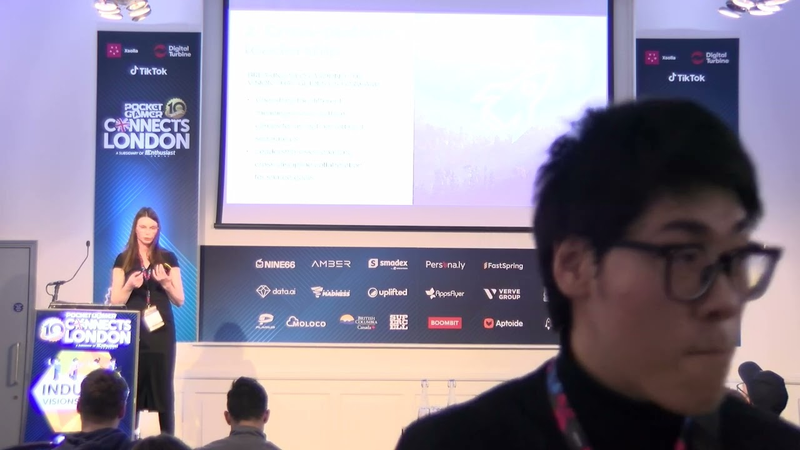
So, this is a talk for Super Evil Megacorp. My name's Ian Fielding, and we're going to be talking about our journey from a mobile-first studio to a cross-platform studio. The heart of the talk is really digging into 10 concrete lessons that we learned as we evolved from a mobile-first to cross-platform studio. But, ahead of that, I'm going to give a brief brief background about myself, and also talk about our studio. I'll keep that short though, so we can get into the 10 lessons. And then at the end, I'll talk about some future considerations for the industry around the cross-platform space, and there should be a little bit of time for Q&A as well. It should be about 5 minutes or so for that. So, without without further ado, I'll talk a little bit about my background. So, I started at Super Evil in April 2021. I was the studio head for several years. I took on the CEO role in January of this year. My focus has stayed consistent though. I focus on culture, talent, strategy, and
then expanding our game portfolio. I also try really, really hard to best our designers and our QA and play test, but I often fail at that. But, I do love our play test, one of my favorite things about the studio. In the past, I worked on Valorant as a senior manager. I often call it a team of team leads. I also worked for many years on League of Legends. In the distant past, I worked at Insomniac Games and Buzz Monkey Software. I'm really passionate about company building, so hence the talk today will be what I focus on is around company building. Developing new leaders. Um We try to pioneer something new with every game we take on, whether it's how we approach cross-platform development or something fresh with the game experience for our titles at SMC. And then on a personal note, I really love to spend time with my wife and our two dogs and cats. Uh our dogs are named Cloud and Aerith. I'm a huge Final Fantasy nerd, so if you're a fan of that, we can chat after about Final Fantasy. All right. And then for a brief That's a brief overview of myself, but for a brief overview of Super Evil, so you can sort of contextualize the talk today, I'll talk about our mission, vision, and a little bit about the studio.
So, why we exist as a studio is to build amazing shared gaming moments. So, all of our titles are co-op in nature. It's actually a big reason we wanted to expand across platform to bring more players together. One of my favorite moments at the studio and what really gets me up out of bed in the morning is helping connect players to have amazing experiences in games. Last year at the end of 2024, I was humbled to be able to participate in an LA Independent Games Festival and I worked the booth myself for a couple days and it was really amazing to be able to see players playing at that festival both days connecting friends and family and our team in Teespring or Fate title. And that wouldn't have been possible if we didn't expand across platform from mobile to on Switch and PC and having those booths available. So, it's really allowed us to deliver on our mission better to expand cross platform. Then, our vision as a studio is to build the best home for the best talent to push the boundaries of gaming for the long term. So, as I mentioned earlier, every game we take on, we try and find something that's new and fresh with the game experience and we really believe at the
core of that is our talent. I always say that I work for the talent at the studio. I think that's really key even when you think about expanding cross platform is what is the talent that you're bringing in your studio. So, I'll talk about that a little bit later in our 10 lessons.
[snorts]
And then, why did we expand to cross platform? So, first a lot of people I think are focused on cross platform right now because the dollars and cents, the business aspect of it. It is true there is the monetary opportunity to make more money by extending to more platforms, but I think that can be also a trap because if you don't start first thinking through the player experience and wanting to really make sure that when you expand to that new platform, you're building a game that's going to delight them, you can get into a trap. And then you get from players deeming for making a port or trying to make a cheap buck. So, first and foremost, we actually thought through the player experience. What is going to delight them when we expand to these new platforms? We also really want to make sure that the experiences felt native. They felt like every SKU that we made felt like it was a first-class citizen for that platform. And as I mentioned earlier, we could bring more players together
regardless of the platform or device they preferred to play on. And then for the titles we made in sort of showing our growth into cross-platform, the first title, and this was before my time, but a game that I really loved and played quite a bit myself was Vainglory. So, that was the first mobile esport, really high-quality mobile title at the time when it came out. Still proud of that today. And then Call of Duty: Black Ops, we evolved from that which helped us create large-scale battlegrounds and also social drop-in drop-out tech that we used for Teenage Mutant Ninja Turtles: Splintered Fate. And this game, TMNT: Splintered Fate, is going to be primarily the focus of the 10 learnings today as we've expanded This is our first title we expanded from mobile to PC and then to Switch on console, and we're continuing to expand it this year to more platforms such as PlayStation, Xbox, and beyond. We're also working on a title with Netflix. That's Bloodline, a Rebel Moon game, so that's going to be launching later this year on the Netflix platform. And we have a cross-platform title, a prototype that's already playable, fully cross-platform as of today that's in the works as well, but that is announced.
And then the last slide for just overviewing Super Evil, again, to contextualize the the lessons is we're really focused on the long term for cross-platform. We really have shifted now to make this our main focus from a mobile-first studio. Social play, we really believe in cross-play, and then transmedia, both helping players engage with our games in the core game and around the game as well. All right. So, with that brief overview of myself and the studio, I'm going to dig into the 10 lessons. Hopefully, there's some concrete takeaways from you all for this talk. The first lesson I want to talk to you is actually being really, really mindful of hiring in your studio. So, what I see a lot is that when people found new studios or even at long-lasting studios, people will hire a lot of their former colleagues, their friends that they've worked with, in similar backgrounds and similar experiences. And there can be value in that because if you worked with someone before, there's a good chance, you know, you know they're good, you know them well, that you can work well together. But also can be a trap if you end up having the vast majority of your studio be your former friends or colleagues that may not bring a breadth of experience that
you need to execute on your goals, especially if you're taking on new challenges. So, for us at Supervil, having only shipped mobile games before, we were very deliberate in hiring in talent that actually came from AAA console and PC background.
[clears throat]
Excuse me. Or came from PC space as well. And that was really helpful for us cuz we were able to learn and and take in learnings from their experience when it came to things like marketing for PC or console or building community or the specific controls and feel on those different platforms. And having those that diverse experience really helped us broaden while we kept our mobile veterans as well, complement them. So, to get more specific in some of our hiring as an example, we brought in people who came from best-in-class studios. For example, in mobile as we were expanding cross-platform and we wanted to improve our live ops and our telemetry and data, we went out and hired recently recent-ish a director of product that came from Zynga who's really helped us level up in those spaces. We also brought in Daniel Stansons. He's
someone who led design on Last Epoch who I particularly saw I played that game and followed his journey as he helped drive community-oriented updates taking learning from Discord on PC, which is different than sort of how you approach community-driven updates often with mobile. And you did a really good job building up Last Epoch and so he's now leveled us up in how we engage with our Discord community and incorporate those learnings as we evolve Teamfight Tactics Fate. He's done a great job. We have another update coming out really soon for Splinter Fate based on our community feedback in Discord. And then lastly, Cass Cass Bume, she came from Ubisoft and other studios where she worked on AAA leading titles like Assassin's Creed and she's really leveled us up in in production planning as we approach going to PlayStation and Xbox in terms of gotchas that we need to avoid, things we need to get ahead of for cert and working with those partners. So, we're really deliberate. I haven't worked with any of these people before, but trying to take people who have worked in these areas and expand our skill set versus purely hiring people that we've worked with before that may not be the right fit for what we need for where we're going.
Another lesson uh from a company uh building perspective is building into the new capabilities that you want to you want to develop at your studio. So, for us, something that really really helped us was actually deciding to partner with Apple Arcade and Paramount as we expanded TMNT Splinter Vape. So, it was really helpful for us to be able to methodically build up sort of start walking before we were running in cross-platform development. With working with Apple Arcade, we were able to develop skills and launch on mobile, launch on Mac, PC essentially, and Apple TV as well. And to do that, we needed to develop the the control scheme and feel for Apple TV. We needed to develop also the feel for PC and Mac on keyboard and mouse. And so, we were able to start with that subset of platforms ahead of us actually evolving to PC and console. And so, by a more focused set of experiences, we could really tailor it to those platforms, make sure it felt really good ahead of tackling more more uh platforms. There is an alternative
strategy where you can go with a big splash and launch on all platforms at once, but the risk is if you're trying to launch on six, seven SKUs at once, that you miss the mark and then it's it can be challenging to launch to be able to optimize and respond to all that feedback. So, we've been methodically growing into each platform uh platform by platform, and that's been really helpful for us. And also really thankful, of course, cuz from company building perspective, Arcade actually helped fund the the base game of this ahead of us expanding and self-publishing to new platforms. They've been great partners. Another thing that's been really really valuable for us, and I think it's one of the most important lessons um from the talk, is being very very deliberate in how you set up your play tests in your culture. So, as I mentioned earlier, like I'm I'm kind of fanatical about play tests and trying to make sure even leadership and everyone at the company attends play tests. And this is something we really had to up our game in as we evolved cross-platform. So, our QA and design team works really closely together along with production to make sure there's detailed play test protocols when we have our company-wide play tests. We try to run those uh once a week.
And making sure people know the areas of the areas of games that we're playing, but we have people who can test the game across console, PC, and mobile. And also with all the control schemes. So, people are playing with touch, people playing with controller, keyboard and mouse, etc. And we even break people out into different zooms based on their devices, based on the platforms they're playing on. And then we will do uh post play test surveys often and we'll make sure we capture what platform they're playing on, what devices they're playing on, and then look at the feedback and see like are we hitting the mark across these various platforms and devices. And so, taking this rigorous approach to play testing early in the product has really helped us catch issues and make sure we hit the mark when we launch.
[clears throat]
Just give her 1 second. All right. And then another area that's been really helpful, which relates to play testing, is de-risking your three Cs early in development. So, three Cs being camera, character, and controls. So, this I think is something that often times studios wait really late in the
game to de-risk. Often times there's a lead platform and you wait until production to actually start testing your three Cs. For us, we found it really, really valuable. Once you found a kernel of fun and you got your initial core loop in place, that you start actually ahead of your vertical slice, finalizing your vertical slice, test the three Cs on the different platforms. And for us, doing this was immensely valuable ahead of going into full-scale production because it allowed us to uncover issues, how onboarding and your first-time user experience may be different per platform, how expectations are on settings and menus, HUD, uh even just locomotion feel and a lot of different UX things that we found by testing the 3 C's earlier ahead of production. So, something I really recommend studios do versus waiting until you're halfway through production and then trying to retrofit those issues cuz that can lead to a lot of added cost and risk to your your development process. And then the other thing is this is this is how important small details are. Share a lesson where we actually really missed the mark actually and hopefully this can prevent some future pain for
folks is that the the small details really can have a big impact on your initial reception. So, Apologies, buying a little buying a little bit of a cough so, bear with me on that. But, this this lesson about the small details is that we actually spent a lot of care working on controller feel early on the product even ahead of vertical slice. And even though we spent all of that effort and controller felt really like a first class assistant even eventually won a award from Navigator for control feel for TMNT Splinter Fate. What happened is that we didn't indicate this in the HUD screen or anywhere really in the product actually. We relied on the App Store. And so, on mobile in the App Store it's very easy to miss if a game actually supports controller. So, when we launched Splinter Fate, the number one feedback point from players most common was we don't support controller. And controller use on mobile and actually on PC as well has been growing over time. So, it's now in the double digit percent low double digit percent, but it's really meaningful.
So, we actually had to rush out a hotfix to inform players that we supported controllers. And so, we put that we support controller scheme out front and center in the homepage so, it's hard to miss. We actually added to the loading screen and then also tooltips. So, there's three different ways we notify you that we support controllers and that quickly alleviated the pain point. But, that little detail actually was one of our biggest misses on launch and so, make sure you pay attention to UX and making sure inform players that you actually did put in the work to support the way they may prefer to play. And then the next lesson is how important it is to align on your budget constraints really early on, especially if you're going across platform and you want to support older platforms. So, for us we had talked to Apple actually already at the beginning of supporting a phone all the way down to an iPhone 6S E, which is a a phone that's actually roughly 10 years old. So, we had to be really mindful of this and we had aspirations also to extend to the Switch, which is about 8 years old at this point. So, we had to be super super mindful early on of our
tech constraints. And so, we we had a lot of tricks that we thought about very early. We aligned across the tech team, production, art that we were going to leverage things like resolution upscaling. We actually built custom shaders and lighting very early on. And the other thing is it's not just about the the tech constraints, but thinking through the player experience as well. Cuz we knew that we wanted to support not only touch, but we knew controller was becoming increasingly important for players even on mobile. And so, we did things where you can actually very dynamically just with one uh press of a button on your controller Bluetooth, it'll instantly recognize your controller play without having to restart the application. So, even a lot of leading games, you actually have to go into settings, change to support controller, and restart the application, but ours is totally fluid and dynamic and you can do that very easily. So, these are all things that we had to think about really really early to make sure we supported well these older devices and you can save a lot of pain by doing so. And then related quick thought from the last point is just not forgetting last gen consoles. So, even for us as we
expand to PlayStation and Xbox later this year, we are looking at Gen 8 because recent market reports are showing that on PlayStation about a PS4 still has about 40% of game hours of and versus PS5, which even though PS5 has been out for many years, there's still a lot of players who are choosing to play on their PlayStation 4. Similarly for Xbox One, it still has a meaningful market share. So, thinking about your budgeting constraints early, and unless you want to be bleeding edge triple A, like it could be good to actually make sure how uh you look at those platforms as well, because they have such a meaningful market share. And then the other call which which talks about earlier methodical approach to rolling out to new platforms is we really didn't want players to just feel like it was a port. Port can kind of have good or bad connotations. There are good ports, but often times when player reference something feels like a port, it actually has a bad connotation. That's because often when a game goes to new platform, there aren't considerations on not only making it feel good, but does that audience on that platform have increased
expectations in a certain way? So, when we alluded to expanding Splinter Fate from Arcade to new platforms, players who had a Switch were bringing up a lot on our socials and our Discord that they're really hoping it had couch co-op, which we actually didn't have that feature for our Arcade. And so, we made sure that by the time we launched on the Switch, we had full four-player couch co-op support. And I think if we didn't have that, we would have let down Switch players. So, as you expand to new platforms, being sure do you have the key features for that? And then for other platforms, there are things that we felt were really important. For example, on Apple TV, making sure we supported 4K support. Or on Steam, the Steam Deck continues to gain game hours and market share. So, we made sure we were fully optimized with the Steam Deck when we launched to Steam. Uh and that's actually been over 10% of our game hours, and we think that will continue to go up as more people get gaming handhelds as well. So, really making sure of those optimizations as you expand to new platforms. And the other things adding on to that to to not overlook is
make sure you don't make the same mistakes twice. So, we wanted to make sure we called out on PC we support controllers, which still has a double-digit use percentage of players who aren't playing with keyboard and mouse, they're actually using controllers. So, carry those learnings learnings over from prior platforms. We took a lot of care when it came to the UX for these new platforms, including making sure we support Joy-Cons for the Switch. And also optimization, so especially for PC, we went really above and beyond to hit a low min spec. We even sometimes look at the Steam community review and we'll fix issues for people below our min spec as well, which has really helped us with our Steam rating and building goodwill with the community. And then a couple more points. So for for point I one thing to call is it's not just about the development for your game when you expand cross-platform, but when it also marketing as well. And this is an area where I still feel like we're learning at Super Evil, but there's there's never ending quest to continue to level up your muscles to understand the different platform holders, but also channels that you can leverage cross-platform and how players actually engage with those differently depending on the the platform you're supporting. And so I really recommend that you bring
in consultants to help in this area. Outside agencies can be really really valuable. I'll just name a few that were really helpful for us as specific examples. Happy to talk shop after the the the talk as well about more folks that helped us out, but just a few to give you shout-outs to you I think are really really valuable. If you're launching on Steam or PC, the Game Discover Code newsletter by Simon Carless was really really valuable. We got a lot of insights from the article from their newsletter which we subscribe to. They also have a new tool that they're just rolling out which has a lot of insights that you can use to look at other different competitors in your space. You get a lot of valuable insights from this tool. You can also see what tags they're using to optimize their Steam pages. And if you want to use some of those learnings to optimize your Steam pages, it's really really important when you're launching on Steam and PC overall. We also worked with Kaboodle who helped us a lot with our long short and long-term sales strategies, which becomes increasingly important as you launch on more and more storefronts. Even PC, it's not just Steam, but you have Epic Games stores, you have Humble Store, and you have other storefronts.
And so they were really helpful in figuring out the right sales strategy per storefront. And then Game Dash was also really helpful for us. They helped us prepare for doing well in the Chinese Chinese market, which is really really important. It's top five in terms of our audiences, at least for Splintered Fate. So, they helped us localization and marketing support. And then, lastly is Neon Hive, who helped level up our Discord as we expanded to PC, and they gave us a lot of tips and tricks to get ready for that influx of players. And then, uh, lastly for the 10 lessons, uh, when I talk to a lot of other independent studios, one thing that I've been surprised by is a lot of people actually don't take the time to build a direct in-person connection with the platform holders. Obviously, all of them have portals that you can use that are pretty easy to interact with, but I found it really, really valuable to actually go out there and and talk with real people from Valve, Nintendo, PlayStation, Epic, Xbox, etc. They're really, really awesome people, and at conferences such as GDC, they're pretty much always hosting coffee hours. Valve, uh, has coffee hours example at
GDC, uh, but other events that you can attend, and you can meet people and talk through what you're trying to do, and I found them to be incredibly helpful at giving you tips on things like how to leverage their platform, you know, upcoming sales, even emergent opportunities sometimes when you talk to them directly about promotions for your title. So, I really encourage, especially if you're in a studio leadership position or marketing, to build those in-person connections at these events. All right, and those are the 10 lessons. Uh, one more slide and we'll have a few minutes for Q&A. So, the last thing I want to call is that more titles are expanding cross-platform. Players' expectations are continuing to increase for titles that expand, but the bar is really going up. You do see often new games that are going either from mobile to PC and console or vice versa, PC console games going to mobile, and they end up getting flagged with being a port, or they end up having, uh, significant challenges. So, the hope is that these 10 lessons today give you some concrete takeaways that you can learn so that when you expand to those new platforms, players
actually feel like it is truly a native experience, and just from a mindset perspective, it is easy just to look at the the dollar and cents, I know, because if you're expanding to more platform uh more platforms, obviously there's more players, bigger opportunity you can address, but try and have that mindset, I really encourage it of first and foremost, is this going to be something that really wins over players, and make sure in your play test and as you're developing the product, you're really thinking through that lens first and foremost, and I think that will lead you to commercial success in the long term. All right. So, that's the talk for today. We have a little bit of time for Q&A. So, I think 7 minutes if I am right. So, thanks all.
[applause] [applause]
Um yeah, so uh we also have a cross-platform game. It's on about four platforms. Um but it ended up costing us maybe more than we bargained for, I think. And I guess my question is, you know, going forward, it's hard for us to decide, you know, how to budget our time on all the different platforms. Um you
know, so that's my question for you is like, how do you decide where I'm going to spend this much time and money on mobile or PC? Or do you just do it equally? Or how do you kind of allocate resources between the the different platforms?
Yeah, that's a great question. So, I'll just uh they asked to repeat it so other people can hear. So, it's sort of like, how do you figure out how much to allocate or invest per platform? And for me, I think that's going to depend on your studio, your product that you're making. I would say there's a lot of opportunities if you're open to as a studio to also do things like limited time exclusives or get additional funding support to help offset some of that risk. So, as I mentioned, Arcade and Paramount were amazing partners for us in that they actually funded our core development for uh launching on the Arcade, and then we expanded over time, and we took the risk to go to Switch and PC, but they offset the risk and help cover that core development cost. There's a lot of other partners that offer deals uh such as Game Pass, you know, with Microsoft, or other ways to offset the risk. And then for the the game opportunity space, I think some of the tools I mentioned earlier, like Simon, Karos, our Game Discover Co, or other telemetry can help inform how
successful are similar products that you're making on that platform and look at that and just have an honest talk. Is it worth the effort to build new features and optimize for that versus what you forecast the return would be?
All right, thanks.
The gentleman over there.
Okay, I I I want to ask how do you feel the difference of publishing and marketing a free-to-play mobile game versus a PC console game that you need to convince people to buy it?
That's a good question. So, question was the difference between free-to-play and premium and then a little bit of nuance there mobile and console. So, I think there's some overlap that's similar and then some differences. I came from free-to-play in the past working at Riot for many years and there is a big need I feel like with free-to-play to keep, you know, ongoing engagement large teams and players coming back whereas in retention is very very important for that getting your LTV curve right. At least our approach with Team Ninja is actually been more about regularity
versus retention. So, we tried to make a good splash when we launched the game on Switch. We were humbled to get support from Nintendo and also PC and and Valve and Epic gave us some promotion as well when we did that. But then instead of trying to keep constant retention day every day cuz that's a really large team and really expensive to support that for live ops, we've tried to have spikes in engagement every few months so to drive players to come back and then new players to buy our game engaging so for example, we launched last year Switch and PC but then in February we launched a new DLC which was a premium price but the DLC actually helped promote the base game so increase base game sales and also there was still really good attached rate like we actually had a little over 20% last year which is really good for us in terms of people bought DLC. So, creating those moments every few months is kind of been our our difference from free-to-play is that regularity and then marketing those big those beats. Thank you.
Hi, thanks for the thanks for the presentation. Yeah. Um, I guess my question is geared more towards the beginning of your
presentation where you've mentioned that eventually you will end up with many SKUs across different platforms, generations, devices, etc., etc. Later on you mentioned you've let's say customized the SKUs based on the platform's needs. So, I guess my question is how do you tackle feature parity, cross-generational ownerships, cross-progression, uh cross-generation or cross-device progression? Is that something you take into account because the modern trend is to allow the player to continue playing wherever he is. So, at home he might play on Apple TV, then he continues on Nintendo Switch, and then when he gets, you know, home late at night he wants to play on Steam, for example. Is that something you take into account in uh cross-platform development?
Yeah, I think there's a few questions within that. So, I'm a big believer in in one SKU for all platforms. There could be a reason though for a studio to to not do that.
So, to clarify for us, even when we added new features like couch co-op for Switch, uh we actually did provide that to all platforms. So, you can play couch co-op up on arcade or you can play that on PC as well. It's just something we felt was particularly important to get in for that platform. We also support full cross-play. So, someone on Switch could play on mobile or PC and so them having the same SKU is really important for our cross-play goals and that aligns to our mission, something I've been really fulfilled with for Team Teague is bringing players together across all the tribes. We don't currently support um full cross-save progression across platform this time. There's sort of some platform challenges around that, but I would say that within ecosystems we do support actually the cross-save capability. So, for example, if you're on Steam, you can play at home on PC, but you can also take it on the go on a Steam Deck, or you could play at home on your Apple TV and you could take that progression on the go on your iOS or iPad. So, within those specific ecosystems, we do have full cross-save capability as well.
Okay, makes sense. Thank you.
Thank you again for a very concrete and tangible talk. Uh we've been investing in super small teams. They're super evil and super cool, but not definitely not mega corps. Super small teams in Latin America and other emerging markets. How advisable and how easy is in your vision for them to plan with all the augmentation that AI tools, uh no-code tools, uh 3D asset, AI generated, etc., etc. How realistic and advisable is for these three seven people teams to think cross-platform at this point?
Uh I think that really depends on the the studio, the team, the talent. Um I'm rooting for everyone, so if a small team is able to extend cross-platform, and there's been some examples of those, maybe it takes longer if it's a smaller team to get there. Uh I'm not going to comment too much on the the AI trend. I I would say just at a very high level, I think it can help
accelerate progress. Uh we personally don't use like AI though for any assets at Super Evil for disclosure. Uh but there may be ways again for efficiency gains through that for smaller teams as well. Um so, that would that would be my uh the other thing I'll just add on to that for a small team is the methodical growth strategy may be better for a small team than trying to launch on six seven SKUs at once. So, we were a lot smaller at for context at Super Evil four years ago, we're actually 30 people. Now we're now we're big a bit bigger, we're around 100, but because we were a lot smaller back in the day and trying to support a couple products, we that's why I felt the methodical approach was good. So, we started Arcade and just a few SKUs, and then now we've added, you know, Switch, we've added PC, and we're going to be adding Xbox and PlayStation. So, for a smaller team, maybe it makes sense to go go route. Thank you.
Hello. Um, thank you so much for giving such a nice insightful talk. Um, I was wondering if you could give a little bit more insight into how you pick which platforms to expand to next. As someone
who started on mobile games, is there something that you were looking for in the next console? I know you said that it was hard to launch across like multiple platforms. So, I was wondering if you could maybe give a little bit of insight on how you choose which platform to expand to next.
Yeah, that's great. Um, well, thanks for the kind words and the question is just how do we pick the platform expansion order? So, it's a combination of a a few things. We were looking at the game we had, the IP we have, and the opportunity size. So, for a team of these players of faith, we really felt that playing on There's just a ton of demand from our players even we launched on Arcade. We We heard the Switch audience being very, very vocal. They're also calling out they wanted couch co-op. So, we did have to add that feature for them. But, we felt like that would probably be the biggest opportunity size for this game because it's also very family-friendly oriented, which we think is great for the Switch platform. Um, you know, you can play it as kids, very appropriate for that content, but parents also enjoy the IP. So, we felt that was a really big opportunity. Um, we talked to Nintendo, they were willing to give us some uh additional uh promotion support as well.
So, that was big as well to bring it to them. And uh we really excited about that partnership that we had with them. So, that was opportunity size, I would say, was the reason we went Switch first. But, then um then Steam we felt was the next most important one for us from an opportunity perspective. We also wanted to line it up with the the winter months, really important the winter sales, and be out before that. And we also are big fans of the the Steam Deck, something that our engine does really well. I think humbly our talent is really good at optimizing for those more portable or constrained devices. Uh and so, we felt it'd be a great game on the the Steam Deck uh along with bringing it to PC. Uh but, we do want to get on all platforms, and I don't want to make it sound like any platform won't be We won't try to treat that like a first class, you know, um player player experience. And so, we will get it on PlayStation and Xbox later this year.
Got it. Thank you so much.
Yep. Thanks.
Um hello Ian. Um nice talk. And then my question is um in order to launch on um all these platforms, hardwares, generations, systems, how often do you two uh have to like compromise the game
features, like some cool stuff uh in your game?
Let me think about that So the question Thanks for the question. The question was it do we have to compromise features uh for cross-platform? To be honest, I actually feel like expanding cross-platform had the inverse expect uh inverse from that where when we wanted to expand to new platforms, we actually felt like we really needed to add new features versus not having them. So as I mentioned, Switch like couch co-op. If we didn't extend to Switch, I'm not sure if we would have done that. We just felt it was really, really critical for that platform. Uh it pushed us in certain ways to uh really care even more about making sure controller was a first-class experience obviously as we expand to console, so for us uh and we have a great team. So there hasn't been so far a feature that I feel like when we went out for one platform, we're like, "Oh, this is really going to make us We won't be able to add this feature for for other other platforms."
Okay. Thank you.
All right. I think we're a little bit over, so we're going to wrap now. Remember to fill out the survey after
and thank you all for attending the talk. Appreciate it.
[music]
Auto-generated captions from YouTube — names and numbers may be misheard.
Key insights
7 takeaways · ~3 min read- 01To successfully transition from mobile to cross-platform, studios should hire talent with specific AAA console and PC experience to complement existing mobile veterans, rather than relying solely on internal upskilling.
- 02Test the 'three Cs' (character, camera, and controls) across all target platforms early in development, ideally before finalizing the vertical slice, to avoid costly retrofitting of UX, HUD, and locomotion issues.
- 03Avoid the risk of launching on too many SKUs simultaneously; instead, adopt a methodical, platform-by-platform expansion strategy to allow for better optimization and responsiveness to player feedback.
- 04Build technical constraints into the core architecture early by leveraging resolution upscaling and custom shaders, and implement dynamic controller support that allows players to switch inputs without restarting the application.
- 05Prioritize platform-specific feature requests to ensure a native experience, such as adding four-player couch co-op for the Switch version of TMNT: Splintered Fate based on direct community feedback.
- 06Optimize for emerging hardware trends, such as the Steam Deck, which accounted for over 10% of total game hours for TMNT: Splintered Fate following its PC launch.
- 07Establish direct, in-person relationships with platform holders like Valve, Nintendo, and PlayStation at industry events rather than relying solely on automated developer portals.
Ask AI about this video
Cite this video
Citation
Generating citation…


















Comments