1 free read left. Create a free account for unlimited reading + AI research.
Create free account
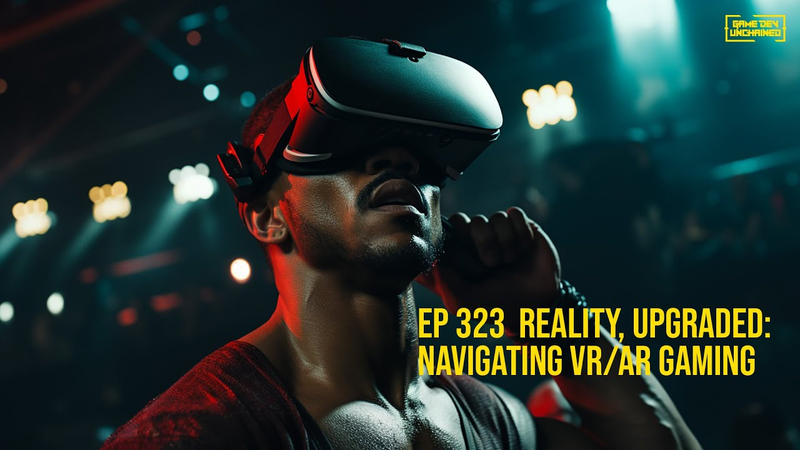
Developing accessible virtual reality games for new players
Key insights
6 takeaways- 01Balance high-end immersive gameplay with intuitive control schemes to ensure long-term retention for both casual newcomers and experienced players.
- 02Implement a non-demanding acclimation period at the start of the experience to allow new users to adjust to the sensory novelty of virtual reality without becoming overwhelmed.
- 03Focus on universally understood mechanics like throwing or stacking objects to serve as accessible entry points that require minimal instruction.
- 04Prioritize intuitive design by replacing complex button inputs with natural physical movements to bridge the gap between real-world actions and virtual interactions.
- 05Utilize real-world metaphors, such as using a deck of cards to represent data selection, to simplify complex user interfaces for players without gaming experience.
- 06Expand engagement by developing multiplayer-focused experiences, including asymmetric local play where headset users interact with players on standard screens.
Ask AI about this video
Transcript
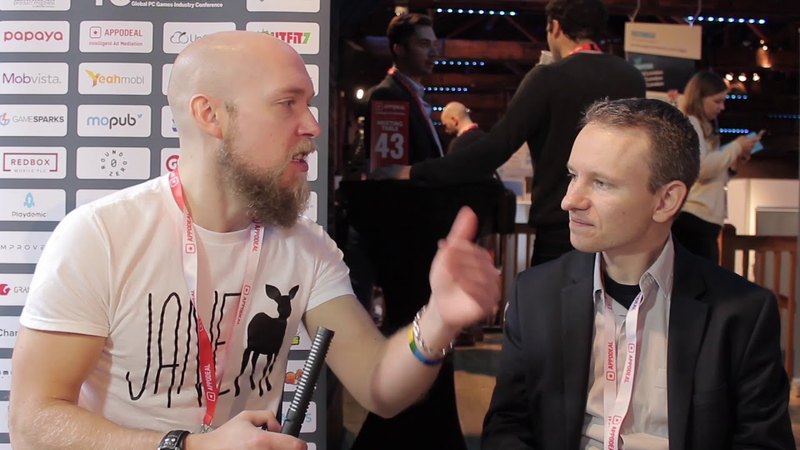
and we're back at Papa gamer Connect 2018 in London I am joined by jayjay of mythical City games and you're here to talk to me about VR on you that's right so we are a vancouver-based VR game development studio and we focus on putting high-end immersive but also very intuitive VR experiences gotcha so when we were discussing things beforehand you mentioned the idea is you're aiming it at people who maybe aren't familiar with VR or perhaps haven't used it before and so you're designing it to be as accessible as possible how do you go about doing that making it easy for the first-time user sure yeah so we definitely want to bring people into VR as much as possible so we want to make the experience as intuitive and as easy as possible so somebody that can pick it up for the first time understands the game very quickly and some of the techniques we've used to do that is limiting the amount of inputs they have so how many buttons they have to press how many could complex controls there are in VR you can move very
naturally and use your body so that's something we want to encourage people to do is learn the fact that you can actually use your body to interact with the environment move around the environment and then that way it becomes something that's an easy intuitive experience for anybody they don't have to have any game experience they don't have to be gamers they can just as long as they don't have something up in real life they can pick it up in VR as well so that's the kind of thing we try to focus on so that so that our games are very good first-time VR user experiences but also do offer depth for people that get into it and want to keep playing more so what do you think is the biggest hurdle that you've seen people come across when they first pick it up we've obviously seen a lot of people playing downstairs at the moment using VR when you give it to someone who's never experienced it before what's the mistake they make what's the hardest thing to get their head around and therefore the toughest thing that you need to adapt to when you're designing sure so the first thing that people do is if it's their first experiences they they need a
little bit of time to adjust and to let the experience sink in so sometimes if you throw them into doing things right away or get them to take actions too early before they've had a chance to sort of adapt to it they might miss what you're trying to show them so they need a little like acclimatization Terrier yeah and it's not as much as sort of acclimatizing because of any kind of negative factor it's more because they're so wowed by the novelty of the experience at first or they're taking in the environment that they may not be paying attention to anything else yet they may not be ready to pay attention so we want to first let them just take a look around and absorb the environment give them some time to sort of look around and just adjust that way and what's the best type of game we released a number of games over the past couple years in the VR space what would be the game that you'd point to say this is the ideal one for the first-timer and how does it work what does it was about sure so one of our first VR games is
called snow fortress and that is a snowball throwing and snow fort building game so it's a very perfect canadian-made title but it's also a very good first-time experience because it doesn't require a lot of complex buttons there's really two main interactions in it with it so as long as you understand two ones on the controllers it's very simple the type of interactions in it are also very easy so it's a revolves around throwing snowballs that's something everybody's familiar with we're throwing and then building a fort you pick up blocks and build a fort in front of you and so that's something that's very easy for people get into and they don't need a lot of instruction usually we don't even have to tell them what to do if we're doing a demo we can just let them figure it out on their own or we have a little fox that explains it to you too if your gets them the tutorial folks yes I say I guess that's a fairly easy one - one thing to understand then people will just start doing that their own accord I guess when
it starts getting a slightly more esoteric control systems I what's the trickiest stuff you've encountered having to implement because I know that combating nausea is a big issue with VR that people have done so rather than wandering around people tend to teleport from place the place to avoid that kind of most sickness you get from your body being still but you suddenly your eyes drifting away that way like what's the trickiest things you've had to try and overcome in that regard sure so probably more so on a user interface side is things that we've encountered that are very difficult because there's no examples of how it's been done yet so with the motion and locomotion stuff there's already a lot of good examples out there and a lot of good techniques you can refer to but on the user interface stuff from games that have more complex data so for example we made a city building game in VR called sky traumas and a city building game typically has a lot of complex UI elements you have a list of different things you can build you have to have all kinds of budget panels and information for the player about how
they're doing other cities doing and so that information is very difficult to convey in VR in an intuitive and immersive way what is it just floating yeah exactly it's just not floating somewhere so one of the approaches we used for spy droplets to be able to show you what you can build is we took a panel of card sort like a deck of cards in front of you something people are very used to that concept and you when you want to pick what you want to build and this deck of cards shows up in your left hand and with your right hand you just pick the car do you want to build and this is a good way to show a lot of data but also make it very intuitive somebody to just look through it and be able to pick something with that is that I think the words heuristic right where the reality represents reality so the way the AppStore was originally designed where the book shop was literally a bookshelf with books on it so yeah I guess it plays into that idea of something people are already familiar with yeah so what are you working on this year what's the thing that you're pushing towards in 2018 sure so we want to try to get more and more into VR and
focus on new kinds of experiences so we want to try to focus more on multiplayer aspects we've done a little bit of multiplayer so snow fortress had a multiplayer component to it but it was more of just us exploring the space we've noticed that a lot of the successful VR titles are incorporating multiplayer and a lot of the players are asking for that they want those kind of PC or mobile type of multiplayer experiences in VR so we want to explore that space a little bit more we've got four games that we want to develop this year one is a sequel to one of our previous games and then the next three are all new experiences that have more of multiplayer tie-ins so some of them are online multiplayer and some of them have more local multiplayer where you and I could both play with one VR headset so I would be in VR and you'll be on the computer screen that's sort of a asynchronous or asymmetric gameplay I've seen some of those being demoed again downstairs we see a bunch of them so why do you come to a conference like
this if you this is not your first time or is it your first time at PGC full stop in London this is the first time but in Vancouver we've gone to so what's the benefit from Europe and you're a developer and you're out here are you looking to publish we're looking for us who are you looking to talk to the biggest thing is networking with the industry and the fact that this conference has an ex are connected component to it is really great and being able to take in some of the talks that are going on and meet other people in the industry and also to take part in the indie pitch that's happening for the artists which gave me mentoring so we're entering our racing game it's called dispatch and this is our multiplayer local multiplayer VR game excellent well beer over there a little bit later so I look forward to seeing it in action awesome wave doors to be today thank you you
Summary
Developing accessible virtual reality experiences requires prioritizing intuitive design to accommodate users who may have no prior gaming experience. By limiting complex button inputs and encouraging natural physical movement, developers can bridge the gap between real-world actions and virtual interactions. A primary challenge for new users is the initial period of sensory adjustment; providing a brief, non-demanding window for players to acclimate to the environment prevents them from becoming overwhelmed by the novelty of the medium.
Effective design strategies often rely on real-world heuristics to simplify complex tasks. For instance, utilizing familiar metaphors—such as a deck of cards for selecting building options in a city-management simulation—allows users to navigate dense data without requiring traditional, abstract user interfaces. Furthermore, titles that focus on simple, universally understood mechanics, such as throwing objects or stacking blocks, serve as ideal entry points for first-time users, often requiring minimal instruction.
Beyond accessibility, the industry is shifting toward deeper, multiplayer-focused experiences. Developers are increasingly exploring both online and asymmetric local multiplayer, where one player in a headset interacts with another on a standard screen. While locomotion-related motion sickness remains a technical consideration, the current focus has expanded to solving the complexities of immersive user interface design. As the sector matures, the emphasis remains on balancing high-end, immersive gameplay with intuitive controls that ensure long-term engagement for both casual newcomers and experienced players. These insights reflect a broader industry trend toward refining user experience through naturalistic interaction and social connectivity.















Comments