Beat Saber
5 documents in the library are about Beat Saber, from writers such as GameDiscoverCo, Deconstructor of Fun and Game Dev Unchained, the newest from 2026. Each has a summary and key insights with the page they come from.
Beat Saber is an immersive rhythm experience you have never seen before! Enjoy tons of handcrafted levels and swing your way through the pulsing music beats, surrounded by a futuristic world. Use your sabers to slash the beats as they come flying at you – every beat indicates which saber you need to use and the direction you need to match. With Beat Saber you become a dancing superhero!
- Released
- May 1, 2018
- Developers
- Beat Games, Hyperbolic Magnetism
- Genres
- Music, Sport, Indie, Arcade
- Platforms
- Meta Quest 2, PlayStation VR2, Windows Mixed Reality, PlayStation VR, SteamVR, Meta Quest 3, Oculus Rift, Oculus Quest
- Links
- Official site, Wikipedia
Game data from IGDB.com
Documents about Beat Saber
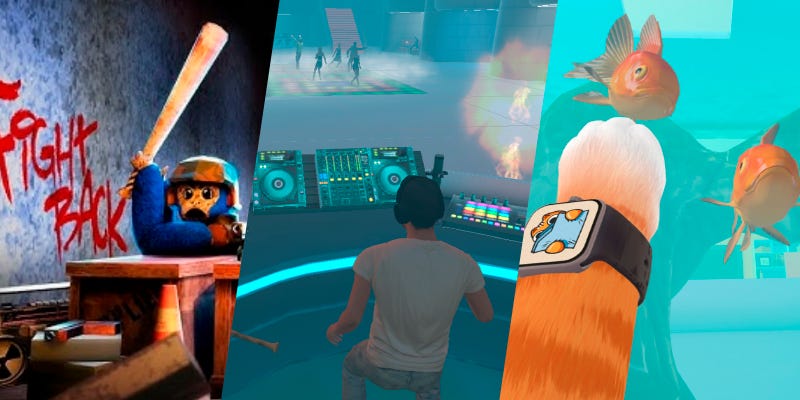
Scary Baboons, Sim Hits: The State of Quest Discovery in 2026
The newsletter examines the Meta Quest VR market in 2026, arguing that the platform remains vibrant but has shifted from early-stage experimentation to a mature ecosystem dominated by free-to-play (F2P) titles and social-centric experiences.
- The 2026 Meta Quest market is dominated by free-to-play (F2P) titles, which account for seven of the top ten grossing games.
- Revenue generation is primarily driven by high-volume downloads and in-app purchases, specifically focusing on cosmetic and functional items.
- Social-centric experiences and co-op world spaces like VRChat, Rec Room, and Job Simulator lead the market in total hours played.
Why Cloud Gaming Isn't a Market
The primary thesis of this analysis is that cloud gaming should not be viewed as a monolithic, distinct market, but rather as a collection of diverse business models and delivery mechanisms.
- Cloud gaming is not a standalone market but a collection of four distinct business models: cloud as a feature, platform, complement, and B2B input.
- Regulatory concerns regarding a 'cloud gaming market' are largely speculative, as the technology functions primarily as a delivery mechanism or feature rather than a distinct product category.
- Consumer demand for standalone cloud gaming services remains low, while 'cloud as a feature' models—such as Xbox Game Pass—show the highest growth potential by eliminating download and storage barriers.

TWIG 146: The Real Problem with VR
The current state of the consumer virtual reality (VR) market is characterized by a reliance on heavy corporate subsidization, specifically from Meta (formerly Facebook), which serves as a critical life-support system for the industry.
- The VR market is currently dependent on heavy corporate subsidization from Meta, which acts as a critical life-support system for the industry.
- Despite the Meta Quest 2 reaching an install base of approximately 10 million units, engagement remains low, with most Steam VR titles maintaining fewer than 100 concurrent users.
- Major third-party developers are hesitant to invest in VR because the current user base and engagement levels do not justify the high production costs.
How Big Is Your Game's Discord?
This analysis explores the role of Discord as a community-building tool for video games and examines broader trends in game discoverability and platform marketing as of August 2020.
- Steam’s automated wishlist notification emails are a primary driver of sales, but developers must offer a discount of at least 20% to trigger these notifications.
- Discord serves as a vital hub for player retention, with effectiveness extending beyond official developer-run servers to include community-led and partner-affiliated hubs.
- While major titles like Minecraft, Valorant, Fortnite, and Roblox dominate Discord activity, indie games such as Terraria, Risk of Rain 2, Deep Rock Galactic, and TemTem maintain disproportionately high engagement levels.
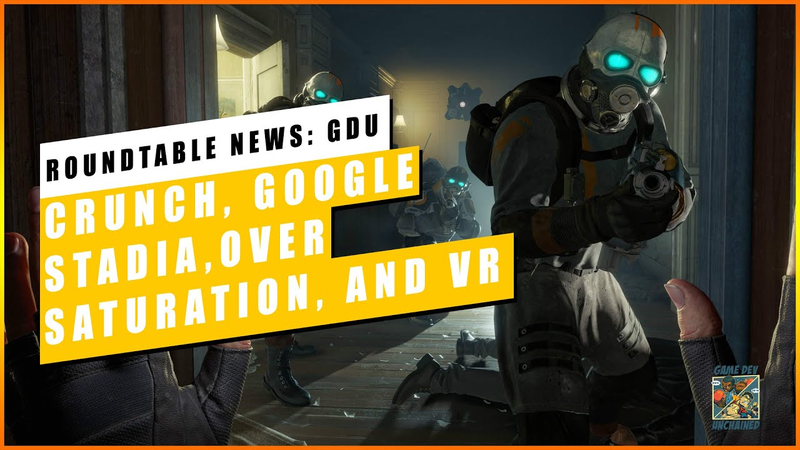
Crunch Culture, Google Stadia, Over Saturation of Games, and Virtual Reality | Roundtable News
The game industry currently faces a complex intersection of labor challenges, shifting distribution models, and evolving hardware paradigms.
- Crunch culture remains a systemic industry issue driven by poor management and scope creep, despite reports of marginal reductions in excessive work hours.
- Cloud gaming services that leverage existing user libraries, such as Nvidia GeForce Now, are better positioned for success than platforms like Google Stadia, which struggle due to restrictive pricing and a lack of exclusive content.
- Market saturation on digital storefronts like Steam requires independent studios to prioritize distinct brand identities and high-quality experiences over direct competition with AAA titles to remain viable.