1 free read left. Create a free account for unlimited reading + AI research.
Create free accountWhitepaper DiGRA
1 free read left. Create a free account for unlimited reading + AI research.
Create free accountWhitepaperDiGRA
Anderson argues that mechanics, narrative devices, and visual conventions become naturalized through habitual reiteration. Race operates as an organizing logic that persists through that repetition.
Anderson's article proposes "racial recursivity" as a systematic methodology within critical race game studies, one that bridges formalist and cultural approaches rather than treating them as opposed. Its central claim is that both games and racial formations are structured by repetition: mechanics, narrative devices, and visual conventions become naturalized through habitual reiteration, and race operates as an organizing logic that persists through that repetition. The method operates at three levels of repetition, moving from the game's internal structures to the medium as a whole and then to wider cultural circulation. Anderson argues that earlier game methodologies lacked procedures of this kind, and the framework is intended to be repeatable across titles, including those with no overt racial themes.
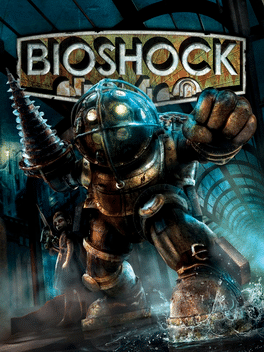
The article demonstrates the method through a detailed case study of BioShock. Anderson contends that the game's "A man chooses, a slave obeys" twist, its critique of Ayn Rand, and its Little Sister harvesting mechanic carry racial logics despite the absence of explicit racial content. The Little Sisters' sympathetic framing draws on a cultural construction of innocence as exclusively white, a trope recurring across titles such as The Last of Us and Resident Evil 4. Anderson further reads the game's ubiquitous 1930s-style skyscrapers through Adrienne Brown's scholarship on how such buildings disrupted racial perception, arguing that their apparent neutrality conceals racial undertones.
Anderson concludes that BioShock functions as a racial text, while acknowledging that the analysis has only begun to map its potential readings. Unexplored avenues include the game's music, its "ludo-Orientalist" narrative elements, and its genre lineage. The article's grounding is a bibliography drawing on game studies, race studies, and media scholarship, including work on Hollywood portrayals of Black children and race in children's literature.
Each row is a game or company this document names, each column a document, oldest first. A mark means that document names it. Select a row to see those documents.
European Conference on Games Based Learning (ECGBL) · 2026
European Conference on Games Based Learning (ECGBL) · 2026
DiGRA · 2026
DiGRA · 2026