Key insights
6 slides
Strong momentum
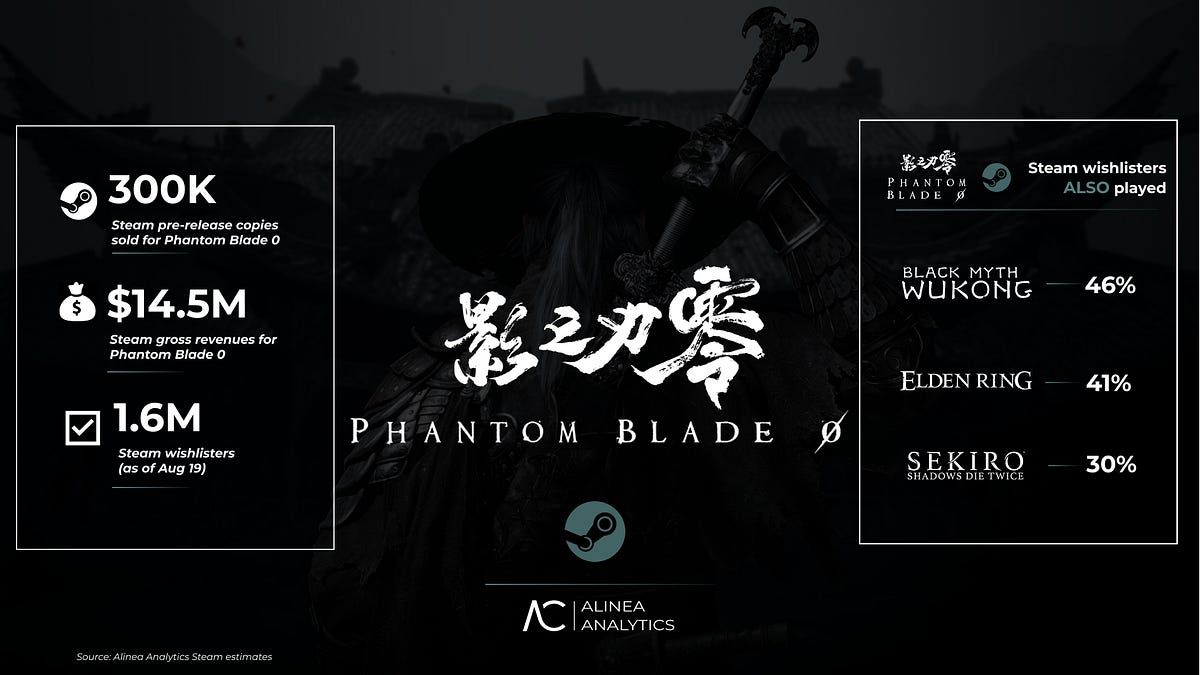
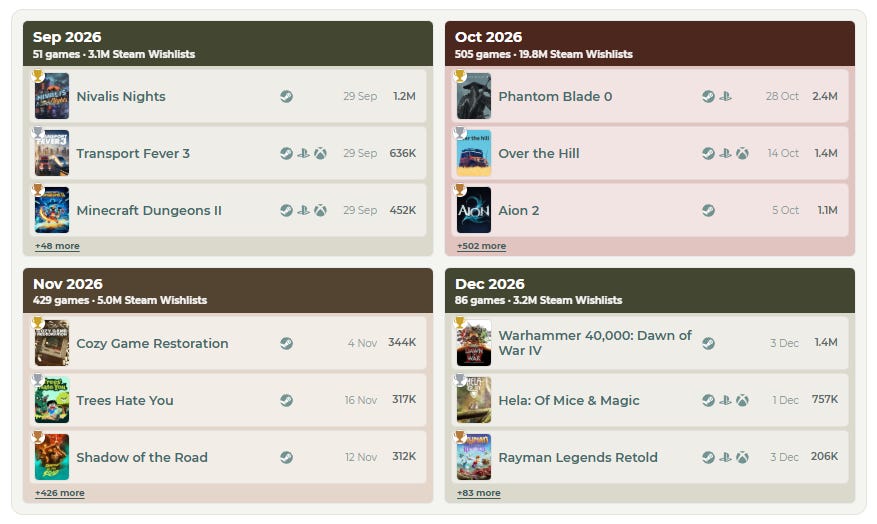
Phantom Blade Zero shows significant pre-launch sales and wishlist conversion.
The title has secured 386,000 pre-launch sales, converting 16% of its 2.4 million wishlists.
High engagement
Guildrun demonstrates strong user engagement through its demo.
The game's demo has an average playtime of 14.9 hours, with 55% of its 437,000 wishlisters having played it.
Significant revenue
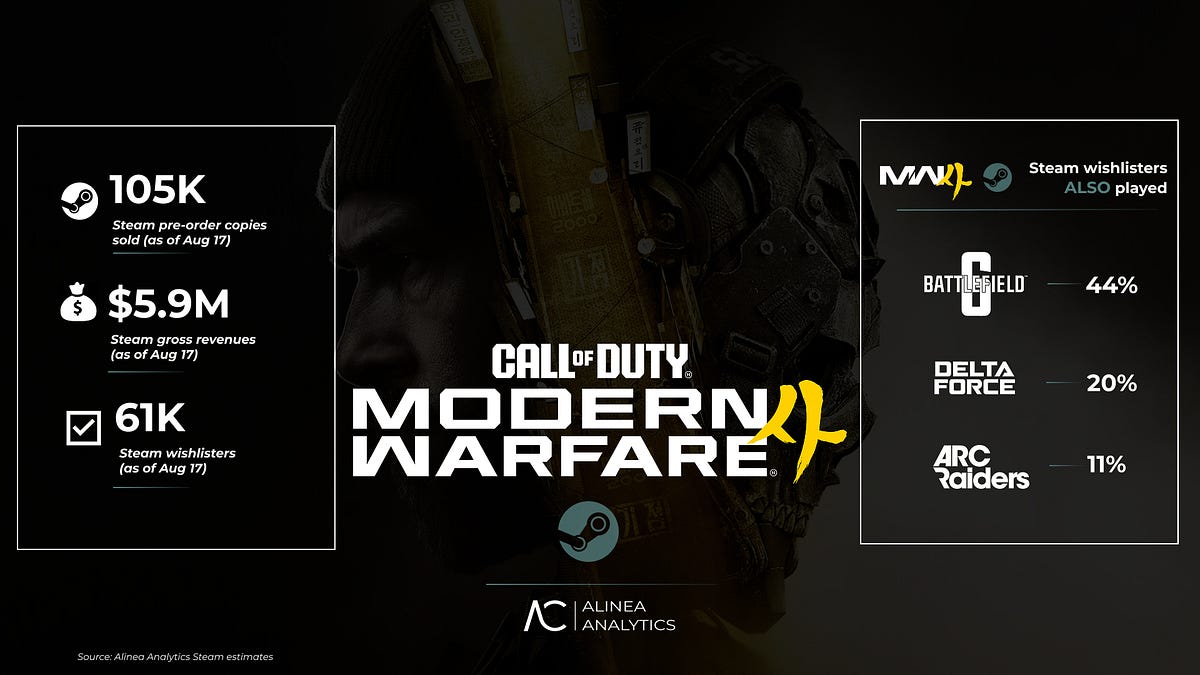
Modern Warfare 4 is tracking for a strong Steam launch with high pre-launch revenue.
The title has generated $25 million in gross revenue from nearly 450,000 pre-launch copies sold. This positions it for the franchise's strongest Steam launch since Battle.net exclusivity ended.
Growing interest
Warhammer 40,000: Dawn of War IV has reached 1.4 million wishlists and 90,000 pre-launch sales.
The title has generated $4 million in revenue ahead of its December 3 release.
Community traction
Clive Barker’s Hellraiser: Revival is gaining traction within the horror community.
Its demo has achieved a 93% positive review score and attracted 130,000 players.
Conversion challenge
Star Wars: Galactic Racer faces a challenging conversion rate despite high wishlists.
With 800,000 wishlists, fewer than 50,000 pre-launch copies have been sold, resulting in a conversion rate under 6%.
1 / 6
Ask AI about this report