Resident Evil: Requiem earned $108.3 million worldwide on its opening.
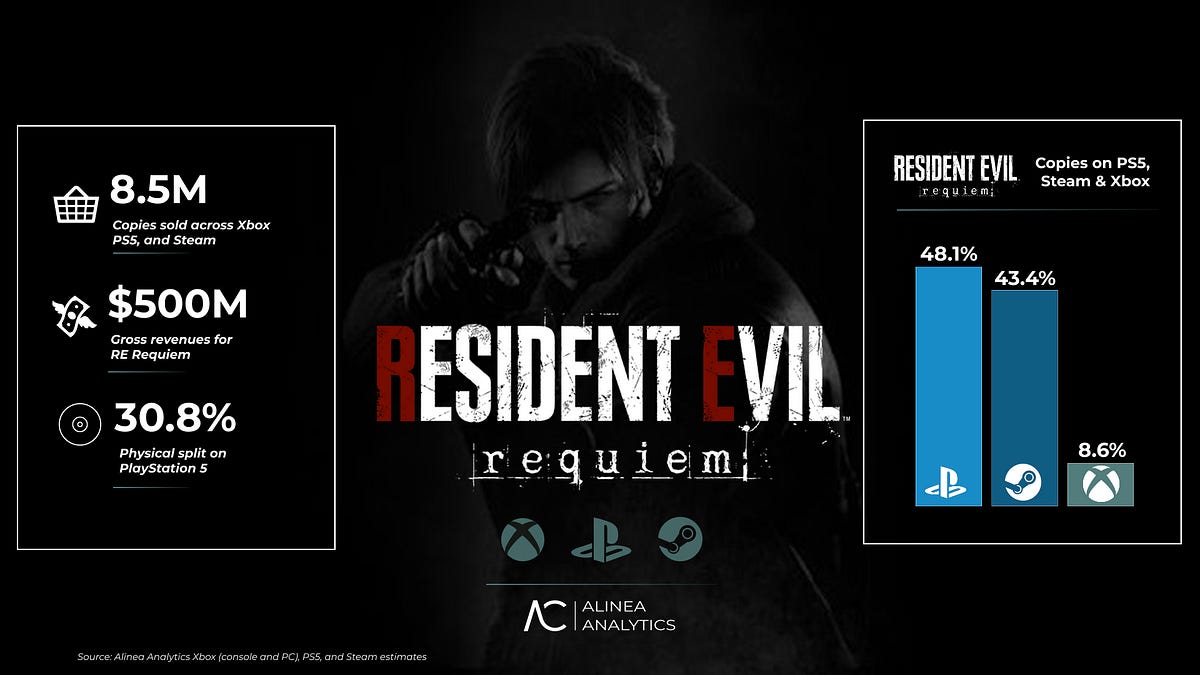
The game has surpassed $500 million in revenue.
The Resident Evil 2 remake saw a 48% jump in daily active users, and the Resident Evil 4 remake experienced a 24% increase.
Resident Evil Requiem saw a 4% decline in daily revenue on PlayStation during the movie's opening weekend.
The upcoming remake already has nearly 2 million wishlists recorded on Steam.
The release of the film Resident Evil: Requiem in September 2026 provides a case study on the efficacy of transmedia marketing in the video game industry. While the film achieved significant commercial success with a $108.3 million worldwide opening, its impact on game sales was secondary to aggressive discounting strategies. The analysis indicates that while the film successfully increased daily active user engagement across the Resident Evil franchise, it functioned primarily as a catalyst for re-engaging existing fans rather than driving new, full-price acquisitions.
Data from September 2026 shows that engagement metrics for titles such as Resident Evil 2 and Resident Evil 4 remakes rose by 48% and 24%, respectively, following the film's release. However, revenue growth was largely attributable to pre-existing price reductions on platforms like Steam and PlayStation. By isolating the impact of these discounts, it becomes clear that the film provided a modest, low-value lift in unit sales—concentrated in older, discounted titles—rather than stimulating demand for the franchise's newest, full-priced entries. For instance, Resident Evil Requiem saw a 20% increase in engagement but experienced a 4% decline in daily revenue on PlayStation 5 during the film's opening weekend.
The findings suggest that the lack of a direct narrative on-ramp or recognizable protagonist in the film limited its ability to convert cinema audiences into new game purchasers. Because the horror-film and horror-game demographics already overlap significantly, the movie served more as a brand-reinforcement tool than a traditional sales funnel. Future synergy between the franchise's film and gaming segments may require closer narrative alignment, such as the integration of established characters, to effectively bridge the gap between cinematic success and full-price game sales.