Key insights
5 slides
Initial Success
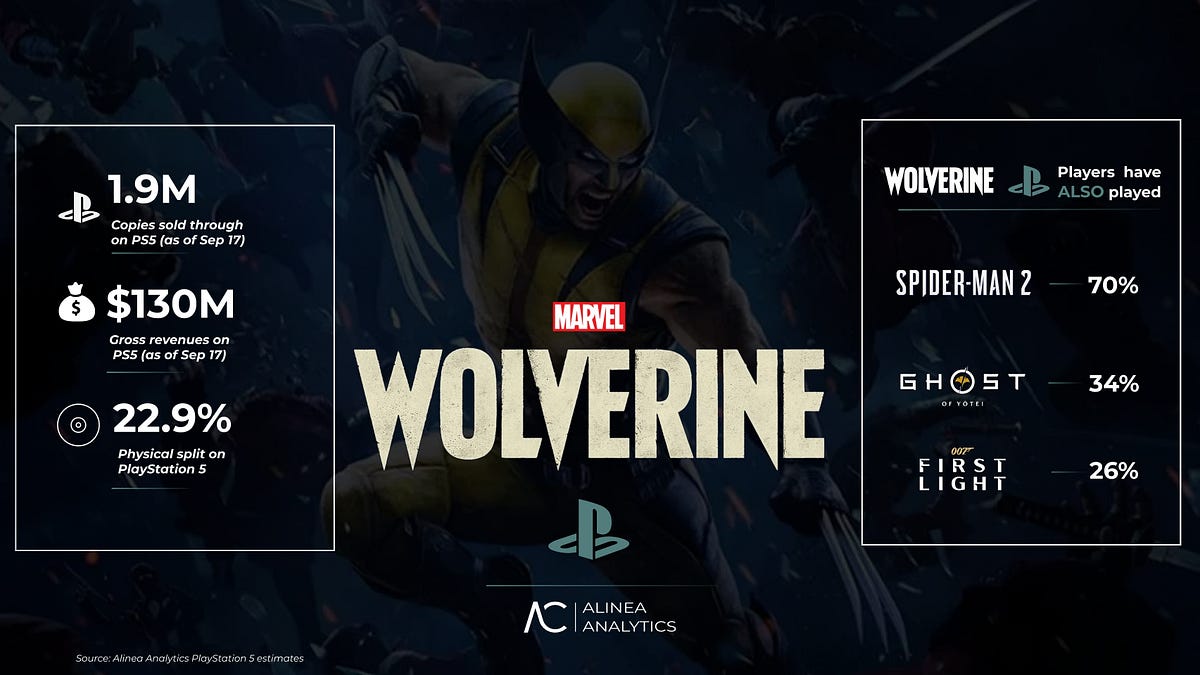
Wolverine achieved significant revenue and unit sales in its first three days.
The game generated $130 million in revenue from 1.9 million units sold within its initial three-day launch window.
Sales Breakdown
Physical sales contributed a notable portion to Wolverine's launch revenue.
Physical sales accounted for 22.9% of the game's total launch revenue.
Outperforming Peers
Wolverine surpassed several recent titles in launch revenue despite critical reception.
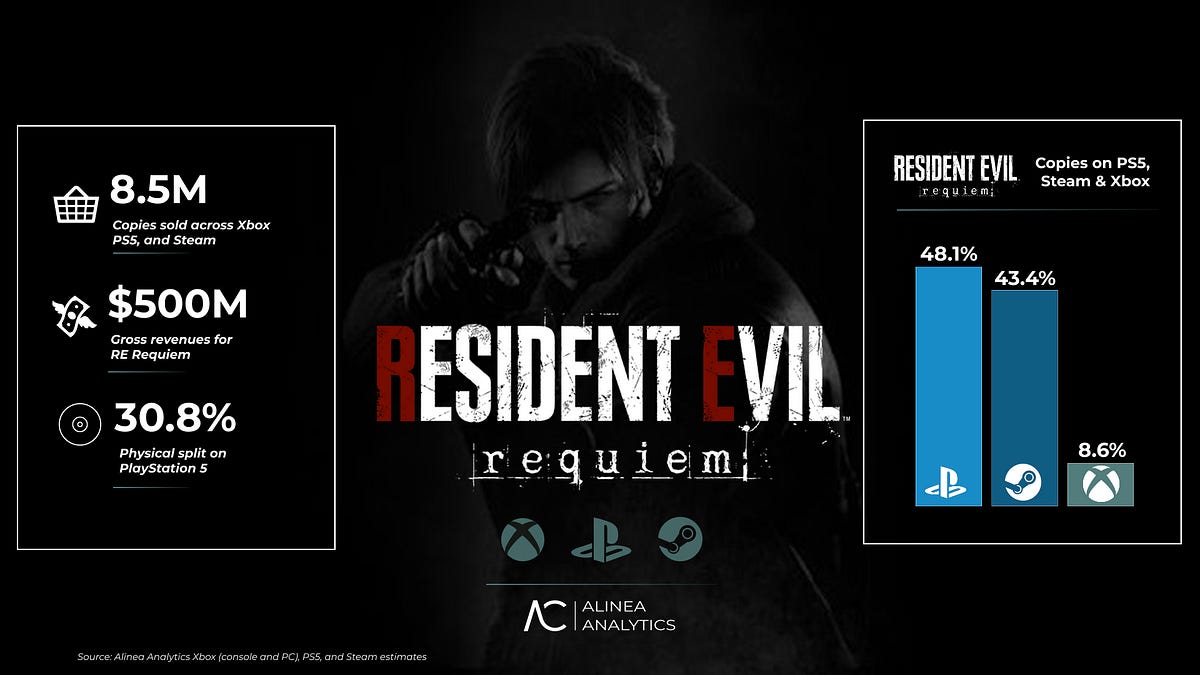
The game outperformed Resident Evil Requiem by 24.7% and Crimson Desert by 54.8% in their respective three-day launch windows.
Like a dark horse winning a race, Wolverine's commercial success defied its critical scores.
Audience Profile
Wolverine's success is driven by a mainstream audience, including existing superhero game fans.
The player base is primarily composed of casual and mainstream gamers, with 82% of buyers having previously played Insomniac's original Spider-Man title.
Growth Drivers
Future sales are expected to be driven by specific external factors.
Holiday gifting, upcoming MCU X-Men media tie-ins, and the broader PS5 install base are expected to drive future sales.
1 / 5
Ask AI about this report