VideoDeconstructor of Fun
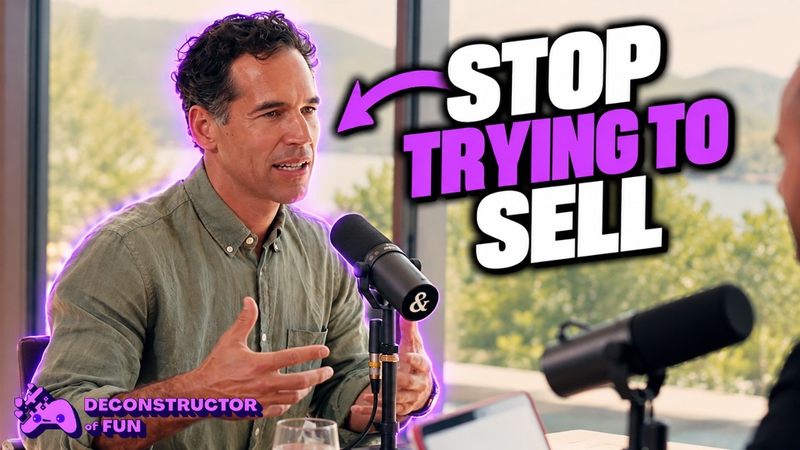
How 15 People Built a $50M Mobile Studio After a Failed Sale | Michael Martinez, FunCraft
21 Sept 202652 min video
Transcript
Michael, you tried selling Funcraft and that did not go how you expected.
Welcome to a friendly interview.
Wow. Okay, that's first question.
Yeah, let's just let's let's just go to the deep end right away.
So, uh yes. Yes, that happened.
Walk me through it. Um, so we had some inbound classic thing like if you
real inbound or
it was real inbound.
Okay.
There's always the balance of like oh manufactured people are asking people are asking but there was real inbound.
Like what's a real inbound?
Um, somebody was asking us and expressed interest and we want to make a deal. We're interested in looking. Maybe slightly exaggerated but not really. It it was it was serious. So this was last year uh last spring 2025 2025 spring
and I uh reached out to some bankers talked to a fun
shout out.
Shout out Arie
and did not listen.
And he said Michael be patient.
Cool story.
Be patient. Cool story.
Right. And I said that I have another banker who says we can do this
and you can do it. Let's do it.
Felt like we could do it. Lot of confidence. Business was growing. Felt good about it. We put together our materials. Went through the whole process. Uh and it didn't end the way we wanted. And it sucked. Before I I get into how much it sucked, tell me about the process.
Um, so the process was uh fairly straightforward. I mean, we're a small company, so I was focused on it,
but also wanting to make sure that we keep running the business. So, we put together a deck um and had the list of folks that we were going to talk to. So, did a number of management presentations. I don't know how many um follow-ups and um that took probably into June, July. I think that was another thing that was challenging about it. Keep hearing like summer months avoid those and we were it ended up going right into
another another advice not listened to.
Interesting, [laughter] right? I should listen to advice. Exactly. Yeah. Um, and then the deadline came and it's like great, what do we what do we what do we got? And it was nothing.
Yeah. Massive. How many how many companies did you reach out to?
The initial I mean I think 30 40. So too too broad. Not focused enough.
Just the amount of of not interested.
Yeah. It's like walking inside a club and talking to a lot of fine people and then walking out.
Right. Right. Yeah. Yeah.
How did that feel?
It felt uh was it sucked. It was
While your business is is legit.
Yeah. And it has gotten way more legit since. But when it happened definitely there was a moment where my co-founder Jason and I we were like this this sucks. What? It feels like a rejection of
It was a rejection.
It was a rejection. Yeah.
All over
multiple times everywhere. Yeah. Um and there was a moment where we had to It's like we felt bad for ourselves for the weekend and then have to get back up and be like, "All right, we here. Let's try and get more feedback about what we need to do to be better." Obviously, we're this is off
the table. Sales off the table for a while. Um so, get to work. And that um that was that was a little tricky at first. Yeah. Because in your head, somebody you had the inbound, then you had a banker telling you that we can do this,
right?
And then you're starting to calculate [clears throat] essentially you're going through this process. So you're thinking about in your head even though the banker would tell you like nothing is sure we have we don't have any offers but you're thinking in your head like what happens on the other side of this deal
right right
you're planning you might be spending a little bit too much time on looking at properties [laughter]
yeah potentially not not too much because I we've been doing this uh 6 years now so like we and we've there have been offers and that we've rejected along the way and stuff
so we know that there's nothing I go into this fairly skeptical. Um but it
was a lot of confidence.
Yeah.
Was like a lot of people were telling me that something would happen. of course,
a lot of investors,
adviserss, um the banker, and one of the things that was incredibly frustrating that I've learned after is that there was a discrepancy in the price projected that we wanted.
Mhm.
Or that was acceptable to us. Uh was a number that just doesn't make sense. So then it made more sense to me when I learned that months later why no offers came in because it was just like this
silly price
untethered from reality price.
So that was that was frustrating that was infuriating
price no negotiation was able to be like
so it's like there were many interesting parties. That's why when it first came in I was like are you kidding me? We had
all these people that
were interested. I've had great conversations with them. I know these people. They've expressed real interest. So to not even begin the conversation was it it something didn't make sense to me. Um and then there's the reputationally what it looks like for us that we presented ourselves in that way. Not great.
You know that's not a good impression to make. What what what made you want to sell?
Um I it wasn't I mean again or not again I we are a VCbacked company so I think that's the that's clearly the a likely outcome for us that makes sense for us. Um and we wanted to test the waters and see what was possible. Um, so that was that was the reason.
Got it. And how did you overcome the rejection? You said it took a a weekend. This kind of sounds like a little
No, it actually was. I mean, it's like I think it it [laughter] being in this industry, you have to take a lot of rejection.
No
And just like
get back on that horse and keep going. So that it's like nobody there's no right to any of this. You have to go you have to go get it. You have to do it yourself. You have to do it with your team.
Doesn't Doesn't make sense.
Did your team know that you're going through the process?
They did. Yeah. Yeah. Yeah. Yeah.
They're probably also spending too much time on [laughter]
I hope not also.
Yeah. That'd be a waste of time. Right.
Right. Yeah. And their their equivalent property.
Shout out to Funcraft team. Shout out to Funcraftraft team. Shout out. [laughter]
Yeah.
Um, okay. So, you go through this process. Everybody tells you not to do
it. You do it. You put on too high of a price tag.
Yeah. Which I didn't know about.
Yeah. Exactly. Just, you know, small mistakes,
right? Small mistakes along the way.
Yeah.
And then you get 40 rejections.
Yep.
But what happens next is the most interesting part.
Yeah. Um, so
cuz the business has gone
the business really well
has gone great and we Jason and I keep talking about this. We joke like every time
we say no again and we get rejected and then get that boost another chip on your shoulder.
We get a chip and we keep growing. Like the business has has never been better.
It has transformed into a really excellent business which is so exciting. So last year we grew 40%. Um to 36 million in topline.
This year we are on a 50 million run rate.
So it's 50% growth already and we're going to keep growing. So we are
in current market where growth is incredibly difficult.
Right. So we're we're like and we're more profitable than we've ever been. We've already
in the first five months we more than doubled last year's profit. So that's like that's awesome. We have a good business
and the business has been running for several years already. It's not like you just started yesterday and you're seeing this hockey stick. You've gone through hard times.
Yeah. Yeah. Yeah. This is like um 6 years of steady growth. Uh all the foundations that we've built and all the processes, the team and it continues to to come together.
Break those down to me. foundations that you've built. What are the foundations that allow you to reach growth in current market in a later [clears throat] state? Like not a later stage, but you're like getting a mid midsize company in terms of your revenue.
Right. Right. Right.
Unless you've been living under a rock, you know this is web store rumbringer.
70% of top [music] apps are using a web store and the best ones, they're doing it with app charge. Do you want a $20,000 inapp purchase? Yeah, app charge does that. Do you want to pretend that subscriptions are still [music] a viable monetization strategy for games? Yeah, apparent let you do that. They get [music] what high average revenue per paying customer means. And they're already doing over half a billion [music] dollars in transactions a year. So, are you going to be the first to do a $20,000 AP? [music] Don't accept microtransactions. Embrace macrotransactions. Learn more at appcharge.com. Eiffel Tower, [music] iconic. Tower of London, historic. The two towers, simply epic. But none of them tell you anything about mobile app intelligence. Downloads, revenue, active users, [music] and my personal favorite, weekly cohorted retention. Get the real story. Get the real data. Get sensor tower today.
Funcraft, we do things a little bit differently. I I can't really think of
another company
like not listening to advice. [laughter] Yeah, that well you have to not listen sometimes. Um I think we're pretty unique in the type of games that we make, how we make them. So we make turn-based games
ad supported. Um and we are very lean team, 15 people, really excellent, senior, independent, driven, capable people that allows us to work quickly. Um, we really emphasize speed and of course we can always be faster and we're trying to always be faster. Um, and the type of games that we make. We make many games. So we we think of ourselves as we've built a factory that can make these turn-based games quickly and test them in the market. You have to test them in the market.
All we care about is is rorowaz. It's like games that we've made. We launched 16 games uh each of the last two years
with four engineers. Um we we games that we've been really excited about and think they're great, really innovative, really cool gameplay, they do terrible. And then other games that we're like, should we even launch this game?
And that's our biggest game right now. So it's like
what's what's it?
That's Farle. It's this classic simple dice rolling gameplay, risk and reward. Um really simple game play and it's yeah it's our biggest game.
How is this approach different? You said turn-based so one type of a game in terms of like game engine. That's how I would say.
Yeah.
Uh inapp ads, lean team, remote first.
Remote first. Yeah.
ROS first.
Yeah. How is this different than Juicebox games?
It's a lot different from juicebox games.
Yeah, they're first.
Yeah, my first. Right. Right. So, I mean the the lessons that we hold really dearly are um don't put all your eggs in one basket. We early on it's like we want to make sure that we're not betting the company on a single game.
And so trying lots. Um, another is making sure that we're not play acting at being a a startup like our point.
So, just like I you were at my office in San Francisco
many times. It was a beautiful office. The coolest office
at the It was like a I'll I'll I'll explain. There's a there's a wine bar.
Yeah.
It was a really cool wine bar. Kind of like a date spot.
Great coffee shop.
Great. And so, no, you go on the alleyway of that wine shop and it opens up into barber shop there. barber shop and a coffee shop that are like super cool.
And then opens up to this full uh wall.
Glass wall.
Glass wall. Beautiful brick. Juice box.
Yeah.
And Mr. Martinez is sitting there.
Yeah. And and you know, ready to to rock and roll.
We were there. Yeah. Juice Box.
That was Juice Box.
Um
so I I mean I think the biggest one is making sure like the the value that we have is in the the team and the process and all of our learnings. So making sure those don't get wasted on an individual game. I think the other and it's like so basic as to be benol at this point but really focusing on making it a successful business first like that's what matters and being really laser focused on that. Um, and thinking knowing that we have to judge ourselves very honestly and with metrics with rorowaz metrics from day one. None of this like, oh, our metrics look good, we have okay retention, we have we're going to fix the game later. It's like everything matters the first install
that you buy and you are judged by that and you should be like judge yourself by that. Um so that's been something that is is very is different.
What are the the type of a processes that you have cuz not a lot of startups talk about processes.
Yeah. Well I I think how we think about it there's like different areas of expertise that we have of what it takes to make a game and and launch a game. Um so there's product um and there's the data analysis and all the experimentation that goes with that. We feel like we were very good at that from the beginning. Where we really have excelled now is in ad monetization and user acquisition and really great at those. Um we can and I'm sure we'll talk about where we can get better. We've been really excellent at admonization. We're very focused on that. 80% of our revenue is is admon. We have uh very high ad ardow. It's like for globally
for our company it's 60 cents a day.
Is part of your growth in revenue the fact that CPMs and CPIs have gone up. So that helps you with ad monetization
that we have seen our uh our ad arow continue to rise over the last
you make games for women probably.
Yeah they're primarily women it's like 30 huge bucket 35 to puzzle casual is playing your games as well.
Yeah absolutely they're
okay. So that that increases the uh the admonization. Yeah, yeah, yeah, yeah. Um, so re great 60 cent ad art dows that we're
really proud of. Um,
just shoveling those ads in ladies faces [laughter]
in a tasteful way. We experiment everything and are checking everything against retention of course in a in a a revenue and
they don't monetize it. I'm with a couple of more. [laughter]
Yeah. See, no. Uh,
shout out to to Adtech.
Shout out to Adtech. [laughter]
Um, and then user acquisition as well and taking that really seriously and bringing them all together like I think as uh much more so than we did previously where things were siloed. We have conversations with all of us together and that's everyone's responsibility.
And another part is that example craft engine that you built pulling winning features across the whole portfolio like can you give me concrete examples?
Yeah. So this is uh co-founder CTO Jason Mcgherk is like unbelievable
from Juicebox.
From Juicebox, from Zingga,
you took a break between Juicebox and and and uh and Funcraft. You went separate
separate ways from you went to corporations. You went to Zingga. You went to EA.
Shout out Command and Conquer.
Yep. Here we go. Rivals. Yep. [laughter]
And then uh and then you got back together.
We we couldn't stay apart. It was just this idea of
separation,
right? We h we um
we dated others.
We [snorts] we dated others and we came back to each other. Absolutely.
That means you're meant for
we're me. I mean it really is. It's like we have this uh we're glutton for punishment and we have we think
that we can do better and we want to do it our way. Um and we're we're
trying to prove that still.
Yes. Uh but but examplecraft so he's he's built these um
game s like these fundamental systems for games so many times from the ground up. Um so he knows what it takes what it takes to operate a game at scale with live ops live updates all that stuff. So, examplecraft is the core and that's what allows us to build all of our games so quickly with all of the identity, all the analytics, login, and then all of our successful features, all of our systems, our achievement system, anything that works is now part of example craft. So, when we're building a new game, we take the game play um and that's what we're um that's what we're
that's what we're building. That's what we're prototyping with. That's what we're exploring. And then we bring all those other systems. They come with it for free.
How big are the teams and how quickly it takes you to launch a new game?
So, we have four engineers. We have two UI designers and artists. Um, and it takes a single engineer owns a game and they will get it out in around 6 weeks
to launch a new game. to launch a new game.
It's like faster than a Roblox game.
Okay. Yeah, it's great. I mean, it's like we our second biggest title right now, Bingo Dice, was uh it's a really neat variation.
Bingo Dice.
Bingo Dice. Yeah,
it sounds like a Chinese company named [laughter] that.
Yeah, we uh
How about bingo match dice?
Right. All of our games are have variations of dice word. Uh,
you like bingo. You like you like SEO. I
understand.
We we try to be straightforward with say what it is. Um,
so this game was pitched by uh Maggie, our UI designer, and immediately when we saw it, it was just like obviously we should make this. We put it to the top of the list of the game to make next and then it was out on the app stores within six weeks. And it's really awesome that she came up with such a great idea and that we were able to act on it.
And the team was like four people working on it, right?
One one engineer.
One engineer.
Yeah. Yeah. So it's one engineer then with support from UI team to
and it fixing it. How many people?
So that is done with our head of product um who I I need to give a shout out.
Give it
to you last time we did this.
Yes. He reached out to us and uh
we call that value ad.
That's value ad. Un like he's been so impactful for us. He's been with us
I four years now. Um he brought excellent workers that he knows um
you would recommend joining this podcast if you
I would recommend. Yeah. If you get an invite to do this podcast, you should you should hop on the podcast.
That was internal promotion. [laughter]
Thank you for that. Um but Gonzalo Yeah, he
shout out Gonzalo.
Shout out Gonzalo listening such a great
for listening. Right. Right. Um, so he I mean he's built our systems, our live op systems and that's something frankly that we are uh okay to good at, not excellent
that it's something we uh continue to find the most value and the most ROI by building new games rather and launching new games. As much as like other people say that's not the case or it's so hard to launch new games, we see more growth
from launching new games than the other approach of putting everything in a single game.
So this is an acquisition and ad monetization business, not a franchise business,
right? We are searching for the franchise and the true breakout. How we I mean how we first pitched this is
you'd like to have a magic sword
of Yeah, of course. We'd love to.
Wouldn't
Yeah. No, we don't want that.
Keep Pixel Flows away from this company.
Yeah. No, thank you.
Not that.
We like to do it the hard way. [laughter]
Right. Right. No, we are uh stacking the revenue of our game. Building a great like it's a good business right now.
A really good business. uh it's not yet a great business. That's what we're trying to do. And and I I still think and I do think that our approach of launching many games is the quickest
best way to find that game.
So what's the challenge with this business? Because when I'm looking at it, I'm looking 15 people.
Yeah.
36 million.
Yeah.
That's 2.4 million per revenue per head.
Your profit is more than doubling.
Yeah. No, it's awesome. You're experiencing profitable growth,
right? Right.
And the market is not seeing growth.
Yeah.
And you're growing profitably.
Yeah.
So what's what's the problem?
Well, I think I mean going back to the original question, obviously Aan was right.
Obviously what?
Obviously Aon was right. But it's just this
making sure that it's it's clearly out loud here. [laughter]
Right. No, but it's just the idea of being patient and we were impatient. And the always people say it's like and I I've said this to myself, it's like you
when you want to sell the business, you won't be able to sell it.
And when it's a good business, such a good business that you don't want to sell, then maybe something happens. But that like that's if and we're not thinking about that cuz what it's it is working right now. And now that we are generating what we're it's like it's transforming how we're thinking about it.
Sati, it's the Japanese Zen Buddhist term for sudden enlightenment. That flash where everything clicks. We're told that Heroic Labs team had theirs when they realized that most studios [music] run live ops like a horoscope. Vague, kind of generic, same advice for everyone. So they built Sattorii, realtime experimentation, player level personalization, events that actually respond to player behavior. Say Sanonara to your old live op stand [music] and Konichiwa to Sattorii from heroic labs. 7 years. That's not a sponsorship.
That's a marriage. And that's exactly how long we've been partnering with Apps. And the reason it has lasted is simple. Every growth team I talk to on [music] this podcast, every operator who comes and breaks down what is actually working for them, eventually the conversation lands on measurement. [music] And in gaming, we refer to reliable measurement with a single word slider. [music] Just think about it. Maloco, Meta, Google, and Unity all back this platform too, which means the people competing hardest for [music] your budget all agree where the single source of truth lies. And so what the what are the challenges of this business like on what side on one side what I'm seeing is there's the platform risks as always to mention them but you know you got the Google the Apple you also have Apple oven that is quite of a quite of a powerhouse when it comes to as ad monization
and user acquisition
and then you have the type of products that you currently have as you said it's very much a low retention ad monization factory
that depends on out executing in UI right
uh uh
proven factory
out executing I in every I mean in all together that we have to do it do it all but I we feel confident with the
I mean we we continue to do it
it's like the proof is in in the pudding we keep doing it we keep growing
and we're more confident than ever about where we're headed like when we look at our road map not only of games but other and we we'll get into that um but I mean certainly I think risk like we are at the whims of Apple and Google uh then we'll talk about app 11 but it it thankfully it's been stable for a while um but it's frightening what they do and
two recent examples of just removing ing major businesses from the app store. They did that is like is is crazy is crazy. And then talking to the CEOs of them that it's hard to for them to talk to a human about it on the other side. That's it's a little it's scary. Um but I don't I don't think there's there's much of an alternative with with Apple on Google. No.
Yeah.
How about applovin?
Appven is is uh
shout out to Adam. [laughter] Adam. Um, they are they've been a big partner of ours and have driven a lot of our growth, but we want more competition for them and it's we spend a lot with them. They're our one of our top partners.
Too good.
They're too good. Yeah. Obviously, and we need more we we they know both sides of our business and that
and they like margins.
They like our margins. They like our
margins. Yeah. So that I mean like they see everything so they know where where to get us and that's uh that's tricky and I think
we need more
competition obvious like to to push
Meta Google
Google step it up.
Meta has been so terrible. They're like not even totally out of it.
Shout out Meta. [laughter]
Right. Right. But I think I mean Apploven is Yeah. They're it they're working so well and um I think it's been really interesting the rise of rewarded
is
uh
has meta been really that terrible
terrible for us for us
I was it like before but now they're kind of like reinvesting into
No we we tried
quite a bit last year and um we we growing our budgets and spending decent amounts uh and I It's like fully off now.
Deteriorated.
Maybe it's you, not them.
It could be. Could be. You never know. You never know. We'll we'll retry. Actually, I I take that back. There is It h there's like very small scale that that's working.
Yeah. Yeah. Yeah. Um how are you going to find that sort of a that long-term retention that inapp purchase engine that you need for your business?
Yeah. Uh,
how do you get out of this this sort of a this hook, this treadmill where you're out, you know, executing at launching games cost efficiently, scaling them profitably, and constantly like launching new ones. How do you get to ride that pixel flow?
Yeah. Um, I mean, that's hard to do. It's hard.
It took them many years. I know we I know we counted that as as four months, but
it took Yeah. three months.
It's it's like all of them like, oh, we just shipped this yesterday,
right? Uh I mean I think the it's it's hard and we just have to keep keep trying. Um we we're doing it in two ways. One is the always experiments on our existing games looking for deeper
systems that can engage players longer. Um and I think the new games that we are making they are all efforts to improve it like Far has had
our our best retention metrics. Um, so that's I don't think that AP is not necessarily our goal. We we really like ads. We're really good at them. Um,
and ad roll is increasing.
Yeah. Yeah.
Half of the market already.
Say that.
Ad revenue is half of the market already.
Okay. Yeah.
The graph,
right? Right. Right. Right. That's what people are not seeing. They're looking up.
Yeah. Yeah. Yeah. like it's it uh we we really believe in it and um we know we we our our players do too.
When when somebody's listening to this, somebody who might have said no to you, which [laughter] is everybody. I'm just kidding.
Hey guys.
No, but they're like, "Okay, weak retention, no inapp purchases." Like, this is an absolute house of cards.
What are they not seeing?
I'm I I mean, they're not seeing the numbers. It's like what we've transitioned this to. I think another thing is we had been so focused on growth, growth, growth. Um, and that was important and essential for us to do um when our revenue is smaller. We are now at a point where clearly in the market profit matters more and we are at a size where boosting our profit is meaningful to us uh to to the company whereas before if we were at like 1 point whatever 1.2 or 1.3 2 years ago it doesn't really matter. Now it it can make a big difference. So, we are changing the way that we uh run our campaigns and uh reducing some of the more
uh uh skeptical campaigns.
Got it.
Be more rigorous there.
Focusing on everything.
Yeah. Yeah. Yeah. Yeah. Um, one of the things that we've been talking about over over past maybe half a year has been publishing.
And you've been kind of on the fence. Like on one point you'd be saying, "Hey, we're looking at games to publish."
Yeah.
That's this was earlier this year, right?
Yes. Yes.
And you you're It feels like you're on the fence. You're giving it a go.
Yeah. Yeah. I think it's something we have really great capabilities on the UA and Admon side. and we are very capable of launching and testing games. I am welcoming the opportunity to work with excellent people that are looking to offload that because it's really challenging especi
the to get our ad monetization and I know it's a it's a it's like a a unicorn type of person or type of team that wants to match up with us. Um, it's certainly not the Turkish trio that can raise $10 million right now. That's not the right fit.
But I think there are potential
What are you looking to get out of it? Like topline revenue.
We want to get
seems like a headache.
Well, yeah. I I don't think it'll be I mean,
it's work, but that's that's the point. So I don't understand it because you're really good at making games and really efficient.
We want to make more games. We want to make more games. We want to make I mean all in pursuit of that we want to make more games. Uh we want to expand uh the
capability like the types of games that we can make. The way that we are structured right now, it is very much uh
like we have a real competency in these turn-based games and we want we we want to experiment with with more and we need to bring in expertise to do that.
So, anybody who's making turn-based games,
I think we can make a game turn-based that would be perfect for us. Like if there there are ways for us to transform games into a turn-based game. Um,
what does it mean? Like if I'm playing a car game,
you mean an example is bingo that we were able to make that into a turn-based game competitive against another player. Got it.
So you are playing bingo head-to-head against another player. Got it. Four players can be matches that are turn.
Yeah. So we are always thinking like what other mechanics can we take that or what are simple gameplay that we can put into this.
So let's say there's a person or two or three who are
who have an idea of a game.
Do they have to use your funcraft engine example craft to make those? We've worked with in the past we've done this I think maybe three years ago and we were testing games um that they launched themselves and then we uh they were building them themselves uh and if one of the games worked we would have rebuilt it for it to be fully
so it doesn't have to be um but like the more they integrate they will then fully come on
that sounds like a lot of work for a 15 person team
we we really can do a lot we really Man, I mean it's just there's no we just act. We just do. Like the example of that game Bingo Dice that we saw the prototype and then we made it.
We don't question. I don't know. It's I'm I've been really pleased with our capabilities.
That's like a dream come true where things just happen.
It Yeah, it really is like it's
because we worked at companies where things just never happen.
Right. Precisely. Yeah. So, I mean, this is like the Jason and I have it's we've the company that we've built is like is a representation of the way that we like to work and bringing people like that on board. It's like you have an idea, go do it. Great. You want to spend more money? Good. Go do that. You want to try something? Great. Go do that.
Is that counter what what Juicebox was or like where did that come from? M
I think the difference from Juicebox is just the the level of seniority that we have and being more clear about the pace and always testing whereas then it was the a big bet
longer term. This everything is is quicker. I I think the biggest like speed is is the most important to us
and we always I mean we want to be faster of course.
Yeah.
Have to be
and
we think we're slow.
Do you have this sort of like a culture playbook or like it just you just work?
No, I mean we we just work. We we do have um our core values. uh trust is is uh the foundation of it and it's it's really true. I mean we are a remote team.
Is trust given or earned?
Um it is it is given with a
lease.
With a leash
with a lease.
No. A leash.
Short leash. Wow.
And then and and earned. And yeah, I mean it's it but we we we're hiring people remote. Like you have to trust them. I don't want to be I'm not a of course I'm not a babysitter. Our everyone needs to deliver and they need to come to Funcraft for the right reasons. Uh we don't have time for management. That's not something we we do. We are
How does that grow scale then? If if
it's a if it's a company that doesn't have time for people management
I I don't know how necessary that is. I think we we are one of those companies where it's
just hire the right type of people. You hire the type of people. Yeah.
And and we continue to I mean we like I I love our people. They're excellent. Um and we've gotten to know each other very well. Um but we're we're here to we're here to work.
Yeah.
Really? There's no like agenda other than than uh [laughter]
than delivering fun.
than delivering fun. Yeah.
Wow.
Right.
It's refreshing.
But it's good. Yeah. And it's and it's like something that it's it's uh that has developed over time and now people have been with us for four plus years now. And
um they they are driving they have driven and created our success. So they know what it takes.
And how do you do remote work? Like how do you make remote work work? You've been remote from day one.
Yeah, we started six months before the pandemic. Um so when we went remote then I think we had three employees. So at that point we started to hire remotely. Um Gonzalo and and friends are in in Buenosiris and um
Have you visited them in Buenosares? Yeah.
So what's Buenosaris like?
Beautiful. Beautiful. It was a real joy to go through the World Cup experience with them.
Yeah.
It was awesome. Last World Cup.
Yeah. So fun to wa to watch their joy [laughter] of Argentina winning the World Cup.
See, I'm I'm like absolutely oblivious. I know I live in Europe, [laughter] but
that was really like
Argentina won. Who was in the finals? France.
Yes. The most the best final ever time.
Of all time. I remember.
Yeah. Yeah. Right. [laughter]
What a wonderful
No, but Yeah. Aronos is super cool.
Okay. And so you're rooting for
not Argentina.
Argentina.
USA.
USA, [laughter]
but when USA falls after the first bracket,
lots of teams to root for.
Then you got Argentina to go for.
No, I think Spain. I like
Spain. Love this guy.
Good choice.
Yeah, but I I mean we make remote work. Um it it doesn't I've been talking to a few people recently. It's like it doesn't feel like a thing for us. We're not managing it. We have uh weekly meetings that are important but we don't have very many meetings.
Yeah.
People are doing the work. Slack is very active
in the same time zone like in the the South American time zone.
Yeah. And then we have uh an engineer in Serbia and uh UA lead in Israel. So that's uh a little challenging for them or different time zones for them. And they overlap just for the meeting times. um and are
we don't we don't it's like they they do their work.
So majority is in in Americas.
Yeah. Yes. Yeah.
Interesting.
Okay.
But it's it's like it's it hasn't been an issue. I mean certainly the size number of people makes it easier to do and that might be something where that may be one of the reasons we've stayed smaller. um so we don't have to enter into more more management or have that be challenging and and that's the reason our people are so senior.
I think we will continue. I think it'll focused hires um but it's really out of necessity. There's certainly not a plan to hire
40 people. It would be it's will be a few at a time. And so what are those people like who you hire? Not the role specifically, but the people
who Yeah. I mean, I think they are uh they know what they're doing.
They senior
they have to be senior. They have to we we cannot train PE. We are not training people. We expect people.
There's no training wheels.
There's no training wheels. We throw them into the deep end
and
there's no first day first week you read the wiki.
There are I mean there are things too
to check out the documentation of course but it uh we throw people into the deep end and they figure it out. So they're senior, they are independent, they are self-driven, they have to be wanting to do the work and figure out what else they need to do and feel responsibility and ownership for the business. And I like really trying to make sure that our our people feel that way. uh we grant equity of course and I think that's sometimes unusual for some of these countries that that we've hired in uh
but it makes a lot of sense for us um [clears throat] and yeah I mean it's like we we I'm very very we're very transparent about the performance of the business and
yeah because they need to understand the context to become independent
right yeah we know we know what we're driving towards and we know how we're And um that's that's what we're talking about.
This episode is sponsored by Maloco. More than 2 billion daily active users, over 2.8 million independent apps globally. That's the reach Maloco ads unlock for performance marketers who don't want to stop at the usual gardens. It's all powered by car's compound AI system. Continuously learning from billions of events and getting [music] smarter with every campaign. Hop over the world garden. Check out malokco.com. That's m o l o.com. [music]
In sickness and in health, in soft launch and in live ops through every meta shift and every platform policy change. That's the kind of loyalty vibes built between your game and your players. AI powered targeting, a real meta layer, rorowass optimization [music] that actually compounds. That's what makes Vibes the fastest growing loyalty platform in mobile games. Till churn do us a part. Vibes vybs.co. So you evaluate people on low input, high output.
Yeah.
Would that be correct? [laughter]
Yeah. Yeah. Yeah. Yeah.
Um Yeah. And then it's helpful if they have a a chip on their shoulder. Like we want people who have a little bit of a chip on their shoulder.
Some of yours, [laughter]
right? Yeah. I have some extras.
Right. You want to borrow one?
Yeah. [laughter] Um, I want to end this on on since you talked about Gonzalez came through this podcast.
Yeah.
Can you pitch to the people you want to join your company to the roles or like however you want to put it, who do you want, who do you need in your company so that you go from Funcraft,
the company that is generating soon 50 million a year profitably,
uh, growing year-over-year, double digits to, you know, to that like region.
We want to get to the next tier. Absolutely. create franchises,
right? Right.
Yeah.
Flows.
Yeah. Um,
who do you need?
So, a few that we need. One, we need a killer growth manager.
What
UA manager for you
describe me?
I'm describing it for you. They need to be expert in uh the non incentive the traditional networks Google apploven
unity um meta um and we want them to be yeah exactly we want them to be uh capable of driving more of the creative process and leading that effort as well of
creation of creatives. Yes, create creation of creatives and putting together the team that and the tools that is required to deliver that. So that's that's
the creative factory.
A creative factory
because there's no targeting.
What's that? Right. No targeting.
Yeah. Yeah. Yeah. Right. And and I think too I mean of like this is going to be silly, but of course like someone capable of using new tools very comfortable with that. Like that's something AI like we're all of course we're
experimenting as much as we can. You're not on the fence.
We're not on the No,
you you crossed the fence a long time ago.
Long time ago. Yeah. We rebuilt uh Example Craft.
Yeah.
With Claude.
Um in weeks.
Yeah.
Um so we're goal is to be even faster with our development. So Jason decided to do that in March and we rebuilt the engine and then our first game just launched on it a few weeks ago. So you have your own custom engine now built with Anthropic
HTML 5. Yeah.
Shout out to Jason and Anthropic. [laughter]
Right.
Yeah. It's incredible that all of those systems, all those. So that's
So you need your So you need your UA creative machine builder, maker, runner, operator.
Mhm. Yes.
Who else?
Yeah. Um, another is we talked about a bit of injecting new style of games to what we're capable of. And I think it's a designer engineer pair or same person. It can be the same person some creat
but they need to be a creative and
capable technically capable
delivering prototypes directions from us uh
somebody to push the boundaries the type of games you're making somebody to drive to create a design document
right collaborating with us and having like their expertise but taking it in our model I would designer
no no they It needs to be they that wouldn't be enough time. I don't think they would be they would have their hands full. They need to be delivering
like a I meant by old school by somebody who can be in the engine.
Yeah. Yeah. Yeah. Okay. Yes. Yes. Then
that Yeah. In the engine type of designer,
right? Yeah.
Okay. Yeah. Hands-on builder.
Hands-on builder. Yep. And then um another is someone who can stay focused on our live titles and product manager to
grow those help with retention.
So you don't need to be launching all the time new stuff.
So I mean we can we will have even longer tales. They'll stack even more. Like these are these are some of the the
weaknesses in our business or opportunities for us to improve. So that that's where we we can improve. So that's what I'm trying to
designer and live ops product manager.
Yeah.
And then you'll be 100m.
Yeah. Yeah. I mean
Yeah. Right.
Yeah. I believe you.
Yeah. And I mean there's like there's so much stuff that we're doing right now. We had our leads meeting um at the beginning of June and I was talking with Gonzalez and Jason. I was like, "Guys, are we doing enough? Are we focused on the right things?" I was like feeling kind of that we could do more. I was impatient. And Jason was
like, "We this is what we did in May."
Yeah.
And he knocked all these things off. This is what we're doing in June.
Shut up. [laughter] It's a lot. And I'm like, "Oh, you're Wow." Right. We're doing something
just like you're not doing them, so it doesn't feel like you're doing
right. Right. Right. Yeah. Precisely. But it's like I'm saying to do them or Right. Oh, is it done yet? Um,
but I think that uh it was like so refreshing for me. Put me at not at ease, but it's like such a reminder of of what we have going on. Um, and yeah, that's that's great,
Michael. Always a pleasure. I'm I'm so happy that the company is growing
and I'm happy that you're happy.
Yeah, it's good.
And I'm happy when you find these three people
to make you even happier and they will be happier because they get to work with autonomous people who
have high input and require low in who have high output and require low
opposite, right? Yeah.
Thank you.
Thank you. Thank you, sir.
You did it. You made it to the end of the episode. As a fan of the show, it would help us out if you'd subscribe and leave us a review on the podcast service [music] of your choice. Those stars and likes, while small action on your part, mean a lot to us and help to grow the show. More importantly, are you a member of the Deconstructor of Fun Slack group? If you have 5 years or more of games industry experience, go to deconstructorofund.com/slack and apply to join. Join the [music] games industry best professional community filled with peers always willing to lend a hand or subscribe to our newsletter to get all the latest [music] insights from the deconstructor of fun content creators. Thanks for listening.
Auto-generated captions from YouTube — names and numbers may be misheard.



















Comments