Loading the document
1 free read left. Create a free account for unlimited reading + AI research.
Create free accountReport DiGRA
1 free read left. Create a free account for unlimited reading + AI research.
Create free accountReportDiGRA
Among games rated 3+, 7+ or 12+, 79.5% (66 games) included random reward mechanisms. The study notes this is widespread even in games aimed at younger players.
This study investigates the prevalence of Random Reward Mechanisms (RRMs), commonly known as loot boxes, in the Danish-facing Google Play store. The research aimed to fill a gap in existing literature, as previous studies on RRM prevalence focused on regions such as the United Kingdom, Australia, Belgium, and China. The methodology involved examining the 100 highest-grossing mobile games in the Danish Google Play store in August 2025. For each game, researchers assessed the presence of RRMs obtainable with real-world money, the possibility of cashing out rewards for real-world money, the number of downloads, the PEGI age-rating, and compliance with PEGI content labeling.
The study found that 83 out of the 100 examined games contained RRMs. Among games with PEGI age-ratings of 3+, 7+, or 12+ (83 games in total), 66 (79.5%) included RRMs. Furthermore, 14 games were identified as non-compliant with PEGI labeling, meaning they contained RRMs but lacked the "In-game purchases (Includes random items)" label; notably, 8 of these non-compliant games had a PEGI 3+ rating. Only three games—Pokémon GO, Roblox, and Pokémon TCG Pocket—were found to offer possibilities for cashing out RRM rewards for real-world money through third-party marketplaces like g2g.com and playerauctions.com.
The observed prevalence of RRMs in the Danish market (83%) is comparable to findings in the Belgian-facing Apple App Store (82%) and higher than earlier studies in the United Kingdom (58-77%). This higher prevalence may reflect an increasing popularity of loot boxes over time. However, it remains significantly lower than the prevalence found in China (91%), which is attributed to distinct cultural and legislative differences in the Western versus Chinese video game markets. The study highlights a substantial presence of gambling-like mechanics in popular mobile games accessible to Danish consumers, including those targeted at younger audiences.
 Pokémon GOGame · Niantic Labs · 2016 · 514 documents
 RobloxCompany · Game company · 1,433 documents
 Pokémon TCG PocketGame · The Pokémon Company · 2024 · 98 documents
 The Pokémon CompanyCompany · Japan · founded 1998 · 95 documents
 GoogleCompany · United States · founded 1998 · 2,859 documents
 AppleCompany · United States · founded 1976 · 2,115 documents
Each row is a game or company this document names, each column a document, oldest first. A mark means that document names it. Select a row to see those documents.
DiGRA · 2026

Two & a Half Gamers · 2026
Bournemouth University · 2026
University of California Santa Cruz · 2026
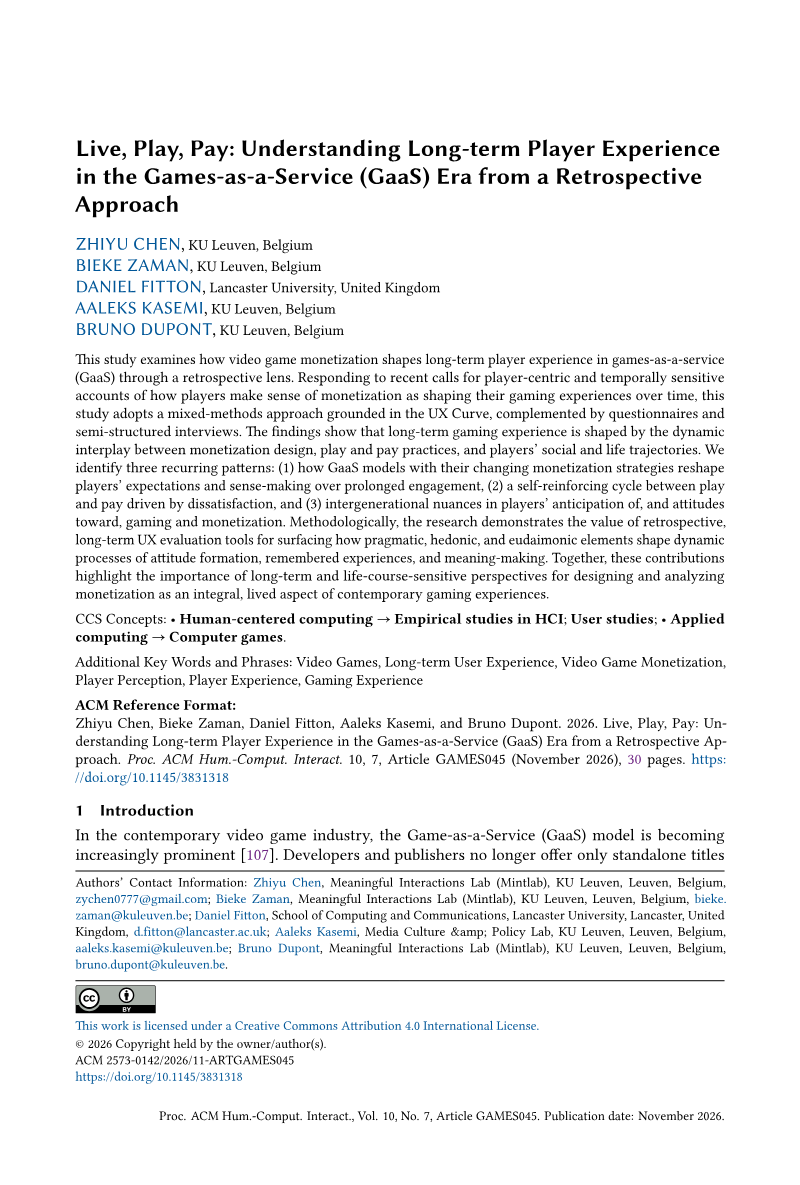
KU Leuven · 2026

PocketGamer.biz · 2026



Newzoo · 2026
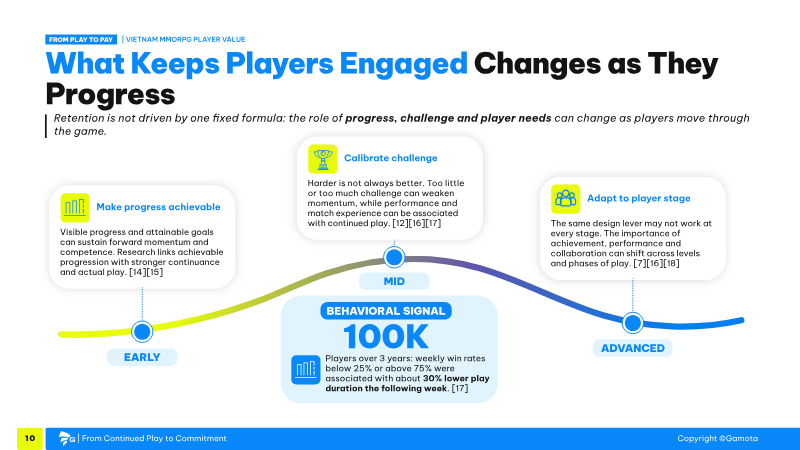
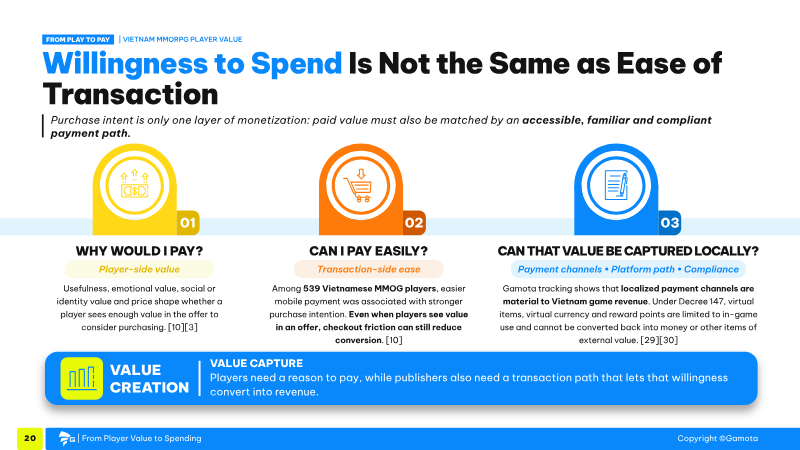
Gamota · 2026
DiGRA · 2026
DiGRA · 2026
DiGRA · 2026
DiGRA · 2026
DiGRA · 2026





























