ArticleAlinea Analytics
Physical Game Sales and Engagement Drivers
29 Jul 20261 pages~11 min full read
Key insights
5 slides
Key number
Digital sales yield 54% more revenue per copy than physical.
A digital sale of a first-party game yields 54% more revenue than a physical disc sale.
54%
Revenue increase per copy for first-party digital sales
- Third-party digital sales
- 40%
What changed
EA introduced a $150 Ultimate Plus tier for FC 27.
The tier is primarily digital in-game content and offers up to seven days of early access. It aims to drive higher revenue per player from hardcore fans.
$150
Price of the FC 27 Ultimate Plus tier
- Early access window
- 7 days
External catalyst
A film caused a 90% surge in Assassin’s Creed Odyssey engagement.
Christopher Nolan's film 'The Odyssey' caused a 90% surge in daily active users between July 17th and July 27th. Combined daily active users increased from 122K to 233K.
The trade-off
Eliminating physical media risks alienating budget-conscious and younger players.
Physical discs have historically provided an accessible entry point for younger and budget-conscious players. Removing this barrier may push them toward mobile, PC, and free-to-play options.
Key number
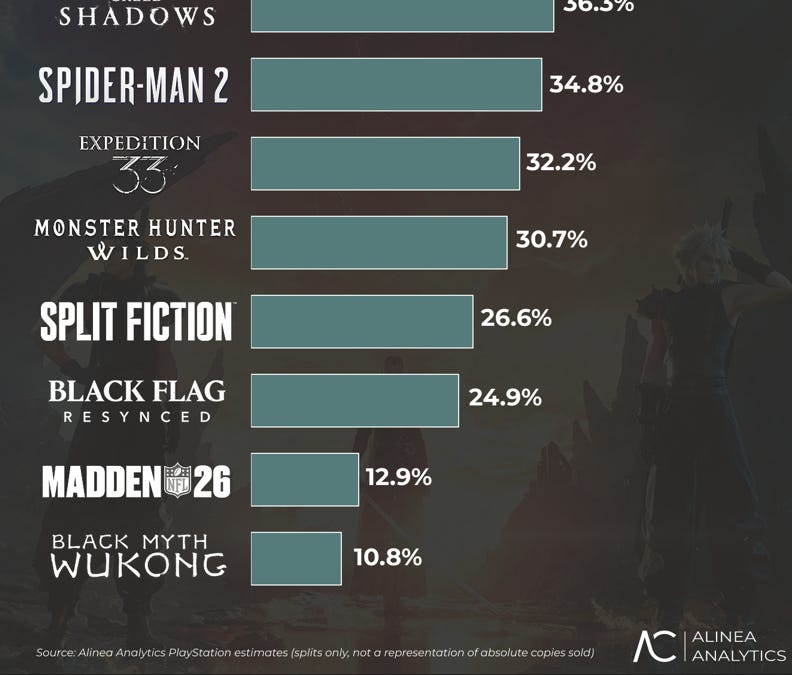
Physical media adoption ranges from 48% to 10.8% across titles.
Physical media adoption ranges from 48% for prestige single-player titles like Final Fantasy VII Rebirth to 10.8% for digital-native releases like Black Myth: Wukong.
1 / 5
Ask AI about this report