ArticleAlinea Analytics
Steam Next Fest's Winners, and Why the Event Might Matter Less Than You Think
23 Jun 20261 pages~15 min full read
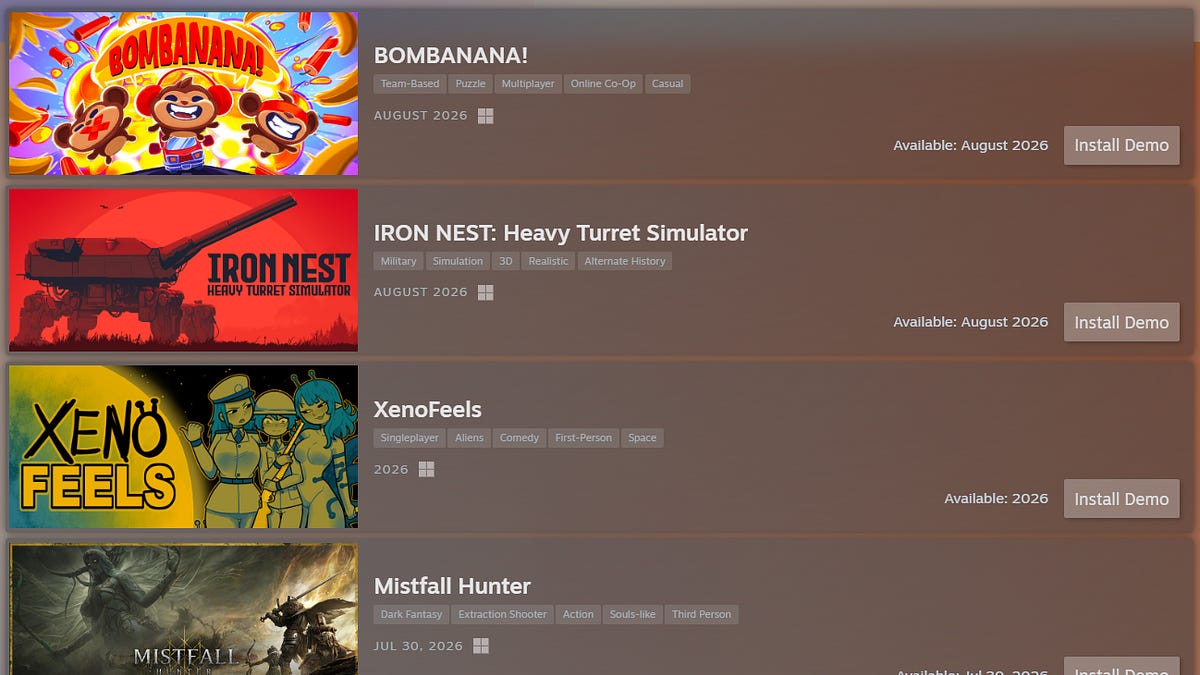
Steam Next Fest is increasingly viewed as a diminishing tool for independent developers, serving more as a crowded promotional venue than a reliable engine for long-term commercial success. While the event provides visibility for top-tier titles, the sheer volume of participants—exceeding 4,300 demos—makes it difficult for most games to distinguish themselves. Furthermore, wishlists are identified as a declining metric that frequently fails to correlate with actual launch sales, often representing idle curiosity rather than genuine intent to purchase.
Analysis of conversion rates from the June 2025 event reveals that even successful titles struggle to convert a significant portion of their wishlists into buyers within the first three months post-launch. Conversion rates for top performers typically range between 5% and 26%, with many games failing to reach even these modest benchmarks. Consequently, the event is characterized as an amplifier for games that already possess strong marketing momentum and a compelling, shareable hook, rather than a catalyst that can manufacture demand for lesser-known projects.
To better gauge potential success, developers are encouraged to prioritize metrics such as demo playtime and demo-to-wishlist attachment rates, which more accurately reflect player engagement. The most effective strategy for developers remains the cultivation of a novel, instantly understandable concept that encourages organic distribution. Ultimately, the findings suggest that for the vast majority of developers, the festival is a high-effort, low-reward exercise, and resources might be better allocated toward independent marketing efforts outside the constraints of the event window.
Alinea Analytics · 2026
Alinea Analytics · 2026
Alinea Analytics · 2026
Alinea Analytics · 2026

Alinea Analytics · 2026
Alinea Analytics · 2026
Alinea Analytics · 2026
Alinea Analytics · 2026
Alinea Analytics · 2026
Alinea Analytics · 2026
Alinea Analytics · 2026
Alinea Analytics · 2026
Video Game Insights · 2025

Almedia · 2026

Gamesight · 2026

InvestGame · 2026
InvestGame · 2026

Sensor Tower · 2025

GamingReport · 2025
EA · 2025
Liftoff · 2024

Sensor Tower · 2023

Adjust · 2023
Tenjin · 2023