Key insights
6 slides
Market size
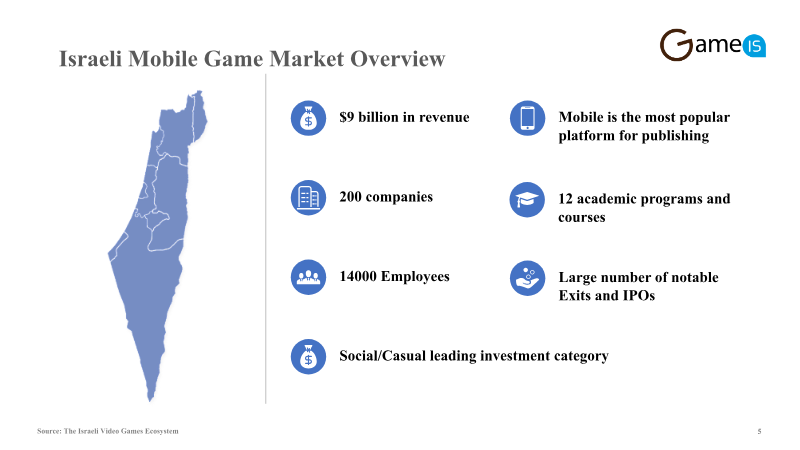
The Israeli mobile game market reached approximately $9 billion in 2021.
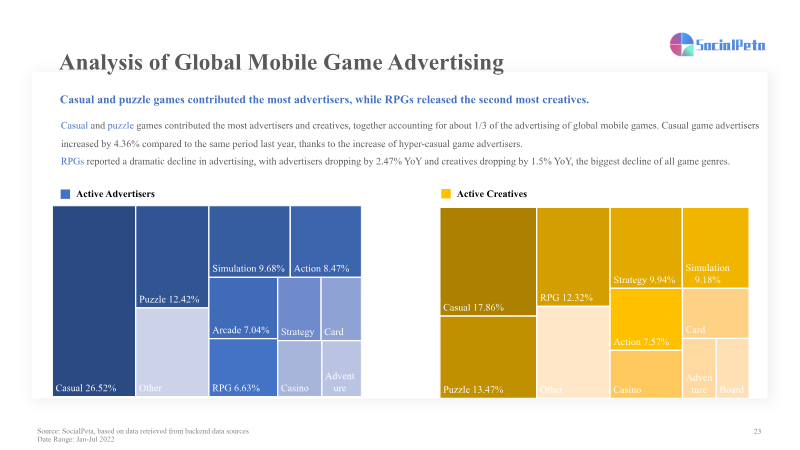
The market is supported by more than 200 companies and 14,000 employees. Casual, puzzle, and hyper-casual titles represent about one-third of global mobile game advertising spend.
Flagship scale
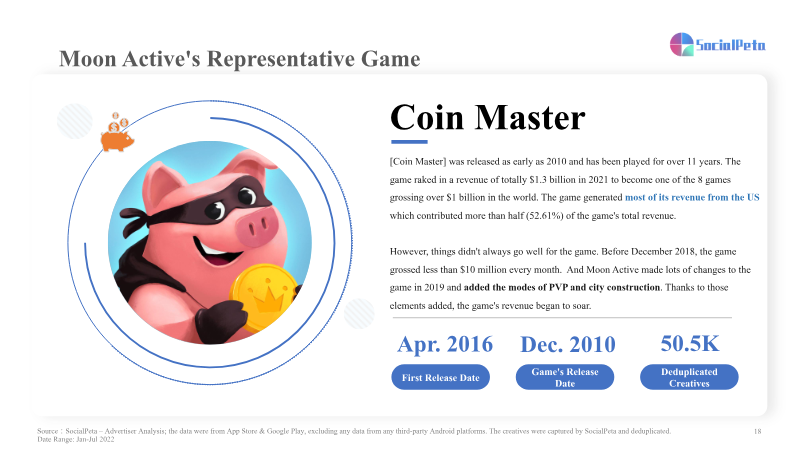
Coin Master earned about $1.3 billion in 2021, with over half from the U.S.
Released in 2010 and revitalized in 2019, Coin Master averaged 2,500 creatives per day in 2022. The campaign concentrated on video formats across Google Ads for both iOS and Android.
Flagship scale
RAID: Shadow Legends exceeded 50 million downloads and generated roughly $700 million.
Launched in 2019, the game's 2022 advertising strategy deployed an average of 1,100 creatives daily, primarily on Google Ads and Facebook, with a heavier focus on Android.
Creative volume
Top-performing mobile game campaigns utilize thousands of daily creatives across platforms.
Mobile advertising is heavily video-centric. Leading Israeli studios including Playtika, Plarium, Moon Active, and Crazy Labs have established themselves as global leaders in high-volume advertising across action, strategy, and simulation genres.
Video-centric ads. Mobile advertising is heavily video-centric, with top-performing campaigns utilizing thousands of daily creatives across platforms like Google Ads and Facebook.
Page 27 of the reportBlue27
Green73
Regional creative
Creative strategies are highly localized across U.S., Japanese, and Korean markets.
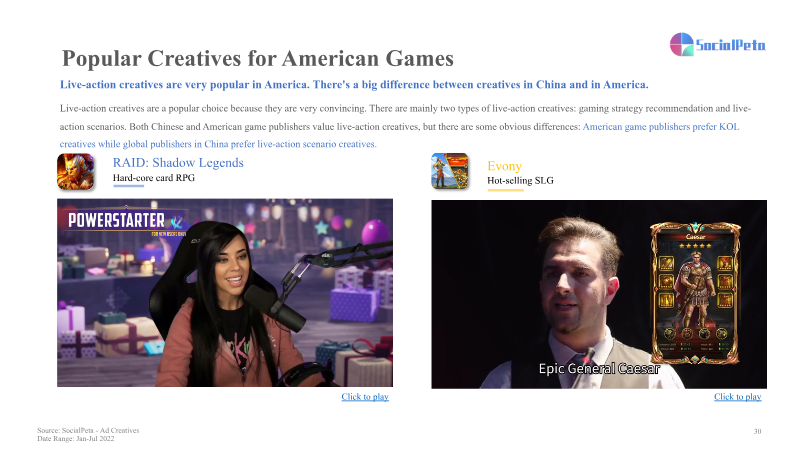
U.S. markets favor live-action and influencer-led content. Japanese markets prioritize character-driven gacha mechanics, while Korean markets prioritize high-fidelity gameplay footage.
Genre mix
Casual, puzzle, and hyper-casual games account for one-third of global mobile game advertising spend.
This share was bolstered by pandemic-era growth in user acquisition. Across genres, short, engaging videos that spotlight core mechanics or narrative hooks are rising in popularity.
1 / 6
Ask AI about this report