This represents a 5.1% decline compared to 2021. All primary industry segments experienced a broad downturn.
Mobile gaming is typically the largest driver of market growth. PC and console sectors experienced a more moderate decline.
VR game revenues totaled $1.5 billion. The active hardware install base for VR grew by 30.7% to reach 26.6 million units.
VR Growth. The virtual reality sector emerged as a significant outlier.3% increase in VR game revenues.
This represents a 4.0% decrease compared to the previous year.
Consumer interest in specialized hardware remains resilient.
Like a tide receding after a high surge, the market is settling back after an unusual period of growth.
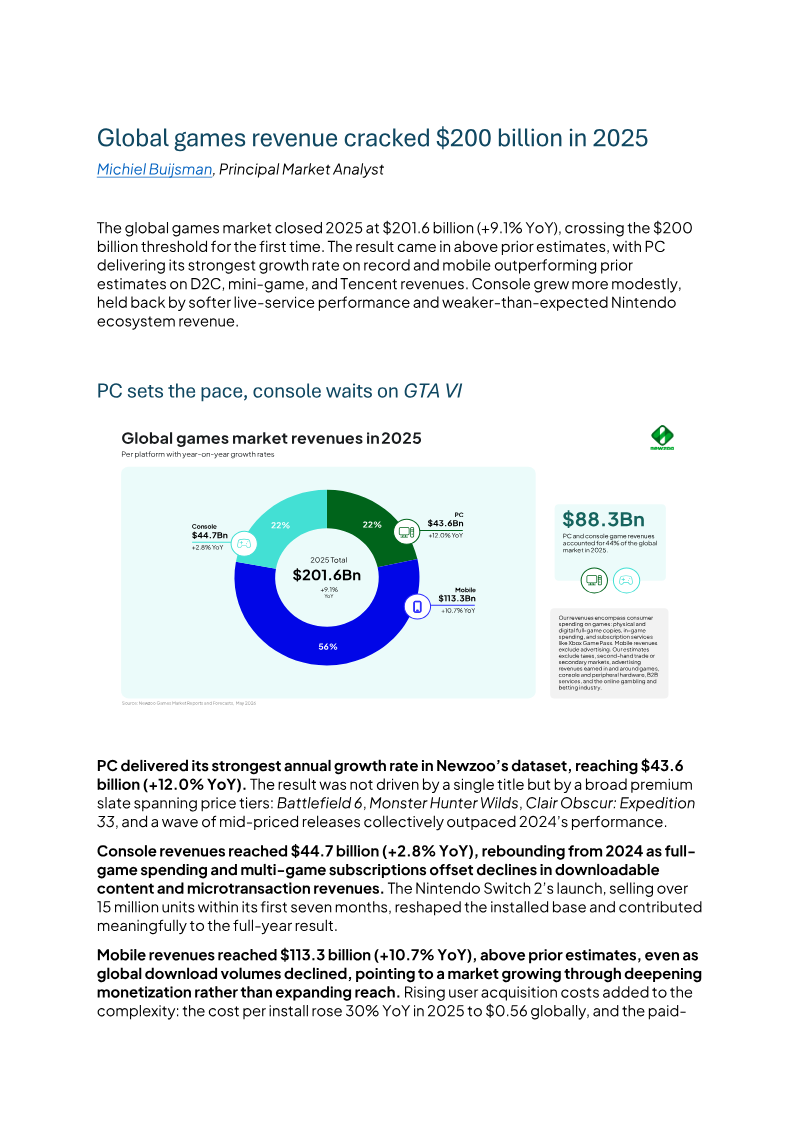
The global games market experienced a notable contraction in 2022, generating $182.9 billion in total revenue. This figure represents a 5.1% year-on-year decline, signaling a broad downturn that impacted all primary industry segments. Mobile gaming, typically the largest driver of market growth, saw revenues fall by 6.7%, while the PC and console sectors experienced a more moderate decline of 3.4%. This cooling trend was mirrored by the top 25 public gaming companies, which collectively generated $152 billion, a 4.0% decrease compared to the previous year. Although the industry began 2022 with a promising 8.5% growth rate in the first quarter, momentum stalled significantly as the year progressed.
Despite the prevailing downward trend, the virtual reality sector emerged as a significant outlier, demonstrating robust expansion. The active hardware install base for VR grew by 30.7% to reach 26.6 million units, fueling a 14.3% increase in VR game revenues, which totaled $1.5 billion. This growth highlights a divergence between the established mass-market segments and emerging immersive technologies, suggesting that consumer interest in specialized hardware remains resilient even during periods of broader economic stagnation.
These findings provide a comprehensive overview of the global gaming landscape throughout the 2022 calendar year. By analyzing performance across mobile, PC, console, and VR platforms, the data illustrates a complex market environment characterized by a post-pandemic correction in traditional sectors alongside continued investment in nascent technologies. The industry remains a focal point for ongoing analysis, with current trends in monetization, esports, and regulatory frameworks continuing to shape the strategic direction for developers and stakeholders worldwide.