ReportNewzoo
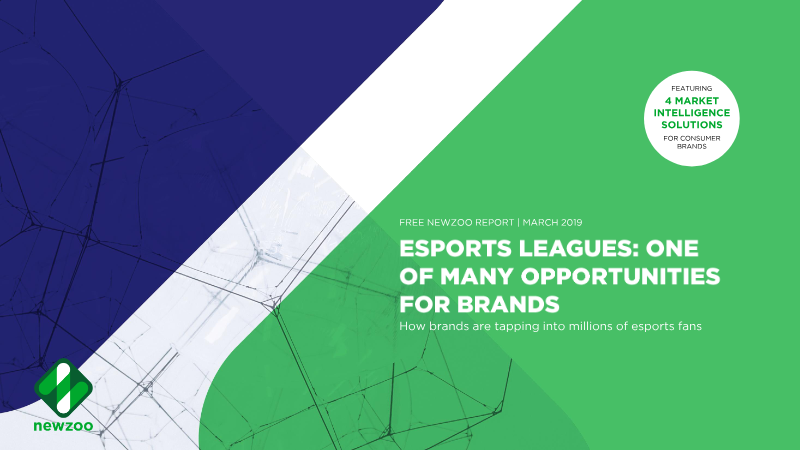
Esports Leagues: One of Many Opportunities for Brands (March 2019)
21 pages~18 min full read
Key insights
6 slides
Market Growth
Esports is a high-value marketing channel for brands.
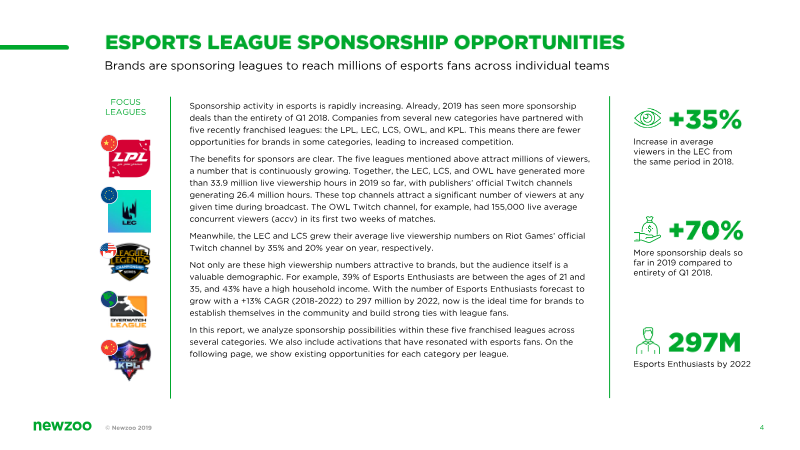
The number of esports enthusiasts is projected to reach 297 million by 2022. This represents a critical frontier for non-endemic brands.
Audience Profile
The esports audience is engaged and affluent.
39% of enthusiasts are aged 21-35, and 43% report high household incomes.
Key Demographic. The esports audience is characterized by high engagement and income.
Sponsorship Surge
Sponsorship activity in esports is accelerating rapidly.
Deal volume in Q1 2019 already surpassed the total volume recorded during the same period in 2018.
Audience Scale
Major franchised leagues demonstrate significant audience scale.
The LEC, LCS, and OWL collectively generated over 33.9 million live viewership hours in early 2019.
Untapped Sectors
Significant opportunities remain for non-endemic brands.
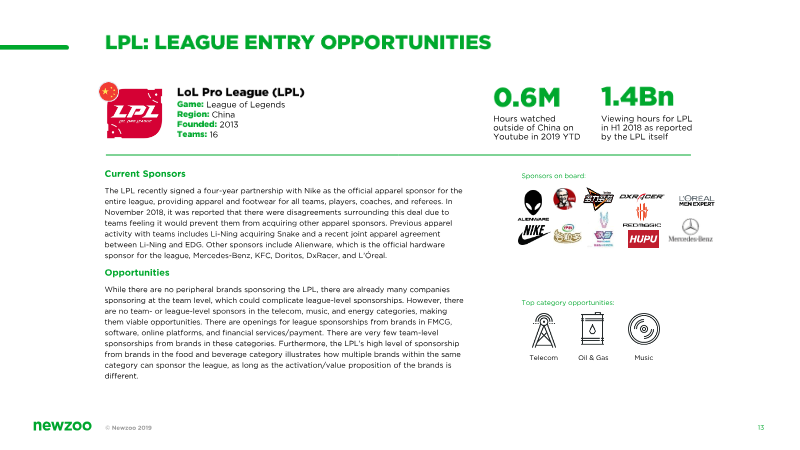
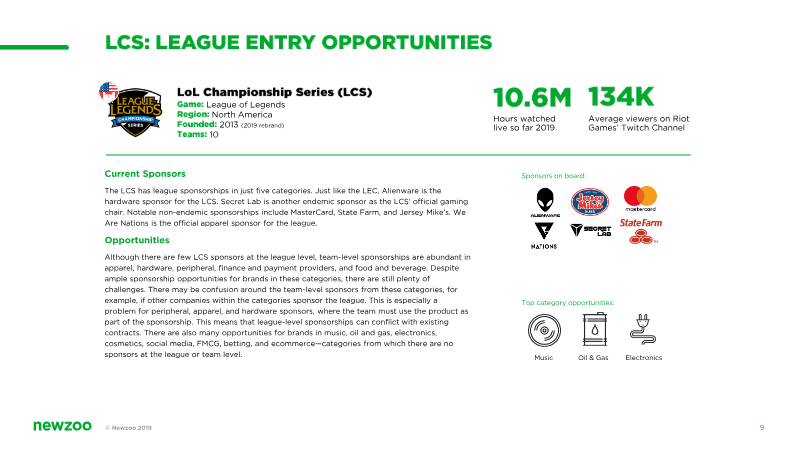
Sectors such as music, cosmetics, telecommunications, and oil and gas are underrepresented.
Think of it like an open field in a crowded market.
Market Gaps. Non-endemic sectors remain underrepresented, offering opportunities for brand entry.
Navigating Agreements
Brands must navigate potential conflicts in agreements.
Conflicts can arise between league-level and team-level agreements. A cohesive and effective sponsorship strategy requires careful navigation of these issues.
It's like making sure all parts of a team are playing from the same playbook.
1 / 6
Ask AI about this report