ReportNewzoo
Trends to Watch in 2019: Five Developments Transforming the Esports Market
20 pages~13 min full read
Key insights
6 slides
Market Size
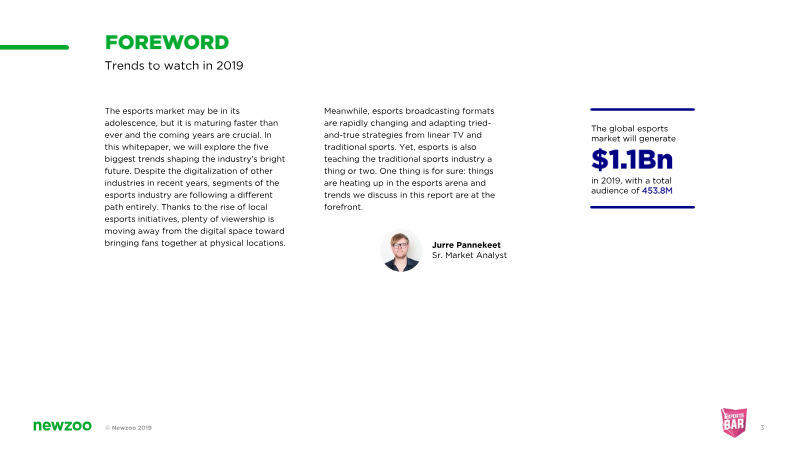
The global esports market reached a valuation of $1.1 billion in 2019.
This valuation is supported by a total audience of 453.8 million people. The market is transitioning from a digital-first niche.
New Directions
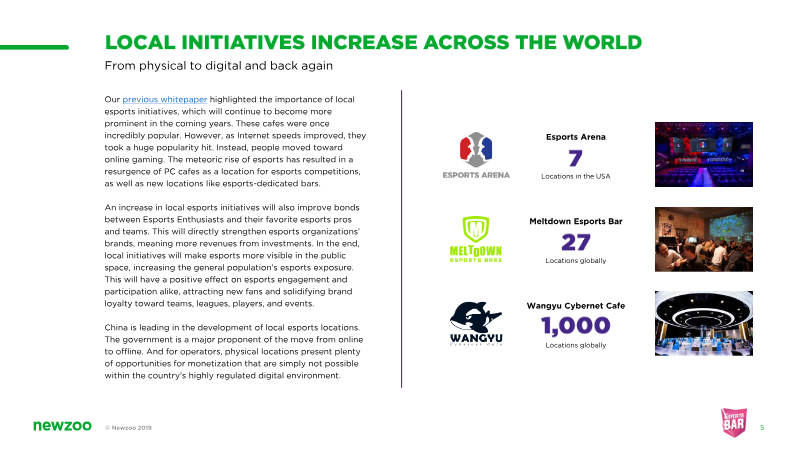
Esports is shifting from a digital-only model toward physical infrastructure.
This includes significant government-backed investment in esports hubs and PC cafes.
Revenue Diversification
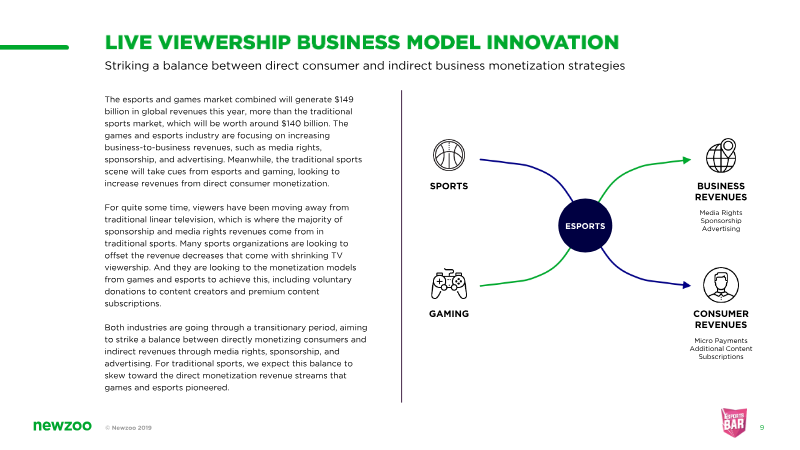
Organizations are diversifying revenue by balancing traditional sponsorships and media rights.
They are also incorporating direct-to-consumer models like micro-transactions and premium content subscriptions.
Content Evolution
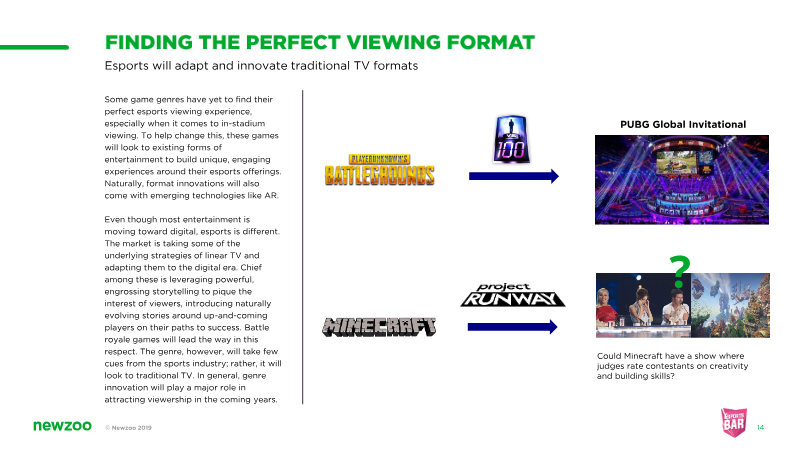
Esports entities are increasingly adopting linear television storytelling formats.
This includes narrative-driven content to professionalize the industry.
Brand Building
Teams are prioritizing distinct brand identities that transcend individual games.
They are also utilizing influencers as primary broadcasters to reach fragmented audiences. This is done to secure long-term growth.
Like a sports team building a loyal fanbase beyond a single season's roster.

Enhanced Experiences
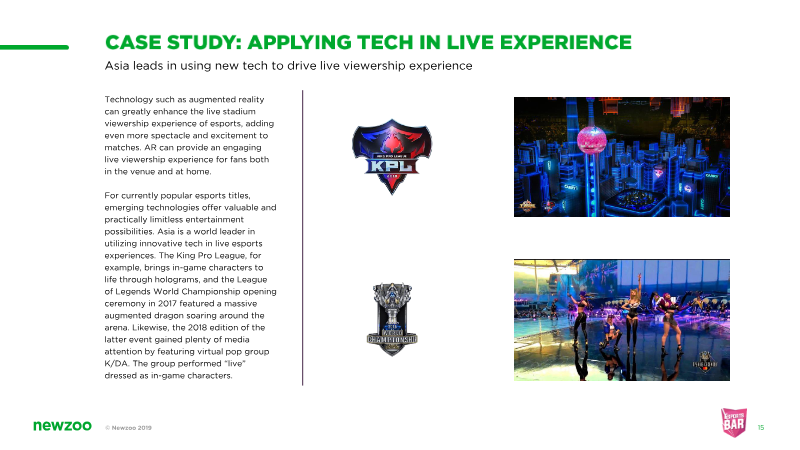
Emerging technologies such as augmented reality are being integrated into live events.
This integration aims to enhance fan engagement and create more immersive spectacles.
1 / 6
Ask AI about this report