Key insights
5 slides
Key number
Multiplayer gaming engagement grew by 3.3% year-over-year.
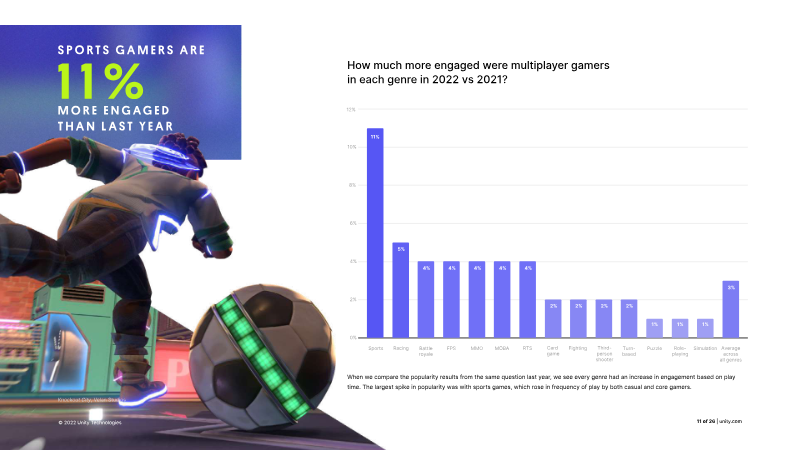
77% of the global gaming population now participates in online play. Engagement increased across all genres.
Selection drivers
Genre is the primary factor for game selection at 49%.
Social drivers follow closely, with 34% citing friends already active in the title and 31% citing in-game chat.
Page 7 of the reportThe game's in a genre you like49
Your friends are already playing it34
Able to chat with friends in-game31
A lag-free experience29
The game is new and innovative29
Short wait to join a match28
It's free to play27
Being able to quickly create / join a party with your friends23
Technical retention
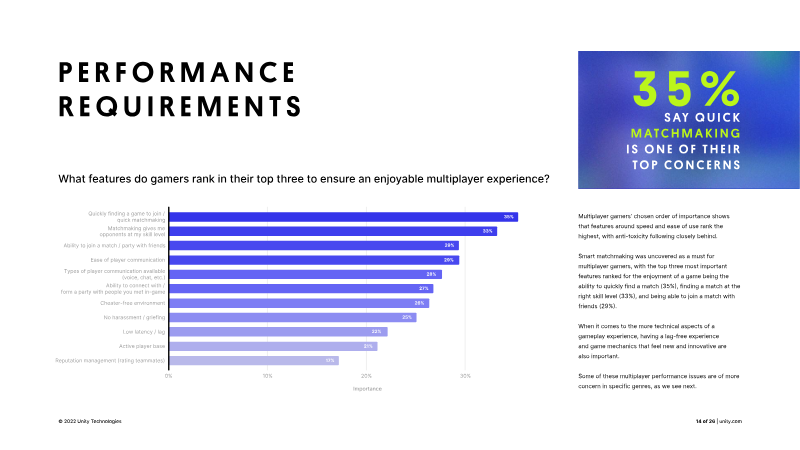
35% of players prioritize quick matchmaking for retention.
33% require skill-based pairing. Technical performance is a critical retention factor for online gaming.
Monetization shift
Players purchasing downloadable content increased by 5% year-over-year.
Core gamers are 58% more likely to spend over $20 on additional content than casual audiences.
Page 21 of the reportI didn't buy any additional content46
Under USD/GBP 19.9931
USD/GBP 20 or more24
Internal growth
Unity saw a 150% surge in PC multiplayer development.
Mobile multiplayer projects increased by 40% since early 2021.
PC development. Unity internal data shows a 150% surge in PC multiplayer development.
Page 22 of the reportJan 210
Feb 2115
Mar 21-5
Apr 2110
May 2112
Jun 2115
Jul 2120
Aug 2130
1 / 5
Ask AI about this report