ArticleAI and Games
Microsoft’s New AI-Powered Patents Offer Little to Be Excited About
30 Sept 20261 pages~21 min full read
Recent patent filings from Microsoft indicate a strategic push to integrate artificial intelligence into cloud-based gaming, focusing on dynamic advertising and generative narrative systems. Published in the second half of 2026, these patents reflect a broader industry trend toward leveraging machine learning to optimize player engagement and monetization. The analysis suggests that these technologies are primarily designed to support Microsoft’s expanding cloud gaming infrastructure, potentially at the expense of traditional player experiences.
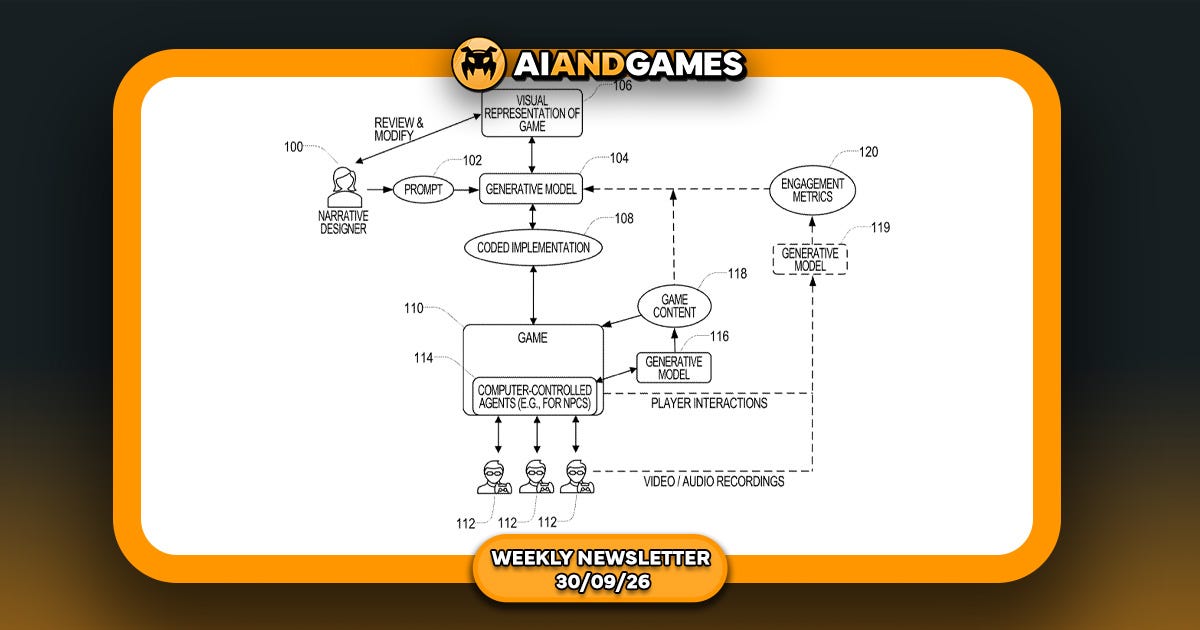
The first patent, titled Contextually Aware Management of Interactive Software Application Access, outlines a system that uses machine learning to identify optimal moments to inject advertisements into cloud-streamed games. By monitoring gameplay data, the system aims to minimize user disruption while maximizing ad delivery. The second patent, Generative Narrative Game Experience with Player Feedback, proposes using AI foundation models to adapt game narratives based on real-time player behavior and feedback. While the patent suggests potential utility for user research and focus testing, it raises concerns regarding the automated manipulation of narrative structures and the aggressive collection of player engagement metrics.
These developments highlight a shift toward data-driven game design, where player interactions—including potential biometric data—are harvested to refine monetization and content generation. The analysis concludes that while these tools may offer technical efficiencies for developers, they represent a concerning trajectory for the gaming industry, prioritizing platform-level metrics over the integrity of the intended player experience. The findings are contextualized within Microsoft’s recent moves to introduce usage limits on cloud gaming and expand its subscription-free streaming offerings, signaling a long-term strategy to monetize the cloud gaming ecosystem through intrusive advertising and algorithmic content adjustment.

AI and Games · 2026
AI and Games · 2026

AI and Games · 2026
AI and Games · 2026
AI and Games · 2026

AI and Games · 2026
AI and Games · 2026
AI and Games · 2026

AI and Games · 2026
AI and Games · 2026
AI and Games · 2026

AI and Games · 2026
modl.ai · 2025
Game Developers Conference · 2025
Google Cloud · 2025
Informa · 2024
Drake Star Partners · 2024

Perforce · 2024
GDC
Modern Times Group
CD Projekt · 2026
Poki · 2026

Sensor Tower · 2026
SocialPeta · 2026