VideoDeconstructor of Fun
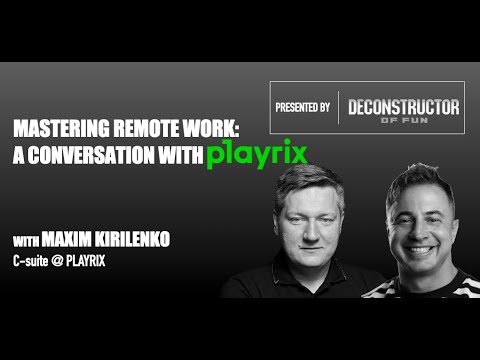
Mastering Remote Work Culture: A Conversation with Playrix
24 Jul 202347 min video
Transcript
Welcome, welcome, welcome everybody to the Deconstructor of Fun podcast. This is a I would say a continuum to the the conversations that we've been having any after I released the opinionated and research statements on the blog why remote workers are increasingly less productive, anxious, depressed, and lonely. And all this started from the crazy strong statements against remote work and how it's in 2023. So, for the past years, leading tech companies have stopped asking and begun mandating their employees to return to on-site. And for me, what's craziest have been that these are the same companies resisting fully remote work are also the ones that create the actual tools for others to work remotely. Over the years, I've experienced running a game studio or game studios on a fully on-site, remote, and hybrid setups. And I've benefited both from the ability to hire experts remotely, and I've also endured a lot of the pitfalls and the misalignments and the mental health issues caused by communication challenge with remote employees. So, a lot of challenges, but I wanted to get
somebody from a company that does remote work arguably best than anybody else, and that is of course Playrix. So, without further ado, Maxim Kirilenko, chief business development officer from Playrix, welcome to the podcast. Hi Mikhail, how are you? Good to be here. This is your second time on the podcast. I kind of wanted to You asked me to to do like a do a proper intro, talk about the tech companies and everything, kind of like the magnitude of issues. So, so so um how are you doing? And where are you from? Like, where are you where are you logging in? Um I'm logging in from from London. So, I moved to London last last year in September from Ireland, where I were for like past four years. Where is headquarter of Playrix? Nice. And you're talking about Playrix. Like, you know, people know the Gardenscapes and Fishdom. Yeah, now now I have Fishdom Solitaire as well. Yeah, Fishdom Solitaire. Like, you have a lot
of games. People know of the games, but sometimes they forget how big and successful company Playrix is. It is huge. You have over 3 and 1/2 thousand employees. You have almost 10 game studios. And just in terms of revenue, looking at data.ai numbers, it's a third biggest publisher mobile, and the only ones ahead of Playrix are Tencent and Activision Blizzard King. And Activision Blizzard King, which is now probably a Microsoft. Yeah. Yeah, so and then so Tencent and Microsoft are the only ones ahead of you. So, there's still a little bit of a little bit of a way to climb up, but but it's a it's it's you know, huge company and hugely successful one. I think it's important to understand that as a context as we're continuing this conversation. And I wanted to kick off by by asking what is your typical day as an a remote employee at Playrix? Yeah, that's great question. So, as for me, my like typical day from like business development side
started from 6:00 a.m. in the morning because I'm covering China and ended sometimes 11:00 p.m. because we are partners with lot of companies from the United States, especially marketing companies from the United States. And because of that, like my day is unpredictable Mhm. sometimes and crazy in terms of schedule, especially call schedules and business meeting schedule. Yeah. Yeah, I I have to say that before we were recording this podcast, you were coming in you're like, "Hey, can we can we move? I think we're getting a second child at this moment." And you're like, "Nope, false alarm. Let's actually record." false alarm. Wow, it's and and you're talking about waiting now like second second child and I texted you like contraction started. Let's reschedule to later on. Yeah, well, congratulations to girls club. You're you're going to be a member soon. But but but you actually make a make a good point in that like you're
describing your day and as an executive in this company, as a remote employee, are you at a risk of burning out? That sounds like a crazy day. Yeah, I think so. I do have risk to get a burnout easily. And sometimes I can feel that I'm pretty close to burnout. Mhm. And because of that, of course, I'm doing a lot of things to prevent this burnout. Trying to like schedule my day better, trying to keep time for my family in between work. Mhm. And in my case, I think that it's connected to how organized I am and how motivated I am to continue delivering success and results for our company. And of course, here my family helps a lot. Um so, I'm spending time with my daughter and my wife and I'm trying to uh to spend time every day like no matter what. And I have like breaks in between.
But at the same time, like burnout easy to get, especially when there are a lot of like things happening, especially like last year because of all transitions that we passed through as a company because of all relocations, office closer closures, and like exit from Russia. Um there were a lot of tasks which are connected to business development and not connected to business development, but we were in charge of all these tasks. And it was hard to navigate that period of time. And again, like family and uh very good schedule of my day helped me to overcome. And and so and how do you make sure that your team doesn't burn out? Because if you're working so hard, then they need to be working 10% harder. Yeah, 10% harder. Probably like 20 20% Yeah. at some point. And this is I think that this is a
challenge for managers, especially in companies who embrace remote work and give opportunity to their employees to work in a remote way. So, uh I'm constantly thinking about how to prevent burnout of my team. Trying to prioritize more what tasks are important, what are less important, and we can uh put them in the backlog and like achieve these goals or like make these tasks later on. Uh also like constantly speaking to my team, which is also important to understand their like motivation, to understand how like their personal needs and what they need at the moment. Like all of us, like my team, and actually it's like not a big team for for Playrix. Uh in business development, we have five people at the moment including me, which are covering all areas.
All business areas. And of course, all of us like we work remote from different countries. I'm from the UK, one girl from my team, she's in Ireland, Spain, Serbia, Cyprus. Yeah, pretty distributed team. Yeah. Yeah. Yeah. Yeah, and all of us we have like our like personal needs, our personal problems. I'm trying to uh to discuss like all of these like in the beginning of our calls, what like problems they have, how can I help from personal standpoint and company standpoint. Uh because if from company's standpoint, we can make their life easier and solve some of them their problems, uh it um could help them to focus more on what they're doing uh and also achieve results in a shorter period of time. And
also like prevent like burnout and this kind of stuff. So, by their problems, you're probably talking about things like first of all, communication from your from your side as a manager, giving them context and and prioritization. Uh communication as well, yeah. Yeah, and also like personal personal problems like day-to-day their day-to-day life. Yes. I don't know. Sick kids or they got sick Yeah. at some point. Or they have like big experiencing some kind of like problems with like paperwork because we're living in different countries like taxation, like various things. Yes. Exactly. Like like those are typically the other challenges with a remote work setup is is the three like the burnout that we talked Mhm. first about, the the communication. Uh and actually like do you meet up with with your team often? Um now more often compared to COVID time because of course during COVID time, it was impossible to meet. Yeah. Um now because we're attending a lot of different
conferences, a lot of different quarterly business reviews, yearly business reviews with our partners. Of course, we meet more often. Yeah. And we are planning some events like GDC or MAU Yeah. to attend together. Uh Or the Deconstructor of Fun Abu Dhabi event later in this November. Oh, later in this November. So, I guess that this is an invitation to Abu Dhabi event. Yes. Yes. Okay, yeah. Thank you and we will be there. And and and of course, the other tax and legal elements like like setting up so many entities. Playrix is so big, so you probably have entities in in a lot of different countries. So, so taxation and legal problems are Taxation and legal problems, yeah. Yeah. Which is like more this are most common problems of our employees. And also like relocations. Relocations is a big part. Of course, when like people relocate from their like mother country, Uh, are disconnected with their friends. They are disconnected with their
families. They're in a completely new world and from company standpoint, we need to be sure that we are providing a best support to settle uh, in these countries uh, and cover all all their needs from information standpoint to um, I don't know, like human things. Yeah, yeah, yeah. Yeah, where to go, what to do. Daycare, yeah. schools, but those are of course as a parent, those are the first things that you think about is like, you know, can my can my child find a find a place in school and and how do they learn new language like if they're in Serbia or or Spain and and so forth. true. That's true. That's true. Yeah. Uh, okay. And most of it most of your work is asynchronous, right? Mhm. Uh, yeah, correct. Most of our work is asynchronous, but some uh, work and some like special projects uh, need uh, like specific time. Mhm. Yeah, where you get together and you can go through them. What what I'm kind of going through is like how many people in
Playrix and three and a half thousand people working at Playrix, how many people work on site, how many people work remotely and how many people work hybrid or like is it remote and hybrid are the options? Uh, it's like remote and hybrid at the moment. Uh, 50% they work remote in a remote way. Uh, 50% in a hybrid mode. So, it's up to our employees how to uh, schedule their day uh, and what schedule to like choose. We don't have like any rules in our company and uh, this is the only policy that okay, you can uh, decide where to work, when to work. Uh, the only thing which is like matters is to deliver uh, performance, deliver results. And and so this is this is like sounds to many who are listening is like yep, exactly that. That sounds perfect. Um, how did you first of all, like how when did you arrive to this model that you allowed like you allowed, you know, almost 2,000 people to work remotely and the only thing you ask for them is like deliver on time, we don't care from where and you we don't care when like in
in terms of Yeah, so Playrix started uh, this approach I think in 10 years ago, more than 10 years ago. Uh, and we were I think one of the first companies uh, who before COVID used this approach uh, at a scale because before COVID 50% of our employees they were remote, 50% were working from from the office. And then of course like COVID came, 100% of our company started to work in a remote way. And then after COVID a lot of our employees they um, identified that actually hybrid uh, mode to work is not uh, is is like very convenient uh, for them. So, they can plan their time, they can plan their visits uh, to the office. They can uh, on the one hand uh, communicate with their colleagues in the office in like informal way Yeah. and at the same time they can be more focused at home and combine their like home needs and like home uh, chores and uh, and work at the same
time. And after COVID uh, we we started to feel that more and more people they would like to work in a hybrid mode. And for us because before uh, it was hybrid and remote at the same time, we decided that okay, uh, we will like open this policy uh, and we will give an opportunity for our employees to decide what they want to do and when they want to do and from like what country they want to do as well. Which is important. And and so okay, um, so several questions. Uh, is it like a company-wide rule or is it more like a studio-wide rule or is it like a team-wide rule like No, no, it's it's company it's it's company-wide. So, no matter what like title do you have in our company uh, from C C C O to uh, very junior employee. Mhm. Uh, we use the same approach, same rule. Mhm. It's up to our employee
uh, where our employee will work and uh, what approach uh, he or she is going to use. Uh, have you had any of these challenges that that companies like I think we were talking just before the recording, you said that Sega is move is try is trying to move to 100% on site five days a week like counter to what what for example Playrix is doing. So, have you have you seen the challenges in communication, lack of creativity, lack of loyalty, you know, tax and legal issues, burnout, getting slower, more disorganized and overall challenges in building and maintaining an engaging and outstanding company culture with people remote setup like you you surely have seen these same challenges. Like how how have you gotten over them? Mhm. Yeah, that's a great question and we're constantly thinking about do we have like any problems with uh, remote I like how you like other others are like solving against it and you're like, are we okay? It's like we're third in
the world. Yeah, because it's like it's definitely always like a question. Uh, of course, uh, but at the same time I think that because Playrix started to use this uh, approach long long time ago we're we're already uh, set a number of like tools and like services how to how to solve this uh, issue and how to how to control overall work process and how to control uh, structure. And here actually tools and and services are like less important. Actually, the most important thing here is culture. Uh, culture and uh, way of work, how you are like working as a company and as a team together. And because Playrix started uh, to use remote uh, approach there a long time ago of course our like recruitment team and our like onboarding team and all other teams, they are
focused how to onboard uh, like how to hire and onboard employees in a way where uh, remote work and hybrid more work will be uh, good for like everyone and uh, will be accepted by employee. Because the most important thing at the end of the day here is how organized like self-motivated your employee is whom you are like just hired and how this employee will be connected to the culture of the company. In company when everyone is like motivated uh, to deliver success in a hybrid or remote work uh, it's easy to get this vibe and easy to adjust your schedule and adjust your like needs based on uh, like culture of uh, company. And
this is the most important part. Okay. And and and the uh, so so originally why did you move to uh, to remote setup because you said you you've been doing this for over 10 years. Uh, yeah, over 10 years. Uh, our founders they decided to use this approach uh, because that time uh, Playrix uh, office uh, was in Vologda. I've been there not not where the second visit. And uh, there were like a lot of people uh, in Russia and also like Ukraine and CIS countries who were like talented to like work in in our company. But at the same time to offer people to relocate and work from the office, it was like impossible task. Mhm. Uh, because of like various reasons. And uh, uh, our founders they started to test uh, like outsourcing uh, like run
hire people Contractors. Yeah, hire contractors and try to work with them and found out that okay, this approach is working and if you can uh, find like proper person who can deliver results and we uh, will be like motivated to work as like contractor and in a remote way, you can easily uh, like achieve success. And at the same time you can cut costs uh, like office costs and uh, like relocation costs and all these uh, costs that are connected to relocation of uh, recruitment and relocation of like any employee and uh, making this employee to work from the office. So so it it was basically an answer to um, to a talent problem. Yeah, to talent problem. To talent problem, how to attract talents uh, from different regions, from different countries. Mhm. And
um, to to a very unappealing city. Uh, they were Um, so and I'm not like it could be appealing. I don't know. I was there only once and it was winter and it was absolutely No, winter is nice. In Vologda. In Vologda. No. But um, um, and okay, so so interesting question regarding you you mentioned cultures and the ways of working. Um, where do where do employees of Playrix come from? What I'm trying to ask is like is like are they from the same CIS region most of the people so that there's a little bit of a similar culture and a similar language set for most of the people. Uh, I'm just trying to understand like how homogeneous versus diverse the the three and a half thousand people are. Uh, yeah, that's a great question. Uh, most of our employees from CIS countries or like Eastern European countries at the moment. Yeah, because for example, now we're scaling our development head
count in Serbia. Mhm. Now it's probably second or like third biggest office for us and not office. Office is not a proper word here, but country where our employees they're they're located. Um but most of them yes, they're like from CIS countries. Do you Do you think that plays a role in finding a common ground? Because you know, we've we've had podcasts about diversity and cultures and everything and what I've been trying to say is like diversity like in my opinion is not only how people look like or what their gender is or so forth. It's a lot of it is diversity of mind and diversity of mind comes from your upbringing, your your values, your your schools, like like a lot of those elements play and and to me it sounds like a lot of a lot of your people are culturally very similar and through that Very similar. Yes. And it might be easier to kind of like build a culture.
It might Yeah, it might be easier to build a culture. But at the same time, for example, if I talking about our localization team Mhm. or we're talking about our customer support team. Of course. All these people are from different countries and different cultures and they use pretty much the same approach remote remote work approach. And for by the way like working like for Playrix especially for people from like different countries except like CIS region, it could be a plus. Like as a good example, we have like several employees in China Mhm. in Beijing especially and in Shanghai as well. And they really first of all, they really like to work in a remote mode. Because they can plan their day according to the needs of company and according to their needs. Second one they are using holiday schedule of
like Irish Irish? Oh, sorry. Not holiday schedule, but vacation vacation schedule. So like 20 days or like 22 days of vacation every year. And compared to China where they have like 10 days of vacation maximum. So this is like a game changer. And and overall like one of the one of the good parts about remote work setup is it allows you to attract talent at a much wider scope. Have you Have you seen this you know It seems like you've you've definitely tapped into this, right? Yeah. Here's the thing like in my perspective like living in a Finland and working mostly in the Western Europe, it doesn't seem that that people are like like Playrix on is on the top of the top of the list when people are looking for jobs or or when they're thinking who to work with. Is Is that a wrong perception? I'm I'm just trying to because I would think
feel that that a company this successful with a fully remote setup should be like on top of your list if you're looking for a job. Yeah, should be and we're seeing a lot of CVs from like different different people. But at the same time still we have one internal advantages and also like limitation at the same time. Like from different angle this is like advantages and from different angle this is limitation. It's like language wise. So the thing Yeah, the thing is that most of our employees they are either like Russian speaking or bilingual. Mhm. And no matter that we're using English like as a company language to share news, to share like everything what is like happening with a company and also we use English
during like Q&A sessions with founders or C-suite. But at the same time it would be like challenging for let's say game developers or developers or even like marketing to work in environment where dominance of one language non-English language is you can feel this like dominance. Yeah. Yeah, it's It's like what Yeah. Like working for a Chinese company. The same same kind of thing would be. Yeah, same kind of thing. And of course like from like leadership standpoint we are thinking what to do in this case, how to attract like more talents globally. And especially we started to think after last year what to do on next. There are like various solutions. And for example like in my case, I'm finishing now executive MBA program. Congratulations.
Yeah, thank you. Hopefully before before the baby comes. Probably not. Hopefully. And topic of my dissertation is company transformation in terms of language. Mhm. How to change company corporate language from like local one to international or like English as a lingua franca in this case. And yeah, this is like a challenging thing to do. There On the one hand there are a lot of companies who do this successfully. Global companies. On the other hand, there are a lot of limitations and there are a lot of problems which can come on the way of changing language. Yeah, because language is is only one part. And as I said like it seems like culturally it's a Culturally as well. Yeah. Also like power disbalance between like foreign people and like and local people. This is This could be also a problem and there
are a lot of problems. Mhm. Definitely. Got it. I was I would have just more asked is like That That was kind of like my point is like how many people who are outside of the dominant culture of the company have joined and how they have been you know, working remotely, but it seems like pretty much everybody who joins apart from you know, customer support or or functions where the Q&A and whatnot where the the other types of cultures are essential because you're looking for people who are native in in those Yeah, you don't have those in in your company really to to that extent where you can see it. So that those might be future challenges and something luckily you're you're uh Might be. MBA on. Might might might might be a future challenges. Yeah, because of course I'm start like I started to hear from various companies from like big corporates like Apple and Google to like smaller companies that they're experiencing problems with understanding what approach they're going to to choose
like hybrid approach and continue to provide people hybrid approach or maybe it's like a strong word like make people to go to the office again 5 days a week. Mandate. Yeah. Yeah. Yeah. I wanted to ask you about something. So this This is something that I've heard of Playrix before before I engaged with Playrix in any way was the sort of a cluster approach that at at least at some point you had and this was like the industry rumor of how Playrix works in a way that I think I heard this from Belka when I was visiting Minsk back in the days and they were saying that cuz they hired a a person who worked at Playrix in user acquisition and the guy was in Petersburg back then. Mhm. And he was he basically was allowed they they told me this is the Playrix model. He was able to hire full full team like you know, five people around him in St. Petersburg Mhm. run the function as well
as he needed and kind of got the and it was like what I loved about what was it was so straightforward with that company. I'm sure Playrix is the same way as like you do this, this is the target and they showed you and this is the bonus when you hit the target. And the bonus was like very sizable and we were just laughing cuz we're like, oh my god like I would do anything to hit that bonus. And then and then we're like, okay. And from from this point on is like we're we're aligned on the target, we're aligned on what is the reward for the target. See you in a year when the target is is achieved. And yeah, is is the cluster structure still the same? No, cluster cluster structure is not not the same. So might be that like 5 years ago or 5 and 1/2 years ago. That was about then. Yeah, that that was that was the case, but I really don't know because I joined like Playrix 5 and 1/2 years ago and that time we started to do a lot of implement a lot
of changes to our company structure and our approaches. And now if I talking about like our user acquisition team like as a cluster probably I can name Ireland because our headquarter in Ireland and of course in Ireland we have all like senior leadership team including user acquisition, including development, including like fin legal and it was before like business development as well. Yeah. Everything except business development. Now everything except business development. Interesting. Now I'm like more a guest of our Irish headquarter. Yeah, and the thing is that if I'm talking about like other offices Mhm. Um no, I think that we don't have clusters. So, if I'm talking about a user acquisition team, our user acquisition team is spreaded around the globe with a
focus on like Eastern European countries and European countries. For example, we have like different people in like Georgia, Armenia, um Portugal, Spain, Montenegro. Mhm. Serbia, Cyprus, and again like Ireland. Uh Yeah. By the way, Mhm. uh let's maybe add to like previous point first Yeah. because I forgot there is one also uh like disadvantage to be like so remote if I'm talking about like user acquisition. I don't know if it it could be like interesting or not. It is very interesting. Yeah, the thing is that uh the thing is that because our user acquisition team uh is not like clustered and not focused in one country. Now for for us, it's sometimes a challenging to set up like
quarterly business reviews or meeting with our marketing partners. Because what we need to do is that we need to uh prepare like business trips for all our team to meet at like in one country. Oh, so when you're doing a quarterly business review, you do them on site. Yeah. Makes sense. It's it's a very synchronous task to do a quarterly business review. yeah. For example, like this August we're going to have like several business review with our uh partners. And we were trying to choose a location for this business review and we started to choose locations by number of people from user acquisition team who are there. And all other user acquisition team will come to this country to attend this business review. Which country you want? Uh Georgia. Oh. Now it's Yeah, now it's a great time in Georgia and I think that our partners and our user
acquisition team they can combine business conversation with a little bit of uh leisure. Yeah, yeah. It's a beautiful country for sure. And and how about new game development? That is something that also requires extensive amount of on-site, like in my opinion, extensive amount of work from a team that is very gelled that can do very rapid iterations on on on the work and and everything. So, how do you do that in a remote setup? Or is that the type of a thing that you mainly do on site? And then when it goes when it passes, you know, when the game design documentations are done and it passes all the green lights and you know exactly what to do, you kind of move into remote. Like how how do you do that? Yeah, it is also like hybrid and let's say like fully remote. Uh it's like not a secret that during like digital era where we have a lot of opportunities to have conversation and like see each other Yeah. via like video conference
tools. And we're using as like a lot of other companies, we're using these video conferences to brainstorm. We're using these video conferences to like generate ideas and also we're using these conferences like video conferences uh for like problem-solving things Mhm. to be quick in our decisions. For example, if we have it like any problem uh which is connected to our games, it's better to jump on a call for like 5 10 minutes uh together, discuss uh what we're going to do, finalize like vision, uh what to do next, and then like the whole team will start working towards one unified vision. And I think you're you're making it sound too easy. You're saying like everybody else has video calls too and everybody else is having problems. That that that's true, but one of the like main problem of
I suppose that one of the main problem of like other companies and maybe like other people with like different culture is that they think about like video calls that they need to schedule this call like in advance and they need to sort out schedule. Mhm. In our case, at some point video calls is an like instant tool. So, let's imagine that your company is working 100% from the office. Mhm. And you have a problem. And you have like some members of your team which are sitting on a different floor. What you will do probably? So, to solve this question, you will come to them Mhm. at their place and you will discuss what what to do and then start solving this this problem. So, we at some point using pretty much the same approach. So, we imagine that uh we're sitting in one big virtual office.
And actually at any time you can call to anyone Mhm. without even like scheduling video call or like video conference. And this approach works. So, it's pretty much the same approach but in like virtual environment. Mhm. How Okay, another question. How hierarchical is Playrix? Uh it's not hierarchical, it's like pretty flat. Interesting. yeah, sometimes from our like junior team member to founder, it's like probably less than two levels. Sometimes even like one. Somebody can just ping one of the Bookman brothers and like, "Hey man, No, actually everyone can do this. Wow. Yeah, like Wow. All our employees, they can text to Dmitri and Igor like at any time. Uh and Igor and Dmitri will answer like to any question.
That's amazing. I mean, these are the things that people don't know and I'm just asking because I know that people have certain type of pre-composition about a company, especially a company that is so rooted in in like a you know, Slavic cultures and they would assume that it's very hierarchical, there's levels, and then people are just commanding each other and shouting at each other. And when you say like, "Oh, we're actually fully remote, you can ping the founder anytime. We're 3 and 1/2 thousand people. We work wherever people want to work." This is These are the things that people put on on the most the most Californian companies. Most most Californian companies. Yeah. Yeah, I think Which are the ones that mandate people back to work. Yeah, at at some point maybe we're ahead of Californian companies now in terms of like transparency, in terms of like flexibility, and in terms of simplicity of process. So, so kind of like to take this this this episode home. I I I think a lot you know, people who are listening to this have have a lot of revelation that have come in and and they're trying to
probably many of them figuring out how they can work at Playrix. But but like what is your recommendation for other companies that are that are, you know, looking to make remote work a permanent solution and looking to improve them because the my hypothesis is that the big companies the ones that carry the weight, the the Activision Blizzards, the the Supercells of the world, they are the ones who can command people to come to the office and they say, "This is our culture, this is how we always worked. We want you to be here most of the time." Again, I don't know if if Supercell is doing this, but I would assume that they would do that. And if you don't want to do that, well, tough luck, you're not part of the culture. So, that's that that that it could be. It could be. Yeah, and then and then the the smaller companies that don't have the same type of prestige will have to will will have to be great at remote work because that's their value proposition. Well, if you work there, I'm sure the salary is better and safer and whatnot. But if you work here,
you know, maybe salary is not high that high, but you can work out of Portugal or whatever wherever you are. So, so what would what would be kind of like your recommendation for for companies that are embracing embracing remote work and want to be, you know, little Playrixes? Yeah, the thing is that let's say let's start from like big companies and suggestions to them. I think that like a lot of people uh from like senior leadership they used to work from the office. And of course for for them it's like a normal format how to how to do their job and how how to continue to work in an efficient mode. And because of that, of course, these people especially like these people because they are like formulating also like culture and they are formulating um the whole like processes. They need to think about this in a more detailed way
as an opportunity compared to uh like disadvantage. Uh and they need to start like the trying to do remote work in on their own first. And then they will feel how their employees are working in the remote way. And then after that they can scale this approach. Uh as for um like other like medium-sized and small companies, I think that most of companies they're like doing great at the moment because after COVID a lot of companies they started to work in a remote way and they feel the taste of remote work. And uh like small and medium-sized companies, they are trying to uh to scale this approach. And they are teaching our industry, including of course like uh Playrix. Uh so, we're like uh teaching our industry how to work in a remote and hybrid mode.
Fascinating. Uh you make So, you make everything sound so simple, and yet I've been studying this for for, you know, the past 2 weeks quite intensively, and a lot of companies have a lot of problems with it. Um I don't know how like I understand how Playrix makes it based on your your words, but I'm I'm still left in in a little bit of a state of like trying to understand what is really the secret sauce because I On one hand, like I don't know, my feeling is that the culture is actually really big thing. You said culture, ways of working, onboarding, uh motivated and connected to the culture. You mentioned culture a couple of different times, and I feel like like the uh a little bit more homogeneous culture of Playrix compared to other companies that that are quite widely even I mean, even even if you hire from around Europe, you will get a lot of different cultures. Like a person coming Yeah, a lot of different cultures, yeah. Yeah, versus a person coming from Portugal are quite different, though though they might look the same. I don't know if that plays a role. Yeah, I think
that it it it plays uh role that a lot of our like employ- employees are from like CIS countries. Yeah. And like in CIS countries, uh there is a complete different approach uh how to work and uh completely different approach to work-life balance. Mhm. That I'm seeing like a lot uh here in Europe. For example, in London especially or uh in Dublin. So, in Dublin and uh in London, like work-life balance is necessary. Mhm. And a lot of people are following this. So, people just don't want to uh like to work more. And uh when you're like in remote work, you need uh like as an individual or as an employee, you need to motivate yourself uh to continue to work and to continue to deliver, actually. And this is the hardest part. And uh uh when
like in CIS countries, people really think that they need to work hard. 8 hours, 9 hours, 12 hours. So, it's like culture. At some point, it's like a culture to work, only work. Yeah, I I get that. Yeah, for a few few things about like work-life balance. Uh yeah, because a lot of like people are like at some point in need or in like not overall in a good state from like wealth standpoint. Uh but here's like a little bit different situation. And maybe this cultural difference is uh plays a very big role. I'm happy you said that. I'm happy you said that because because it's not as just as simple as like you can have a video call at any time. So, I think the culture is a as you mentioned many times, I think that plays a big role. And for I I would say for takeaways for the companies is also hire against a certain culture. You don't need to be
coming in from the same geographical region to have same kind of approach towards work-life balance. You can hire against that type of a virtue. Yeah, but at at at the same time, Playrix already has an experience like more than 10 years of experience working in a hybrid or remote work. Yeah. And other companies, like big corporations and a lot of other companies, they have experience of only like 1 and 1/2 years or like 3 years since COVID pandemic. And 2 years it's not enough to change all processes. It's not enough to change people's mind. And the what we're seeing at the moment is that uh like all these companies are thinking that, "Okay, let's return to our roots. Let's return to work from the office." Mhm. So, they didn't give remote work or hybrid mode like to try. Well, on the other hand, defending those companies, I would say if your business
was booming and you were doing great in your billion-dollar revenues, and you're not doing as great of today, and the only thing you can say like, "Well, people are disengaged and whatnot," then for them it's easy to say, "You know what? Let's go back to years ago." Yeah, that's true. For those who don't have that option, who who have to, you know, we're not doing that great and are not as desirable places to work, they have to learn from it. And I would kind of like I don't know if you if you agree with this, but I would like to conclude this in in one thing, like like the culture aspect, like hiring against the type of a culture you want to build is imperative when you're building when you're building, for example, a remote work structure. It's not only that, "Hey, you can work remotely from a beach." If you hire against that sentiment, you're doomed because you're basically saying work-life balance, everything is going to be hunky-dory, uh but if you're I think work from home is tough. It it as you pointed out in the beginning, you need to put in a lot of hours. It will happen. And and um
there's no coffee breaks, just walking around to chatting with your friends, and doing stuff like that. So, so you have to be prepared for that. And then when you're hiring people, make sure you hire against that approach Mhm. uh rather than people who are saying like, "Yes, I will come because I always wanted to work from from Mykonos." Mhm. So, so So, um So, I don't know. Do you agree with that? Yeah, I think so. I think so. All right. Well, we arrived on on some kind of a hypothesis at least at the end. Uh if you want to connect with Maxim, he's on Deconstructor of Fun Slack channel. You can ping him anytime. You can find him on LinkedIn. You can ask him as a motivational speaker and how to transform your company to a fully remote one. I'm not sure if he will accept, From from frustration. But but but you can ask him. And uh you can find him on the streets of London very rarely when he gets out uh from from his two daughters and his
MBA. So, Maxim, huge thanks for for coming in and and for for sharing so much information and Yeah, huge thanks as well. third third largest company works, though. Third largest. It was a pleasure, and a pleasure as always. Yeah. Yes, let's get you back on the podcast as as soon as you're you have your your second child. Yeah, see you soon. All right. Bye-bye, everybody, and thank you so much for listening.
Auto-generated captions from YouTube — names and numbers may be misheard.




















Comments