Loading the document
1 free read left. Create a free account for unlimited reading + AI research.
Create free accountArticle GameRefinery
1 free read left. Create a free account for unlimited reading + AI research.
Create free accountArticleGameRefinery
The US has 4 and China has 3 such titles in the same top-grossing 200.

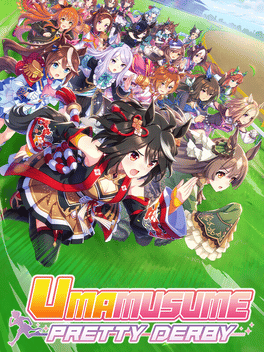
Celebrity-themed mobile games are far more prominent in Japan than in other major markets, and this July 2021 GameRefinery analysis examines why and how they are built. Among the top-grossing 200 titles, 17 in Japan carry the Celebrity theme, versus just 4 in the US and 3 in China. The theme also differs by region: Western examples center on real-world figures such as Kim Kardashian, while Japanese titles focus on idols, especially idol groups, and fictional characters can hold celebrity status. Umamusume Pretty Derby, which has stayed in the top-grossing five for months, is cited as a recent standout, alongside long-running franchises like The Idolmaster and Ensemble Stars.
The theme appears mostly in the Casual genre, led by the Music/Band subgenre (12 of the 200 titles), with additional examples in Adventure, Interactive Story, Arcade Sports, and Turn-based RPG. Outside the top 200, it extends to Match3 Puzzle, Time Management, Idler, and Puzzle RPG, suggesting the idol aesthetic is not tied to music gameplay alone.
Three feature pillars define these games. First, collection: RPG-style leveling, awakening, and skill upgrades; rarity tiers; gacha monetization, which favors group-based casts for their diverse monetization options; and decorative layers such as outfits, dorm rooms with furniture, voice lines, and collectible albums. Second, relationship building: 73% of top-200 Celebrity games include an NPC relationship system, compared with 30% of all Japanese top-200 games. Trust or affection levels, raised through gifts, gameplay, or narrative choices, unlock voice lines, images, outfits, and story segments. Third, storytelling: every Celebrity title in the top 200 includes story content, delivered through main narratives, character conversations, and limited-time event stories. The tone is light-hearted and centered on daily life and idol management, with subtle romance at most and occasional player choices.
The analysis concludes that idol games exemplify a character-driven design approach, where retention depends on players' investment in characters and on meaningful collectibles and content that extend beyond core gameplay. The analysis draws on top-grossing chart comparisons across Japan, the US, and China, supported by game-level feature examples.

GameRefinery · 2026
GameMakers · 2021