ArticleGameRefinery
Analyst Bulletin: Mobile Game Market Review May 2026
11 Jun 20261 pages~23 min full read
Key insights
7 slides
The tracking stack
Publishers rely on 85 third-party cookies for market analysis.
This ecosystem underpins both market analysis and targeted advertising.
Tracking reliance. Mobile game publishers utilize a total of 85 cookies.
85
Total third-party cookies used by mobile game publishers
- Marketing cookies
- 40
- Statistical cookies
- 17
Casual mechanics
Leading titles integrate proven casual mechanics to sustain engagement.
Publishers are borrowing established casual mechanics and integrating them with unique progression loops. This approach sustains player interest without the cost of building new systems from scratch.
Low-risk live-ops. Leading titles integrate low-risk, proven casual mechanics into their existing loops.
Social competition
Clash of Clans shifts toward community-vs-environment event frameworks.
The bulletin highlights socially driven competition as a key engagement trend. Clash of Clans introduced a community-vs-environment event.
High-end mechanics
Free Fire refines ultra-whale auctions with serialized skins and refunds.
Monetization strategies are evolving through refined high-end mechanics. Free Fire implemented serialized skins and refund options for its ultra-whale auction model.
Niche hybrids
Clash of Critters tops downloads by blending autobattler and pinball.
Hybrid genre titles are gaining traction in the mobile-game market. Lilith’s Clash of Critters proved the viability of niche hybrids by topping downloads and sustaining May revenue.
Hybrid traction. Lilith’s Clash of Critters topped download charts by blending autobattler lane defense with pinball-style progression.
Persistent worlds
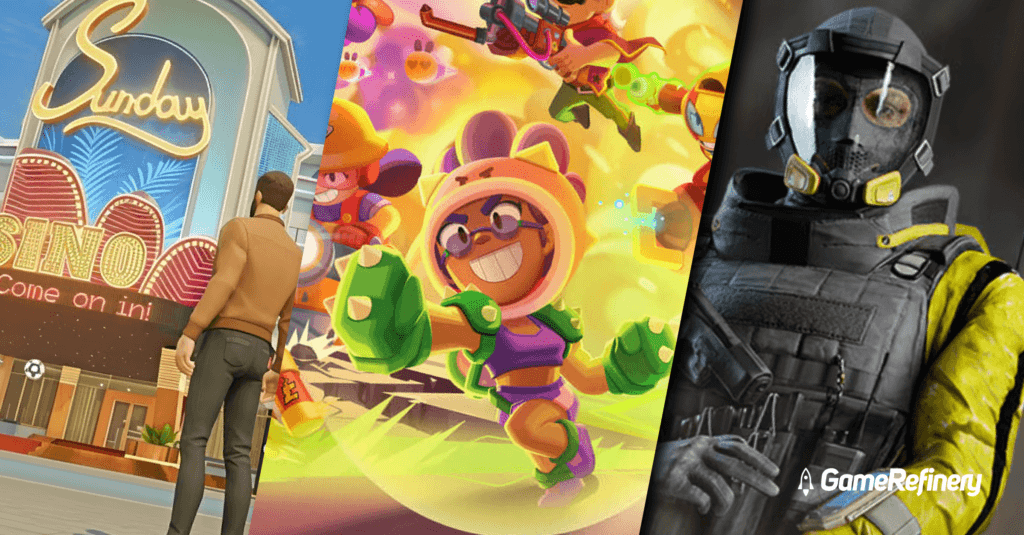
Sunday City anchors slot-based revenue to a persistent world.
Developers are increasingly anchoring slot-based revenue to persistent world-building. Sunday City generates idle currency that fuels further spending within its persistent world.
Strategic takeaway
Borrowing casual mechanics sustains interest without new system costs.
Integrating these with unique progression loops monetizes effectively without the cost of building new systems from scratch.
Cost efficiency. Borrowing established casual mechanics and integrating them with unique progression loops can sustain player interest and monetize effectively.
1 / 7
Ask AI about this report