Loading the document
1 free read left. Create a free account for unlimited reading + AI research.
Create free accountArticle Breda University of Applied Sciences
1 free read left. Create a free account for unlimited reading + AI research.
Create free accountArticleBreda University of Applied Sciences
The research presented at the 2026 GermanDevDays conference examines the design principles behind procedural non-player characters (NPCs) and challenges the conventional narrative requirement that such characters must be "round"—or fully developed and complex—to foster player engagement. The core thesis posits that procedural characters can effectively polarize players and generate significant emotional attachment without needing traditional, static character depth.
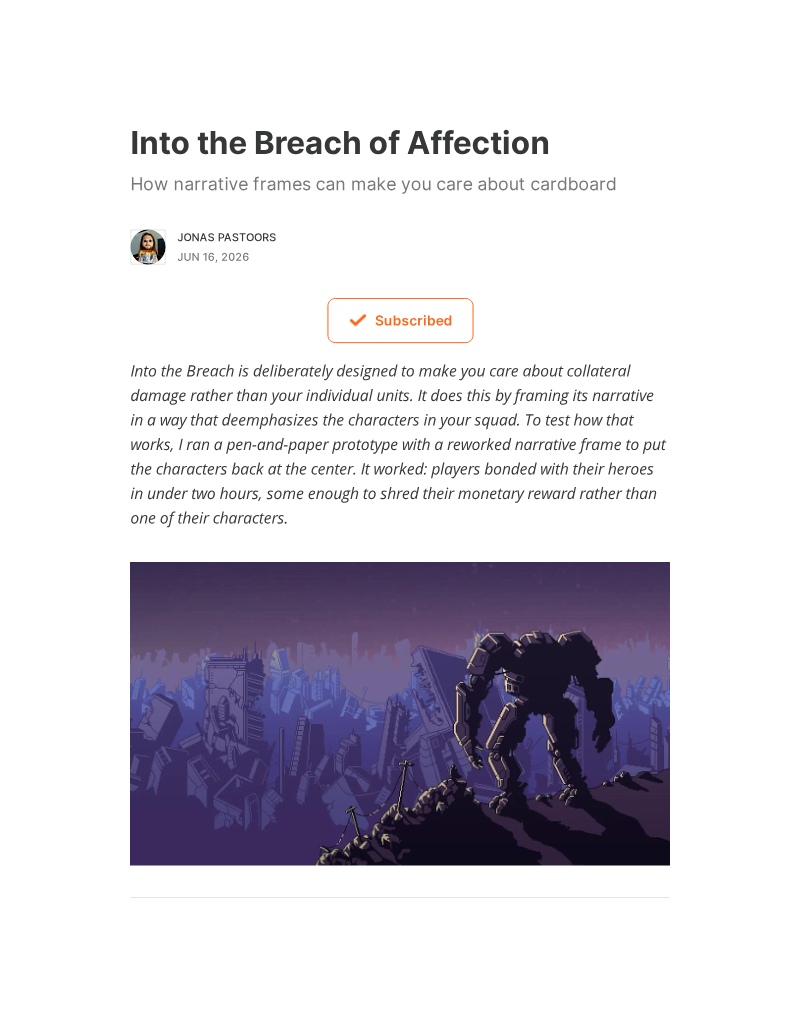
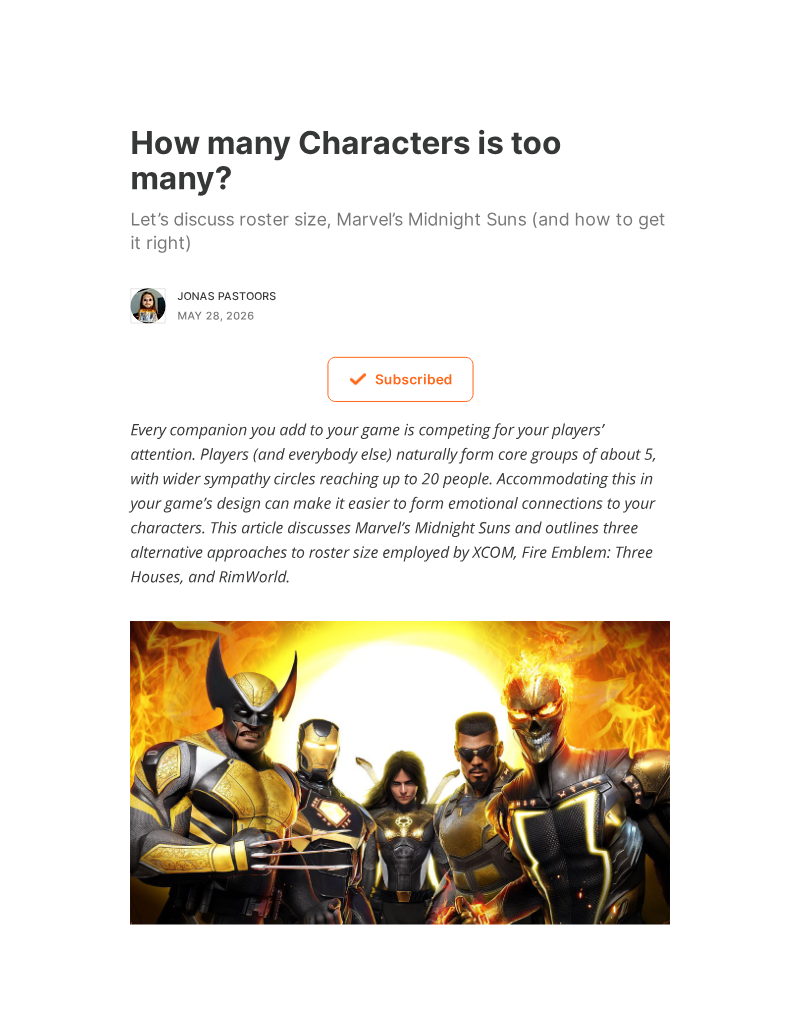
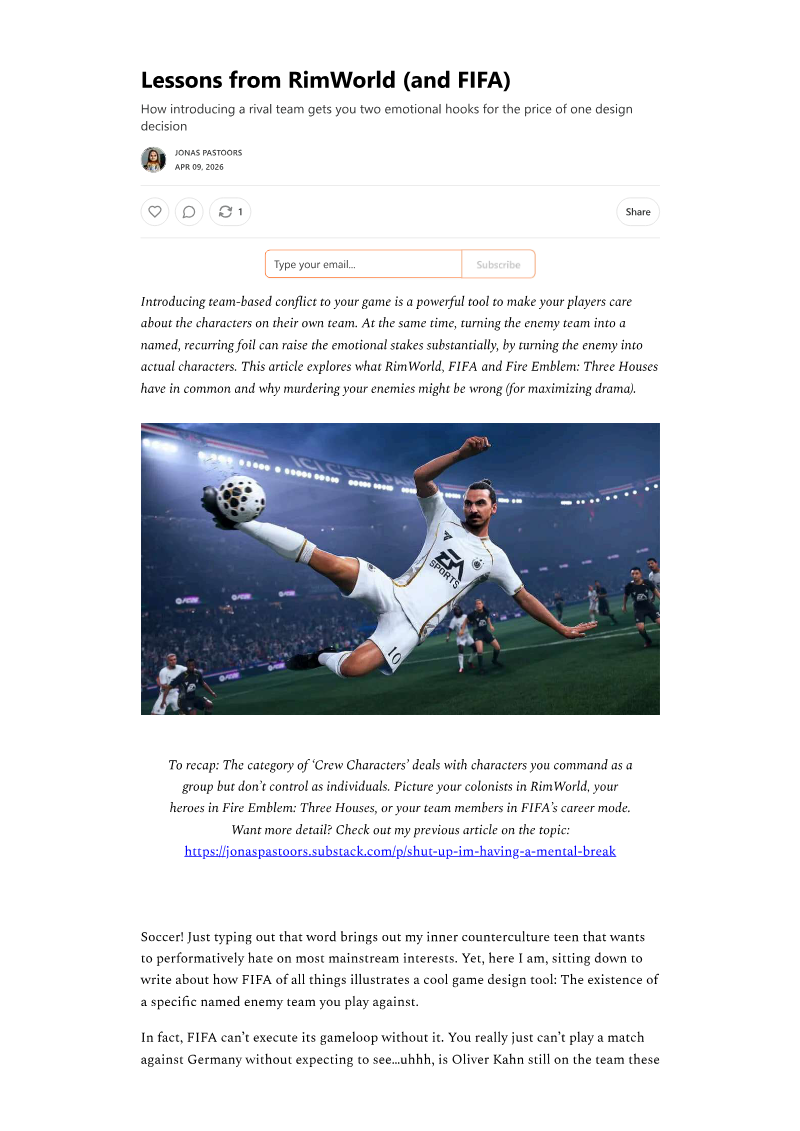
By utilizing a research-through-design methodology, the study investigates how ensemble casts of NPCs in titles such as Into the Breach, Baldur's Gate 3, Bury me in the Rift, and RimWorld facilitate parasocial interactions. The analysis suggests that the procedural nature of these characters, rather than hindering emotional bonding, serves as a catalyst for unique player experiences. By focusing on the mechanics of narrative framing and game design, the work explores how players project meaning onto procedurally generated entities, allowing for deep, albeit unconventional, emotional connections.
This research is part of a broader academic project focused on increasing parasocial interaction with NPCs, spanning from 2024 to 2028. By shifting the focus away from traditional character writing toward procedural systems, the findings offer new insights for narrative designers looking to balance systemic complexity with human-centric emotional resonance. The work highlights that the capacity for players to "love or hate" a character is not solely dependent on pre-written arcs, but can be successfully cultivated through the dynamic, emergent behaviors inherent in procedural game design.
Each row is a game or company this document names, each column a document, oldest first. A mark means that document names it. Select a row to see those documents.
Breda University of Applied Sciences · 2026

Naavik · 2026

Thomas Brush · 2026

PocketGamer.biz · 2026
Alberta Machine Intelligence Institute · 2026
Alberta Machine Intelligence Institute · 2026
University of Copenhagen · 2026
Southwest University · 2026



DiGRA · 2026
DiGRA · 2026



DiGRA · 2026



DiGRA · 2026
DiGRA · 2026