1 free read left. Create a free account for unlimited reading + AI research.
Create free account
Loot: One Year Later - The Metacast by Naavik
Key insights
6 takeaways- 01The ecosystem prioritizes the cultivation of a dedicated core of several thousand super fans over immediate mass-market adoption to foster sustainable, community-led growth.
- 02Value creation in the Loot ecosystem is derived from the interoperability of community-built projects and collective contributions rather than a top-down creative mandate.
- 03Loot shifts digital franchise development from centralized corporate control to a decentralized, permissionless ecosystem built on shared on-chain creative constraints.
- 04The project utilizes Layer 2 scaling solutions, specifically StarkNet, to support persistent, player-driven economies and modular, composable gaming primitives.
- 05Governance and coordination are managed through a decentralized autonomous organization that incentivizes contributors via grants and long-term ownership within the Ethereum-based economy.
- 06Core infrastructure projects like Loot Realms and the autonomous game Eternum provide the smart contract building blocks necessary for developers to construct an interconnected fantasy world.
Ask AI about this video
Transcript
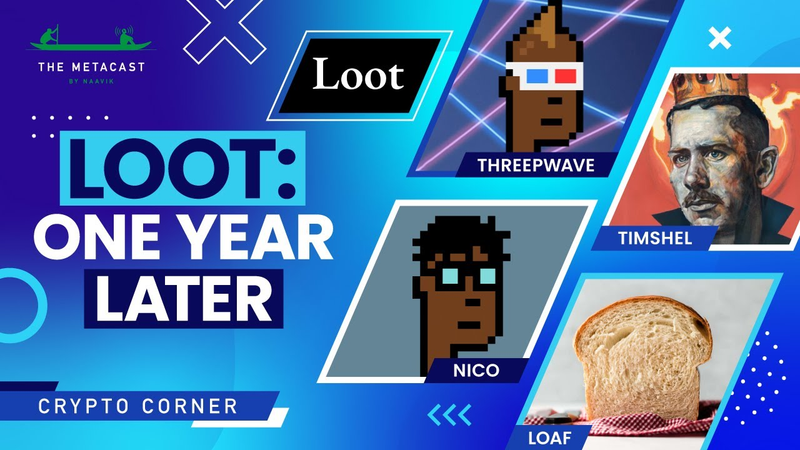
[Music] gm friends and welcome to the medical scripted corner brought to you by navic i'm your host nico very and today i'm joined by tim shell threepwave and lord of a few who is also known as loaf and as you might be able to guess from these names or if you're watching this on youtube from our cameras or non-existent cameras our discussion today will be focused on the more web3 native side of games um if you might remember an episode we did a few months ago about loot um and so today it's been a bit more than one year since loot was created and i thought it was a great opportunity to get these builders back on the show to discuss um the current state of loot where we're at how things have evolved
lessons learned how we're excited for the future um and you know if people are excited how they can help and contribute to this growing ecosystem universe that is the loot verse um i've got i've had some some compliments about you know how well things were explained last time and then specifically by by shell who's also here he's one of the driving forces in the whole loot ecosystem so tim why don't you bring us back a bit and talk about you know the initial vision for loot and a bit about everything that's happened um over the past year right on gm everybody uh loot year two cannot believe this has been a year of threep and loaf and loot hero and the rest of this crew working together on this crazy adventure but yeah today i think we're gonna unpack a lot of it but so lu year two before we dive into year two and the road ahead and i think what we've learned and
the seeds that have been planted that we're thinking about for this future fair to go backwards a little bit uh i don't think we just want to spend too much time on where loot came from uh but let's spend a little bit here so top line i'd frame the sort of the conversation here as the evolution from loot to the loot verse so loot itself is an nft project launched by dom hoffman out of nowhere this magnetic pulse in the universe a lighthouse for builders this pull sort of across the ecosystem of builders and creators and uh geeks and others saying hey what what is this thing i feel like i need to participate in this and bam uh out of loot was born the loot verse i mean what the loot verse is is this interconnected sort of infinitely expansive but still ex loosely slightly cohesive fantasy universe that we're building together it's a game world
it's a media project in terms of multimedia hyper media different forms of media stories art et cetera it's a foundation for a bunch of utilities have been built a bunch of open source code that's been deployed into the world for all sorts of reasons and it's been you know this is a a word that's overused for sure but at the core it's been a community in that loot has brought people together i think the discord has like 90 000 people inside of it now and i think 90 000 probably is a big overestimate since discord sometimes can get so crazy but it's definitely thousands of people maybe tens of thousands if you think about the holders of all the loot versus items who've come together and said hey we see something here and we're not exactly sure what it is but it feels special and it feels important and it feels fun i mean it feels intriguing and it feels magnetic to us and so what what this conversation today is going to be about is almost less so about loot
and more about this infinitely expansive game world media world decentralized universe that we're building together between biblioteca which is brainchild and this game ecosystem between crips and caverns which threef is going to talk about today uh between stuff i've been working on genesis project and the eye open quill you know between uh loot explorers and hyperloot and portals and passages and yada yada the crypt there's a bunch of projects that sort of collectively make up this thing we call the loot verse and so i'll maybe i'll end that that little intro about what loot is by saying if loot year one was about establishing this magnetic foundation and presenting us in some ways with a time machine to like what the future of collaborative work could be if loot year one was like establishing a rich foundation and
starting to build the architecture on top of it loot year two is about building a sustainable system on top of that foundation um in loot year two and maybe that's through year ten or three year whatever to me is going to be defined by how it can build a nice infinitely expansive and still cohesive ecosystem but in a sustainable way where it's not just a quiet foundation that's quietly allowing people to show up and raise their hand and say hey this is interesting what is this place but also can play a more active role in building this virtuous cycle of self-reinforcing value creation that sounds like a ridiculous mouthful that i just threw out there but what i mean by that is that when we as builders when realms improves its game foundation when krypton caverns in the community starts to come up with some sort of new lore or feature
when writers in the loot community publish new content and create new characters like when all of this activity happens instead of happening in parallel silos where each project is just like one branch or one sprout coming out of the ground these projects can really influence each other and they can provide value to each other where a character can cross between projects where a user's player can pop up in multi multiple parts of this universe where things you learn in one side get applied to the other side both sort of conceptually as a user but also technically um and so i'm sure we're gonna get into some of that today again really driven by biblioteca dow as an anchor force behind the loot verse uh we're just i think arrived at the next chapter of loot in terms of the advancement of that foundation and the beginnings of building that sustainable system on top of it that's all very meta but uh threep and loaf please dive in add on to that sure
i think uh you know it was interesting that you said that the bibliotheca is is is the force i think that loaf uh the force of will that is loaf is actually the force that is keeping that that gravity and the unit the gravity well pulling everyone into this universe at the moment but you'll hear from him in a minute my name is threepwave um my background is in virtual reality and virtual worlds uh i work on a project called crips and caverns and crips and caverns is a set of on-chain dungeon maps you know tim covered what loot is why it's special et cetera i thought it might be helpful for me to touch on why in reflection after a year i believe in the ethos of loot and to me what loot did that was very special was two things it wasn't that it created a bunch of items on the internet to me that's interesting but i feel like the first thing it did that was special is it gave us constraints and it made us feel like we can build if you look at the creative process it's
very very difficult for any artist or creator or programmer or anyone creating something in the world to put what is in their heart and put that out in the world it's a very difficult process and one of the hardest things is you can create anything and i think loot for me at least gave me a constraint and that constraint was black text white words very simple modular composable items and when i saw that within an rpg universe we call we are adventurers we are going on adventures that gave me just enough of a boundary to figure out where i fit into that box and say okay i can do something here and so that to me was one really powerful thing that happened a year ago number two was that the ethos behind loot was not as was mentioned at the beginning by nico a single vision holder saying this is what we should do and as much as sometimes in the very beginning i wanted dom to say dumb just tell us what it should be and what it's going to be it's actually very powerful for us to come together and define what
this thing can be as a group we all are empowered collectively to figure out what the future of loot looks like and that's very different than most games you see today and those two things have taken me from thinking okay i'm going to build an on-chain set of maps to now thinking about things like what if every item wasn't just composable and can be plugged in together what if contracts were composable what if any builder and developer out there could come together and build systems for a bigger game and make this thing bigger than it already is and so that's what excites me about loot still today what excited me from the beginning the main thing that's changed for me i have a little more time these days and i feel like we're starting to get real games and experiences and lore out there in the world and we're not just talking about it and now we're doing it yeah um ditto to uh what tim and threep just said i share the same sentiment about about loot and you know um sorry jam well i'm uh i'm low-fi i'm one of the
uh um corders at bibliotheadow and we've been building uh our on-chain you know game for almost a year now and just following on from what threep said about the constraints and what sniped me mostly about loot was it's it's not just the constraints of loot that snapped me that was that i found that very interesting um just like open source world build and you know you can build whatever you want and it's this creative canvas you can go crazy on i've always been fascinated with just this idea of running you know entire um complex applications on this on like a shared substrate which is the uh which is the blockchain and so uh from the very beginning um myself and redbeard when we kind of first got stuck into loot we were like
well we want to build a game that pulls these loot you know items together but we will we want to run it all on chain and so for the last year um we've been figuring out how to do that um and so we originally started running this game on arbitrom but we ran into some constraints so we kind of i think we made a proposal back in october how's a long time ago about bringing the whole loot first to starknet because we thought it was um what we think it is going to be the most expressive blockchain to for on-chain games and so really what we've been trying to do for the last year uh it's definitely been an insane year um is you know try to figure out how to build um immersive and scalable on-chain games um and so uh threeps we're all actually tim tim anthony but
part of the dow um and we're all building this world and we're we are getting quite close to um you know fun functioning games um but it's been a challenge and it's it's still early in this cycle so loaf let me jump in on that if i can sorry go uh i just i love the way you just phrased that at the end there that is a threepin tim shell or part of the dao i kind of love that and i want to use that as an opportunity to say for people who are listening to this who are maybe like web 3 curious or web 3 skeptical or something when we say that what we mean is that the tao the decentralized autonomous organization big words uh is open and that anybody who's intrigued by this and anybody who wants to participate in this and anybody who's curious to learn more or be part of this in any capacity is welcome to join now not all dowels are permissionless meaning like some dowels you have to do a whole application process and apply to
be part of it and what's unique and interesting about loot and the loot verse and biblioteca dao is that it is more of a permissionless foundation you know three was talking about the ethos of loot i think that really fits the ethos of loot so that thou mayest join thou mayest build everybody's welcome energy and so if you're listening to this uh and curious you can join the dow too um you can jump into the discord that's where most of the action happens for the loot verse either the loot discord or the biblioteca discord and just start to follow along ask questions like everybody is present what's ridiculous sometimes about this world is it so 24 7. so if even while you're listening to this on youtube or wherever you're listening to this you say i'm curious find the discord open it up even while you're still listening ask a question and i'll almost guarantee that somebody in real life with live will genuinely and thoughtfully uh reply back to you this is a whole new model for how teamwork works
and collaboration works and it's messy and crazy and frustrating and hair wrenching and whatever other words you're going to put at times but it's also beautiful and joyful and uh really effective if you can harness it well loaf and threep and i didn't know each other before this loot brought us together and you know people joke like oh community and internet friends and whatever but there's a lot of truth to it i'm sure you can see it hear it in our voices as we talk but there's a real sense of belonging that the loot verse creates and there's a real sense of sort of magnetic energy and vision and sort of collective a collective dream that's being built together so my my headline at that point is you're interested uh when loaf says dao what he also means is yeah that's an invitation come join us and if you're a developer or a storyteller um there's always something to do and
there's all our all the codes open source so you know you don't even have to talk to us you can just go and uh see an issue on github and and tackle it and just a note on that um all the core developers in bibliotheca dell before they became core developers they actually contributed to the um some of the open source code um which is quite it's just a beautiful thing and then they became core developers so there's always there's always there's a lot to build you know sorry i'm gonna just keep i must just keep saying one more thing here i realize like we are talking in crazy crypto web 3 you know language sometimes and so maybe just one more comment about what it is that we're building through all this uh if you don't really know much or again are skeptical about this world imagine if lord of the rings or say i don't know harry potter if you want to go that direction or game of thrones maybe if you go the other direction
imagine if those instead of being owned by just one corporation who hires a bunch of writers and owns all the ip and puts out movies and books and games and stories and art and whatever else around it enables some fan fiction but mostly says hey this is our property imagine that the richness of that world and the kind of fractal expansion of that world was in the hands of the public domain and that anybody could collectively come in and say i'm going to build a game i'm going to write a story i'm going to make a movie i'm going to make music i'm going to make art i'm going to write a book i'm going to work together with other people to weave my character from my story into somebody else's game i'm going to build a utility for this thing and that you didn't have to call up hbo or electronic arts or whoever and ask permission but you could just join that's what loot is it's a decentralized fantasy franchise if you will collectively owned and created by the community got it um
i'm gonna sometimes play a bit of the advocate of the devil here and tell you guys that you're too meta for this um and sometimes push back i'm i'm curious salute started as a primitive as assets you know as a three described a black background white text eight items that together form equipment for an adventure i see that as a primitive um and what has been built on top of that are other primitives that form the foundation of this whole world could you give me some tangible examples of some of the primitives that have been built that are being built that will you know help this whole space move forward low if you want to give some suggestions and then perhaps uh threep and tim can also join in yeah um so yeah like loot was really it was the law layer and the data layer and from the original contract um but
i'll explain kind of what how we've interpreted and what we're doing um and so well every derivative is kind of spawned from loot um there's some that like i guess are more canonical and some that are not but i guess the thing is you don't have to be canonical you can go on any direction you want um we've tried to stay true to the contract and treat the contract as you know as canon and um but you know the reality is that uh loot being on main net you can't really do that much with it from a kind of a game perspective um and so we're kind of migrating it all to stock net which will allow it to be um used in a much more i guess dynamic fashion and so we're we're splitting up all the loot items um into the individual bits and we're also creating um on-chain characters which will allow you to equip the loot items
um but you know everything that we do with that um we're treating it from like a composable composability point of view where they everything will interrupt with one another and everything will still be permissionless so we've just taken the loot contract and we split it into its eight bits um and we've created a couple other contracts and now with those um more i guess usable contracts that are on stock that we're a lot much cheaper environment to do things um developers come along and build on top of that um and so that's the approach that we're taking um with some of these other primitives so these are gaming oriented mostly primitives right exactly yeah yeah so um you know maybe with thicker dowel we're you know we're focused on um building on chain games that's kind of our core vision is to build the loot verse like to build the game for the loot verse um on stocknet so everything we do um it revolves around that and uh the the loot items that we've created are um you know the loot items
they have their own statistics and whatnot and you can take them and you can incorporate them into um any game that you build on stock net so it was i guess it's creating we've created more composable version of the loot bags but still true to the original contract got it and so just for the listeners that haven't followed because we've we've talked about startnet a bunch essentially startnet is a layer 2 scaling solution that makes transactions way cheaper um which makes it that we can actually do way more stuff on chain we don't have to be too careful for too many interactions that can get expensive um okay got it um loaf while we're at it could you talk about more like more practically what game you're building because i can imagine some of the game developers that are listening to this being like you know what the hell on chain games how does that work what does this look like i have no idea um could you go a bit more into that well
it's funny what does that question like what does it look like um i you know threep and i have been trying to answer that for a while now and i don't think anybody really has the answer to you know what you know what does what does an on-chain game look like it's like it's kind of an analogous to you know the early um the early consoles like the snares and whatnot because back then when you're designing a game for the snares you had this like fixed constraint of the hardware and so that was all you could do you had so you had to squeeze everything uh you could out of these um out of that tiny bit of hardware so the developers came up with very um interesting games that revolved around that constraint and that's what created the fun was the constraint and so it was a new medium you had to design for and so it's kind of similar to what we're trying to do with this new medium which is the blockchain and on this new medium there's some quirky parts to it uh meaning like you know all the information is
open um it's all running on this public chain uh there's a little bit of latency because you know everybody's writing their information to the chain there's no central server uh changing the information like in a traditional um you know uh networked game um and so that's kind of like yeah like that and like i think in this time cycle of on-chain games it's still so early um and there are like i think there's about to be a camera an explosion of on-chain games and now that the technology kind of is capable of handling it um yeah but it's still very early and it's you know it's kind of this weird and wonderful stage where everyone's trying to figure out what an unchained game is and trying to figure out you know the what's the fun mechanic with these constraints and whatnot and so that's exactly what we're trying to figure out um and the the game like the core game that we're building revolves around loot realms and loot realms were one of the first loot derivatives which are um 8 000 generative maps and they have
resources and they have specific traits on them and so in this first game that we're um which we've been building um we've really we've been really building the tech stack to enable not just this game but like all the other games that we produce in the future but the first game is really uh revolves around these 8000 realms and they're all situated on this um gigantic map with x y and coordinates and uh you take you have if you have a realm you can settle your realm and you can start generating resources and once you start it once you've generated those resources you can build up your realm you know you can build barracks and castles and then with those buildings you can build armies um and then with those armies you can go and travel to other places in the realm verse um and you know and fight wars and steal resources from other realms um and so that's kind of like the core matter of that of of the first release and all that logic and all that state exists on on chain and so we just have our
visual client which we're you know we're going to make uh look good but really it's just an interpretation of the information that's on on chain um and so that's kind of cool that's like the first game that we're building and it's just kind of laying the foundation for this ever expanding uh loot verse and like three three's project crips and caverns is going to be in the next release and we're porting them to starknet and um they're going to be generative dungeons and we have to do some fun things with that um but it's really like it's it's uh as tim has been talking about like this is an invitation to any developer that wants to come and build this you can um you can take our primitives that we've designed and you know copy our code and we've we've done all the hard yards um trying to design this tech sack and so you can take that and build on top um and build into this world um as you wish look i think it would be really cool if you could take us from because i've been
on this journey with you but not everyone has like get really tactical like if you think about the game itself like how did the realms game start what was the initial idea and then what did you iterate and like you're in the process of like finding the fun and going from like okay you found something that's fun can you talk us through like where did you start and then like what did you find that was fun like what's changed about the development process and where are you now in terms of game mechanics and how you play the game yeah um i would definitely still you know trying to answer that question you know what is the fun um i think you know in in games it's about agency and about choice and so it's like you know i have a realm what can i do with it um and from a designer well developer point of view it's like well how do we make how do we give players choice in this whole new constraint um and so that's like the original game didn't have any travel it didn't have any coordinates um and we we quickly realized it doesn't doesn't give the player enough agency to move around and and it's all about choice really in any
game it's like do i do this do i do that um and so that's what we're really really leaning into is trying to give as much agency as possible to the players um and it's it's all like uh [Music] this game that we're you know we're about we will release will you know it will last for the length of ethereum really yeah you know it's all running on this public chain um nothing's going to take it down so once production's live it'll it will just continue to exist and you know people will empires will rise and fall within it um but the game will always go on so yeah it's it's definitely an iterative process um in trying to figure out the fun um but that's like designing any game you know you start with your original thesis and you just keep evolving it from there super exciting um and one of the things i want to do is is get on the one-on-one with you loaf and just talk about
a deep dive into realms and and what exactly you're building and how it works um i'm curious to also get a an idea of why people get involved in the loot verse so the way you're speaking it's as if everyone's just like really excited about this and just wants to help and and do something but unfortunately we live in a world where we have to pay rent and pay for food um how does how does that work well if you've built a team of people that are helping you um could you tell us like practically how it works you're like a very decentralized organization you probably don't even know the first names of a lot of people you work with so like how are people getting rewarded for this why like if if anyone wants to like is really inspired here wants to quit their job like how will they still be able to put food on the table yeah it's i think it's definitely early um in that sense um and just to you know recap i've built businesses in the real world and when i started this project i just told
myself like let's just do this organization totally web3 you know for better or worse and so that has come with its challenges um but you know we do have our core contributors are paid directly in eath um you know we don't have a we're not you know domiciled in any country it's a totally you know decentralized group of people um and yes i don't know the first name of um anybody on the team really um but that's fine because you know all that really matters is what you do and so if you turn up and you push code that's all that matters um in this world doesn't matter if you're from i think we have people from brazil america europe and asia so we're hitting everywhere in the world um he's part of the dao and part of the core team now which is amazing and like you couldn't do that in the in you know an old world in the old world and give everyone skin in the game um that's what i that's what i love about this whole new really uh you know ethereum economy which is really what it which is really what it is it's this
whole digital economy that we're all living in um we just don't quite grok that yet um yeah so yeah and to for people that are you know are coming into this space uh it i definitely wouldn't advise quitting a job and just trying to join a dow that's probably not the best move um probably like the best move is if you're a developer specifically um try to find a adele with open source um code and you know tackle some issues like we have a bunch of issues on like we have like five repos go like um github repositories going at any time um and they all have issues within them and you know anyone can come and actually tackle them um and often like me personally if like if you know if people contribute to open source code um and you know
that's all that really matters it's like if people can see the quality of your code then you'll get hired um and if you're a talented developer in front end or back end or contracts that's the best place to start just contribute to an open source project in part of your free time and you never know what will come from that i think we also see a few other archetypes of people that show up you know like i think you're talking about the kind of like devs or dev curious group there's also um i think there's a lot of lurkers who are just interested and curious as tim shell said to see where this crazy experiment goes i think that's actually a big group of people there's also speculators there's people who maybe bought some loot maybe they bought some nfts along the way they have maybe a realm they've got a few lords and they're curious to see like what does this become some people might think they've got the next gold mine some people might just want to be along for the ride and see like what happens all these weird in-game assets do they ever become worth anything but i think there's another class of people who are almost like game dev curious and or world building curious and so you see some people i'll just use the crimson caverns discord for example there are people who like to write lore about
their dungeons and like loot the crips and caverns dungeons those who haven't seen them they are purposely very simple they're very simple maps they have doors and walls and floors and these things we call points of interest and they have some color color schemes we call biomes um and but people have have written you know short stories about their dungeons they've taken their dungeon and woven it together with their realm to create a bigger story where there's a mage attacking other people in their realm they've taken genesis adventures which is another project that tim shell created within loot and they've said wrote the story of their their genesis adventure you have other people who create art there's an artist who just creates icons and who creates has done a bunch of 3d work in bibliotheca down so i do think you have people who are just excited to be around a game that they can actually contribute to and where their ideas are welcome which often doesn't happen in the rest of the game dev world whether it be a commercial game or an open source game so those are some of the different archetypes that i've seen that
are kind of just interested in and rotating around this sphere i'd like to jump in on that one too uh nika you asked a good question you have sort of almost a brass tax question like hey this is an incredible fantastical universe y'all are building but how about brass tacks like how does somebody get incentivized to work inside of this and so plus one to what lope and three just said but i'll ask or answer with another brass text comment here which is that people are being rewarded for their contributions either rewarded through i guess three ways either rewarded through participating in a team like the detected out and actually getting paid for it uh two rewarded through ecosystem grants there's a currently active ecosystem grant round loot put out a 75 eth matching pool into the last bitcoin round and just put out a 50 matching pool into the current git coin round
and i think we have like 20 or something like that 20 25 grant proposals that are in the mix spanning game dev to community management to people making a podcast to writers to artists to you know more um who are actually getting like significant you know maybe not like a year's salary but significant money for participating um and then three is through uh building things yourself um so again one is like joining a team and actually having some incentive structure two is grants and then three is building yourself and uh there's a lot of value creation opportunities within the loot verse uh at any scale you know biblioteca is that like mega scale of a whole you know now multi-national mediversi global organization uh but also people are making you know making art uh making stories making books making hyper media um you know making one-off projects and not everything succeeds just like you know anything you know not every
dart thrown at the dartboard hits the bullseye but a lot of projects have succeeded within the loot verse and builders and artists and developers and writers have been able to actually translate um success and that feeling i forget what word you said three but like you know your ideas being welcomed and you know contributing and creating something of value actually being able to capture some of that value and so i'd say that if you're curious about this if you're a developer or there's a lot of opportunity but if you're not a developer there's still lots of different places you can plug in here if you go to getcoin.com and just click around you'll find the loot versus one right on the homepage you can click around and see what the other grants are in this current round or if you pop into the discord you can also just skim the sidebar and there's a ton of different projects loot burst type projects where each of them have their own you know lack of better word their own modernization model and i don't think we should shy away from that i think this is where i started this conversation off the bat
that loot year two is going to be about building a sustainable system and a sustainable system creates places where people can or create opportunities for people to become owners of the system either by owning some of the native tokens like game tokens and the loot tokens and the lords tokens or whatever else um or by plugging in and building parts of the system and sort of creating their own pieces of this system but a sustainable system where value is created and there's sinks and loops and value is also extracted i don't think that has to be a bad word that if somebody's creating value into an ecosystem it's okay to extract some of that value to pay for your life and your rent and your food and your family and more um you know this doesn't have to be free work but it can be a new type of work and it's it's obviously not for everybody and i agree with the loaf like don't quit your day job just yet uh but if you're gonna sit down on the
couch and spend two hours you're watching game of thrones come join you know come try it for a couple of couple couple days there a couple weeks or how long is like the new game of thrones prequel is probably 24 hours of content or something spend 24 hours in here building a fantasy universe with us and i think for some people it really clicks so as a gamers investor i talk to a lot of teams that are building really cool stuff using web3 technologies and how they apply to games but one of the questions i always need to ask them is how are you getting this game or this content into people's hands how are you reaching you know 10 100 million people with this i'd like to ask the same question to you like you mentioned okay you're building games these are all chain games they're already like on the cutting edge of the cutting edge um there's media which is obviously like more easily approachable he's more easily shareable how are you guys thinking about uh bringing the loofers to
millions of people it is funny i mean on this call we do have both sides of the coin the like media side and the game side but yeah go ahead with your thoughts like i think at this point like right now um like web 3 gaming itself is still so early like it's actually insane how it like that's not just a meme like i think the last i looked like three months ago there was like less than a million wallets that actually interacted with web3 games which is tiny like 76 million people played clash of clans like yesterday um and so this i mean this space is like just so much um room to grow but yeah as you said like how do you how do we reach people um right now i'm like my core focus is like building this game and like building the the tech that will enable a million people to play um and i don't think even blockchain is there yet to have that amount of throughput i think in about a year it
will um yeah but it's not even there yet so um yeah i do i like i am yeah i'm more focused on like building this this high quality game and i know that the people will come um and you know maybe some of this that 200 million dollars that just got invested will will bring a massive cohort at this point it's so um it's not a zero-sum to anyone working in this um industry like we're all um there's so much growth to have um you know grow so much growth to go um but yeah the question still becomes how do you how do you convince people you know this is going to be fun how do you convince people that nft is on a scam i think we all have a bit of a hill to climb on that right now but i think we're also going to have to start you know one of the things we're finding as we build out the realms game and as we're thinking about kind of the next steps um originally i think the idea here was that we would build up the realms game which was for realms holders imagine them being kind of royalty within the game then you have
adventurers who are people who you don't necessarily have to own a realm to play so we're thinking about how do we expand to a broader audience what we're realizing in the process is that some of the core things that just exist in typical game dev or traditional game dev do not exist in our world as an example there are no push notifications triggered by the blockchain today push notice being like a high re-engagement channel there is no acquisition channel you can tap into because you can't put a blockchain game currently in the apple app store because apple will block you for charge you a 30 tariff every time you want to make any transactions with your nfts or in-game purchases so i think there's like a series of hurdles it's almost like the building blocks of a back-end server are there in the form of the blockchain we have a very simple identity system with your wallet that you connect and that's about all we got so far and so we've had to build everything else from scratch so i think it's going to be a long time before we can hit those million user audiences i would love to be proven wrong to me the question we need to ask
today is how do we get 100 people to fall in love with this game and if we can make that happen i'm very confident we can get the next 100 and the next hundred and we could start to solve some of those questions like how do we re-engage people and get them to come back to this game over and over again every week and so for my background i think that's the real question we have to answer is like how do we find our super fans how do we get a hundred people then how do we get a thousand people then how do we get 10 000 and at that point with the economics of blockchain games i actually think you could have a profitable game i don't think you need a million users build it doing free to play mechanics i think you can capture a lot of value with your protocol fees your marketplace fees et cetera and so to me that's the that's the north star today is like can we get 10 000 people or even a thousand people playing this game over and over and over again until that happens i don't think we have anything near a potential long-term hit on our hands and tim how do you look at this from the the more the media and the storytelling side yeah i think it's two sides of the same coin
i think that a game world benefits from stories i think stories benefit from games and i think it's a virtuous cycle between the two and so in this universe i think the entry point for a lot of people may not actually be like seeing something about a game and going to the website and grabbing a character and diving in the entry point may be more like a story or a shared clip of a video or hell maybe a movie in theaters i mean that's a big stretch but some sort of media that maybe is less immediately demanding that you dive into it and build it together or participate in it but you can sort of use your existing behavior which is like just watching or just reading or just skimming but you you see it you say huh that's interesting that's good that's surprising i like that character i like what's happening here i want a little bit more of this and as you dive into it you realize like okay wait this runs deep and this runs deep
in a direction that i've never thought of before it's not like oh i just watched the game of thrones you know series for season one and wait there's six seasons of this and there's a prequel and there's a game and there's more uh now it's like wait this is interesting i can dive into here and participate in this or i can dive into this and not just play a game but also help build this game world uh where i can dive into this and grab a character and make a character and introduce my character into the the lore um so i think it's still tbd as to how collaborative media takes shape and there surely will be all sorts of fits and starts and flops but i think a little bit of storytelling goes a long way um and so that's what i've been focused on here we're both like at the meta level trying to help bring us together and find our shared language and give us shared spaces to feel like we're contributing together and to feel that magnetic energy uh but also in
particular i've been spending a ton of time this year kind of experimenting at the edges of on-chain media and collaborative media and collaborative world building and community driven canon and expansions of characters and conflicts and the way they can all fit together um i don't want to dive too much into the thing that we just launched but we did just launch something last week in this spirit that i've been working on for a long time that was a really galvanizing moment and maybe i'll just end by saying uh one very particular example of this is that last week we just launched a if you will an e-reader for the loot verse like a nft device that contains a bunch of on-chain stories created by professional semi-professional amateur writers and everything in between from the community for the community owned by the community and we launched this nft sold it like you do with nfts it brought in 200 eats of like mint fees on day one and we turned around and said hey let's take a hundred eth which is
in the scheme of like venture-backed companies small but in the scheme of building your own universe significant let's take it underneath and let's donate it back to the loot verse and back to writing grants and back to media grants so that anybody who's curious here and wants to participate can get a storytelling grant if you will and so now there's an untapped pool this is now like i don't know seven days old or ten days old um an untapped pool of 100 eath you know there's a lot going on the loot verse but one corner of it has this underneath pool to say storytellers are welcome and you don't just have to do it for free you know there can be a little bit of like bootstrapping and kickstarting a little bit of fuel to get people started and so loaf's comment maybe i'm not gonna be the one to write that book but i'm hoping that i can help inspire the person and invite the person who does write that be a best-selling novel um and maybe a little loot versus grant can help them bridge into this universe and then be on
their way to their own adventure and so tim shell what is your objective for the for year two like what do you want to reach by the end of this year what do you want to the situation to be for the loot first i would like to give ownership to the people who are already acting like owners in the lead verse that's my main goal i think sometimes that gets missed in this universe and that sometimes taos are really tricky in the sense and liquid super teams and liquid work and all this stuff is really tricky but to me it's really special when you have someone act like an owner of something uh the owner in the sense that like this is my home like i keep it clean you're like this is our space our community our kibbutz our whatever analogy you want to use and like we take responsibility for it there are people who are in the loot verse acting like that already but who don't even yet have any ownership of the things the stuff the
artifacts the sort of raw loot bags if you will of the loot verse so broadly speaking i would like to to create moments or even just give ownership to the people who are already acting like owners but to do that i mean that sounds like a noble goal to do that though there's a lot of structural thinking and strategy and infrastructural change that needs to happen a lot of that is happening in bibliotheque already so i think through the tech is on the right path to make this happen but i want to also do this at the level of loot itself and then sort of set the precedent so that anybody else who's participating and joining and you know being part of this universe keeps that same ethos in their mind as they build so that the people who join in and who participate actually can sort of earn some sort of ownership of the thing so it's kind of broad but that's what i'm hoping for
open year two is the year of uh creation of the sustainable system when i talk about what blockchain brings to you know the internet more broadly not only games for me it's a it's a way to granularly disperse value to all participants that added it and so you know what you describe is this universe and everyone that brings a small piece to this universe you know will get a relative or like will capture a part of the the value that was added by their piece and you know blockchain technology is is is most built to do that so um totally get that um three what is what is your objective uh over the next 12 months what do you want to to achieve and what do you want loot first to be you know i think my objective is is more on the figuring out what's possible on the blockchain side of things um i think that for me i'm very confident that we can find a way to take the value that flows
in and reward it whether i think that the blockchain does to finance what the internet did to content and so i think it's inevitable that we'll find ways to take the small chunks of coins or tokens etc and figure out ways to divvy them up and the people adding the most value what i don't know if is is inevitable is whether this shared distributed computing platform can support and be a full game server for a compelling game or for a virtual world or for a place we want to hang out and so what i'm really interested in exploring is can we take the typical architecture that you see in real time experiences where you have a set of components and you have a set of systems and they are tied together very loosely and composed together can we build that on chain in a way that other contracts can become modular pieces historically if you look at how games are made typically there's a big company they make a bunch of they hire a
bunch of developers they build their engine over a period of years and then they crank out a bunch of content um using that engine and then maybe they ship a sequel maybe they iterate and launch an expansion etc but that's kind of how the game industry works and i'm very excited to see can we take those same core programming constructs can we put them on chain and can we then see if myself building and launching my own game can someone else come and plug their contract into that game and have it all just work together seamlessly because if that can happen then you have the all of the beauty of blockchain from the financial perspective of capturing and distributing value i thought you summed up very well nico you can couple that with users who can add value at the contract level if they're a developer at the art level if they're an artist at the story level in the lower level if they're a writer and we will have vehicles by which they can they will have ways to plug in to these on-chain games if we can give just a small version of that running where we have an entity component system running on chain
we have a game client that syncs up with it and then one or two other groups come in and plug in a contract plug in some art etc and we can pull that off then you are gonna i think we're gonna see an explosion of this the type of explosion we saw in the open source world in the late 90s early 2000s and mid-2000s happening in the on-chain game virtual world and virtual experience space it's really fascinating a few months ago i had a conversation with justin who is um one of the xerox park leaders three are you familiar with uh with xerox sparks building i've i'm i would say like i watch what they do i think i understand what they're doing but i've never spoken to them i'm a big admirer of what they're trying to do on chain yeah well amongst others i think lattice is one of the the projects within the xerox park ecosystem that is um you know i think you know trying to solve exactly what three if you were three people were just describing so um yeah it's
it's it's still an open question but there are some uh some very bright minds that work to solve it um loaf what is you you already touched a bit upon like what you're looking to do but in a year what do you want to have achieved with uh with realms well i'm uh three's been showing me some of his early um prototypes what he's just described so i'm going to help him realize that and hopefully incorporate some of that conceptual work into what we're building um i think by the end of this year the the will that well sorry in a year from now at the end of this year a year from now the core eternal game will be live at least for six to nine months um uh people will be playing it and people will be governing it um outside of um you know the core team and so it'll be itself autonomous internal game running um i think we're gonna realize that
vision within the next yeah three to six months um and so that's that's uh that that's the you know that's the number one thing to achieve we are going to achieve um and the other thing will be the adventurers module which we touched on briefly i don't i can't remember how deeply we got into it but it's really this um it's a it's off it's a free-to-play you know almost free to play version of this on-chain world i think the problem i have like the problem with a lot of web 3 games is like um i'm not a believer in like selling an avatar like having a constrained supply on an avatar that you use within a game um i want to make the avatar basically free to claim um and value a crew in other met you know in other ways to you know how much you play the game um and so this whole adventure module that we're bringing out will be frida free to play basic
almost free play we'd have to stop the bots but it'll be almost free to play and i hope to scale that to you know thousands of people playing um which will hopefully be using this entity system that um threep just described um so yeah you know we're heads down we're still um and just just touching on what three i i am and believe i believe that we can have a very immersive highly scalable um shared computer um but i think we can do it using stocks um in my mind i like compressed computation and you know once we get to like recursive proofs um we're gonna rabbit hole now but i i think we can hit like hyperscale and this type of you know fully unchained world um that we all want to see but we're not there yet um but i i i definitely believe it's possible so yeah um the main eternum game running and our adventure model um
our adventure module um pumping as well with thousands of people playing so probably a lot of other stuff as well but we probably haven't come up with that stuff yet the trio of answers to this question is just like the beautiful chaos of loot in a nutshell that we're all working towards the same goal we talk to each other all the time in some ways we're all on the same team yet yeah we have three visions for loot that all uh reinforce each other uh yeah i want to have a book in my hands that i can read loaf wants a playable game threep wants a world computer and composable contracts and more but they all play into each other and they all are completely components and building blocks of a much larger thing but yeah the controlled schizophrenia or whatever you're gonna call it of that is a perfect little metaphor for the amazing insanity of the loot verse controlled schizophrenia i'm gonna remember that if people get inspired by this whatever
they do whatever they like doing where can they what will be the best place to get started bibliotheca dow or uh discord or the loot discord or the krypton camera discord um that's probably the best place to start it's also i mean if you want to dive into the loot lore there's luke.foundation um which gives it the backstory if you have no idea about what loot is um but i mean you know if you're a developer uh bibliophikadel is probably the most active um part of the loot first right now in terms of like um developer like if you're curious about stock net or building on chain games or any anything to do with that then pop into our discord and you can chat to me directly i'm happy to help fantastic got it um all right so i get to speak to a lot of teams who are trying to use web3 technology to build new experiences to build new games and i sometimes get frustrated because
it feels like they're not using it enough and it's very skeuomorphic it's like you know i'm building this game but then our assets are nfts um and so conversations with three of you are very refreshing because you know what you guys do is is so degen is so out there um and absolutely love it and i hope um i'm not alone and that's some of the people listening also enjoy hearing this um and maybe want to help out so low tim shell and 3pwave um this has been fantastic as usual i love talking with you guys about what's happening on the weird side of the internet um this has been a pleasure so thank you for for joining me and then um listeners uh or listener if you enjoyed this please let us know also last week i did a call out um as some of you know i will be stepping down as host of the metacast and we're still looking for um one or two other hosts to take over so you know if you could see yourself asking these
unchained legends questions and getting some of the knowledge that's in their head on this podcast then uh feel free to reach out to metacast navic.com um and then we can have a chat and see um if there's a fit there so with that um that concludes the episodes i really enjoyed this and um yeah i look forward to speaking to you next week ciao [Music] you
Summary
Loot represents a fundamental shift in digital franchise development, moving away from centralized corporate control toward a decentralized, permissionless ecosystem. By providing a shared on-chain foundation of creative constraints, the project empowers a global community to build interconnected games, lore, and media. This model relies on the ethos of open-source collaboration, where the value of the ecosystem is derived from the interoperability of various projects and the collective contributions of its participants rather than a top-down creative mandate.
The technical architecture of this ecosystem leverages Layer 2 scaling solutions, such as StarkNet, to facilitate persistent, player-driven economies and composable gaming primitives. Projects like Loot Realms and the autonomous game Eternum serve as the primary infrastructure for this vision, allowing developers to build modular smart contracts that function as the building blocks for a broader fantasy world. Through a decentralized autonomous organization, the project coordinates these efforts, ensuring that contributors are incentivized through grants and the potential for long-term ownership within the Ethereum-based economy.
Rather than pursuing immediate mass-market adoption, the current strategy prioritizes the cultivation of a dedicated core of several thousand super fans. This focus on depth over breadth aims to overcome existing technical and platform barriers while fostering a sustainable, virtuous cycle where collaborative storytelling and on-chain gameplay reinforce one another. As the ecosystem matures, the emphasis remains on creating a robust, decentralized environment where value is granularly distributed to those who contribute to the technical and creative growth of the franchise, ultimately establishing a lasting, community-owned digital world.