1 free read left. Create a free account for unlimited reading + AI research.
Create free accountArticle DiGRA
1 free read left. Create a free account for unlimited reading + AI research.
Create free accountArticleDiGRA
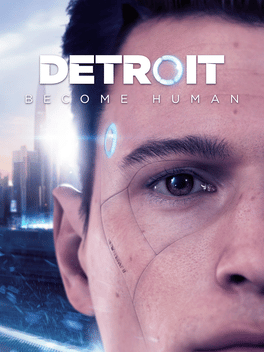
Emma Reay's article examines how the 2017 trailer for Quantic Dream's Detroit: Become Human, which depicted a father beating his daughter to death, provoked backlash from commentators, politicians, and child-protection advocates. Reay's central argument is that this outrage functioned as a moral performance in which "the child" serves as a symbolic touchstone for Western society, and that the game, despite its apparent critique of injustice, ultimately reinforces conservative and paternalistic views of childhood. The study situates the controversy within Quantic Dream's broader output, where child abuse and trauma appear in four of five recent titles, and notes that comparably violent trailers shown at the same event attracted little criticism. Its method is a text-oriented, autoethnographic close reading centered on the character Alice.
The analysis finds that both the press coverage and the game construct the child as a figure of innocence and vulnerability whose suffering legitimizes adult authority and invites voyeuristic moral indignation. The player is positioned as a morally superior protector, while the character Todd is cast as a classist villain whose "man-child" traits contrast with the idealized young figure. Game mechanics and narrative consequences punish departures from the prescribed ethical framing, so the work's apparent engagement with questions of abuse ends up reproducing the cultural discourse it seems to challenge.
The concluding argument extends this reading to the android protagonists Kara and Alice, who are presented as infantilised and vulnerable beings whose appeal depends on their suffering and dependence on patriarchal protection. Close readings of Kara's "childlike" design, the player's protective stance during Todd's violence, and Alice's staged neediness as "The Perfect Child" support the claim. Although the game raises genuine questions about android rights and the constructed nature of childhood, Reay concludes that it ultimately affirms the status quo by making the protection of "the child" an unchallengeable moral value.
Each row is a game or company this document names, each column a document, oldest first. A mark means that document names it. Select a row to see those documents.
DiGRA · 2022

DiGRA · 2022
DiGRA · 2022
DiGRA · 2022
DiGRA · 2022
DiGRA · 2022
DiGRA · 2022
DiGRA · 2022
DiGRA · 2022
DiGRA · 2022
DiGRA · 2022
DiGRA · 2022
Extra Credits · 2026