1 free read left. Create a free account for unlimited reading + AI research.
Create free accountArticle DiGRA
1 free read left. Create a free account for unlimited reading + AI research.
Create free accountArticleDiGRA
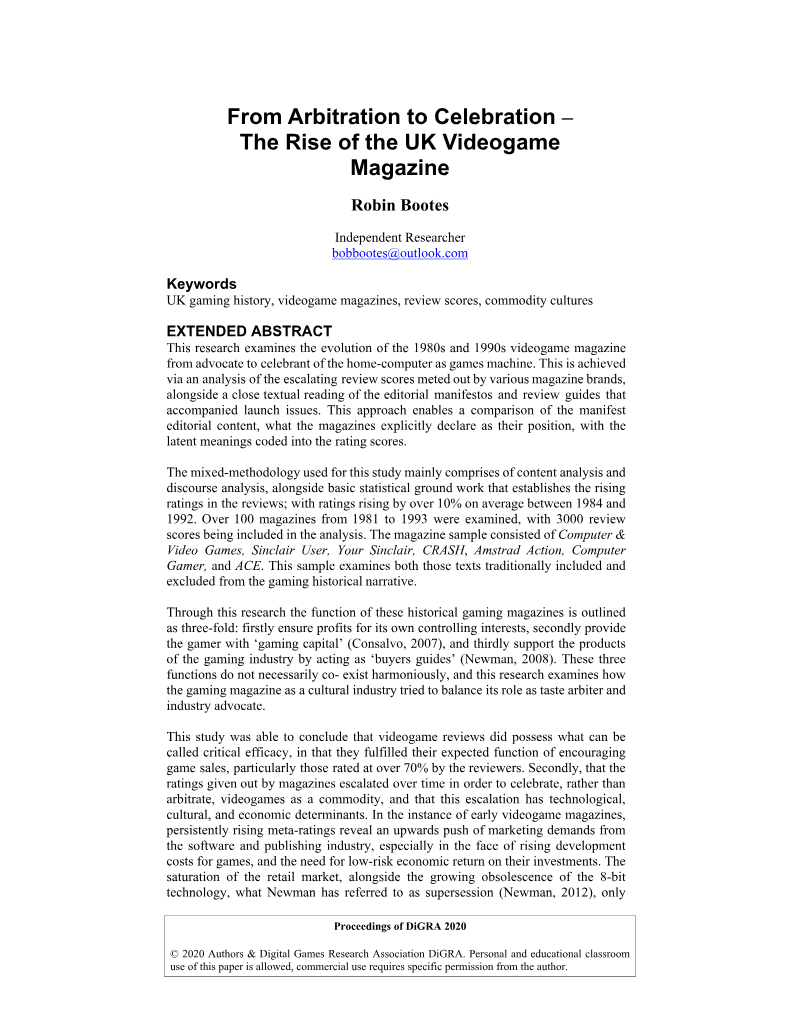
This study traces how UK videogame magazines of the 1980s and early 1990s shifted from acting as arbiters of quality to celebrants of videogames as a commodity. Drawing on content analysis and discourse analysis of more than 100 magazines published between 1981 and 1993, the research examines around 3,000 review scores from titles including Computer & Video Games, Sinclair User, Your Sinclair, CRASH, Amstrad Action, Computer Gamer, and ACE. The sample deliberately includes publications both within and outside the conventional historical narrative of gaming media.
The central finding is that average review scores rose by more than 10 percent between 1984 and 1992, a trend the author attributes to technological, cultural, and economic pressures. Rising development costs, the saturation of the retail market, and the obsolescence of 8-bit hardware all increased the commercial stakes for publishers, which in turn appear to have encouraged more favourable reviews. The study also finds that reviews rated above 70 percent were particularly effective at driving sales, suggesting that magazines performed the commercial function of buyers' guides as well as critical evaluation.
Beyond ratings, the analysis of launch manifestos and review guides reveals a parallel process in which magazines helped establish a distinct and increasingly specialised gamer identity. The study argues that this success created a lasting commodity dilemma: how to maintain an exclusive, "hardcore" consumer culture while remaining open to new audiences. Methodologically, the work positions these magazines as both records and agents of social change, shaping the tastes of their readers and producers during the formation of UK gaming culture.
DiGRA · 2022
DiGRA · 2022
DiGRA · 2022
DiGRA · 2022
DiGRA · 2022
DiGRA · 2022
DiGRA · 2022
DiGRA · 2022
DiGRA · 2022
DiGRA · 2022
DiGRA · 2022
DiGRA · 2022
PocketGamer.biz · 2026











Comments