1 free read left. Create a free account for unlimited reading + AI research.
Create free accountArticle DiGRA
1 free read left. Create a free account for unlimited reading + AI research.
Create free accountArticleDiGRA
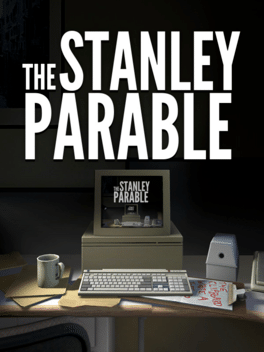
Game mechanics, together with audiovisual modes, can support unreliable narration without a personified narrator. Prior scholarship has concentrated on games with explicit narrators such as The Stanley Parable.
Game mechanics, together with audiovisual modes, can function as a non-personified "Game Narrator" capable of unreliable narration. This argument challenges prior scholarship, which has concentrated on games with explicit personified narrators such as The Stanley Parable, and instead asks how unreliability is signalled to the player when no character or voice presents the story. Drawing on cognitive and narratological frameworks that bridge film, comics, and literature, the analysis treats interactivity itself as a site of narrative meaning.
Close readings of Tales from the Borderlands Episode 1 and Doki Doki Literature Club, informed by repeated playthroughs, identify several mechanisms that generate distrust. Conflicting information, forced choices offered without context, and metaleptic breaches, such as Rhys's "death" being revealed as contingent on the story layer, lead players to repeatedly reconstruct the narrative and to doubt their own actions. In Doki Doki Literature Club, Monika is the only character who breaches metaleptic boundaries, and her unnatural cues undermine the player's initial assumptions about the game world.
The analysis further shows that audiovisual markers, metalepsis, and manipulated gameplay, including lost cursor control and forced choices, combine to produce unreliability without a personified narrator. The authors conclude that the "Game Narrator" is best understood as the set of rules governing how audiovisual and mechanical modes support meaning-making. Because the effect depends on players' cognitive need to construct a coherent narrative, the authors argue that it should persist even as the technique becomes conventional. The work is supported by a bibliography spanning narratology, unreliable narration, and game studies, with references to titles including The Stanley Parable, Borderlands, Doki Doki Literature Club!, and Save the Date.
DiGRA · 2026
DiGRA · 2026