1 free read left. Create a free account for unlimited reading + AI research.
Create free accountWhitepaper European Conference on Games Based Learning (ECGBL)
1 free read left. Create a free account for unlimited reading + AI research.
Create free accountWhitepaperEuropean Conference on Games Based Learning (ECGBL)
The authors argue that accessibility in analogue games has received limited scholarly and professional attention. They say the field needs more systematic, stakeholder-informed design practice.
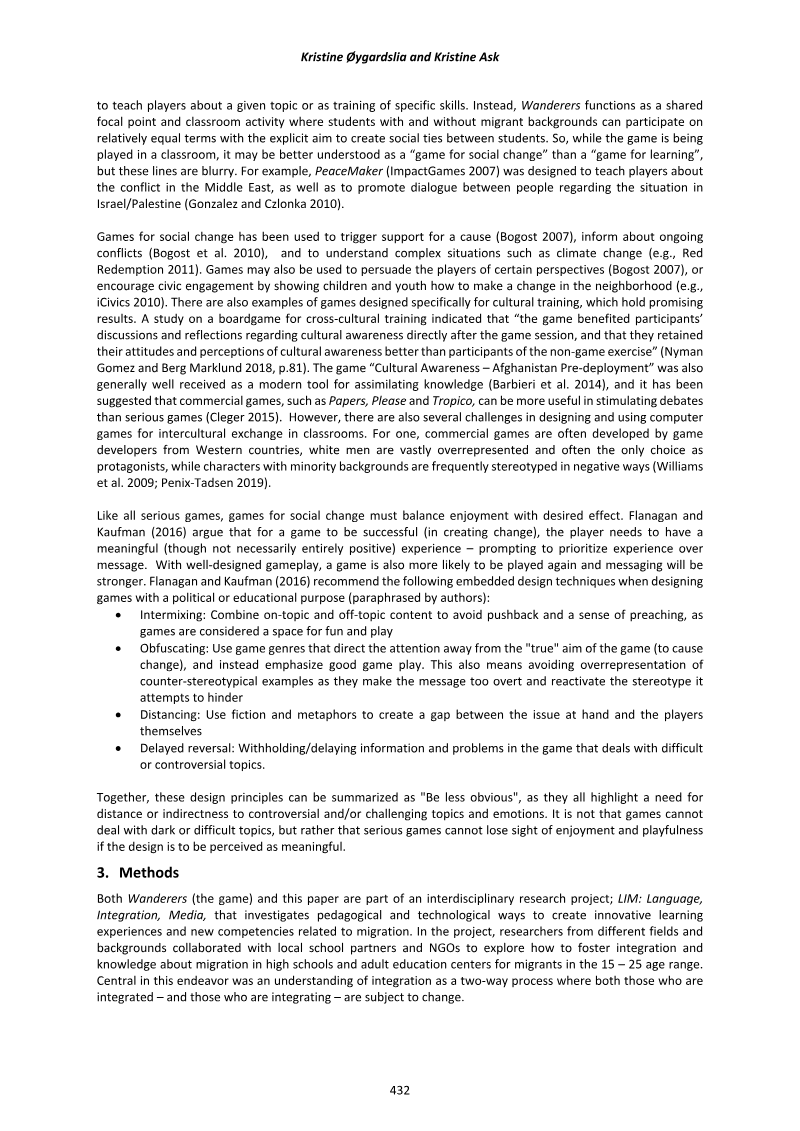
This study examines how inclusivity is understood and applied in analogue game-based learning, combining focus groups with 35 educators, game designers, and students with a review of the literature. Its central argument is that accessibility in analogue games has received limited scholarly and professional attention, and that the field needs more systematic, stakeholder-informed design practice. The research positions motor, sensory, and cognitive needs as the primary considerations for inclusive design.
Participants identified motor, visual and auditory sensory, and cognitive requirements as key inclusivity measures, mapping these to concrete design choices such as card size, token shape, reading level, and the complexity of game state. Perspectives on inclusivity varied considerably depending on classroom context, indicating that no single design standard will serve all learning environments. A notable finding is that lying and bluffing, common mechanics in many analogue games, present intersectional accessibility challenges spanning communication, sensory, cognitive, and emotional needs.
The authors conclude that the state of the art in analogue game accessibility remains limited. They recommend that designers adopt existing frameworks such as Meeple Centred Design, offer alternative communication channels, build adaptable gameplay, and diversify knowledge requirements. The findings are presented as validating an earlier conceptual framework by Sousa et al. (2022), though the authors acknowledge the need for further empirical research and closer collaboration between industry and academia to test and refine these recommendations.
European Conference on Games Based Learning (ECGBL) · 2025
European Conference on Games Based Learning (ECGBL) · 2025
European Conference on Games Based Learning (ECGBL) · 2025
European Conference on Games Based Learning (ECGBL) · 2025
European Conference on Games Based Learning (ECGBL) · 2025
European Conference on Games Based Learning (ECGBL) · 2025
European Conference on Games Based Learning (ECGBL) · 2025
European Conference on Games Based Learning (ECGBL) · 2025
European Conference on Games Based Learning (ECGBL) · 2025
European Conference on Games Based Learning (ECGBL) · 2025
European Conference on Games Based Learning (ECGBL) · 2025
European Conference on Games Based Learning (ECGBL) · 2025
DiGRA · 2025