1 free read left. Create a free account for unlimited reading + AI research.
Create free accountWhitepaper DiGRA
1 free read left. Create a free account for unlimited reading + AI research.
Create free accountWhitepaperDiGRA
The game is themed around meerkat colony behaviour and targets three computational thinking competences. It was tested in a short prototype phase.
This preliminary study, authored by Pinto, Seiça, and Roque, investigates whether a gender-neutral, cooperative tabletop game can foster computational thinking competences through playfulness. The game, themed around meerkat colony behaviors, was designed using Petri Net-inspired action construction and targets three competences: reading and interpretation, condition-action-result reasoning, and action chaining. The authors frame the work as an exploratory response to concerns about gender stereotypes in technology-related learning, positioning play as a potential route to engagement.
The empirical basis consists of eight two-person rehearsal sessions involving sixteen participants, each lasting roughly two hours and analyzed through video coding and individual interviews. The qualitative analysis of over 5,900 evidence lines suggests that players moved from passive participation toward autonomous construction of actions over the course of play, frequently through cooperative dialogue. Playfulness, particularly the support players offered to one another's play, appeared to reinforce competence development, drawing on factors from the Test of Playfulness framework. Participants completed all challenges without gender-specific performance differences, and fifteen of sixteen reported enjoying the game. Most did not perceive gendered aesthetics or themes, though some attributed strategic differences to prior gaming experience rather than gender.
The study's scope is narrow: a small convenience sample, qualitative coding, and a short prototype testing phase. The authors themselves characterize the findings as exploratory and not generalizable, and they explicitly call for larger samples before stronger claims can be made. The contribution is therefore best understood as an early indication of design promise rather than confirmed evidence of educational effectiveness.
DiGRA · 2023
DiGRA · 2023
DiGRA · 2023
DiGRA · 2023
DiGRA · 2023
DiGRA · 2023
DiGRA · 2023
DiGRA · 2023
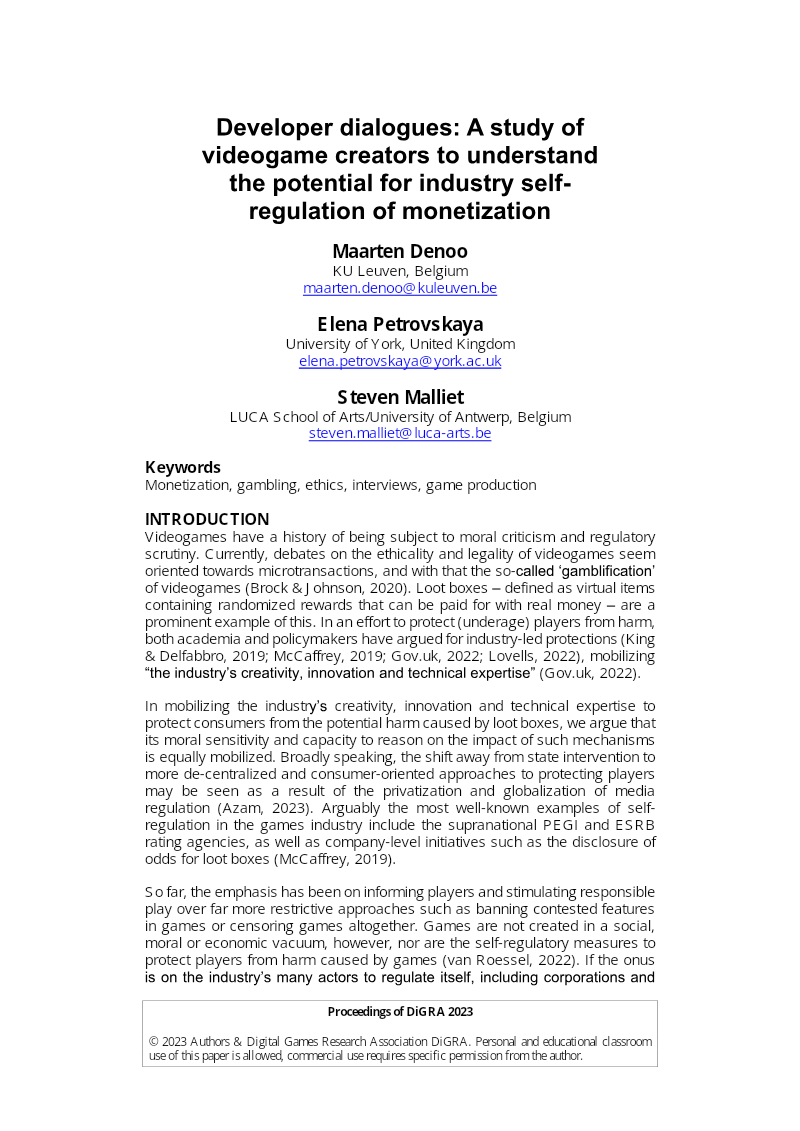
DiGRA · 2023
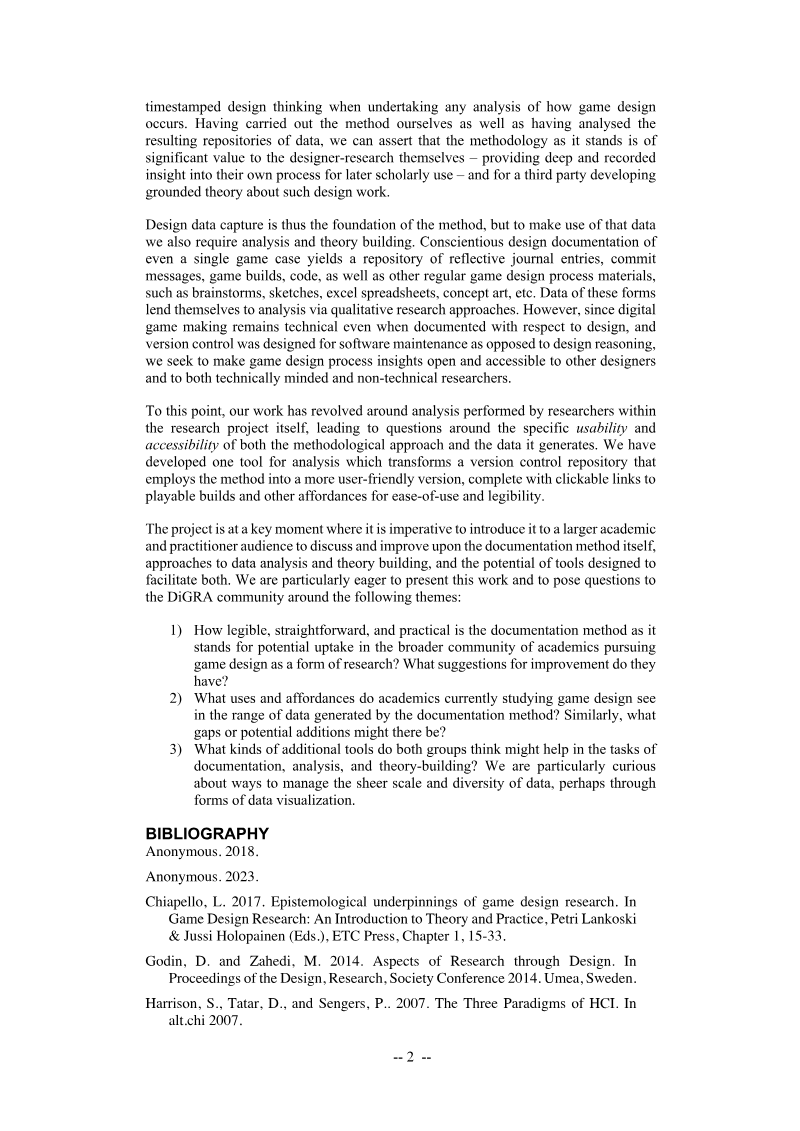

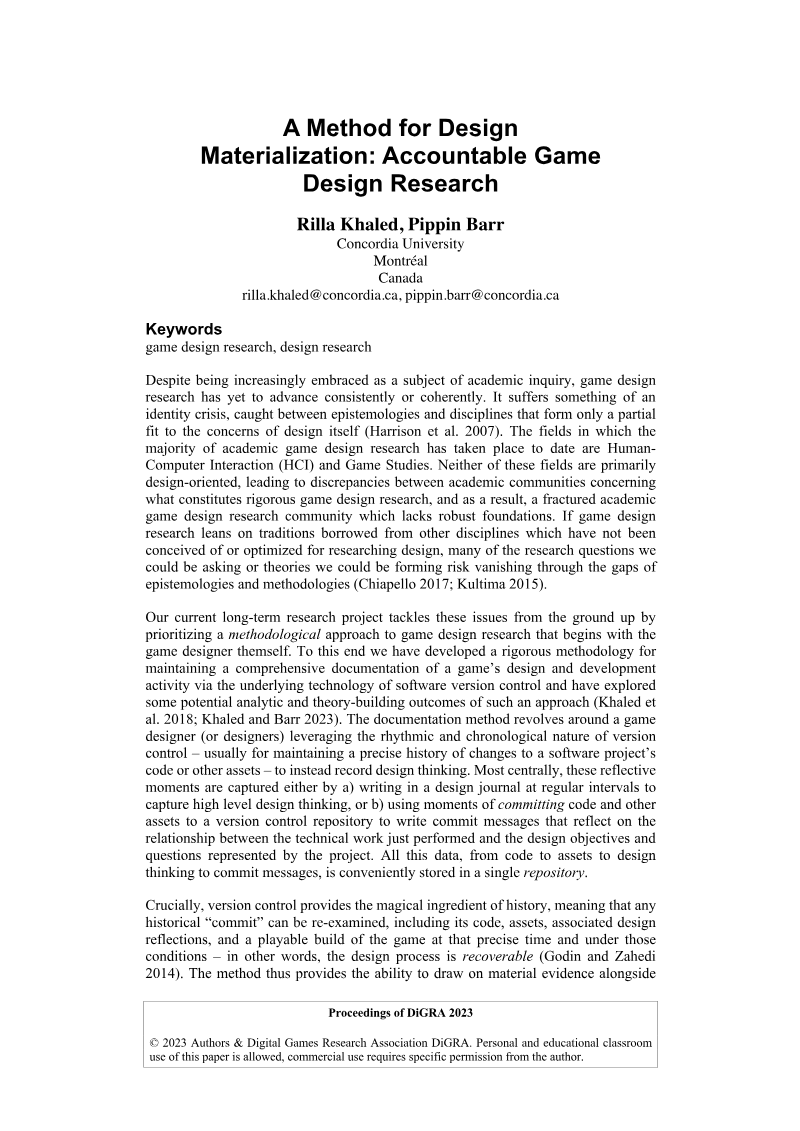
DiGRA · 2023
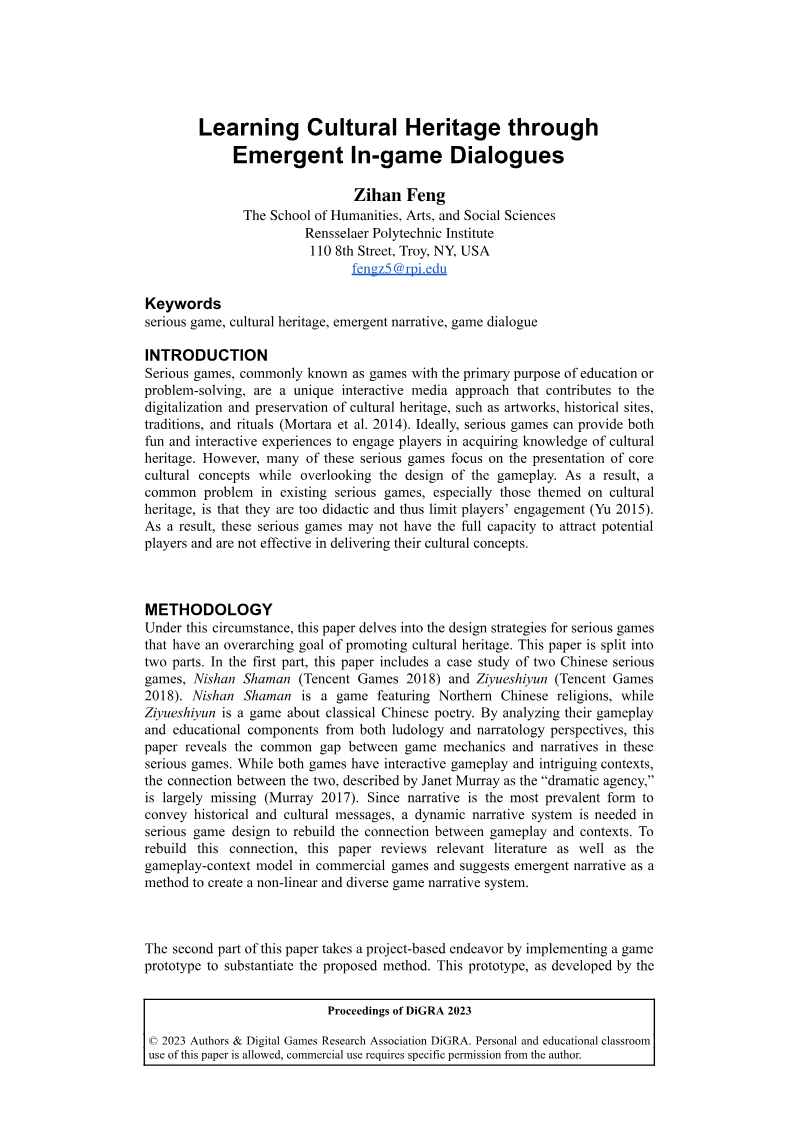
DiGRA · 2023
DiGRA · 2023
DiGRA · 2019